A native of Carlanstown, near Kells in the north of County Meath, Tully is educated in Carlanstown schools and in St Patrick’s Classical School in Navan. He is elected to Dáil Éireann as a Labour Party TD for the Meath constituency at the 1954 Irish general election. He loses his seat at the 1957 Irish general election, but is re-elected at the 1961 Irish general election and serves until 1982. When Labour enters into a coalition government with Fine Gael in 1973, he is appointed Minister for Local Government. While serving in that post he gains prominence for a massive increase in the building of public housing, and notoriety for an attempt to gerrymander Irish constituencies to ensure the re-election of the National Coalition at the 1977 Irish general election. His electoral reorganisation effort via the Electoral (Amendment) Act 1974, which comes to be called a “Tullymander,” backfires spectacularly and helps engineer a landslide for the opposition, Fianna Fáil. He is regarded as a conservative within the Labour Party, though tends to support party decisions, even if he disagrees with them. For many years he is opposed to coalition, though finding the years in opposition fruitless, he changes his mind and becomes increasingly in favour of coalition with Fine Gael.
Also as Minister for Local Government, Tully decides on alterations to the plans for the controversial Dublin CorporationCivic Offices.
Tully is appointed deputy leader of the Labour Party under Michael O’Leary in 1981, and Minister for Defence in the short-lived 1981–82 Fine Gael-Labour Party government. In that capacity he travels to Cairo, in 1981, as the Republic of Ireland‘s representative in Egypt‘s annual October 6 military victory parade. While in the reviewing stand, next to PresidentAnwar Sadat, he suffers a shrapnel injury to his face when Sadat was assassinated by members of Egyptian Islamic Jihad who had infiltrated the Egyptian Army.
In 1982, a few months after the event, Tully retires from politics. He dies ten years later, on May 20, 1992, at the age of 76.
(Pictured: Portrait of James Tully taken from his 1954 election poster)
Lady Harriet Kavanagh, Irish artist, traveler, and antiquarian, described as a “woman of high culture and of unusual artistic power,” is born Lady Harriet Margaret Le Poer Trench on October 13, 1799. She is believed to be the first Irish female traveler to Egypt.
Kavanagh is the second daughter of Richard Le Poer Trench and Henrietta Margaret Le Poer Trench (née Staples), with three brothers and three sisters. She marries Thomas Kavanagh of Borris House, County Carlow, on February 28, 1825, as his second wife. The couple has four children, three sons Charles, Thomas, Arthur, and one daughter, Harriet or “Hoddy.”
Kavanagh’s third son, Arthur MacMorrough Kavanagh, is born without fully formed limbs. Some attribute the disability to a peasant’s curse, while others speculate it is due to Lady Kavanagh taking laudanum during her pregnancy. She refuses to treat her son differently to his siblings, and with the help of local doctor Francis Boxwell, raises him as a normal child. During his initial education, she teaches Arthur herself, teaching him to paint and then write by holding brushes and pens in his mouth. With the help of the surgeon Sir Philip Crampton, she has a mechanical wheelchair constructed for Arthur, and also encourages him to ride horses and engage in other outdoor activities. Her husband dies after twelve years of marriage, in 1837.
In 1846, Kavanagh takes her children to learn French in Saint-Germain-en-Laye, later traveling to Rome. As an antiquarian, she also wants to visit Egypt and the Holy Land, setting off on the long journey from Marseille in October 1846. Accompanying her are her daughter, Harriet, her two sons, Thomas and Arthur, their tutor, the Rev. David Wood, and a maid, Miss Hudson. In Cairo, she hires two feluccas with Arab crews, and visits archaeological sites along the Nile, such as Thebes, Karnak, and the Nubia region. From there, she visits sites of biblical interest, including Tyre, Sidon, and Roda Island. She negotiates with Bedouin chiefs in Aqaba, hiring camels and Bedouin guides to travel to Hebron. She visits harems and a slave market and records the journey’s incidents in her diary, including her son Arthur’s accidental near drowning when he falls off their boat while fishing.
While visiting Jerusalem in Easter 1847, Kavanagh bears witness to a confrontation over the control of holy places between Roman and Orthodox Catholics priests. She goes on to visit Petra, the Sinai Peninsula, Beirut, Smyrna, and Constantinople. The group spends a second winter in Egypt before traveling to the Black Sea before returning to Marseilles in April 1848. Much of these journeys are conducted on horse or camel-back, with one desert crossing taking 36 days. She later comments on her travels as a woman, stating “quite enough danger to make it a very exciting business.”
In 1850 and 1852, Kavanagh travels to Corfu, returning to Borris with samples of Greek lace. She teaches a number of her tenants to copy these designs, which lead to the establishment of a local lace-making industry. She is elected to the Kilkenny Archaeological Society in 1851.
Kavanagh moves to Ballyragget Lodge, County Kilkenny, in 1860, dying there on July 14, 1885. She is buried in St. Mullin’s Abbey, Borris in County Carlow. She documented her travels in journals, with drawings and paintings of the sites she visited. These are held by the Kavanagh family, along with an oil portrait and a self-portrait. Her collection of roughly 300 Egyptian antiquities were donated to the Royal Society of Antiquaries of Ireland after her death. These collections were later moved to the National Museum of Ireland and form a core element of the Museum’s Egyptian collection. Copies of two of her watercolours, a self-portrait, and a landscape are on display in the Museum.
On July 30, 1919, the first assassination authorised by Michael Collins is carried out by The Squad, also known as the Twelve Apostles, when Detective Sergeant “the Dog” Smith is shot near Drumcondra, Dublin.
On April 10, 1919, the First Dáil announces a policy of ostracism of Royal Irish Constabulary (RIC) men. At the time Sinn Féin official policy is against acts of violence. Boycotting, persuasion and mild intimidation succeed against many officers. However, others escalate their activities against republicans and in March 1920 Collins asks Dick McKee to select a small group to form an assassination unit.
When The Squad is formed, it comes directly under the control of the Director of Intelligence or his deputy and under no other authority. The Squad is commanded by Mick McDonnell.
The original “Twelve Apostles” are Mick McDonnell, Tom Keogh, Jimmy Slattery, Paddy Daly, Joe Leonard, Ben Barrett, Vincent Byrne, Sean Doyle, Paddy Griffin, Eddie Byrne, Mick Reilly and Jimmy Conroy. After some time, The Squad is strengthened with members Ben Byrne, Frank Bolster, Mick Keogh, Mick Kennedy, Bill Stapleton and Sam Robinson. Owen Cullen, a member of 2nd Battalion, is driver for a short time, and Paddy Kelly of County Clare for a short time. They are employed full-time and received a weekly wage.
Sometimes, as occasion demands, The Squad is strengthened by members of the IRA Intelligence Staff, the Active Service Unit, munition workers and members of the Dublin Brigade, TipperaryFlying Column men, Dan Breen, Séumas Robinson, Seán Treacy and Seán Hogan, and also Mick Brennan and Michael Prendergast of County Clare. The IRA Intelligence Staff consists of the Director of Intelligence Michael Collins, the Deputy Director of Intelligence Liam Tobin, the Second Deputy Director of Intelligence Tom Cullen, the Third Director of Intelligence Frank Thornton, and members Joe Dolan, Frank Saurin, Ned Kelleher, Joe Guilfoyle, Paddy Caldwell, Paddy Kennedy, Charlie Dalton, Dan McDonnell and Charlie Byrne. The munitions workers include Mat Furlong, Sean Sullivan, Gay McGrath, Martin O’ Kelly, Tom Younge and Chris Reilly.
Other members include Mick Love, Gearoid O’Sullivan, Patrick Caldwell, Charlie Dalton, Mick O’Reilly, Sean Healy, James Ronan, Paddy Lawson, John Dunne, Johnny Wilson and James Heery. Seán Lemass and Stephen Behan, the father of Irish writers Brendan and Dominic Behan, have also been listed as members of the Apostles. There is no hard evidence to support the inclusion of many of the names, but those who subsequently serve in the Irish Army have their active service recorded in their service records held in the Military Archives Department in Cathal Brugha Barracks, Rathmines. Andrew Cooney is also reported to have been associated with The Squad. Stephen Behan’s involvement is first made public in 1962, when the BBC broadcasts an episode of This Is Your Life dedicated to Behan. During the broadcast, remaining members of the squad joined Behan on the set of the show.
Following “The Dog” Smith’s assassination, The Squad continues to target plainclothes police, members of the G Division of the Dublin Metropolitan Police, and, occasionally, problematic civil servants. Organisationally it operates as a subsection of Collins’ Intelligence Headquarters. Two of the executions by The Squad are the killing on January 21, 1920, of RIC Inspector William Redmond of the DMP “G” Division and on March 2, 1920, a British double agent John Charles Byrnes.
One of the Apostles’ particular targets is the Cairo Gang, a deep-cover British intelligence group, so called since it has either been largely assembled from intelligence officers serving in Cairo or from the Dublin restaurant called The Cairo, which the gang frequents. Sir Henry Wilson brings in the Cairo Gang in the middle of 1920, explicitly to deal with Michael Collins and his organization. Given carte blanche in its operations by Wilson, the Cairo Gang adopts the strategy of assassinating members of Sinn Féin unconnected with the military struggle, assuming that this will cause the IRA to respond and bring its leaders into the open.
The most well-known operation executed by the Apostles occurs on what becomes known as Bloody Sunday, November 21, 1920, when British MI5 officers, linked to the Cairo Gang and significantly involved in spying, are shot at various locations in Dublin with fourteen killed and six wounded. In addition to the The Squad, a larger number of IRA personnel are involved in this operation. The only IRA man captured during the operation is Frank Teeling. In response to the killings, the Black and Tans retaliate by shooting up a Gaelic football match between Dublin and Tipperary at Croke Park, the proceeds from which are for the Irish Republican Prisoners Fund. Fourteen civilians are killed including one of the players, Michael Hogan, and 68 are wounded. The Hogan stand at Croke Park is named after Hogan.
The elimination of the Cairo Gang is seen in Dublin as an intelligence victory, but British Prime MinisterDavid Lloyd George comments dismissively that his men “… got what they deserved, beaten by counterjumpers…”. Winston Churchill adds that they were “.. careless fellows … who ought to have taken precautions.”
Some members of The Squad are hanged in 1921 for the killings on Bloody Sunday, including Thomas Whelan and Patrick Moran. Moran had killed a vet, Patrick MacCormack, who seems to have been an innocent victim.
In May 1921, after the IRA’s Dublin Brigade takes heavy casualties during the burning of the Custom House, The Squad and the Brigade’s Active Service Unit are amalgamated into the Dublin Guard, under Paddy Daly. Under the influence of Daly and Michael Collins, most of the Guard take the Free State side and join the National Army in the Irish Civil War of 1922–23. During this conflict some of them are attached to the Criminal Investigation Department and are accused of multiple assassinations of Anti-Treaty fighters. They are also involved in several atrocities against Republican prisoners, particularly after the death of Collins, due to many of them having personal ties with him.
Bill Stapleton goes on to become a director in Bord na Móna, Charles Dalton and Frank Saurin become directors in the Irish Sweepstakes. In October 1923, Commandant James Conroy is implicated in the murder of two Jewish men, Bernard Goldberg and Emmanuel ‘Ernest’ Kahn. He avoids arrest by fleeing to Mexico, returning later to join the Blueshirts. A later application for an army pension is rejected. The killings are the subject of a 2010 investigative documentary by RTÉ, CSÍ: Murder in Little Jerusalem.
Always a keen traveler, during the following years Guinness makes several expeditions in search of biological specimens and archaeological material. He travels twice to New Guinea and also goes to Greenland and the Bay Islands near Honduras. These voyages are vividly described in his books Walkabout (1936) and Atlantic circle (1938). He still maintains a political profile, however, serving in several different capacities including financial commissioner to Kenya (1932) and chairman of the West India Royal Commission (1938–9). At the outbreak of World War II, he works as chairman of the Polish Relief Fund before being appointed as Joint Parliamentary Secretary at the Ministry of Agriculture on the formation of the Churchill government (1940). In 1941 he becomes Secretary of State for the Colonies and Leader of the House of Lords. Appointed Deputy Resident Minister of State in Cairo (August 1942), he becomes Minister-Resident for the Middle East in January 1944. On November 6, 1944, he is assassinated in Cairo by members of the ‘Stern Gang’, the Jewish terrorist group based in Palestine.
Guinness marries (1903) Lady Evelyn Hilda Stuart Erskine, daughter of the 14th Earl of Buchan. They have two sons and one daughter.
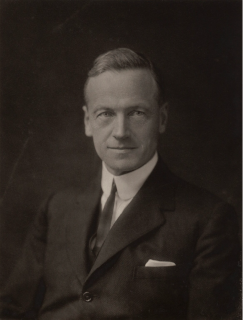
(Pictured: Walter Edward Guinness, 1st Baron Moyne of Bury St. Edmunds, bromide print, 1929, by Walter Stoneman, National Portrait Gallery)
Parke joins the British Army Medical Services (AMS) in February 1881 as a surgeon, first serving in Egypt during the final stages of the ʻUrabi revolt in 1882. As a senior medical officer at a field hospital near Cairo, he is responsible for treating battle casualties as well as the deadly cholera epidemic that afflicts 20% of British troops stationed there. In late 1883, he returns to Ireland, where he is stationed at Dundalk with the 16th The Queen’s Lancers. He arrives in Egypt once again in 1884 as a part of the Nile Expedition sent in relief of General Charles Gordon, who is besieged in Khartoum by Mahdists in neighbouring Sudan. The expedition arrives too late, and Gordon is killed. Parke later negatively recounts this experience in an 1892 journal article titled How General Gordon Was Really Lost. Following the expedition, he spends the next few years stationed in Alexandria, where he notably introduces fox hunting to Egypt, becoming master of the Alexandria Hunt Club.
In January 1887, while in Alexandria, Parke is invited by Edmund Musgrave Barttelot to accompany him on the Emin Pasha Relief Expedition. The expedition is led by Henry Morton Stanley, and journeys through the African wilderness in relief of Emin Pasha, an Egyptian administrator who had been cut off by Mahdist forces following the Siege of Khartoum. He is initially rejected by Stanley upon his arrival in Alexandria but is invited by telegram a day later to join the expedition in Cairo. On February 25, 1887, the expedition sets off from Zanzibar for the Congo.
The expedition lasts for three years and faces great difficulty, with the expedition of 812 men suffering from poor logistical planning and leadership. The rainforest is much larger than Stanley expected, leading much of the party to face starvation and disease. The expedition has to resort to looting native villages for food, escalating the conflict between the two groups. Parke, for his part, saves the lives of many in the party, including Stanley, who suffers from acute abdominal pain and a bout of sepsis. Stanley describes Parke’s care as “ever striving, patient, cheerful and gentle…most assiduous in his application to my needs, and gentle as a woman in his ministrations.” Parke also treats Arthur Jephson for fever, and nurses Robert H. Nelson through starvation. Furthermore, after a conflict with the natives, he has to save William Grant Stairs by orally sucking the poison out of an arrow wound.
During the expedition, Parke purchases from an Arab slaver a Mangbetu Pigmy girl, who serves as his nurse and servant for over a year.
After returning to Ireland, Parke receives an Honorary Fellowship of the Royal College of Surgeons in Ireland and is awarded gold medals from the British Medical Association (BMA) and the Royal Geographical Society. He publishes several books, including My Personal Experiences in Equatorial Africa (1891) and A Guide to Health in Africa.
The National Day of Commemoration is held on the Sunday closest to July 11, the anniversary of the date the truce was signed in 1921 to end the Irish War of Independence.
Leaders from Christian, Coptic Christian, Jewish and Islamic denominations read or sing prayers and readings, and President Higgins lays a laurel wreath. The service is observed by more than 1,000 guests, including Government Ministers, the Council of State, which advises the Taoiseach, members of the judiciary, members of the diplomatic corps, TDs and Senators, representatives of ex-servicemen’s organisations and relatives of the leaders of the 1916 Easter Rising.
The national flag is lowered to half-mast while the “Last Post” and “Reveille” are sounded. After a minute of silence, a gun salute is sounded, and the flag is raised again before the national anthem is played with a fly-by by three Pilatus PC-9 aircraft.
The Army band of the 1st Brigade and pipers play music including “Limerick’s Lament” and “A Celtic Lament” as guests arrive at the quadrangle of the former British Army veterans’ hospital, now the Irish Museum of Modern Art.
The prayer service begins with Imam Sheikh Hussein Halawa of the Islamic Cultural Centre of Ireland, father of Ibrahim Halawa, who is in prison in Cairo, singing verses from the Quran in Arabic and praying in English, “I ask Allah, the Mighty, the Lord, to bless our country, Ireland, and give the people of our country a zeal for justice and strength for forbearance.”
Soloist Sharon Lyons sings hymns between prayers and readings from all denominations, ending with Rabbi Zalman Lent: “May the efforts and sacrifice of those we honour today be transformed into the blessing of people throughout the world.”
Speaking to reporters, Chief of Staff of the Defence ForcesVice AdmiralMark Mellett says more than 650 personnel are serving in eleven countries and on the Mediterranean Sea. “In the Defence Forces we have over 80 people who have given their lives in the cause of peace internationally, and I think it’s a sign of a State that recognises those who give this service,” he says. “The military of our State serve the political and serve the people. And it’s this loyalty to the State which is actually critical, and I’m delighted that we have a day like this.”
Mellett’s views are echoed by former sergeant Denis Barry, who says 47 Irish soldiers died in Lebanon and it is important to pay respects for that sacrifice. “None of us who served ever thought we would see the day we could travel in Lebanon without weapons, heavy armaments or flak jackets.” That United Nations mission paid off, he says.
Former British soldier Ron Hammond says the event reflects positive developments, such as the creation of the veterans’ Union of British and Irish Forces. He served from 1960 to 1980 in the Royal Irish Fusiliers and Royal Irish Rangers, spending time in Germany, Canada, Yemen and north and south Africa. He joined the British rather than the Irish forces because at the time “a home posting in the Defence Forces was Collins Barracks and an overseas posting was the Curragh encampment.”
(From: “Irish military dead honoured in National Day of Commemoration” by Marie O’Halloran, The Irish Times, July 9, 2017)
Hely-Hutchinson enters the Army as a cornet in the 18th Royal Hussars in 1774, rising to a lieutenant the following year. In 1776 he is promoted to become a captain in the 67th (South Hampshire) Regiment of Foot, and a major there in 1781. He moves regiments again in 1783, becoming a lieutenant-colonel in, and colonel-commandant of, the 77th Regiment of Foot, which is, however, disbanded shortly afterwards following an earlier mutiny. He spends the next 11 years on half-pay, studying military tactics in France before serving as a volunteer in the Flanders campaigns of 1793 as aide-de-camp to Sir Ralph Abercromby.
Hely-Hutchinson is second-in-command of the 1801 expedition to Egypt, under Abercromby. Following Abercromby’s death in March after being wounded at the Battle of Alexandria, he takes command of the force. From then he is able to besiege the French firstly at Cairo which capitulates in June and then besieges and takes Alexandria, culminating in the capitulation of over 22,000 French soldiers. In reward for his successes there, the Ottoman SultanSelim III makes him a Knight, 1st Class, of the Order of the Crescent.
On December 18, 1801, Hely-Hutchinson is created Baron Hutchinson in the Peerage of the United Kingdom, gaining a seat in the House of Lords. In recognition of his “eminent services” during the “late glorious and successful campaign in Egypt,” at the request of the King, the Parliament of the United Kingdom settles on Lord Hutchinson and the next two succeeding male heirs of his body an annuity of £2000 per annum, paid out of the Consolidated Fund.
Hely-Hutchinson is promoted lieutenant-general in September 1803 and made a full general in June 1813. In 1806, he becomes colonel of the 57th (West Middlesex) Regiment of Foot, transferring in 1811 to be colonel of the 18th Regiment of Foot, a position he holds until his death. He also holds the position of Governor of Stirling Castle from 1806 until his death.
Hely-Hutchinson sits as Member of Parliament (MP) for Lanesborough from 1776 to 1783 and for Taghmon from 1789 to 1790. Subsequently, he represents Cork City in the Irish House of Commons until the Act of Union 1800 and is then member for Cork City in the after-Union Parliament of the United Kingdom until 1802.
Hely-Hutchinson dies on June 29, 1832, never having married.
O’Bannon enters the Marine Corps on January 18, 1801. As a first lieutenant assigned to the USS Argus, he commands a detachment of seven Marines and two Navymidshipmen in diplomatic Consul General William Eaton‘s small army during the Tripoli campaign of the First Barbary War. In the combined operations with the United States Navy, he leads the successful attack at the Battle of Derna, a coastal town in eastern modern Libya on April 27, 1805, giving the Marines’ Hymn its line “to the shores of Tripoli.”
Lieutenant O’Bannon becomes the first man to raise a United States flag over foreign soil in time of war. O’Bannon’s superior, William Eaton, a former Army officer, had raised the American flag several months earlier while traveling on the Nile River from Alexandria to Cairo, but it had not been in a time of war. According to Marine Corps legend, Prince Hamet Karamanli is so impressed with O’Bannon’s bravery during the attempt to restore him to his throne as the Bey of Tripoli that he gives O’Bannon a sword as a gesture of respect. This sword becomes the model for the Mameluke sword, adopted in 1825 for Marine Corps officers, which is part of the formal uniform today.
O’Bannon resigns from the Marine Corps on March 6, 1807. He moves to Logan County, Kentucky, making his home in Russellville. He serves in the Kentucky Legislature in 1812, 1817, and 1820–21, and in the Kentucky State Senate from 1824 to 1826.
Sometime before 1826, O’Bannon marries Matilda Heard, daughter of Major James Heard and Nancy Morgan, a daughter of American Revolutionary War general Daniel Morgan, commander at the Battle of Cowpens in South Carolina in 1781.
Presley O’Bannon dies at age 74 on September 12, 1850, in Pleasureville, Kentucky, where his daughter and nephew live. In 1919, his remains are moved to the Frankfort Cemetery on East Main Street in the state capital of Frankfort, Kentucky.
(Pictured: Oil painting of Lieutenant Presley Neville O’Bannon, USMC, by Colonel Donald L. Dickson, USMCR, from the Official Photograph Album Collection (COLL/2246) at the Archives Branch, Marine Corps History Division)
As an heir to the Guinness brewing fortune and a handsome, charming young man, Bryan is an eligible bachelor. One of London’s “Bright Young Things,” he is an organiser of the 1929 “Bruno Hat” hoax art exhibition held at his home in London. Also, in 1929 he marries the Hon. Diana Mitford, one of the Mitford sisters, and has two sons with her. The couple become leaders of the London artistic and social scene and are dedicatees of Evelyn Waugh‘s second novel Vile Bodies. However, they divorce in 1933 after Diana deserts him for British fascist leader Sir Oswald Mosley.
Guinness remarries happily in 1936 to Elisabeth Nelson, of the Nelson publishing family, with whom he has nine children.
During World War II, Guinness serves for three years in the Middle East with the Spears Mission to the Free French, being a fluent French speaker, with the rank of major. Then in November 1944 Guinness succeeds to the barony when his father, posted abroad as Resident Minister in the Middle East by his friend Winston Churchill, is assassinated in Cairo.
After the war, Lord Moyne serves on the board of the Guinness corporation as vice-chairman (1947-1979), as well as the Guinness Trust and the Iveagh Trust, sitting as a crossbencher in the House of Lords. He serves for 35 years as a trustee of the National Gallery of Ireland and donates several works to the gallery. He writes a number of critically applauded novels, memoirs, books of poetry, and plays. With Frank Pakenham he seeks the return of the “Lane Bequest” to Dublin, resulting in the 1959 compromise agreement. He is invested as a Fellow of the Royal Society of Literature.
Lord Moyne dies of a heart attack on July 6, 1992, at Biddesden House, his home in Wiltshire, and is succeeded by his eldest son Jonathan. He is buried at Ludgershall, Wiltshire, England.





 seamus dubhghaill