seamus dubhghaill

Promoting Irish Culture and History from Little Rock, Arkansas, USA


Leave a comment

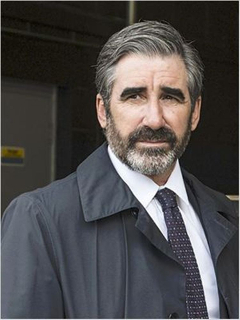
Birth of Mannix Flynn, Politician, Author & Playwright

Gerard Mannix Flynn, an Irish Independent politician, author and playwright, is born in Dublin on May 4, 1957. He is serving as a Dublin City Councillor since May 2009. In addition to his work on Dublin City Council, he has also written the novel Nothing To Say in 1983 and the play James X in 2002.

At the age of eleven, Flynn is sent to St. Joseph’s Industrial School in Letterfrack, County Galway, for eighteen months. He is subjected to sexual and physical abuse there. He also spends time in Marlborough House Detention Centre, DaingeanCounty Offaly, St. Patrick’s Institution, Dublin, and is given five years at the age of fifteen and sent to Mountjoy Prison.

Flynn publishes the novel Nothing To Say in 1983. It is subsequently translated into German, Italian, and Polish. He founds his arts company, Farcry Productions, in 2004, which produces visual art, performance and installation work around taboo issues such as child sexual abuse, violence, and addiction.

In 2004, James X performed by Flynn wins The Irish Times Irish Theatre Award. An earlier version of this play entitled Talking to the Wall previously wins the Edinburgh Fringe award.

Flynn appears in the films CalWhen the Sky Falls and Excalibur and works as an actor in ScotlandLondonAustria, and Dublin for twenty years.

Flynn is first elected to Dublin City Council in the 2009 Irish local elections as an independent candidate representing the South-East Inner City electoral area. He is re-elected to the revised Pembroke-South Dock electoral area in the 2014 Irish local elections.

Flynn tables a motion to move the Temple Bar Cultural Trust, a State company set up in 1991 as a regeneration agency for Temple Bar, under the direct control of Dublin City Council. The trust is subsequently found to be in breach of corporate governance and accountability in a number of public reports. He also expresses critical views of the way public money is spent as part of a Grafton Street regeneration project in Dublin.

Flynn supports tougher regulation around the amplification of busking on public streets, which leads to his office being vandalised in February 2015. He is involved in a number of challenges to cycle lane provision, with a High Court challenge against the Strand Road cycle lane COVID-19 mobility trial and is a spokesperson for a group opposed to this cycle lane trial. Critics accuse him of consistently voting against policies that would provide more active travel infrastructure and in favour of policies which negatively impact pedestrians and cyclists. His legal challenges to cycling provision have the potential to revert a number of cycle lanes which have been created back to servicing predominantly cars.

In 2015, Flynn resigns from the Dublin City Council Arts SPC over what he perceives as a lack of cohesive overall policy, strategy, and vision.

In 2016, Flynn protests against the Artane Band, due to its association with the Artane Industrial School. The band responds saying it has had no association with the former industrial school. His peaceful protest, which includes him protesting on a window sill in his Dublin City Council office, is criticised by some as “attention seeking” and a “publicity stunt full stop.”

In 2019, Flynn is involved in a protest march against plans to open the state’s largest homeless shelter in his ward. Protesters march northbound on Aungier Street blocking traffic and shouting slogans against the Peter McVerry trust for providing the services in conjunction with Dublin City Council. In 2020, he takes further legal action against the council, who are working in conjunction with the Peter McVerry Trust, so that he can ensure the homeless facilities will not be built in the area.

Flynn contests the 20112016 and 2020 Irish general elections to Dáil Éireann unsuccessfully. He stands unsuccessfully as an independent candidate at the 2021 Dublin Bay South by-election, getting 879 first-preference votes (3.3%).

A 2019 documentary by Flynn, Land Without God, about the effects of clerical abuse on Flynn and his family, receives special mention for the Dublin Human Rights Film Award at the Dublin International Film Festival.

Leave a comment

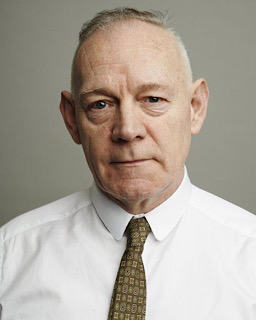
Death of Donal McCann, Stage, Film & Television Actor

Donal McCann, Irish stage, film, and television actor, dies from pancreatic cancer in Dublin on July 17, 1999. He is best known for his roles in the works of Brian Friel and for his lead role in John Huston‘s last film, The Dead (1987). In 2020, he is listed as number 45 on The Irish Times list of Ireland’s greatest film actors.

McCann is born on May 7, 1943, in Terenure, Dublin. His father is John J. McCann, a playwright and politician who serves twice as Lord Mayor of Dublin. Although he acts in a production of his father’s Give Me a Bed of Roses at Terenure College in 1962, he briefly studies architecture before taking a job as a trainee sub-editor at the Evening Press which allows him to pursue part-time acting classes at the Abbey School of Acting at the same time. He joins the Abbey Players in the late 1960s.

Among his most important early roles are Cú Chulainn in W. B. Yeats‘s On Baile Strand (1966), and as Estragon in a seminal production of Samuel Beckett‘s Waiting for Godot, partnering with Peter O’Toole as Vladimir (1969).

McCann’s career includes parts in many plays from the Irish literary canon, including Tarry FlynnThe Shaughran, and the Gate Theatre‘s highly acclaimed production of Seán O’Casey‘s classic Juno and the Paycock in the 1980s (McCann plays the “Paycock” (Captain Boyle) opposite Geraldine Plunkett as Juno and John Kavanagh as Joxer Daly) as well as a subsequent production of O’Casey’s The Plough and the Stars.

McCann develops a particularly fruitful relationship with the playwright Brian Friel. He plays the role of Gar O’Donnell, the public figure, in a film adaptation of Philadelphia, Here I Come! in 1970 and, despite popular belief, he never plays either public or private Gar on stage. He gives a landmark performance as Frank Hardy, the title character, in Faith Healer in 1980 (a role he reprised in 1994), continuing his relationship with Friel through productions of Translations (1988) and Wonderful Tennessee (1993).

Friel says that McCann’s work “contains extraordinary characteristics that go beyond acting … it is deeply spiritual.” Perhaps McCann’s most renowned role is as Thomas Dunne in Sebastian Barry‘s The Steward of Christendom. He wins the London Critics’ Circle Theatre Award (Drama Theatre) as best actor for this role in 1995. He reprises this role in a 1996 production at the Gate Theatre, Dublin and, following a twelve-week run at the Brooklyn Academy of Music in 1997, his “performance of unarguable greatness” (The New York Observer) had Newsweek hailing him as “a world-class star,” and The New York Times referring to this “astonishing Irish actor…widely regarded as the finest of them all.”

On the London stage, McCann plays in Prayer for My Daughter opposite Antony Sher (1978), and is Jean to Dame Helen Mirren‘s Julie in Miss Julie (1971). This is filmed for the BBC, and he much later plays Judge Brack with Fiona Shaw in the title role of Henrik Ibsen‘s Hedda Gabler, a production filmed for the BBC in 1993.

McCann begins his film career early, in 1966, in Walt Disney Pictures’s The Fighting Prince of Donegal (this later becomes a TV series). More significant roles include the title character’s father Shamie in Cal and one of the feuding brothers in Thaddeus O’Sullivan‘s December Bride (1990). He works a number of times with Neil Jordan (in AngelThe Miracle and High Spirits).

His best-known film role is as Gabriel Conroy in The Dead (1987), starring opposite Anjelica Huston and directed by her father, John Huston. Significant late roles include Bernardo Bertolucci‘s Stealing Beauty (1996) and in John Turturro‘s Illuminata (released in 1999, after McCann’s death).

McCann’s television work includes the featured role of Phineas Finn in the BBC’s serialised adaptation of Anthony Trollope‘s The Pallisers, Willie Burke in RTÉ‘s Prix Italia drama entry The Burke Enigma (1979) and Barney Mulhall in RTÉ’s Strumpet City (1980), as well as many one-off parts.

McCann plays in Bob Quinn‘s Irish language film Poitín (1979) and in Quinn’s somewhat experimental The Bishop’s Story (1995). After hearing that McCann is ill, Tom Collins asks Quinn to make a TV documentary about McCann for RTÉ called It Must Be Done Right (1999), after a remark by McCann on his craft. The film airs on RTÉ a week before McCann’s death.

In his private life, McCann is a quiet and unassuming man, but he battles both depression and alcoholism all his life. He has many friends in Irish theatre and artistic circles but also across all strata of life. His hobbies include sketching and he is passionate about horse racing.

Remembering McCann on the 25th anniversary of his death, Gerald Smyth writes, “In the melancholy of that life-worn voice could be heard the cadences of a lyric heart.”


Leave a comment

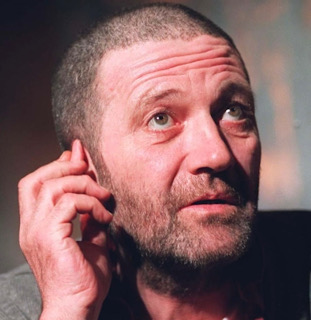
Birth of John Lynch, Actor & Novelist

john-lynch

John Lynch, actor and novelist, is born in Corrinshego, County Armagh, Northern Ireland on December 26, 1961. He wins the AFI (AACTA) Award for Best Actor in a Leading Role for the 1995 film Angel Baby. His other film appearances include Cal (1984), The Secret Garden (1993), In the Name of the Father (1993) and Sliding Doors (1998).

Lynch is the eldest of five children of an Irish father and an Italian mother from Trivento in the Province of Campobasso. His younger sister Susan and his nephew Thomas Finnegan are also actors. He attends St. Colman’s College, Newry and begins acting in Irish language-medium plays at school during the early years of the conflict in Northern Ireland.

Lynch has appeared in numerous films related to Northern Ireland’s problems such as Cal (1984) with Helen Mirren, In the Name of the Father (1993) with Daniel Day-Lewis, The Railway Station Man (1992) with Julie Christie and Donald Sutherland, Nothing Personal (1995) and Some Mother’s Son (1996), also with Mirren, as well as the Irish-themed film Evelyn (2002).

Lynch stars as a supporting actor in Derek Jarman‘s Edward II (1991), as Lord Craven in Agnieska Holland‘s film of The Secret Garden (1993), as Tadhg in The Secret of Roan Inish (1994), and as Gerry in Sliding Doors (1998).

Lynch plays the part of football legend George Best in the 2000 film Best. He plays the lead in the Australian feature Angel Baby, winning the Australian Film Institute award for best leading actor and the Australian Film Critics Association award for best actor of 1995. He is nominated for a Satellite Film Award for the film Moll Flanders in 1996. He works with acclaimed Belgian director Marion Hänsel on her adaptation of Booker-nominated author Damon Galgut‘s novel, The Quarry (1998), which wins Best Film at the Montreal World Film Festival. He wins Best Actor for the lead role in Best at the Fort Lauderdale Film Festival in 2000.

Lynch is nominated for a British Academy of Film and Television Arts (BAFTA) for Cal, as well as for an Irish Film and Television Award for his role in The Baby War. He stars in Five Day Shelter as Stephen, which wins a European Film Award and is in competition at the Rome Film Festival. He plays the lead in Craig Vivieros’ first feature film, the prison drama Ghosted. He plays the role of Wollfstan in Black Death and appears in the 2012 film version of Michael Morpurgo‘s novel, Private Peaceful.

Lynch is also a novelist. His first novel, Torn Water, is published in November 2005 by the 4th Estate, a literary imprint of HarperCollins Publishers LLC, and his second, Falling Out of Heaven, is published on May 13, 2010, by the same publisher.