seamus dubhghaill

Promoting Irish Culture and History from Little Rock, Arkansas, USA


Leave a comment

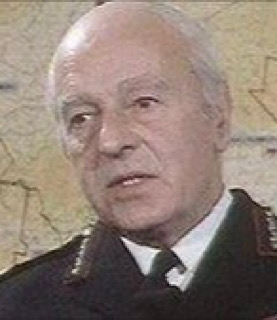
Birth of Graham Shillington, Northern Irish Police Officer

Sir Robert Edward Graham Shillington CBE, a senior Northern Irish police officer, is born on April 2, 1911, in Portadown, County Armagh. He serves as Chief Constable of Royal Ulster Constabulary (RUC) from 1970 to 1973.

Shillington is the youngest of six children born to Major David Graham Shillington, who goes on to become a Member of the Parliament of Northern Ireland, and Sarah Louisa (née Collen). He is educated at Castle Park School, a preparatory school in Dublin, and Sedbergh School, a public boarding school in Sedbergh, Cumbria, North West England. He then attends Clare College, Cambridge, where he studies natural sciences. He graduates Bachelor of Arts (BA) in 1932.

Shillington originally plans to join the Northern Ireland Civil Service, however he wants a more varied career. He joins the Royal Ulster Constabulary on February 8, 1933, as a cadet officer. He completes his training at the Newtownards depot in County Down. He is promoted to district inspector in 1935, and serves as officer in charge of D District in Belfast. In 1944, he is promoted to 1st Class District Inspector and is posted to Derry, County Londonderry.

In 1953, after nine years in Derry, Shillington is promoted to County Inspector and returns to Belfast. There, he joins the Inspector General’s Headquarters and serves in an administrative post. On January 16, 1961, he is appointed Commissioner of Belfast City.

In 1969, Shillington is appointed Deputy Inspector-General of the RUC, as second-in-command to the Inspector-General, Anthony Peacocke, who, like Shillington, had been educated at Sedbergh and Cambridge. When the Battle of the Bogside breaks out in Derry in August 1969, he requests permission to use CS gas for the first time in the United Kingdom. When that does not halt the rioting, he requests that the British Army be brought in. He telephones Peacocke on August 13 in order to persuade him of this. Peacocke, who has long denied the need for army involvement, eventually agrees, but his reputation never recovers and following the publication of the Hunt Report in October he resigns as Inspector-General.

Shortly thereafter, Sir Arthur Young is seconded from the City of London Police to be the last Inspector-General and the first Chief Constable of the RUC. James Callaghan, then Home Secretary, sends him to implement the Hunt Report. Young’s measures introduce the standard British rank system for police officers in Northern Ireland and disbands the Ulster Special Constabulary (USC). Shillington remains as Young’s deputy, and when the latter returns to the mainland in 1970 he succeeds him to become the RUC’s second Chief Constable.

In the 1952 New Year Honours, Shillington is appointed Member of the Order of the British Empire (MBE). He is promoted to Officer of the Order of the British Empire (OBE) in the 1959 Queen’s Birthday Honours. He is knighted in the 1972 Queen’s Birthday Honours List.

Shillington marries Mary (Peggy) Bulloch in 1935. They have two sons and a daughter. He dies on August 14, 2001, at the age of 90, in a County Armagh nursing home.

Leave a comment

British Troops Shoot Derry Rioters

File written by Adobe Photoshop? 4.0

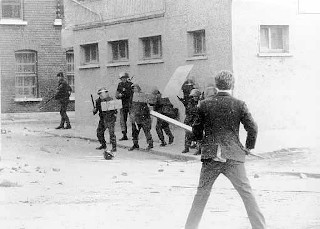
During street disturbances on July 8, 1971, British soldiers shoot dead two Catholic civilians in Derry, County Londonderry, Northern Ireland. Some of the worst violence in the town for three years flares up when a crowd of 200 gather in Lecky Street at the news of the shootings. As a result, the Social Democratic and Labour Party (SDLP) withdraws from Stormont in protest.

British troops are the target of sporadic rioting in the Republican Bogside area of Derry in the four days leading up to the rioting.

At about 1:00 AM on the morning of July 8, 1971, in the Bogside area of Derry, Seamus Cusack, 28, a local man who is a welder and former boxer, is shot in the upper part of the leg by a soldier of the Crown Forces. He dies about forty minutes later in Letterkenny Hospital in the Republic of Ireland.

Cusack’s death gives rise to further disturbances in the city. Troops open fire, initially with rubber bullets and CS gas, but they fail to disperse the crowd. The rioters retaliate by throwing three nail bombs. The army returns fire. During this exchange, George Desmond Beattie, 19, is shot in the stomach by a soldier and dies instantly at about 3:15 PM. Five soldiers are reportedly injured during the skirmishes.

There is a lull in the violence after Beattie is shot and a group of factory girls march in silence through the area carrying black bags.

Army marksmen claim one of the men they shot was armed with a rifle and another was about to throw a petrol or nail bomb. It is unclear which incident Cusack is involved in, but an inquest hears that he could have been saved if he had gone to a local hospital instead of one 20 miles south of the border in County Donegal. Apparently, his rescuers fear they would be arrested by police if he had been taken to the local hospital.

In the evening the Ministry of Defence announces that an additional 500 men from the First King’s Own Scottish Borderers are to be sent to Northern Ireland the following day. This brings to 1,400 the total number of men drafted to Northern Ireland over the previous ten days in preparation for the upcoming traditional The Twelfth celebrations on July 12.


Leave a comment

The Falls Curfew

falls-curfew

The Falls Curfew, also called the Battle of the Falls, a British Army operation in the Falls Road district of Belfast, Northern Ireland takes place on July 3-5, 1970.

The Northern Ireland riots of August 1969 mark the beginning of the Troubles. In Belfast, Catholic Irish nationalists clash with Protestant Ulster loyalists and the mainly-Protestant Royal Ulster Constabulary (RUC), Northern Ireland’s police force. Hundreds of Catholic homes and businesses are burned and more than 1,000 families, mostly Catholics, are forced to flee. The rioting ends with Operation Banner, the deployment of British troops.

A week before the Falls Curfew, on Saturday, June 27, 1970, there is severe rioting in Belfast following marches by the Protestant/unionist Orange Order. At the Short Strand, a Catholic enclave in a Protestant part of the city, the Provisional Irish Republican Army (IRA) fights a five-hour gun battle with loyalists. Three people are killed, and the loyalists withdraw. The Provisional IRA presents itself as having successfully defended a vulnerable Catholic enclave from armed loyalist mobs.

Meanwhile, the Official IRA arranges for a large number of weapons to be brought into the mainly nationalist and Catholic Lower Falls area for distribution. The area is a stronghold of the Official IRA.

The operation begins at about 4:30 PM on Friday, July 3, as a search for weapons in the staunchly Irish nationalist district. As the search ends, local youths attack the British soldiers with stones and petrol bombs and the soldiers respond with CS gas. This quickly develops into gun battles between British soldiers and the Irish Republican Army (IRA). After four hours of continuous clashes, the British commander seals off the area, which comprises 3,000 homes, and imposes a curfew which lasts 36 hours. Thousands of British troops move into the curfew zone and carry out house-to-house searches for weapons, while coming under intermittent attack from the IRA and rioters. The searches cause much destruction, and a large amount of CS gas is fired into the area. Many residents complain of suffering abuse at the hands of the soldiers. On July 5, the curfew is brought to an end when thousands of women and children from Andersonstown march into the curfew zone with food and groceries for the locals.

During the operation, four civilians are killed by the British Army, at least 78 people are wounded and 337 are arrested. Eighteen soldiers are also wounded. Large quantities of weapons and ammunition are captured. The British Army admits afterwards that some of its soldiers had been involved in looting.

The Falls Curfew is a turning point in the Troubles. It is seen as having turned many Catholics/Irish nationalists against the British Army and having boosted support for the IRA.

(Pictured: British soldiers on the Falls Road during the 1970 curfew)