seamus dubhghaill

Promoting Irish Culture and History from Little Rock, Arkansas, USA


Leave a comment

Birth of Patrick Moylett, Businessman & Irish Nationalist

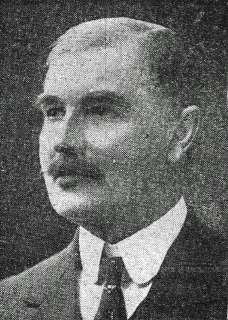
Patrick Moylett, Irish nationalist and successful businessman in County Mayo and County Galway who, during the initial armistice negotiations to end the Irish War of Independence, briefly serves as president of the Irish Republican Brotherhood (IRB), is born in Crossmolina, County Mayo, on March 9, 1878. He is a close associate of Arthur Griffith and frequently travels to London acting as a middleman between Sinn Féin and officials in the British government.

Moylett is born into a farming family and emigrates to London as a young man working in various departments in Harrods for five years before returning to Ireland in 1902. He opens a grocery and provisions business in Ballina and, as it proves successful, he later establishes branches in Galway and London between 1910 and 1914. The London-branch is sold at the outbreak of World War I.

Having founded and organised the recruitment and funding of the Mayo activities of the Irish Republican Army (IRA) he also acts as a justice of the Sinn Féin courts. He is advised to leave the area due to death threats from the Black and Tans and their burning down of his commercial premises in Ballina. On one occasion during the period, according to his military statements, he prevents some over-enthusiastic volunteers from attempting to kidnap and assassinate Prince George, Future King of England, who is sailing and holidaying in the Mayo/Donegal region at the time.

Relocating to Dublin, the Irish overseas Trading Company is formed with a former director of Imperial Chemical Industries. Moylett becomes involved in the Irish nationalist movement and is active in the Mayo and Galway areas during the Irish War of Independence. The Irish Overseas Trading Company, of which he is one of two directors, acts as a front for the importation of armaments covered by consignments of trade goods. According to his subsequent detailed military statements archived in the bureau of military history by the Irish Army, the consignments are imported to a number of warehouses in the Dublin Docks with the three keyholders to the warehouses being Éamon de Valera, Michael Collins and Arthur Griffith.

With Harry Boland in the United States with Éamon de Valera, Moylett succeeds him as president of the Irish Republican Brotherhood (IRB) and, in October 1920, is selected to go to London as the personal envoy of Arthur Griffith. During the next several months, he is involved in secret discussions with British government officials on the recognition of Dáil Éireann, a general amnesty for members of the Irish Republican Army and the organisation of a peace conference to end hostilities between both parties.

Moylett is assisted by John Steele, the London editor of the Chicago Tribune, who helps him contact high-level members of the British Foreign Office. One of these officials, in particular C.J. Phillps, has frequent meetings with him. Discussions center on the possibility of an armistice and amnesty in Ireland with the hope for a settlement in which a national Parliament will be established with safeguards for Unionists of Ulster. These meetings are later attended by H. A. L. Fisher, the President of the Board of Education and one of the most outspoken opponents of unauthorised reprisals against the Irish civilian population by the British government. One of the main points Fisher expresses to Moylett is the necessity of Sinn Féin to compromise on its demands for a free and united republic. His efforts are hindered however, both to the slow and confused pace of the peace negotiations as well as the regularly occurring violence in Ireland, most especially the Bloody Sunday incident on November 21, 1920, which happens while he is in London speaking with members of the cabinet. During the Irish Civil War, although a supporter of the Anglo-Irish Treaty, he chooses not to participate in the Free State government party which he views as an amalgam of Unionists and the old Irish Party. In 1926, he is a founding member of the Clann Éireann party and becomes an early advocate of the withholding of land annuities.

In 1930, Moylett and his family move to Dublin, and by 1940 his political activities in the city have become a concern for the Gardai. He begins moving in antisemitic, pro-German far-right politic circles while in Dublin, engaging with the likes of Gearóid Ó Cuinneagáin and George Griffith. Indeed alongside Griffith, he is deeply involved with the founding of the People’s National Party, an explicitly anti-Jewish Pro-Nazi party whose membership overlaps greatly with that of the Irish Friends of Germany. He leaves the People’s National Party in October 1939 only when he is expelled from the party and his position as treasurer on charges of embezzling party funds. In 1941 he continues to support these far-right groups when he aids Ó Cuinneagáin in setting up the Youth Ireland Association, a group gathered to fight “a campaign against the Jews and Freemasons, also against all cosmopolitan agenda.” When the group is found to be stealing guns from army reservists, the Gardai shuts the group down in September 1942.

Moylett dies on August 14, 1973, at the age of 95 in County Dublin. He is buried in Dean’s Grange Cemetery, Deansgrange, County Dublin.

2 Comments

Birth of Eileen Crowe, Stage & Film Actress

Eileen Aice Izabella Crowe, Irish actress, is born at Carlingford Terrace in Drumcondra, Dublin, on March 2, 1899.

Born Alice Izabella, she is one of ten children born to grocer Moses Crowe and Therese Eglinton. From an early age, she shows an interest in the theatre, and regularly attends productions in both the Gaiety and Abbey theatres. Having completed her education, she joins a convent but soon after abandons the idea of becoming a nun. In October 1921, she enters the Abbey School of Acting. She has a career with the Abbey Theatre from 1921 to 1970.

Upon her entry to the Abbey School of Acting, Crowe makes her debut in 1921 in the play The Revolutionist, taking the lead role of Nora Mangan. She plays her last role of Miss Hatty in Grogan and the Ferret, after which she retires. During nearly five decades, she stars in many plays, some of which include The Marriage of Columbine (1921) and Juno and the Paycock (1924). Between 1931 and 1953, she appears in the Abbey Theatre productions of plays by Irish playwright Teresa Deevy including A Disciple (1931), Katie Roche (1936, 1937, 1949, 1953), Temporal Powers (1932, 1937) and The Reapers (1930).

Following her film debut in 1925 in The Land of Her Fathers, Crowe appears in many films between 1936 and 1964 including The Plough and the Stars (1937), The Quiet Man (1952), Home is the Hero (1959) and Girl with Green Eyes (1964), her last film appearance.

Also in 1964, Crowe appears in the Aldwych Theatre‘s production of Juno and the Paycock in London. She works in the Abbey for the vast majority of her career, except for when she is on a six-month tour for Peg O’ My Heart, touring Northern Ireland and England.

In 1924, when the play Grasshopper is being produced, Crowe meets her husband, Peter Judge, also known as F. J. McCormick. They are married in 1925 and the marriage produces a daughter and a son.

Crowe dies at her home in Upper Rathmines Road, Dublin, on May 8, 1978, at the age of 79. She is buried beside her husband in Dean’s Grange Cemetery in Deansgrange, Dún Laoghaire–Rathdown, County Dublin.


Leave a comment

Birth of Noel Thomas Lemass, Fianna Fáil Politician

Noel Thomas Lemass, Irish Fianna Fáil politician, is born in Dublin on February 14, 1929. He serves as a Teachta Dála (TD) for Dublin South-West from 1956 to 1976 and Parliamentary Secretary to the Minister for Finance from 1969 to 1973.

Lemass is the son of Seán Lemass, a Fianna Fáil TD and fourth Taoiseach of Ireland, and Kathleen Lemass (née Hughes). He is named after his uncle, a victim of the Irish Civil War in the early 1920s. He is educated at Catholic University School, Leeson Street in Dublin and later at Newbridge College in Newbridge, County Kildare. Against his father’s wishes, rather than attend university, he undertakes business training and later becomes an executive member and branch secretary of the Irish Commercial Travellers’ Association.

Lemass marries Eileen Delaney, who is a member of Dublin Corporation, in 1950. The couple has four children.

Lemass follows his father into politics in 1955, when he is elected to Dublin City Council. He is elected to Dáil Éireann in a by-election in Dublin South-West the following year. The by-election is a loss for Fine Gael, who is in government at the time, and whose TD had held the seat for a number of years.

Lemass is active in a number of political councils and other groupings. From 1966 to 1968, he is a member of the Consultative Assembly of the Council of Europe. He is also a member of the Irish-British Parliamentary Group and the Irish-French Parliamentary Group.

In 1969, Lemass is appointed as Parliamentary Secretary to the Minister for Finance, with responsibility for the Office of Public Works. In his first year at the Department, he serves under his brother-in-law, Charles Haughey, and later under George Colley.

When Fianna Fáil loses office in 1973, Lemass is named spokesperson for physical planning and the environment. He holds that position until January 1975, when he is dropped from the front bench.

Lemass’s political career, a career in which he is invariably judged in comparison to his father, is cut short when he dies suddenly in Dublin on April 13, 1976. He is buried at Dean’s Grange Cemetery, Deansgrange, County Dublin. His widow enters the Dáil following his death.


Leave a comment

The Assassination of Alan Bell

Alan Bell, policeman and resident magistrate, is tasked by British Intelligence to track down Michael Collins’s war chest. By March 26, 1920, he has successfully confiscated over £71,000 from Sinn Féin‘s headquarters and by investigating banks throughout the country and is set to seize much more. On that day he is pulled off a tram in South Dublin and shot three times in the head.

Bell is born in Banagher, King’s County (now County Offaly), one of at least two sons of the Rev. James Adamson Bell, Church of Ireland clergyman. His mother’s name is unknown. Educated locally, he joins the Royal Irish Constabulary (RIC) in September 1879 as a cadet, serving in the counties of Cavan, Galway, Roscommon, Westmeath, and Cork up to the rank of district inspector. During the Land War (1879–82) he investigates sources of Irish National Land League funds and in 1882 arrests the American land reformer and journalist Henry George in Athenry. He, along with District Inspector William Henry Joyce, compile evidence against the nationalist and agrarian agitation for the special commission of 1888–89 which investigates charges against the nationalist leader Charles Stewart Parnell and his associates. His actions make him popular with unionists but a marked man among nationalists.

After almost twenty years’ police service, Bell becomes a resident magistrate on November 12, 1898, a civil service post under the Constabulary Act, 1836. His districts included Athenry, Claremorris, Armagh, Belfast, and Portadown. With many years’ experience in criminal intelligence, he is transferred to Dublin Castle early in the Irish War of Independence as a special investigator and intelligence gatherer. In December 1919 he questions suspects for the attempted Irish Republican Army (IRA) assassination of the viceroy, Lord French, and place suspect premises under surveillance. His vulnerability is made evident by the shooting in January 1920 of Dublin Metropolitan Police assistant commissioner William C. Redmond, one of his informants. He remains in Dublin to investigate the “republican loan” raised by Michael Collins and Sinn Féin, believed to be hidden in suspect bank accounts. Refusing protective accommodation in Dublin Castle where other officials have already retreated, he opts to live with his wife at a private suburban residence, 19 Belgrave Square, Monkstown, County Dublin. He summons bank managers to his office in early March 1920 and progresses sufficiently to force Collins into taking action.

Carrying a pocket revolver for protection, Bell travels to work daily by tram until the morning of March 26, 1920. At the busy junction of Simmonscourt Road, Sandymount Avenue, and Merrion Road, Ballsbridge, a group of men immobilise the crowded vehicle and surround their target, declaring, “Come on, Mr. Bell, your time has come.” Bundling him on to the street, they shoot him dead in public view and run from the scene. In spite of vivid eyewitness accounts in the press, no killer is identified. His death comes amid almost daily violence and barely a week after the shooting of the Sinn Féin Lord Mayor of Cork, Tomás Mac Curtain, allegedly by police assassins. He acts fearlessly, perhaps expecting a violent death as the outcome of his mission.

Bell is buried privately in Dean’s Grange Cemetery, Deansgrange, County Dublin. Some Irish republican prisoners at Gloucester during the influenza epidemic of 1918–19 may have been saved from infection by his brother, who as prison doctor there had advised that the jail be evacuated.

(From: “Alan Bell” by Patrick Long, Dictionary of Irish Biography, http://www.dib.ie, October 2009)