
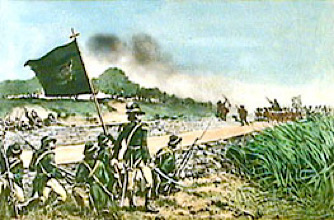
During the Irish Rebellion of 1798, the Battle of Tubberneering (also Tuberneering or Toberanierin) takes place on June 4, 1798, during the Wexford Rebellion fought between Crown forces and United Irishmen insurgents, at Tubberneering (modern townlands of Toberanierin North and Toberanierin South) south of Gorey in the north of County Wexford. The rebels ambush and rout the British.
The United Irish rebels, under Fr. John Murphy’s command, have been encamped on land belonging to a Mr. Donovan at the foot of Carrigrew Hill on June 2 and 3. This small respite from hostilities and marching affords the rebels some rest and time to re-group from previous skirmishes. Some of the rebels take leave to visit their families during these two days before re-joining the camp in advance of their move north toward Gorey.
On the morning of the June 4, Lieutenant-General Loftus and Lieutenant-Colonel Walpole march out of Gorey with 1,200 men with the intention of attacking the rebel encampment at Carrigrew Hill. Loftus leads his 600 men out the Ballycanew road to attack the camp from the east while Walpole heads due south via Clough to attack the camp on its northern side.
Having received advanced warnings of the British plans, the poorly equipped rebel army of 10,000 to 12,000 men sets out from Carrigrew Hill and marches through Ballyoughter on to Tubberneering. Their aim is to defeat the Crown forces in Gorey and release rebel prisoners that have been captured and imprisoned there.
On approaching Tubberneering, a vanguard of rebels is warned by a scouting party returning from Clough that the British forces are heading their way. The vanguard sets up an ambush with musketeers on top of the rock at Tubberneering and pikemen laying in wait inside the ditch along the road south of Cain bridge.
The battle is an ambush of a British force of 400 men under Lieutenant-Colonel Walpole, containing one troop of regular cavalry (the 4th Royal Irish Dragoon Guards) and militia and yeomanry auxiliaries. They are ambushed in a narrow defile by United Irish rebels, led by Fr. John Murphy. Walpole and one hundred men are killed, while the rest throw away their weapons and uniforms and flee. The regular dragoons make an attempt to fight back but are in a bad place for cavalry so they withdraw. This defeat allows three cannon to be captured which are subsequently used against British troops at the Battle of Arklow. The rebels are unable to take Arklow however. The day after the engagement at Tubberneering, the United Irishmen attempt to take New Ross in the south of County Wexford but are repulsed at a heavy cost.

