seamus dubhghaill

Promoting Irish Culture and History from Little Rock, Arkansas, USA


Leave a comment

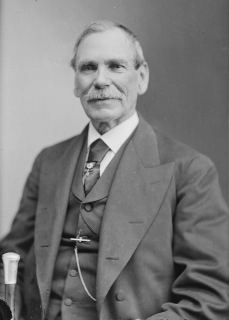
Birth of James Shields, U.S. Politician & Army Officer

james-shields

James Shields, Irish American Democratic politician and United States Army officer, is born in Altmore, County Tyrone, in what is now Northern Ireland, on May 10, 1806. He is the only person in U.S. history to serve as a Senator for three different states. He represents Illinois from 1849 to 1855, in the 31st, 32nd, and 33rd Congresses, Minnesota from 1858 to 1859, in the 35th Congress, and Missouri in 1879, in the 45th Congress.

Born and initially educated in Ireland, Shields emigrates to the United States in 1826. He is briefly a sailor and spends time in Quebec before settling in Kaskaskia, Illinois, where he studies and practices law. In 1836, he is elected to the Illinois House of Representatives, and later as State Auditor. His work as auditor is criticized by a young Abraham Lincoln, who with his then fiancée, Mary Todd, publishes a series of inflammatory pseudonymous letters in a local paper. Shields challenges Lincoln to a duel, and the two nearly fight on September 22, 1842, before making peace and eventually becoming friends.

In 1845, Shields is appointed to the Supreme Court of Illinois, from which he resigns to become Commissioner of the U.S. General Land Office. At the outbreak of the Mexican–American War, he leaves the Land Office to take an appointment as brigadier general of volunteers. He serves with distinction and is twice wounded.

In 1848, Shields is appointed to and confirmed by the Senate as the first governor of the Oregon Territory, which he declines. After serving as Senator from Illinois, he moves to Minnesota and there founds the town of Shieldsville. He is then elected as Senator from Minnesota. He serves in the American Civil War and, at the Battle of Kernstown, his troops inflict the only tactical defeat of Stonewall Jackson in the war. He resigns his commission shortly thereafter. After moving multiple times, he settles in Missouri and serves again for three months in the Senate.

Shields dies unexpectedly in Ottumwa, Iowa on June 1, 1879, while on a lecture tour, after reportedly complaining of chest pains. His body is transferred to Carrollton, Missouri by train, where a funeral is held at the Catholic church, and his body escorted to St. Mary’s Cemetery by two companies of the Nineteenth Infantry, the Craig Rifles, and a twenty-piece brass band. His grave remains unmarked for 30 years, until the local government and the U.S. Congress fund a granite and bronze monument there in his honor.

A bronze statue of Shields is given by the State of Illinois to the United States Capitol in 1893 and represents the state in the National Statuary Hall. The statue is sculpted by Leonard Volk and dedicated in December 1893. Statues of Shields also stand in front of the Carroll County Court House in Carrollton, Missouri and on the grounds of the Minnesota State Capitol in Saint Paul.


2 Comments

Death of Boston Politician James Michael Curley

james-michael-curley

James Michael Curley, American Democratic Party politician and one of the best known and most colourful big-city Democratic bosses, dies in Boston, Massachusetts on November 12, 1958. He dominated Boston politics throughout the first half of the 20th century.

Curley’s father, Michael Curley, a juvenile petty criminal, leaves Oughterard, County Galway, at the age of fourteen. He settles in Roxbury, an Irish immigrant neighborhood in Boston.

Curley never forgets the needs of new immigrants, and he owes much of his political success to serving those needs in exchange for votes. He enters politics in 1899, winning a seat on the Boston common council. In 1904 he is imprisoned briefly for impersonating a friend at a civil service examination.

Curley serves in a succession of elective capacities—as a state legislator, alderman, city councilman, and U.S. representative—before winning the mayoralty in 1914, resigning his congressional seat to assume the municipal office.

Curley centralizes the powers of patronage in his own hands and distributes public-works jobs in such a way as to retain the loyalty and support of his working-class electoral base. As mayor, he nearly brings the city to bankruptcy by spending enormous sums on parks and hospitals to satisfy his various constituencies. He is a gifted orator and a resourceful political campaigner. He loses his bid for reelection in 1918, wins in 1922, loses in 1926, and wins again in 1930.

Unable to win a seat in the Massachusetts delegation to the 1932 Democratic National Convention in 1932, Curley contrives by means he never explains to be elected a delegate from Puerto Rico. He supports the presidency of Franklin D. Roosevelt, but national party leaders look upon the controversial Curley as something of an embarrassment. As governor of Massachusetts from 1935 to 1937, he spends New Deal funds lavishly on roads, bridges, and other public works programs. He is out of elective office from 1938 to 1942, during which period he loses bids for the United States Senate, mayor, and governor. He wins a seat in the United States House of Representatives in 1942, however, and is reelected two years later. He follows with another tenure as mayor of Boston (1947–50) but spends five months of his term in federal prison following a conviction for mail fraud. President Harry S. Truman secures his release and, in 1950, grants him a full pardon.

Curley, who has foiled an attempt by the Republican Party to have him replaced while he is in prison, retires from politics after losing reelection bids in 1950 and 1954. His career inspires Edwin O’Connor’s popular novel The Last Hurrah (1956), and the next year Curley’s best-selling autobiography, I’d Do It Again, is published.

James Curley dies in Boston, Massachusetts on November 12, 1958. His death is followed by one of the largest funerals in the city’s history. He is interred in Old Calvary Cemetery.


Leave a comment

Death of U.S. President William McKinley

william-mckinley

William McKinley, the 25th President of the United States, dies on September 14, 1901, eight days after being shot by anarchist Leon Czolgozc and six months into his second term. McKinley leads the nation to victory in the Spanish American War, raises protective tariffs to promote American industry, and maintains the nation on the gold standard in a rejection of free silver.

McKinley is born on January 29, 1843, in Niles, Ohio, the seventh child of William McKinley Sr. and Nancy (née Allison) McKinley. The McKinleys are of English and Scots Irish descent and settled in western Pennsylvania in the 18th century, tracing back to a David McKinley who is born in Dervock, County Antrim, in present-day Northern Ireland.

McKinley is the last president to serve in the American Civil War and the only one to start the war as an enlisted soldier, beginning as a private in the Union Army and ending as a brevet major. After the war, he settles in Canton, Ohio, where he practices law and marries Ida Saxton. In 1876, he is elected to the United States Congress, where he becomes the Republican Party‘s expert on the protective tariff, which he promises will bring prosperity. His 1890 McKinley Tariff is highly controversial which, together with a Democratic redistricting aimed at gerrymandering him out of office, leads to his defeat in the Democratic landslide of 1890.

McKinley is elected Ohio’s governor in 1891 and 1893, steering a moderate course between capital and labor interests. With the aid of his close adviser Mark Hanna, he secures the Republican nomination for president in 1896, amid a deep economic depression. He defeats his Democratic rival, William Jennings Bryan, after a front porch campaign in which he advocates “sound money” and promises that high tariffs will restore prosperity.

Rapid economic growth marks McKinley’s presidency. He promotes the 1897 Dingley Act to protect manufacturers and factory workers from foreign competition, and in 1900, he secures the passage of the Gold Standard Act. He hopes to persuade Spain to grant independence to rebellious Cuba without conflict, but when negotiation fails, he leads the nation into the Spanish American War of 1898. The U.S. victory is quick and decisive. As part of the Treaty of Paris (1898), Spain turns over to the United States its main overseas colonies of Puerto Rico, Guam, and the Philippines. Cuba is promised independence, but at that time remains under the control of the U.S. Army. The United States annexes the independent Republic of Hawaii in 1898, and it became a U.S. territory.

Historians regard McKinley’s 1896 victory as a realigning election, in which the political stalemate of the post–Civil War era gives way to the Republican-dominated Fourth Party System, which begins with the Progressive Era.

McKinley defeats Bryan again in the 1900 presidential election, in a campaign focused on imperialism, protectionism, and free silver. However, his legacy is suddenly cut short when he is shot on September 6, 1901, by Leon Czolgosz, a second-generation Polish American with anarchist leanings. McKinley dies eight days later on September 14, 1901, and is succeeded by his Vice President, Theodore Roosevelt. He is buried at the McKinley National Memorial in Canton, Ohio.

As an innovator of American interventionism and pro-business sentiment, McKinley’s presidency is generally considered above average, though his highly positive public perception is soon overshadowed by Roosevelt.


Leave a comment

Death of Shipbuilding Mogul John Roach

john-roach

John Roach, an American industrialist who rises from humble origins as an Irish immigrant laborer to found the largest and most productive shipbuilding empire in the postbellum United States, John Roach & Sons, dies in New York City on January 10, 1887.

Roach is born on December 25, 1815, at Mitchelstown, County Cork, Ireland, the first of seven children to Patrick Roche, a retail salesman, and his wife Abigail Meany. In 1832, at the age of sixteen, he emigrates together with his cousin to the United States. Arriving in New York City, he is at first unable to find regular work, but eventually gains secure employment at the Howell Works of James P. Allaire on the recommendation of a former employee of his father.

In 1852, after 20 years in the employment of Allaire, Roach and three partners purchase the Etna Iron Works, a small New York City ironworks which has fallen into receivership. Roach soon becomes sole proprietor, and during the American Civil War transforms the Etna Iron Works into a major manufacturer of marine engines. He continues to prosper after the war and in 1867 he purchases the Morgan Iron Works on New York’s East River and relocates his business there.

In 1871, Roach purchases the Reaney, Son & Archbold shipyard in Chester, Pennsylvania, which has fallen into receivership and renames it the Delaware River Iron Ship Building and Engine Works. This becomes his main facility. Over the next few years, he founds a network of new companies in Chester to support the shipyard’s operations. To give his sons a stake in the business, Roach founds the firm of John Roach & Sons, which becomes the overall parent and marketing company. He also attempts to create his own shipping line with the establishment of the United States and Brazil Mail Steamship Company, but this venture is a costly failure.

From 1871 until 1885, John Roach & Sons is easily the largest and most productive shipbuilding firm in the United States, building more tonnage of ships than its next two chief competitors combined. In the mid-1880s the firm runs into trouble when a series of U.S. Navy contracts become the subject of political controversy. Roach signed the contracts under a Republican administration, but when the Democratic administration of Grover Cleveland comes to power, it voids one of the contracts. Doubts over the validity of the remaining three contracts make it impossible for John Roach & Sons to obtain loans and, in 1885, the Roach shipbuilding empire is forced into receivership.

During the contract disputes, Roach falls ill with a chronic mouth infection which is diagnosed as cancer in 1886. Roach undergoes surgery in the spring of 1886, but it provides only temporary relief. He dies at the age of 71 on January 10, 1887, while his business is still in the hands of receivers. Roach’s eldest son, John Baker Roach, assumes control of the business which continues for another 20 years, although it never regains the pre-eminent position in American shipbuilding that it had enjoyed under Roach Sr.

During its existence between 1871 and 1907, the shipyard established by Roach builds 179 iron ships, 98 under Roach’s own management and an additional 81 under that of John Baker Roach.