seamus dubhghaill

Promoting Irish Culture and History from Little Rock, Arkansas, USA


Leave a comment

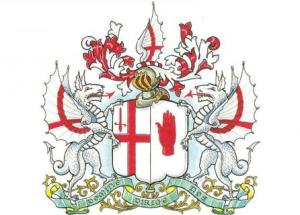
Creation of The Honourable The Irish Society

irish-society-coat-of-arms

On January 28, 1613, The Honourable The Irish Society, a consortium of livery companies of the City of London, is created by Royal Charter of James I of England to undertake the Plantation in the North West of Ulster that is then being driven by the English Crown.

Following the Gaelic defeat in the Nine Years’ War in 1603 and the Flight of the Earls in 1607, northwest Ulster is left open to colonisation. James I sets out to defend against a future attack from within or without. He finds that the town of Derry can become either a great asset as a control over the River Foyle and Lough Swilly, or it can become an inviting back door should the people of the area turn against him. He pressures the guilds of the City of London to fund the resettlement of the area, including the building of a new walled city. This results in the creation of the Society.

The city of Derry is renamed Londonderry in recognition of the London origin of the Irish Society. County Coleraine is enlarged and renamed County Londonderry after its new county town. The rural area of the county is subdivided between the Great Twelve livery companies, while the towns and environs of Londonderry and Coleraine are retained by the Irish Society.

In January 1635, the Irish Society, as well as the City of London, are found guilty of mismanagement and neglect of Derry plantation. They are sentenced to a fine of £70,000 and forfeiture of Derry property. The Society is suppressed in 1637 but is revived by Oliver Cromwell in 1650 and again after the Restoration by Londonderry’s 1662 royal charter.

The Society is involved in several controversies over the years including a dispute over fishing rights with the Church of Ireland and Bishop of Derry and a lawsuit brought by The Skinners’ Company in 1832 over the distribution of profits. The Society also has some disputes with the corporations over ownership and development of property. During the 17th and 18th centuries, four of the twelve livery companies sell their estates, with the Irish Society requiring a bond of indemnity in each case. Leases to middlemen granted by the remaining companies expire at various times during the nineteenth century, after which the companies “enormously increased the rental.”

The Society finances the building of the Guildhall in Derry. Construction begins in 1887 and it is opened in July 1890, at a cost of £19,000.

The Society remains in existence today as a relatively small grant-giving charitable body. Its educational grants are funded by its remaining property, including the Walls of Derry, a tourist attraction and heritage site, and fisheries on the River Bann. The Society is based in London, but maintains a “representative” resident in County Londonderry.


Leave a comment

Death of Irish Songwriter Percy French

percy-french

Percy French, one of Ireland’s foremost songwriters and entertainers of his day, dies of pneumonia in Formby, England, on January 24, 1920.

French is born at Cloonyquin House, near Tulsk, County Roscommon. He is educated at Foyle College, Derry, and writes his first successful song, Abdul Abulbul Amir, while studying at Trinity College Dublin in 1877. The song is sold for £5 to an unscrupulous publisher and later becomes hugely popular and is falsely claimed by other authors.

He graduates from Trinity as a civil engineer in 1881 and joins the Board of Works in County Cavan as an “Inspector of Drains.” It is said that he writes his best songs during this period. French is also a prolific painter of landscape watercolours and during this period he considers art to be his true vocation. When he becomes well-known later in his life, his paintings from his time as a civil engineer become fashionable and sought after.

When the Board of Works reduces its staff around 1887, French turns to journalism as the editor of The Jarvey, a weekly comic paper. Upon the failure of the paper, he embarks on a long and successful career as a songwriter and entertainer. It is around this time that he marries Ethel Kathleen Armitage-Moore, second daughter of William Armytage-Moore, brother of Countess of Annesley. Tragically, at the age of 20, she dies during childbirth along with her daughter.

percy-french-statue

French becomes renowned for composing and singing comic songs and gains considerable distinction with such songs as Phil the Fluther’s Ball, Slattery’s Mounted Foot, and The Mountains of Mourne. One of his most famous songs is Are Ye Right There Michael, a song that ridicules the state of the rail system in rural County Clare. The song causes such embarrassment to the rail company that it lead to an ultimately unsuccessful libel action against French. It is said that he arrives late for the libel hearing and, when questioned by the judge on his lateness, he responds, “Your honour, I travelled by the West Clare Railway,” which results in the case being thrown out.

French takes ill while performing in Glasgow and dies of pneumonia on January 24, 1920, at the age of 65 at the home of his cousin, Canon Richardson of Green Lea, in Formby. He is buried in the churchyard of St. Luke’s Parish Church, Formby in Merseyside. A statue of him sitting on a park bench can be found in the town center of Ballyjamesduff in honour of him and his famous song, Come Back Paddy Reilly to Ballyjamesduff.