seamus dubhghaill

Promoting Irish Culture and History from Little Rock, Arkansas, USA


Leave a comment

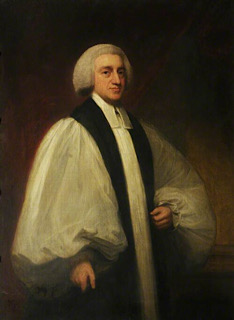
Birth of Charles Agar, 1st Earl of Normanton

Charles Agar, 1st Earl of Normanton, an Anglo-Irish clergyman of the Church of Ireland, is born in Gowran Castle in Gowran, County Kilkenny, on December 22, 1736. He serves as Dean of Kilmore, as Bishop of Cloyne, as Archbishop of Cashel, and finally as Archbishop of Dublin from 1801 until his death.

Agar is the third son of Henry Agar of Gowran and his wife Anne Ellis, daughter of the Most Reverend Welbore EllisBishop of Meath. His brothers include James Agar, 1st Viscount Clifden, and Welbore Ellis Agar, a notable art collector. Welbore Ellis, 1st Baron Mendip, is his maternal uncle.

Agar is educated at Westminster School in Westminster, London, and Christ Church, Oxford, where he matriculates on May 31, 1755, aged 18. He graduates BA in 1759, promoted by seniority to MA in 1762. On December 31, 1765, he is created a Doctor of Civil Law.

Agar is known to have held particularly marked Calvinistic positions. He serves as Dean of Kilmore from 1765 to 1768, and then as Bishop of Cloyne until 1779.

In 1776, Agar marries Jane Benson, a daughter of William Benson, of DownpatrickCounty Down. In 1779 he is appointed as Archbishop of Cashel and also joins the Privy Council of Ireland. In 1784, while he is in office, the new St. John’s Cathedral, Cashel, is completed, and two years later its important Samuel Green organ is built.

In 1794, Agar is raised to the Peerage of Ireland as Baron Somerton. In 1801, he is translated to become Archbishop of Dublin and is created Viscount Somerton. In 1806, he is further honoured when he is made Earl of Normanton. These titles are all in the Peerage of Ireland. He remains as Archbishop of Dublin until his death in 1809, and from the beginning of 1801 onward, sits in the House of Lords as one of the twenty-eight original Irish representative peer, following the Acts of Union 1800 which unites Ireland and Great Britain.

Agar dies on July 14, 1809, aged 72, and is succeeded in his secular titles by his son Welbore Ellis Agar. He is buried in the north transept of Westminster Abbey. His widow Jane, Countess of Normanton, is buried alongside him following her death in 1826. His tomb dates from 1815 and is created by John Bacon.

Leave a comment

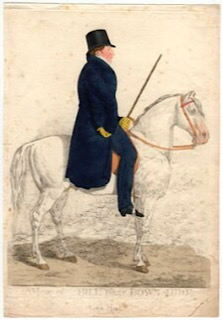
Death of Arthur Hill, 3rd Marquess of Downshire

Arthur Blundell Sandys Trumbull Hill, 3rd Marquess of Downshire KP, an Anglo-Irish peer, styled Viscount Fairford from 1789 until 1793 and Earl of Hillsborough from 1793 to 1801, dies on September 12, 1845, in Blessington, County Wicklow.

Hill is born in Hanover Square, on October 8, 1788, the eldest son of Arthur Hill, 2nd Marquess of Downshire, and his wife, Mary Sandys. He becomes Marquess of Downshire on the early death of his father in 1801. He is educated at Eton College and Christ Church, Oxford, gaining his MA in 1809 and a DCL in 1810.

During his early political career, Hill is identified with the Whigs and supports the reform of Parliament. After the Grey Ministry comes to power, he receives a succession of appointments, becoming Colonel of the South Down Militia on March 25, 1831, and carrying the second sword at the coronation of William IV on September 8. He is appointed a deputy lieutenant of Berkshire on September 20, Lord Lieutenant of Down on October 17 (a new office replacing the Governor of Down), and finally a Knight of the Order of St Patrick on November 24, 1831. He receives an honorary LL.D. from the University of Cambridge on July 6, 1835.

Hill is a very strong supporter of the Irish language, and is president of the Ulster Gaelic Society (est. 1830). In this capacity he plays an important role in helping preserve records of the language, poetry, folk and song collections and much else.

Hill is disliked by Elizabeth Smith, diarist at Baltyboys HouseCounty Wicklow, who feels snubbed by him when she and her husband first move into the area. Writing of him after his death she recalls “The late Lord never called upon me when I first came here although the Colonel waited upon him. The Colonel never went near him again.”

High-minded, if also at times high-handed in manner and self-important, Hill works hard himself and expects all his employees and tenants to be equally conscientious. Naturally, he is often disappointed. He is particularly concerned about his failure, despite all efforts and exhortations, to make his southern estates as efficient and well behaved as those in the north. Though an absentee owner in the south, he visits both Blessington and Edenderry regularly. It is during one of these periodic tours of inspection that he drops dead at Blessington on September 12, 1845. He is buried in St. Malachy Parish Churchyard at Royal Hillsborough, County Down. The funeral attracts an enormous crowd of mourners and is reported at some length in The Illustrated London News. His memory is perpetuated in an impressive pillar monument, with his statue on top, erected at Hillsborough in 1848.


Leave a comment

Death of Philip Twysden, Lord Bishop of Raphoe

Philip Twysden, Anglican clergyman who serves in the Church of Ireland as Lord Bishop of Raphoe from 1747 to 1752, dies bankrupt on November 2, 1752, after having been shot while allegedly masquerading as a highwayman. The circumstances of his death later become the subject of scandalous rumour.

Twysden is born in Kent, in the South East England region, on September 7, 1713, the third son of Sir William Twysden, 5th Baronet of Roydon Hall, East Peckham, Kent, by his wife (and distant cousin) Jane Twisden.

Twysden studies at University College, Oxford, from 1732. He is awarded a Master of Arts degree, and the honorary degree of Doctor of Civil Law in 1745.

Twysden marries twice: firstly, to Mary Purcell, who dies in 1743, and secondly to Frances Carter, daughter of The Rt Hon. Thomas Carter, Master of the Rolls in Ireland. After Twysden’s death, she marries her cousin, General James Johnston.

By his second wife, Twysden has two children: Mary, who dies in infancy, and a posthumous daughter named Frances (1753–1821). Frances, later Countess of Jersey, is one of the many mistresses of King George IV when he is Prince of Wales.

Twysden is ordained a priest in the Church of England. He is instituted in 1738 as rector of Eard and in 1745, for a short time, serves as the rector of Eastling in Kent. He accompanies Philip Stanhope, 4th Earl of Chesterfield, to Dublin as his chaplain, upon the Earl’s appointment as Lord Lieutenant of Ireland.

Twysden is nominated to the Bishopric of Raphoe in Ulster on March 3, 1746, and is consecrated by the Archbishop of Dublin, assisted by the bishops of Derry and Clonfert, at St. Michan’s Church, Dublin, on March 29, 1747.

Twysden dies on November 2, 1752, at home in Jermyn Street, St. James’s, London. However, according to ecclesiastical historian and author Henry Cotton, he dies at Roydon Hall, East Peckham, his father’s country house. He is buried in the south chancel of St. Michael’s Church, East Peckham, under a plain stone with no inscription.

A story grows up that, having been made bankrupt, Twysden is shot while attempting to rob a stagecoach. The location of his alleged attempted career as a highwayman is either Hounslow Heath (west of London) or Wrotham Heath in Kent.

(Pictured: The Cathedral of St Eunan, Raphoe, the episcopal seat of the pre-Reformation and Church of Ireland bishops of Raphoe)