seamus dubhghaill

Promoting Irish Culture and History from Little Rock, Arkansas, USA


Leave a comment

Birth of Thomas Fitzsimons, U.S. Merchant & Statesman

Thomas Fitzsimons, Irish-born American Founding Father, merchant, banker, and politician, is born in Ireland on October 11, 1741. His birthplace is variously given as Nobber, County Wicklow; Limerick, County Limerick; the north of Ireland; and Edenderry, County Offaly. He represents Pennsylvania in the Continental Congress, the Constitutional Convention and the United States House of Representatives.

In the mid-1750s, Fitzsimons’s family immigrates to Philadelphia, Pennsylvania, where his father dies soon thereafter. He has enough education that he begins work as a clerk in a mercantile house. He marries Catherine Meade on November 23, 1761, and forms a business partnership with her brother George. Their firm, which specializes in the West Indies trade, operates successfully for over 41 years.

The firm is soon hit by the new revenue measures created to help support the finances of the British Empire, including the much reviled Stamp Act of 1765. Concerned with these ideas, Fitzsimons becomes active in the Irish merchant community in Philadelphia. He is a founding member of the Friendly Sons of St. Patrick in 1771 and later, in 1774, a steering committee organized to protest the Coercive Acts.

When Pennsylvania begins mobilizing and organizing a militia to fight the British, Fitzsimons is soon involved. He serves as captain of a company of home guards under the command of Colonel John Caldwalader. Initially his company serves as part of the soldiers who man posts along the New Jersey coast. His unit later serves as part of the reserve at the Battle of Trenton in 1776. Later in the war, he serves on the Pennsylvania Council of Safety and heads a board to oversee the newly formed Pennsylvania Navy.

Fitzsimons enters active politics as a delegate to the Continental Congress in 1782 and 1783. He is a member of the Pennsylvania House of Representatives from 1786 until 1795. He is also a delegate to the U.S. Constitutional Convention in 1787. Although not a leading member of that convention, he supports a strong national government, the end of slavery, the United States Congress‘s powers to impose a tariff on imports and exports, the granting the House of Representatives, and power in equal to the United States Senate in making treaties. He is one of only two Catholic signers of the Constitution of the United States, the other being Daniel Carroll of Maryland.

After the Constitution is established, Fitzsimons serves in the first three sessions of the House of Representatives as a Federalist, where he favors protective tariffs and a strong navy, co-drafting the Naval Act of 1794 authorizing the original six frigates of the United States Navy. He fails to win re-election in 1794. This is partially attributed to public opinion turning against the Federalist Party over the forceful suppression of the Whiskey Rebellion. Although he never holds elective office again, he serves in 1798 as head of the committee of merchants overseeing the subscription-loan to build a warship at private expense for use in the Quasi-War.

In 1796, Fitzsimons, along with James Innes of Virginia, is appointed by President John Adams to serve as one of two American members on the five-man debt commission charged under Article VI of the Jay Treaty with examining the claims of British subjects unable to collect debts incurred by Americans prior to the American Revolution. Fitzsimons, Innes and Samuel Sitgreaves, who replaces Innes upon the latter’s death, become annoyed with the arguments used by their British counterparts to inflate the claims total. Fitzsimons and Sitgreaves angrily and permanently secede from the board in July 1799. The claims are eventually disposed of by a lump-sum payment, agreed upon by United States Minister to Britain Rufus King with British Foreign Secretary Robert Banks Jenkinson and approved by President Thomas Jefferson and the Senate in 1802.

While withdrawing from politics, Fitzsimons remains active in civic and business affairs. He serves as president of Philadelphia’s Chamber of Commerce, as a trustee of the University of Pennsylvania, Director of the Delaware Insurance Company and a director of the Bank of North America from 1781–1803. He is a founder of the bank and supports efforts to found Georgetown College. He also helps found the Insurance Company of North America.

Fitzsimons dies on August 26, 1811, in Philadelphia, where he is buried in the cemetery of St. Mary’s Roman Catholic Church, which is in present-day Independence National Historical Park.

Leave a comment

Death of Arthur Hill, 3rd Marquess of Downshire

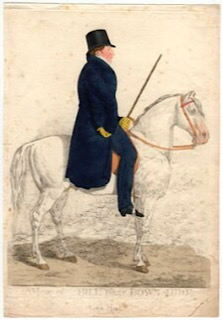
Arthur Blundell Sandys Trumbull Hill, 3rd Marquess of Downshire KP, an Anglo-Irish peer, styled Viscount Fairford from 1789 until 1793 and Earl of Hillsborough from 1793 to 1801, dies on September 12, 1845, in Blessington, County Wicklow.

Hill is born in Hanover Square, on October 8, 1788, the eldest son of Arthur Hill, 2nd Marquess of Downshire, and his wife, Mary Sandys. He becomes Marquess of Downshire on the early death of his father in 1801. He is educated at Eton College and Christ Church, Oxford, gaining his MA in 1809 and a DCL in 1810.

During his early political career, Hill is identified with the Whigs and supports the reform of Parliament. After the Grey Ministry comes to power, he receives a succession of appointments, becoming Colonel of the South Down Militia on March 25, 1831, and carrying the second sword at the coronation of William IV on September 8. He is appointed a deputy lieutenant of Berkshire on September 20, Lord Lieutenant of Down on October 17 (a new office replacing the Governor of Down), and finally a Knight of the Order of St Patrick on November 24, 1831. He receives an honorary LL.D. from the University of Cambridge on July 6, 1835.

Hill is a very strong supporter of the Irish language, and is president of the Ulster Gaelic Society (est. 1830). In this capacity he plays an important role in helping preserve records of the language, poetry, folk and song collections and much else.

Hill is disliked by Elizabeth Smith, diarist at Baltyboys HouseCounty Wicklow, who feels snubbed by him when she and her husband first move into the area. Writing of him after his death she recalls “The late Lord never called upon me when I first came here although the Colonel waited upon him. The Colonel never went near him again.”

High-minded, if also at times high-handed in manner and self-important, Hill works hard himself and expects all his employees and tenants to be equally conscientious. Naturally, he is often disappointed. He is particularly concerned about his failure, despite all efforts and exhortations, to make his southern estates as efficient and well behaved as those in the north. Though an absentee owner in the south, he visits both Blessington and Edenderry regularly. It is during one of these periodic tours of inspection that he drops dead at Blessington on September 12, 1845. He is buried in St. Malachy Parish Churchyard at Royal Hillsborough, County Down. The funeral attracts an enormous crowd of mourners and is reported at some length in The Illustrated London News. His memory is perpetuated in an impressive pillar monument, with his statue on top, erected at Hillsborough in 1848.


Leave a comment

Death of Larry Cunningham, Irish County Music Singer

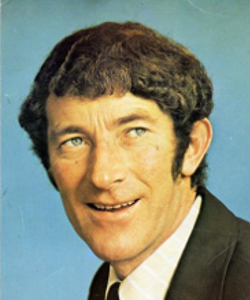
Larry Cunningham, Irish country music singer, who is one of the leading figures of the Irish showband scene in the 1960s and 1970s, dies in Dublin on September 28, 2012, following a lengthy illness. He is regarded as a “trailblazer” and “legend” in the music industry.

Cunningham is born in Clooneen, Mullinalaghta, County Longford on February 13, 1938. He grows up in a farming family of seven children. After leaving school at the age of sixteen, he goes to England and works as a carpenter, playing Irish traditional music and Gaelic football during his spare time. In 1958 he returns to Ireland. Still working as a carpenter, he soon joins the part-time Gowna-based Grafton Showband, but leaves it in 1961 to become fully professional as the lead singer of the Mighty Avons, based in Cavan. That band initially specialises in covers of Jim Reeves songs and similar country material.

The band’s first taste of fame comes when they are supporting Jim Reeves during the Irish leg of his European tour in 1963. When Reeves walks off the stage during a concert in Lifford in protest at the poor condition of the supplied piano, the Avons, as they later become popularly called, take over and entertain the crowd, to much subsequent publicity and acclaim.

In December 1964, Cunningham and the Mighty Avons have a Top-10 hit with the song Tribute to Jim Reeves, which also enters the British charts and is played on Top of the Pops, both firsts for an Irish artist, which further boosts their career. Their major hit is Lovely Leitrim in September 1965, which stays at number one in the charts for four weeks. As well as regularly touring Ireland to large crowds, the Avons make many appearances on television, and often played in Britain, the United States, and other places.

In late 1969, Cunningham leaves the Mighty Avons and merges with Edenderry band The Fairways to form Larry Cunningham and the Country Blue Boys, leaving Gene Stuart to front the Avons. He continues having success with his new band, but after his marriage to Beatrice Nannery in February 1972 he gives up regular touring in favour of occasional concerts and recording. He continues to have top-10 hits until the mid-1970s, and still performs occasionally for the remainder of his life. In recent years, audio and video compilations of his music have been released, as well as a biography.

Cunningham dies in Dublin on September 28, 2012, following a lengthy illness. Among those to pay tribute are U.S. country singer Robert Mizzell who says, “I am so saddened to hear of the passing of country legend Larry. I admired his talent and quick humour. My thoughts are with his family, friends, and the fans who loved the big deep voice that rattled the radio waves.”


Leave a comment

Birth of Singer Larry Cunningham

larry-cunningham

Larry Cunningham, Irish country music singer, who is one of the leading figures of the Irish showband scene in the 1960s and 1970s, is born in Clooneen, Mullinalaghta, County Longford on February 13, 1938. He is regarded as a “trailblazer” and “legend” in the music industry.

Cunningham grows up in the townland of Clooneen in a farming family of seven children. After leaving school at the age of 16 he goes to England and works as a carpenter, playing Irish traditional music and gaelic football during his spare time. In 1958 he returns to Ireland. Still working as a carpenter, he soon joins the part-time Gowna-based Grafton Showband, but leaves it in 1961 to become fully professional as the lead singer of the Mighty Avons, based in Cavan. That band initially specialises in covers of Jim Reeves songs and similar country material.

The band’s first taste of fame comes when they are supporting Jim Reeves during the Irish leg of his European tour in 1963. When Reeves walks off the stage during a concert in Lifford in protest at the poor condition of the supplied piano, the Avons, as they later become popularly called, takes over and entertains the crowd, to much subsequent publicity and acclaim.

In December 1964, Cunningham and the Mighty Avons have a Top-10 hit with the song Tribute to Jim Reeves, which also enters the British charts and is played on Top of the Pops, both firsts for an Irish artist, which further boosted their career. Their major hit is Lovely Leitrim in September 1965, which stays at number one in the charts for four weeks. As well as regularly touring Ireland to large crowds, the Avons make many appearances on television, and often played in Britain, the United States, and other places.

In late 1969, Cunningham leaves the Mighty Avons and merges with Edenderry band The Fairways to form Larry Cunningham and the Country Blue Boys, leaving Gene Stuart to front the Avons. He continues having success with his new band, but after his marriage to Beatrice Nannery in February 1972 he gives up regular touring in favour of occasional concerts and recording. He continues to have top-10 hits until the mid-1970s, and still performs occasionally for the remainder of his life. In recent years, audio and video compilations of his music have been released, as well as a biography.

Larry Cunningham dies in Dublin on September 28, 2012, following a lengthy illness. Among those to pay tribute are U.S. country singer Robert Mizzell who says, “I am so saddened to hear of the passing of country legend Larry. I admired his talent and quick humour. My thoughts are with his family, friends, and the fans who loved the big deep voice that rattled the radio waves.”