seamus dubhghaill

Promoting Irish Culture and History from Little Rock, Arkansas, USA


Leave a comment

Birth of Donal Donnelly, Theatre & Film Actor

Donal Donnelly, Irish theatre and film actor, is born to Irish parents in BradfordWest YorkshireEngland, on July 6, 1931. Perhaps best known for his work in the plays of Brian Friel, he has a long and varied career in film, on television and in the theatre. He lives in Ireland, the United Kingdom and the United States at various times, and his travels lead him to describe himself as “an itinerant Irish actor.”

Donnelly’s father, James, is a doctor from County Tyrone, and his mother, Nora O’Connor, is a teacher from County Kerry.

Donnelly is raised in Dublin where he attends Synge Street CBS, where he acts in school plays with Milo O’SheaEamonn AndrewsJack MacGowran, Bernard Frawley (Seattle Repertory Co.) and Jimmy Fitzsimons (brother of Maureen O’Hara), under the direction of elocution teacher, Ena Burke.

Donnelly gets his start in an amateur group calling itself the Globe Theatre Players. It is organised and run by Jim Fitzgerald and Monica Brophy. He then later tours with Anew McMaster‘s Irish repertory company before moving to England where he stars with Rita Tushingham in the film The Knack …and How to Get It.

Donnelly’s breakthrough role comes when he is cast as Gar Private in the world premiere of Brian Friel’s Philadelphia, Here I Come! directed by Hilton Edwards for the Gate Theatre at the Dublin Theatre Festival in 1964. The production subsequently transfers to Broadway where it plays for over 300 performances and establishes Donnelly and Patrick Bedford, who plays his alter-ego Gar Public, as formidable new talents to be reckoned with. They are jointly nominated for the Tony Award for Best Performance by a Leading Actor in a Play in 1966.

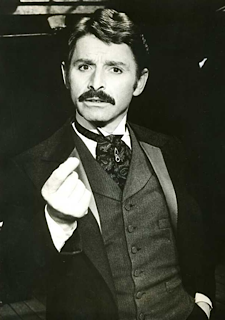
Donnelly returns to Broadway a number of times, replacing Albert Finney in A Day in the Death of Joe Egg in 1968, playing Milo Tindle in Anthony Shaffer‘s Sleuth and appearing as Frederick Treves opposite David Bowie as The Elephant Man. He also renews his relationship with Brian Friel, appearing in the world premieres of Volunteers at the Abbey Theatre in 1975 and Faith Healer with James Mason at the Longacre Theatre in New York City in 1979, as well as the Broadway premieres of Dancing at Lughnasa in 1991 and Translations in 1995.

For many years, Donnelly tours a one-man performance of the writings of George Bernard Shaw, adapted and directed by Michael Voysey and entitled My Astonishing Self.

Donnelly’s film roles include Archbishop Gilday in The Godfather Part III and as Freddy Malins in John Huston‘s final work, The Dead, based on the short story by James Joyce, where he gains particular acclaim for his performance.

On television, Donnelly plays the lead role of Matthew Browne in the 1970s ITV sitcom Yes, Honestly, opposite Liza Goddard. But from the late 1950s onwards, he often appears in such British TV programs as The AvengersZ-Cars and The Wednesday Play.

Donnelly is an acclaimed audiobook reader whose catalogue includes PinocchioPeter PanVoltaire‘s Philosophical Dictionary, and several audio versions of the works of James Joyce.

In 1968, Donnelly records an album of Irish songs, Take the Name of Donnelly, which is arranged, produced and conducted by Tony Meehan formerly of the Shadows.

Donnelly, who is a heavy smoker all his life, dies from cancer at the age of 78 in Chicago, Illinois, on January 4, 2010. He is survived by his wife, Patricia ‘Patsy’ Porter, a former dancer he met working on Finian’s Rainbow, and two sons, Jonathan and Damian. Their only daughter, Maryanne, predeceases him after being killed in a riding accident. A brother, Michael Donnelly, is a Fianna Fáil senator and councillor, and Lord Mayor of Dublin(1990–91).

(Pictured: Publicity still of Donal Donnelly as Frederick Treves in the Broadway’s play The Elephant Man)

Leave a comment

Death of Florence Stoney, First Female Radiologist in the UK

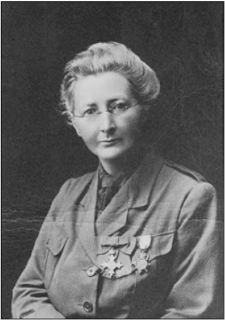
Florence Ada Stoney, Irish physician who is the first female radiologist in the United Kingdom, dies of vertebral cancer in Bournemouth, Dorset, England, on October 7, 1932. During World War I she serves abroad as head of the X-ray department and of staff in makeshift hospitals.

Stoney is born in Dublin on February 4, 1870, to George and Margaret Sophia Stoney. Her father is a mathematical physicist who later serves as Secretary of Queen’s University of Ireland and is an advocate for women’s right to higher education in Ireland. His efforts are considered to be among the principal reasons that women can qualify for a medical license. Of weak health as a child, she is at first privately educated in the home but then attends the Royal College for Science of Ireland with her sister Edith. In 1883, the Stoney family moves to London in order to provide higher education for the daughters since this is unavailable for women in Ireland at the time. She attends the London School of Medicine for Women where she is a distinguished student with great academic achievements in subjects such as anatomy and physiology. She obtains her MBBS with honours in 1895 and a Doctor of Medicine in 1898, going on to specialise in radiology.

Stoney works as an ENT clinical assistant at the Royal Free Hospital as well as spending six years as a demonstrator in anatomy at the London School of Medicine for Women.

After this she spends a short amount of time in the Victoria Hospital for Sick Children in Kingston upon Hull and then goes on to establish an X-ray department in the Elizabeth Garret Anderson Hospital for Women in London in 1902. At the hospital she carries out a variety of work but mainly deals with X-rays, often developing the radiographic plates at her own house. She is the first female radiologist to work in the United Kingdom at a time when knowledge on radiology and the equipment involved is still in its developmental stages. She is forced to work in poor conditions with badly ventilated rooms and a lack of space for X-ray work. She is given no assistance and has to do the majority of the work on her own. Furthermore, she is excluded as a member of the medical staff and from the X-ray department committee. In 1906 she sets up a practice in Harley Street.

Stoney leaves the hospital at the start of the war. She has 13 years of experience in her field when World War I breaks out in August 1914. She and her sister Edith, a medical physicist, volunteer to assist the British Red Cross, but both are refused by surgeon Frederick Treves since they were women. Despite the refusal, Stoney prepares an X-ray installation and helps to organise a unit of women volunteers alongside Mrs. St. Clair Stobart, Women’s Imperial Service League and the Belgian Red Cross to aid the Belgian soldiers in Antwerp. The team converts an abandoned music hall into a makeshift hospital where she manages the surgical unit as head of the medical staff and radiologist. The hospital comes under fire and after enduring ongoing shellfire for 18 hours, the hospital is evacuated. The team walks to Holland, where they manage to cross the Scheldt River on buses carrying ammunition, twenty minutes before the bridge is blown up. She and her unit earn the 1914 Star for bravery.

Stoney continues working in a hospital near Cherbourg in France, mainly dealing with cases relating to compound fractures and locating bullet fragments in wounds. During this time, she becomes experienced in recognizing dead bone and discovers that removing it will speed up recovery.

In March 1915, the Cherbourg hospital is no longer needed, and Stoney moves back London. She begins full-time work at the 1,000-bed Fulham Military Hospital. She is one of the first female physicians granted to serve as a full-time worker under the British War Office and goes on to receive the Order of the British Empire in June 1919. She works as the Head of the X-ray and Electrical Department and remains there until 1918.

In her later years, Stoney suffers from ill health, largely attributed to her over-exposure to radiation in her work. It is reported that she has X-ray dermatitis of her left hand, a painful skin condition associated in modern times with radiation therapy as a treatment for cancer. She moves to the south coastal town of Bournemouth in England where she is on the staff of two hospitals, practicing radiology part-time. She occupies the position of Honorary Medical Officer to the Electrical Department of the Royal Victoria and West Hants Hospital in Bournemouth. She is the founder and president of the Wessex branch of the British Institute of Radiology. She serves as the consulting actinotherapist at the Victoria Cripples Home. During retirement she pens a number of articles in contribution to the medical literature of the time. She publishes research on topics such as fibroids, goitre, Graves’ disease, soldier’s heart, rickets and osteomalacia.

Stoney retires from all of her hospital positions in 1928 at the age of 58. She, along with her older sister Edith, travel in retirement. One trip is to India, where she writes her final scientific paper, the subject of which is osteomalacia (bone softening), in particular in relation to pelvic deformities in childbirth. She studies and investigates this topic overseas, and specifically the association between UV exposure, vitamin D and skeletal development. In India, she also uses her expertise to advise on the use of UV light in hospitals.

Stoney dies at the age of 62, on October 7, 1932. She is suffering from a long and painful illness, vertebral cancer, again largely attributed to her work in the presence of high levels of radiation. Her funeral takes place on October 11 at Golders Green Crematorium, London. The British Journal of Radiology publishes her official obituary which spans five pages, containing many warm personal testimonials. After her sister’s death, Edith Stoney continues to travel and research.


3 Comments

Death of Donal Donnelly, Irish Theatre & Film Actor

Donal Donnelly, Irish theatre and film actor, dies in Chicago, Illinois, on January 4, 2010. Perhaps best known for his work in the plays of Brian Friel, he has a long and varied career in film, on television and in the theatre. He lives in Ireland, the United Kingdom and the United States at various times, and his travels lead him to describe himself as “an itinerant Irish actor.”

Donnelly is born to Irish parents in Bradford, West Yorkshire, England, on July 6, 1931. His father James is a doctor from County Tyrone, and his mother Nora O’Connor is a teacher from County Kerry.

Donnelly is raised in Dublin where he attends Synge Street CBS, where he acts in school plays with Milo O’Shea, Eamonn Andrews, Jack MacGowran, Bernard Frawley (Seattle Repertory Co.) and Jimmy Fitzsimons (brother of Maureen O’Hara), under the direction of elocution teacher, Ena Burke.

Donnelly gets his start in an amateur group calling itself the Globe Theatre Players. It is organised and run by Jim Fitzgerald and Monica Brophy. He then later tours with Anew McMaster‘s Irish repertory company before moving to England where he stars with Rita Tushingham in the film The Knack …and How to Get It.

Donnelly’s breakthrough role comes when he is cast as Gar Private in the world premiere of Brian Friel’s Philadelphia, Here I Come! directed by Hilton Edwards for the Gate Theatre at the Dublin Theatre Festival in 1964. The production subsequently transfers to Broadway where it plays for over 300 performances and establishes Donnelly and Patrick Bedford, who plays his alter-ego Gar Public, as formidable new talents to be reckoned with. They are jointly nominated for the Tony Award for Best Performance by a Leading Actor in a Play in 1966.

Donnelly returns to Broadway a number of times, replacing Albert Finney in A Day in the Death of Joe Egg in 1968, playing Milo Tindle in Anthony Shaffer‘s Sleuth and appearing as Frederick Treves opposite David Bowie as The Elephant Man. He also renews his relationship with Brian Friel, appearing in the world premieres of Volunteers at the Abbey Theatre in 1975 and Faith Healer with James Mason at the Longacre Theatre in New York City in 1979, as well as the Broadway premieres of Dancing at Lughnasa in 1991 and Translations in 1995.

For many years, Donnelly tours a one-man performance of the writings of George Bernard Shaw, adapted and directed by Michael Voysey and entitled My Astonishing Self.

Donnelly’s film roles include Archbishop Gilday in The Godfather Part III and as Freddy Malins in John Huston‘s final work, The Dead, based on the short story by James Joyce, where he gains particular acclaim for his performance.

On television, Donnelly plays the lead role of Matthew Browne in the 1970s ITV sitcom Yes, Honestly, opposite Liza Goddard. But from the late 1950s onwards, he often appears in such British TV programs as The Avengers, Z-Cars and The Wednesday Play.

Donnelly is an acclaimed audiobook reader whose catalogue includes Pinocchio, Peter Pan, Voltaire‘s Philosophical Dictionary, and several audio versions of the works of James Joyce.

In 1968, Donnelly records an album of Irish songs, Take the Name of Donnelly, which is arranged, produced and conducted by Tony Meehan formerly of the Shadows.

Donnelly, who is a heavy smoker all his life, dies from cancer at the age of 78 in Chicago, Illinois, on January 4, 2010. He is survived by his wife, Patricia ‘Patsy’ Porter, a former dancer he met working on Finian’s Rainbow, and two sons, Jonathan and Damian. Their only daughter, Maryanne, predeceases him after being killed in a riding accident. A brother, Michael Donnelly, is a Fianna Fáil senator and councillor, and Lord Mayor of Dublin (1990–91).