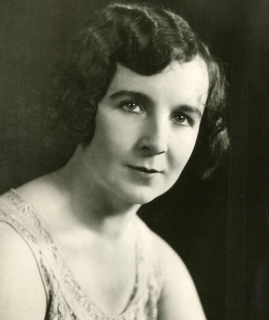
Born Alice Izabella, she is one of ten children born to grocer Moses Crowe and Therese Eglinton. From an early age, she shows an interest in the theatre, and regularly attends productions in both the Gaiety and Abbey theatres. Having completed her education, she joins a convent but soon after abandons the idea of becoming a nun. In October 1921, she enters the Abbey School of Acting. She has a career with the Abbey Theatre from 1921 to 1970.
Upon her entry to the Abbey School of Acting, Crowe makes her debut in 1921 in the play The Revolutionist, taking the lead role of Nora Mangan. She plays her last role of Miss Hatty in Grogan and the Ferret, after which she retires. During nearly five decades, she stars in many plays, some of which include The Marriage of Columbine (1921) and Juno and the Paycock (1924). Between 1931 and 1953, she appears in the Abbey Theatre productions of plays by Irish playwrightTeresa Deevy including A Disciple (1931), Katie Roche (1936, 1937, 1949, 1953), Temporal Powers (1932, 1937) and The Reapers (1930).
Also in 1964, Crowe appears in the Aldwych Theatre‘s production of Juno and the Paycock in London. She works in the Abbey for the vast majority of her career, except for when she is on a six-month tour for Peg O’ My Heart, touring Northern Ireland and England.
In 1924, when the play Grasshopper is being produced, Crowe meets her husband, Peter Judge, also known as F. J. McCormick. They are married in 1925 and the marriage produces a daughter and a son.
Initially acting part-time with the Cork Shakespearean Company and at the Cork Opera House, by 1947 Lynch is acting full-time.
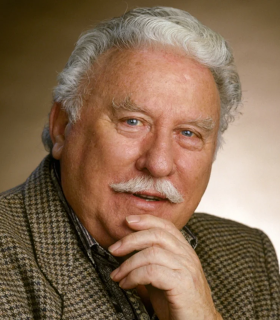
Lynch is a founding member of the Radio Éireann Players and appears in productions of Teresa Deevy plays among others. During the 1950s he is responsible for a Radio Éireann show Living with Lynch, broadcast on Sunday nights, the first comedy series on Radio Éireann. Between 1967–81, he acts onstage with the Abbey Theatre.
In 1962, and again in 1977, Lynch wins a Jacob’s Award for his acting on RTÉ television.
By 1979, Lynch is back in Ireland, and makes his first appearances as Dinny Byrne in the RTÉ soap Bracken. Later the Byrne character would feature in the long-running RTÉ soap Glenroe.
Lynch quits Glenroe after he claims to have been “shamefully treated” and offered “small potatoes” when he asked for a pay rise. He is also upset that he is not to get a pension. RTÉ disputes those claims. He criticised RTÉ for preventing him from doing other acting work alongside Glenroe. “I was terrible restricted in RTÉ, they wouldn’t let me off for anything, even commercials.”
Lynch voices the main antagonist, Grundel the Toad, in the Don Bluth film Thumbelina, his final audio work before his death seven years later.
Lynch dies suddenly on August 1, 2001, in Alicante, Spain, where he had been living since leaving Glenroe.
McKenna makes his film debut in the IRA–Nazi drama The Night Fighters (1960) and from this uncredited beginning he moves up to tenth billing in The Siege of Sidney Street (1960). His next major movie is Girl with Green Eyes (1964), by which time he has also started a successful television career, making his TV debut in Espionage (1963) and over the next few years appears in several more TV shows. His versatility enables him to play three characters in The Avengers (1961). He is also featured in such well-regarded shows as Adam Adamant Lives! (1966), Dixon of Dock Green (1955) and The Saint (1962).
McKenna dies on February 13, 2011, at the Royal Free Hospital in Hampstead, London, at the age of 81 following a long period of illness. He is buried alongside his wife at Teampall Cheallaigh Cemetery in his native County Cavan.
Following his death, tributes are paid by President of IrelandMary McAleese, Prince Charles, and Ireland’s Minister for Tourism, Culture and SportMary Hanafin, who says that McKenna was “one of a great generation whose talents on the screen and stage both at home and abroad gave us all great pride in his accomplishments.” In County Cavan, he is commemorated by the T. P. McKenna Drama Scholarships (VEC) and the T. P. McKenna Perpetual Trophy presented as part of the Millrace Annual Drama Festival.


 seamus dubhghaill