seamus dubhghaill

Promoting Irish Culture and History from Little Rock, Arkansas, USA


Leave a comment

Death of Henry Armstrong, Politician & Member of Parliament

Henry Bruce Wright Armstrong, Northern Irish barrister, politician and Unionist Member of Parliament (MP) for Mid Armagh from June 1921 until 1922, dies on December 4, 1943.

Born on July 27, 1844, at Hull House, Sholden, Kent, England, Armstrong is the second surviving son of William Jones Wright Armstrong, Justice of the Peace (JP), Deputy Lieutenant and High Sheriff of Armagh, and Frances Elizabeth, widow of Sir Michael McCreagh, and daughter of Major Christopher Wilson. He is educated at The Royal School, Armagh, and Trinity College, Cambridge, gaining a BA (2nd Class Law Tripos) in 1867 and an MA in 1870. He is called to the English bar (Inner Temple) in 1868. He practises in England for four years. During this period, he also travels widely in Europe, the East, and the Far East, witnessing the last of the German army leave France after the Franco–Prussian War (1870–71) and acting as a copy carrier for The Daily News while in Metz in 1873.

Known principally for his contribution to Ulster politics at local level, Armstrong serves as JP and is appointed High Sheriff of Armagh for 1875 and High Sheriff of Longford for 1894. He is a County Councillor for Armagh from 1899 to 1920, and a Member of the Irish Convention in 1917–18. Vice-Lieutenant of County Armagh in 1920, he is a Senator of Queen’s University Belfast from 1920 to 1937.

Armstrong is returned unopposed to the Imperial House of Commons for Mid-Armagh in the 1921 Mid Armagh by-election, at the advanced age of 76, becoming one of the oldest first-time MPs whose birth date is recorded. Certainly, he immediately becomes the oldest member of the current House of Commons. He is a Senator of Northern Ireland from 1921 to 1937, and Lord Lieutenant of Armagh from 1924 to 1939. For twenty-five years he is a member of the Representative Body of the Church of Ireland. He is Chairman of the County Armagh Education Committee from 1925 to 1931, and President of the Association of Education Committees of Northern Ireland. In 1932, he is made a Privy Councillor for Northern Ireland, and in 1938 he serves as a Justice for the Government of Northern Ireland in the absence of the Governor.

In his later years, Armstrong provides financial support for Jewish refugees fleeing Nazi-occupied Europe.

In 1883, Armstrong marries Margaret Leader, daughter of William Leader of Rosnalea, County Cork. They have five sons and three daughters, of whom C. W. Armstrong also becomes a politician.

Armstrong dies at his home in Dean’s Hill, Armagh, on December 4, 1943, at the age of 99 years.

Leave a comment

Birth of Henry Armstrong, Northern Irish Barrister & Politician

Henry Bruce Wright Armstrong, Northern Irish barrister and politician, Ulster Unionist Party Member of Parliament (MP) for Mid Armagh from June 1921 until 1922, is born on July 27, 1844, at Hull House in Sholden, a small village adjacent to the seaside town of Deal, Kent, South East England.

Armstrong is the second surviving son of William Jones Wright Armstrong of County Armagh and Frances Elizabeth, widow of Sir Michael McCreagh, and daughter of Major Christopher Wilson. He is educated at The Royal School, Armagh and Trinity College, Cambridge, gaining a BA (2nd Class Law Tripos) in 1867 and an MA in 1870. Admitted at the Inner Temple in 1866, he is called to the Bar in 1868.

In 1883, Armstrong marries Margaret Leader, daughter of William Leader of Rosnalea, County Cork. They have five sons and three daughters, of whom C. W. Armstrong also becomes a politician.

Armstrong is appointed High Sheriff of Armagh for 1875 and High Sheriff of Longford for 1894. He is a County Councillor for Armagh from 1899 to 1920, and a Member of the Irish Convention in 1917–18. Vice-Lieutenant of County Armagh in 1920, he is a Senator of Queen’s University Belfast from 1920 to 1937.

Armstrong is returned unopposed to the House of Commons of the United Kingdom for Mid Armagh in a by-election in 1921, at the advanced age of 76, becoming one of the oldest first-time MPs whose birth date is recorded. Certainly, he immediately becomes the oldest member of the current House of Commons. He is a Senator of Northern Ireland from 1921 to 1937, and Lord Lieutenant of Armagh from 1924 to 1939. For 25 years he is a member of the Representative Body of the Church of Ireland. He is Chairman of the County Armagh Education Committee from 1925 to 1931, and President of the Association of Education Committees of Northern Ireland. In 1932 he is made a Privy Councillor for Northern Ireland, and in 1938 he serves as a Justice for the Government of Northern Ireland in the absence of the Governor.

Armstrong dies at the age of 99 on December 4, 1943, at his home in Dean’s Hill, County Armagh.


Leave a comment

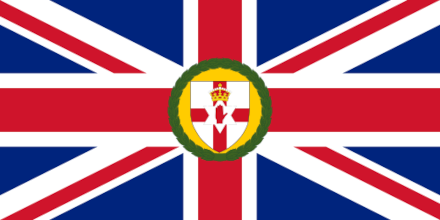
Office of Governor of Northern Ireland Abolished

The mainly ceremonial office of Governor of Northern Ireland is abolished on July 18, 1973 under Section 32 of the Northern Ireland Constitution Act 1973. The Secretary of State for Northern Ireland, a cabinet office created in 1972, takes over the functions of the Governor on December 20, 1973 under Letters Patent.

The office of the Governor of Northern Ireland is established on 9 December 9, 1922 under Letters Patent to “do and execute in due manner as respects Northern Ireland all things which by virtue of the [1920] Act and our said Letters Patent of 27 April 1921 or otherwise belonged to the office of Lord Lieutenant at the time of the passing of the Irish Free State Constitution Act 1922.”

The 1922 “Instructions” sent alongside the letters patent establishing the office require the Governor of Northern Ireland to get the monarch’s permission to leave Northern Ireland, and empowers the Governor in such cases to issue letters patent under the Great Seal of Northern Ireland appointing a “Deputy or Deputies, Justice or Justices” during his absence. This emulates the practice of appointing Lords Justices of Ireland when the Lord Lieutenant is absent from Ireland. Each new Governor upon taking office selects a slate of eligible deputies from among the Privy Council of Northern Ireland, and at each of his subsequent absences a subset of these are sworn in for its duration. Many are Lord Chief Justice or Lord Justice of Appeal, including Denis Henry, William Moore, James Andrews, Anthony Babington, John MacDermott, Baron MacDermott, and Samuel Clarke Porter. Others are Senators and/or county lieutenants, including Robert Sharman-Crawford, Robert David Perceval-Maxwell, Henry Armstrong, Sir Thomas Dixon, 2nd Baronet, Maurice McCausland, and Francis Needham, 4th Earl of Kilmorey.

The Governor has possession of the Great Seal of Northern Ireland and is the successor to the Lord Lieutenant of Ireland in Northern Ireland, itself established on May 3, 1921. The official residence of the Governor of Northern Ireland is Hillsborough Castle in County Down. Following refurbishment of the Castle, James Hamilton, 3rd Duke of Abercorn, takes up residence in 1925. It remained the official residence until the abolition of the office of governor in 1973. Henceforth it has been the official residence of the Secretary of State for Northern Ireland.