seamus dubhghaill

Promoting Irish Culture and History from Little Rock, Arkansas, USA


Leave a comment

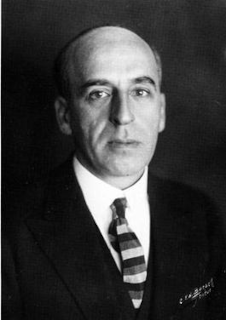
Death of Seán Lester, Last Secretary-General of the League of Nations

Seán Lester, Irish diplomat who is the last secretary-general of the League of Nations from August 31, 1940, to April 18, 1946, dies at Recess, County Galway, on June 13, 1959.

Lester is born on September 28, 1888, in Carrickfergus, County Antrim, as John Ernest Lester, the son of a Protestant grocer Robert Lester and his wife, the former Henrietta Ritchie. Although the town of Carrickfergus is strongly Unionist, he joins the Gaelic League as a youth and is won over to the cause of Irish nationalism. As a young man, he joins the Irish Republican Brotherhood (IRB). He works as a journalist for the North Down Herald and a number of other northern papers before he moves to Dublin, where he finds a job at the Freeman’s Journal. By 1919, he has risen to its news editor.

After the Irish War of Independence, a number of Lester’s friends join the new government of the Irish Free State. He is offered and accepts the position as director of publicity.

Lester marries Elizabeth Ruth Tyrrell in 1920 by whom he has three daughters.

In 1923, Lester joins Ireland’s Department of External Affairs. He is sent to Geneva in 1929 to replace Michael MacWhite as Ireland’s Permanent Delegate to the League of Nations. In 1930, he succeeds in organising Ireland’s election to the Council (or executive body) of the League of Nations for three years. He often represents Ireland at Council meetings and stands in for the Minister for External Affairs. He becomes increasingly involved in the work of the League, particularly in its attempts to bring a resolution to two wars in South America. His work brings him to the attention of the League Secretariat and begins his transformation from national to international civil servant.

When Peru and Colombia have a dispute over a town in the headwaters of the Amazon River, Lester presides over the committee that finds an equitable solution. He also presides over the less-successful committee when Bolivia and Paraguay go to war over the Gran Chaco.

In 1933, Lester is seconded to the League’s Secretariat and sent to Danzig (now Gdańsk, Poland), as the League of Nations’ High Commissioner from 1934 to 1937. The Free City of Danzig is the scene of an emerging international crisis between Nazi Germany and the international community over the issue of the Polish Corridor and the Free City’s relationship with the Third Reich. He repeatedly protests to the German government over its persecution and discrimination of Jews and warns the League of the looming disaster for Europe. He is boycotted by the representatives of the German Reich and the representatives of the Nazi Party in Danzig.

Lester returns to Geneva in 1937 to become Deputy Secretary General of the League of Nations. In 1940, he becomes Secretary General of the body, becoming the League’s leader a year after the beginning of World War II which shows that the League has failed its primary purpose. The League has only 100 employees, including guards and janitors, out of the original 700.

Lester remains in Geneva throughout the war and keeps the League’s technical and humanitarian programs in limited operation for the duration of the war. In 1946, he oversees the League’s closure and turns over the League’s assets and functions to the newly established United Nations.

Lester is given the Woodrow Wilson Award in 1945 and a doctorate of the National University of Ireland (NUI) in 1948.

Despite rumours that he would be prepared to stand for election as President of Ireland, Lester seeks no permanent office and retires to Recess, County Galway, in the west of Ireland, where he dies on June 13, 1959. In its obituary, The Times describes him as an “international conciliator and courageous friend of refugees.”

In August 2010, a room in the Gdańsk City Hall, the building that had been Lester’s residence during his stay, is renamed by Mayor Paweł Adamowicz as the Seán Lester Room.

Lester’s granddaughter, Susan Denham, is Chief Justice of Ireland for the Supreme Court of Ireland from 2011 to 2017.


Leave a comment

Death of James McNeill, Second Governor-General of the Irish Free State

James McNeill, Irish politician and diplomat who serves as first High Commissioner to London and second Governor-General of the Irish Free State, dies on December 12, 1938.

One of five children born to Archibald McNeill, a Roman Catholic working class “baker, sailor and merchant,” and his wife, Rosetta (née McAuley) McNeill, McNeill is the brother of nationalist leader Eoin MacNeill. He serves as a high-ranking member of the Indian Civil Service in Calcutta.

Although unconnected with the Easter Rising in 1916, McNeill is arrested and jailed by the British Dublin Castle administration. On release, he is elected to Dublin County Council, becoming its chairman. He serves as a member of the committee under Michael Collins, the chairman of the Provisional Government, that drafts the Constitution of the Irish Free State. He is subsequently appointed as High Commissioner from Ireland to the United Kingdom.

When the first Governor-General of the Irish Free State, Tim Healy, retires in December 1927, McNeill is proposed as his replacement by the Irish government of W. T. Cosgrave and duly appointed by King George V as Governor-General of the Irish Free State.

In office, McNeill clashes with the King’s Private Secretary when he insists on following the constitutional advice of his Irish ministers, rather than that of the Palace, in procedures relating to the receipt of Letters of Credence accrediting ambassadors to the King in Ireland. He also refuses to attend ceremonies in Trinity College, Dublin, when some elements in the college try to ensure that the old British national anthem God Save the King is played, rather than the new Irish anthem, Amhrán na bhFiann.

When Éamon de Valera is nominated as President of the Executive Council of the Irish Free State in 1932, McNeill opts to travel to Leinster House, the parliament buildings, to appoint de Valera, rather than to require that he go to the Viceregal Lodge, the Governor-General’s residence and the former seat of British Lords Lieutenant, to avoid embarrassing de Valera, who is a republican.

However, McNeill’s tact is not reciprocated by de Valera’s government, and some of its ministers seek to humiliate him as the King’s representative by withdrawing the Irish Army‘s band from playing at functions he attends and demanding he withdraw invitations to visitors to meet him. In one notorious incident in April, two ministers, Seán T. O’Kelly (a future President of Ireland) and Frank Aiken, publicly walk out of a diplomatic function when McNeill, there as the guest of the French ambassador, arrives. In a fury, McNeill writes to de Valera demanding an apology for this treatment. When none is forthcoming, apart from an ambiguous message from de Valera that could be interpreted as partially blaming McNeill for attending functions at which ministers would be present, he publishes his correspondence with de Valera, even though de Valera had formally advised him not to do so. De Valera then demands that George V dismiss him.

The King engineers a compromise, whereby de Valera withdraws his dismissal request and McNeill, who is due to retire at the end of 1932, will push forward his retirement date by a month or so. McNeill, at the King’s request, resigns on November 1, 1932.

In June 1932 John Charles McQuaid, President of Blackrock College hosts an extravagant garden party to welcome Papal Legate Lorenzo Lauri, who had arrived in Ireland to represent Pope Pius XI at the 31st International Eucharistic Congress. While de Valera maintains a very high profile at the event, McQuaid, at de Valera’s request, goes to great lengths to avoid MacNeill to the extent possible.

McNeill dies on December 12, 1938, at the age of 69 in London. His widow Josephine is appointed Minister to the Hague by Seán MacBride, Minister for External Affairs in the coalition government of 1948.