seamus dubhghaill

Promoting Irish Culture and History from Little Rock, Arkansas, USA


Leave a comment

Birth of Irish Mathematician James Thomson

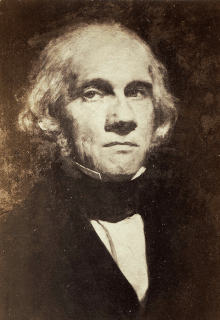
James Thomson, Irish mathematician notable for his role in the formation of the thermodynamics school at the University of Glasgow, Is born on November 13, 1786, in Ballynahinch, County Down, in what is now Northern Ireland. He is the father of the engineer and physicist James Thomson and the physicist William Thomson, 1st Baron Kelvin.

Born into an Ulster Scots family, Thomson is the fourth son of Agnes Nesbit and James Thomson, a small farmer, at Annaghmore, near Ballynahinch, County Down, in Ulster. His early education is from his father. At the age of 11 or 12 he finds out for himself the art of dialling. His father sends him to a school at Ballykine, near Ballynahinch, kept by Samuel Edgar, father of John Edgar. Here he soon rises to be an assistant.

Wishing to become a minister of the Presbyterian church, Thomson enters the University of Glasgow in 1810, where he studies for several sessions, supporting himself by teaching in the Ballykine school during the summer. He graduates MA in 1812, and in 1814 he is appointed headmaster of the school of arithmetic, bookkeeping, and geography in the newly established Royal Belfast Academical Institution. In 1815 he is Professor of Mathematics in its collegiate department. Here he proves himself as a teacher. In 1829 the honorary degree of LL.D. is conferred upon him by the University of Glasgow, where in 1832 he is appointed Professor of Mathematics. He holds this post until his death on January 12, 1849.

Thomson is buried with his family on the northern slopes of the Glasgow Necropolis to the east of the main bridge entrance. The grave is notable due to the modern memorial to Lord Kelvin at its side.

Thomson is the author of schoolbooks that have passed through many editions including Arithmetic (1819), Trigonometry, Plane and Spherical (1820), Introduction to Modern Geography (1827), The Phenomena of the Heavens (1827), The Differential and Integral Calculus (1831), and Euclid (1834).

A paper, “Recollections of the Battle of Ballynahinch, by an Eye-witness,” which appears in the Belfast Magazine for February 1825, is from his pen.

Leave a comment

Birth of Thomas Andrews, Chemist & Physicist

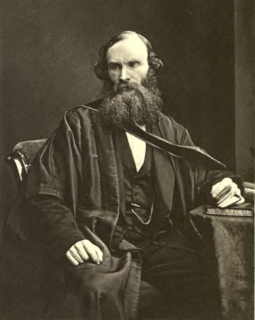
Thomas Andrews FRS FRSE, chemist and physicist who does important work on phase transitions between gases and liquids, is born in Belfast on December 19, 1813. He is a longtime professor of chemistry at Queen’s University Belfast.

Andrews’ father is a linen merchant. He attends the Belfast Academy and the Royal Belfast Academical Institution, where at the latter of which he studies mathematics under James Thomson. In 1828 he goes to the University of Glasgow to study chemistry under Professor Thomas Thomson, then studies at Trinity College, Dublin, where he gains distinction in classics as well as in science. Finally, at University of Edinburgh in 1835, he is awarded a doctorate in medicine.

Andrews begins a successful medical practice in his native Belfast in 1835, also giving instruction in chemistry at the Academical Institution. In 1842, he marries Jane Hardie Walker (1818–1899). They have six children, including the geologist Mary Andrews. In 1845 he is appointed vice-president of the newly established Queen’s University Belfast, and professor of chemistry there. He holds these two offices until his retirement in 1879 at age 66.

Andrews first becomes known as a scientific investigator with his work on the heat developed in chemical actions, for which the Royal Society awards him a Royal Medal in 1844. Another important investigation, undertaken in collaboration with Peter Guthrie Tait, is devoted to ozone.

Andrews’ reputation mainly rests on his work with liquefaction of gases. In the 1860s he carries out a very complete inquiry into the gas laws, expressing the relations of pressure, temperature, and volume in carbon dioxide. In particular, he establishes the concepts of critical temperature and critical pressure, showing that a substance passes from vapor to liquid state without any breach of continuity.

In Andrews’ experiments on phase transitions, he shows that carbon dioxide may be carried from any of the states we usually call liquid to any of those we usually call gas, without losing homogeneity. The mathematical physicist Josiah Willard Gibbs cites these results in support of the Gibbs free energy equation. They also set off a race among researchers to liquify various other gases. In 1877-78 Louis Paul Cailletet is the first to liquefy oxygen.

Andrews dies in Belfast on November 26, 1885, and is buried in the Borough Cemetery in the city.


Leave a comment

Birth of James Thomson, Engineer & Physicist

james-thomson

James Thomson, engineer and physicist whose reputation is substantial though overshadowed by that of his younger brother William Thomson (Lord Kelvin), is born in Belfast on February 16, 1822.

Thomson spends much of his youth in Glasgow. His father James is professor of mathematics at the University of Glasgow from 1832 onward. He attends Glasgow University from a young age and graduates in 1839 with high honors in his late teens. After graduation, he serves brief apprenticeships with practical engineers in several domains. He then gives a considerable amount of his time to theoretical and mathematical engineering studies, often in collaboration with his brother, during his twenties in Glasgow. In his late twenties he enters into private practice as a professional engineer with special expertise in water transport. In 1855, he is appointed professor of civil engineering at Queen’s University Belfast. He remains there until 1873, when he accepts the Regius professorship of Civil Engineering and Mechanics at the University of Glasgow in which he is successor to the influential William Rankine. He serves in this position until he resigns with failing eyesight in 1889.

In 1875 Thomson is elected a Fellow of the Royal Society of Edinburgh. His proposers are his younger brother William, Peter Guthrie Tait, Alexander Crum Brown and John Hutton Balfour. He is elected a Fellow of the Royal Society of London in June 1877. He serves as President of the Institution of Engineers and Shipbuilders in Scotland from 1884 to 1886.

Thomson dies of cholera in Glasgow on May 8, 1892. He is buried on the northern slopes of the Glasgow Necropolis overlooking Glasgow Cathedral. One obituary describes Thomson as “a man of singular purity of mind and simplicity of character,” whose “gentle kindness and unfailing courtesy will be long remembered.”

Thomson is known for his work on the improvement of water wheels, water pumps and turbines. He is also known for his innovations in the analysis of regelation, i.e., the effect of pressure on the freezing point of water, and his studies in glaciology including glacial motion, where he extends the work of James David Forbes. He studies the experimental work of his colleague Thomas Andrews concerning the continuity of the liquid and gaseous states of matter, and strengthens understanding of it by applying his strong knowledge of thermodynamics. He derives a simplified form of the Clapeyron equation for the solid-liquid phase boundary. He proposes the term triple point to describe the conditions for which solid, liquid and vapour states are all in equilibrium.

Thomson also makes contributions in the realm of fluid dynamics of rivers. It is claimed that the term torque is introduced into English scientific literature by Thomson in 1884.


Leave a comment

Death of Thomas Andrews, Chemist & Physicist

thomas-andrews

Thomas Andrews, chemist and physicist who does important work on phase transitions between gases and liquids, dies in Belfast on November 26, 1885. He is a longtime professor of chemistry at Queen’s University Belfast.

Andrews is born in Belfast on December 19, 1813, where his father is a linen merchant. He attends the Belfast Academy and the Royal Belfast Academical Institution, where at the latter of which he studies mathematics under James Thomson. In 1828 he goes to the University of Glasgow to study chemistry under Professor Thomas Thomson, then studies at Trinity College, Dublin, where he gains distinction in classics as well as in science. Finally, at the University of Edinburgh in 1835, he is awarded a doctorate in medicine.

Andrews begins a successful medical practice in his native Belfast in 1835, also giving instruction in chemistry at the Royal Belfast Academical Institution. In 1842, he marries Jane Hardie Walker. They have six children, including the geologist, Mary Andrews.

Andrews first becomes known as a scientific investigator with his work on the heat developed in chemical actions, for which the Royal Society awards him a Royal Medal in 1844. Another important investigation, undertaken in collaboration with Peter Guthrie Tait, is devoted to ozone. In 1845 he is appointed vice-president and professor of chemistry of the newly established Queen’s University Belfast. He holds these two offices until his retirement in 1879 at the age of 66.

His reputation mainly rests on his work with liquefaction of gases. In the 1860s he carries out a very complete inquiry into the gas laws — expressing the relations of pressure, temperature, and volume in carbon dioxide. In particular, he establishes the concepts of critical temperature and critical pressure, showing that a substance passes from vapor to liquid state without any breach of continuity.

In Andrews’ experiments on phase transitions, he shows that carbon dioxide may be carried from any of the states we usually call liquid to any of those we usually call gas, without losing homogeneity. The mathematical physicist Josiah Willard Gibbs cites these results in support of the Gibbs free energy equation. They also set off a race among researchers to liquify various other gases. In 1877-78 Louis Paul Cailletet is the first to liquefy oxygen and nitrogen.

Thomas Andrews dies in Belfast on November 26, 1885, and is buried in the city’s Borough Cemetery.


Leave a comment

Birth of Minister William Dool Killen

william-dool-killen

William Dool Killen, a minister of the Presbyterian Church in Ireland and church historian, is born at Church Street, Ballymena, County Antrim, on April 16, 1806.

Killen is the third of four sons and nine children of John Killen (1768–1828), a grocer and seedsman in Ballymena, by his wife Martha, daughter of Jesse Dool, a farmer in Duneane. His paternal grandfather, a farmer at Carnmoney, marries Blanche Brice, a descendant of Edward Brice. A brother, James Miller Killen (1815–1879), is a minister in Comber, County Down. Thomas Young Killen is his father’s great-nephew.

After attending local primary schools, Killen goes to Ballymena Academy around 1816, and in November 1821 enters the collegiate department of the Royal Belfast Academical Institution, under James Thomson. In 1827, he is licensed to preach by the Presbytery of Ballymena, and on November 11, 1829 he is ordained minister at Raphoe, County Donegal.

In July 1841 Killen is appointed, by the General Assembly of the Presbyterian Church in Ireland, its professor of church history, ecclesiastical government, and pastoral theology, in succession to James Seaton Reid. He concentrates on history. When Assembly’s College, Belfast is set up in 1853, he becomes one of the professors there. In 1869 he is appointed president of the college, in succession to Henry Cooke, and undertakes fundraising for professorial endowments and new buildings. In 1889 he resigns his chair but continues as president.

During his career Killen receives the degrees of D.D. (1845) and of LL.D. (1901) from the University of Glasgow. His portrait, painted by Richard Hooke, hangs in the Gamble library of the college.

William Dool Killen dies on January 10, 1902, and is buried in Balmoral Cemetery, Belfast, where a monument marks his resting place.