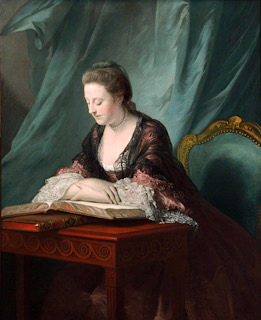
Emily FitzGerald, Duchess of Leinster, an Anglo-Irish aristocrat, is born Lady Emilia Mary Lennox in London on October 6, 1731. She is the second of the renowned Lennox sisters, and a prominent matriarch in Irish and British society, famous for her large family, political connections, and cultural influence.
Lennox is the daughter of Charles Lennox, 2nd Duke of Richmond, an illegitimate grandson of King Charles II, and Lady Sarah Cadogan. She is renowned for her beauty, vivacity, and intellectual curiosity, and is considered the most attractive and socially adept of the Lennox sisters. She is presented at court at the age of thirteen and becomes engaged to James FitzGerald, 20th Earl of Kildare, in 1745.
Lennox marries James FitzGerald on February 7, 1747, at Richmond House, London. The couple moves to Ireland, residing at Leinster House and Carton House. Their marriage, despite his infidelities, is reportedly affectionate. Over 25 years, she gives birth to nineteen children, ten of whom survive to adulthood. Notable children include William FitzGerald, 2nd Duke of Leinster, Lord Edward Fitzgerald, and Lord Henry FitzGerald.
James FitzGerald becomes Marquess of Kildare and then Duke of Leinster in recognition of his political influence. The couple’s financial arrangements are generous, leaving FitzGerald a substantial jointure and properties, which later strains the resources of her surviving children.
After the Duke of Leinster’s death in 1773, FitzGerald marries her children’s tutor, William Ogilvie, on August 26, 1774, having already begun an affair. Ogilvie is nine years her junior and the likely biological father of her youngest son from her first marriage. She and Ogilvie have three additional children together, two of whom survive into adulthood. She spends time in France and Ireland before eventually settling in London to oversee her daughters’ marriages and engage in social affairs.
FitzGerald is a keen reader, politicized, and culturally active. She has a strong interest in literature, politics, and Enlightenment ideas, influenced by thinkers such as Jean-Jacques Rousseau. She actively manages her estates and interiors, notably Carton House and its gardens, and pursues educational and outdoor activities for her children, demonstrating innovation in child-rearing and estate management.
FitzGerald is deeply affectionate and attentive to her children, particularly Lord Edward FitzGerald, a key figure in the Irish republican movement. She is involved in mourning and supporting her children, enduring the deaths of fourteen of her 22 children across both marriages. She also navigates complex social and financial challenges, ensuring her families’ estates and alliances endure despite societal pressures.
FitzGerald dies at Grosvenor Square, London, on March 27, 1814, and is buried in the family vault at Chichester Cathedral.
FitzGerald’s life and correspondence exemplify the culture, politics, and familial dynamics of eighteenth-century Anglo-Irish aristocracy. She has been depicted in numerous portraits by artists including Sir Joshua Reynolds, Allan Ramsay (pictured above), and Arthur Devis. Her story, and that of the Lennox sisters, is popularized in Stella Tillyard’s 1994 book Aristocrats and the six-part BBC/PBS television series adapted in 1999, highlighting her role in history, society, and culture.
In summary, Emily FitzGerald, Duchess of Leinster, is remembered as a central figure of aristocratic Ireland and Britain, a mother to a large and influential family, and a socially and politically engaged noblewoman whose life bridged familial devotion, political awareness, and cultural sophistication.