seamus dubhghaill

Promoting Irish Culture and History from Little Rock, Arkansas, USA


Leave a comment

Birth of Emily FitzGerald, Duchess of Leinster

Emily FitzGerald, Duchess of Leinster, an Anglo-Irish aristocrat, is born Lady Emilia Mary Lennox in London on October 6, 1731. She is the second of the renowned Lennox sisters, and a prominent matriarch in Irish and British society, famous for her large family, political connections, and cultural influence.

Lennox is the daughter of Charles Lennox, 2nd Duke of Richmond, an illegitimate grandson of King Charles II, and Lady Sarah Cadogan. She is renowned for her beauty, vivacity, and intellectual curiosity, and is considered the most attractive and socially adept of the Lennox sisters. She is presented at court at the age of thirteen and becomes engaged to James FitzGerald, 20th Earl of Kildare, in 1745.

Lennox marries James FitzGerald on February 7, 1747, at Richmond House, London. The couple moves to Ireland, residing at Leinster House and Carton House. Their marriage, despite his infidelities, is reportedly affectionate. Over 25 years, she gives birth to nineteen children, ten of whom survive to adulthood. Notable children include William FitzGerald, 2nd Duke of Leinster, Lord Edward Fitzgerald, and Lord Henry FitzGerald.

James FitzGerald becomes Marquess of Kildare and then Duke of Leinster in recognition of his political influence. The couple’s financial arrangements are generous, leaving FitzGerald a substantial jointure and properties, which later strains the resources of her surviving children.

After the Duke of Leinster’s death in 1773, FitzGerald marries her children’s tutor, William Ogilvie, on August 26, 1774, having already begun an affair. Ogilvie is nine years her junior and the likely biological father of her youngest son from her first marriage. She and Ogilvie have three additional children together, two of whom survive into adulthood. She spends time in France and Ireland before eventually settling in London to oversee her daughters’ marriages and engage in social affairs.

FitzGerald is a keen reader, politicized, and culturally active. She has a strong interest in literature, politics, and Enlightenment ideas, influenced by thinkers such as Jean-Jacques Rousseau. She actively manages her estates and interiors, notably Carton House and its gardens, and pursues educational and outdoor activities for her children, demonstrating innovation in child-rearing and estate management.

FitzGerald is deeply affectionate and attentive to her children, particularly Lord Edward FitzGerald, a key figure in the Irish republican movement. She is involved in mourning and supporting her children, enduring the deaths of fourteen of her 22 children across both marriages. She also navigates complex social and financial challenges, ensuring her families’ estates and alliances endure despite societal pressures.

FitzGerald dies at Grosvenor Square, London, on March 27, 1814, and is buried in the family vault at Chichester Cathedral.

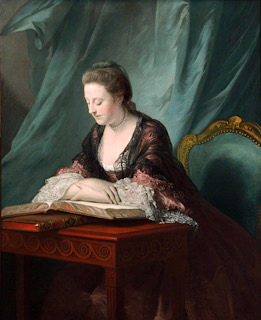
FitzGerald’s life and correspondence exemplify the culture, politics, and familial dynamics of eighteenth-century Anglo-Irish aristocracy. She has been depicted in numerous portraits by artists including Sir Joshua Reynolds, Allan Ramsay (pictured above), and Arthur Devis. Her story, and that of the Lennox sisters, is popularized in Stella Tillyard’s 1994 book Aristocrats and the six-part BBC/PBS television series adapted in 1999, highlighting her role in history, society, and culture.

In summary, Emily FitzGerald, Duchess of Leinster, is remembered as a central figure of aristocratic Ireland and Britain, a mother to a large and influential family, and a socially and politically engaged noblewoman whose life bridged familial devotion, political awareness, and cultural sophistication.
Leave a comment

Death of Thomas Campbell, Presbyterian Minister

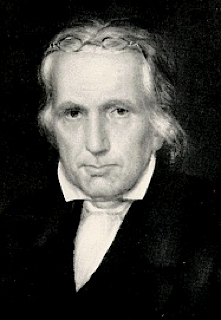
Thomas Campbell, a Presbyterian minister who becomes prominent during the Second Great Awakening of the United States, dies on January 4, 1854. Born in County Down, he begins a religious reform movement on the American frontier. He is joined in the work by his son, Alexander. Their movement, known as the “Disciples of Christ,” merges in 1832 with the similar movement led by Barton W. Stone to form what is now described as the American Restoration Movement (also known as the Stone-Campbell Restoration Movement).

Campbell is born on February 1, 1763, in County Down, Ireland (now Northern Ireland), and is raised as an Anglican. He is ordained a minister in the Scottish Seceder Presbyterian Church sometime after graduating from the University of Glasgow in 1786. He leaves Ireland for the United States in April 1807. This move is prompted by the advice of his physician. Once in America, disagreement arises between him and other Presbyterians over certain points related to Calvinist doctrine and the administration of the Eucharist.

The Campbell wing of the movement is launched when Campbell publishes the Declaration and Address of the Christian Association of Washington in 1809. The Presbyterian Synod had suspended his ministerial credentials. In the Declaration and Address he sets forth some of his convictions about the church of Jesus Christ, as he organises the Christian Association of Washington, in Washington County, Pennsylvania, not as a church but as an association of persons seeking to grow in faith. On May 4, 1811, the Christian Association reconstitutes itself as a congregationally governed church. With the building it constructs at Brush Run, Pennsylvania, it becomes known as Brush Run Church.

When their study of the New Testament leads the reformers to begin to practice baptism by immersion, the nearby Redstone Baptist Association invites Brush Run Church to join with them for the purpose of fellowship. The reformers agree, provided that they will be “allowed to preach and to teach whatever they learned from the Scriptures.”

Thomas and his son, Alexander, work within the Redstone Baptist Association during the period 1815 through 1824. While both the Campbells and the Baptists share practices of baptism by immersion and congregational polity, it is soon clear that the Campbells and their associates are not traditional Baptists. Within the Redstone Baptist Association, some of the Baptist leaders consider the differences intolerable when Alexander Campbell begins publishing a journal, Christian Baptist, which promotes reform. The Campbells anticipated the conflict and move their membership to a congregation of the Mahoning Baptist Association in 1824.

Campbell is a student of the Enlightenment philosopher John Locke. While he does not explicitly use the term “essentials,” in the Declaration and Address, Campbell proposes the same solution to religious division as had been advanced earlier by Herbert and Locke: “[R]educe religion to a set of essentials upon which all reasonable persons might agree.” The essentials he identifies are those practices for which the Bible provides “a ‘Thus saith the Lord,’ either in express terms or by approved precedent.” Unlike Locke, who sees the earlier efforts by Puritans as inherently divisive, he argues for “a complete restoration of apostolic Christianity.” He believes that creeds serve to divide Christians. He also believes that the Bible is clear enough that anyone can understand it and, thus, creeds are unnecessary.

Campbell combines the Enlightenment approach to unity with the Reformed and Puritan traditions of restoration. The Enlightenment affects the Campbell movement in two ways. First, it provides the idea that Christian unity can be achieved by finding a set of essentials that all reasonable people can agree on. The second is the concept of a rational faith that is formulated and defended on the basis of a set of facts derived from the Bible.

Thomas dies on January 4, 1854, in Bethany, West Virginia, and is buried next to his wife in the Campbell family cemetery.


Leave a comment

The Birth of John Toland, Philosopher & Freethinker

john-toland

John Toland, Irish rationalist philosopher and freethinker, and occasional satirist, is born in Ardagh on the Inishowen peninsula, a predominantly Catholic and Irish-speaking region in northwestern Ireland, on November 30, 1670. He writes numerous books and pamphlets on political philosophy and philosophy of religion which are early expressions of the philosophy of the Age of Enlightenment.

Very little is known of Toland’s early life. His parents are unknown. He later writes that he had been baptised Janus Junius, a play on his name that recalls both the Roman two-faced god Janus and Lucius Junius Brutus, reputed founder of the Roman Republic. According to his biographer, Pierre des Maizeaux, he adopts the name John as a schoolboy with the encouragement of his schoolteacher.

Having formally converted from Catholicism to Protestantism at the age of 16, Toland gets a scholarship to study theology at the University of Glasgow. In 1690, at age 19, the University of Edinburgh confers a master’s degree on him. He then gets a scholarship to spend two years studying at Leiden University in the Netherlands, and subsequently nearly two years at the University of Oxford in England (1694–95). The Leiden scholarship is provided by wealthy English Dissenters who hope Toland will go on to become a minister for Dissenters.

In Toland’s first and best-known book, Christianity not Mysterious (1696), he argues that the divine revelation of the Bible contains no true mysteries. Rather, all the dogmas of the faith can be understood and demonstrated by properly trained reason from natural principles. For this argument he is prosecuted by a grand jury in London. As he is a subject of the Kingdom of Ireland, members of the Parliament of Ireland propose that he should be burned at the stake. In his absence three copies of the book are burned by the public hangman in Dublin as the content is contrary to the core doctrines of the Church of Ireland. Toland bitterly compares the Protestant legislators to “Popish Inquisitors who performed that Execution on the Book, when they could not seize the Author, whom they had destined to the Flames.”

After his departure from Oxford, Toland resides in London for most of the rest of his life but is also a somewhat frequent visitor to Continental Europe, particularly Germany and the Netherlands. He lives on the Continent from 1707 to 1710.

John Toland dies in Putney on March 10, 1722. Just before he dies, he composes his own epitaph: “He was an assertor of liberty, a lover of all sorts of learning … but no man’s follower or dependent. Nor could frowns or fortune bend him to decline from the ways he had chosen.” The 1911 Encyclopædia Britannica says of him that at his death in London at age 51 “he died… as he had lived, in great poverty, in the midst of his books, with his pen in his hand.”

Very shortly after his death a lengthy biography of Toland is written by Pierre des Maizeaux.

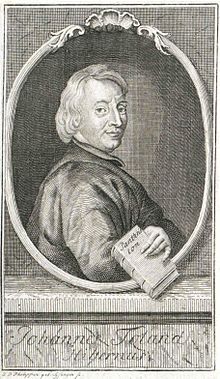
(Pictured: The only known image of John Toland)