seamus dubhghaill

Promoting Irish Culture and History from Little Rock, Arkansas, USA


Leave a comment

Death of Irish Tenor Frank Patterson

Frank Patterson, internationally renowned Irish tenor following in the tradition of singers such as Count John McCormack and Josef Locke, dies in New York City on June 10, 2000. He is known as “Ireland’s Golden Tenor.”

Patterson is born on October 5, 1938, in Clonmel, County Tipperary. As a boy Patterson performs with his local parish choir and is involved in maintaining the annual tradition of singing with the “Wrenboys.” He sings in the local St. Mary’s Choral Society and at a production of The Pirates of Penzance performed with both his parents. His interests extend beyond music and as a boy he represents Marlfield GAA hurling club, plays tennis at Hillview and golf at the Mountain Road course. He quits school at an early stage to work in the printing business of his mother’s family. He moves to Dublin in 1961 to enroll at the National Academy of Theatre and Allied Arts where he studies acting while at the same time receiving vocal training from Hans Waldemar Rosen. In 1964, he enters the Feis Ceoil, a nationwide music competition, in which he wins several sections including oratorio, lieder and the German Gold Cup.

Patterson gives classical recitals around Ireland and wins scholarships to study in London, Paris and in the Netherlands. While in Paris, he signs a contract with Philips Records and releases his first record, My Dear Native Land. He works with conductors and some of the most prestigious orchestras in Europe including the London Symphony Orchestra and Orchestre de Paris. He also gains a reputation as a singer of Handel, Mozart, and Bach oratorios and German, Italian and French song. He has a long-running programme on RTÉ titled For Your Pleasure.

In the early 1980s Patterson moves to the United States, making his home in rural Westchester County, New York. A resurgence of interest in Irish culture encourages him to turn towards a more traditional Irish repertoire. He adds hymns, ballads, and traditional as well as more popular tunes to his catalogue. In March 1988, he is featured host in a Saint Patrick’s Day celebration of music and dance at New York City’s famous Radio City Music Hall. He also gives an outdoor performance before an audience of 60,000 on the steps of the United States Capitol in Washington, D.C. with the National Symphony Orchestra.

Patterson is equally at home in more intimate settings. His singing in the role of the Evangelist in Bach’s St. John Passion is given fine reviews. Further recordings follow, of Beethoven arrangements, Irish songs, Berlioz songs, Purcell songs and others, all on the Philips label.

Patterson performs sold-out concerts from London’s Royal Albert Hall to New York’s Carnegie Hall, and with his family he presents two concerts at the White House, for presidents Ronald Reagan in 1982 and Bill Clinton in 1995. He records over thirty albums in six languages, wins silver, gold and platinum discs and is the first Irish singer to host his own show in Radio City Music Hall in New York.

Rising to greater prominence with the new popularity of Celtic music in the 1990s, Patterson sees many of his past recordings reissued for American audiences, and in 1998 he stars in the PBS special Ireland in Song. His last album outsells Pavarotti.

In recognition of his musical achievements, he is awarded an honorary doctorate from Salve Regina University in Newport, Rhode Island in 1990, an honorary doctorate in fine arts from Manhattan College in 1996 and the Gold Medal of the Éire Society of Boston in 1998.

In 1999, Patterson learns he has a brain tumor. He has several operations in the following year and his condition appears to stabilise. He is diagnosed with a recurrence of his illness on May 7, 2000. He briefly recuperates and resumes performing. His last performance is on June 4, 2000, at Regis College in the Boston suburb of Weston, Massachusetts. Shortly thereafter he is admitted to the Memorial Sloan Kettering Cancer Center in New York where he lapses into a coma and dies on June 10, 2000, at the age of 61.

At his death accolades and tributes came from, among others, President of Ireland Mary McAleese, Taoiseach Bertie Ahern and Opposition leader John Bruton who said he had “the purest voice of his generation.”

Leave a comment

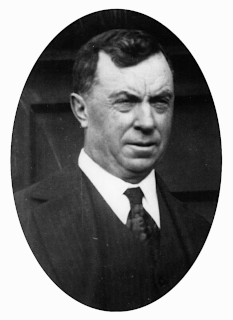
Birth of Daniel F. Cohalan, Irish American Lawyer & Politician

Daniel Florence Cohalan, American lawyer and politician of Irish descent, is born December 21, 1867, in Middletown, Orange County, New York, the eldest of five sons of Timothy E. Cohalan and Ellen Cohalan (née O’Leary), both Irish immigrants.

Cohalan graduates from Manhattan College in 1885, takes a master’s degree in 1894, and is given an honorary LL.D. in 1911. He is admitted to the bar in 1888, and practices law in New York City. In September 1889, he removes to the Bronx, practices law there, and enters politics, joining Tammany Hall, becoming an adviser to party boss Charles F. Murphy and later to John F. Curry. He is Grand Sachem of the Tammany Society from 1908 to 1911.

Cohalan is active in Democratic Party politics by 1900, drafting state party platforms and serving as a delegate to the national conventions in 1904 and 1908.

On May 18, 1911, Cohalan is appointed by Gov. John Alden Dix to the New York Supreme Court, to fill the vacancy caused by the election of James Aloysius O’Gorman as U.S. Senator from New York. In November 1911, he is elected to succeed himself. On December 28, 1923, he tenders his resignation, to become effective on January 12, 1924, claiming that the annual salary of $17,500 is not enough to provide for his large family.

Cohalan is a close associate of Irish revolutionary leader John Devoy and is influential in many Irish American societies including Clan na Gael. He helps to form the Sinn Féin League in 1907 and is a key organiser of the Irish Race Convention and the Friends of Irish Freedom (FOIF) on March 4-5, 1916. He is involved with the financing and planning of the Easter Rising in Dublin and is instrumental in sending Roger Casement to Germany in 1914. He is Chairman of the Irish Race Convention held in Philadelphia on February 22-23, 1919, and active in the Friends of Irish Freedom (1916–34).

When the United States enters World War I, Cohalan’s earlier work to obtain German assistance for Ireland becomes a liability, but he urges Irish Americans to support the war effort and to insist that self-determination for Ireland be included among the war aims. He opposes the peace treaty and the League of Nations and leads an Irish American delegation to the United States Senate Committee on Foreign Relations hearings, contributing to the defeat of the treaty in the Senate.

Cohalan strongly opposes President Woodrow Wilson‘s proposals for the League of Nations, on the basis that the Irish Republic had been denied a policy of self-determination at the Paris Peace Conference in 1919. In 1920, he works for the nomination of Hiram W. Johnson as the Republican Party candidate for president. His quarrels with Franklin D. Roosevelt begin in 1910, and he fights Roosevelt’s nomination for president in 1932 and 1936. He breaks with both Éamon de Valera and Irish American leader Joseph McGarrity in late 1919 on Irish American political direction.

In the aftermath of the Anglo–Irish Treaty, Cohalan and the FOIF back Arthur Griffith, Michael Collins and the Irish Free State. He visits Ireland in 1923 and supports William T. Cosgrave in the election of that year.

Cohalan dies at his home in Manhattan, New York, on November 12, 1946, and is buried on November 15 at the Calvary Cemetery in Woodside, Queens, New York. The Daniel F. Cohalan papers are in the possession of the American Irish Historical Society, New York.

State Senator John P. Cohalan (1873–1950) is one of Cohalan’s eleven siblings, and church historian Monsignor Florence Daniel Cohalan (1908–2001) is one of his nine children.


Leave a comment

Birth of Irish Tenor Frank Patterson

Frank Patterson, internationally renowned Irish tenor following in the tradition of singers such as Count John McCormack and Josef Locke, is born on October 5, 1938, in Clonmel, County Tipperary. He is known as “Ireland’s Golden Tenor.”

As a boy Patterson performs with his local parish choir and is involved in maintaining the annual tradition of singing with the “Wrenboys.” He sings in the local St. Mary’s Choral Society and at a production of The Pirates of Penzance performed with both his parents. His interests extend beyond music and as a boy he represents Marlfield GAA hurling club, plays tennis at Hillview and golf at the Mountain Road course. He quits school at an early stage to work in the printing business of his mother’s family. He moves to Dublin in 1961 to enroll at the National Academy of Theatre and Allied Arts where he studies acting while at the same time receiving vocal training from Hans Waldemar Rosen. In 1964, he enters the Feis Ceoil, a nationwide music competition, in which he wins several sections including oratorio, lieder and the German Gold Cup.

Patterson gives classical recitals around Ireland and wins scholarships to study in London, Paris and in the Netherlands. While in Paris, he signs a contract with Philips Records and releases his first record, My Dear Native Land. He works with conductors and some of the most prestigious orchestras in Europe including the London Symphony Orchestra and Orchestre de Paris. He also gains a reputation as a singer of Handel, Mozart, and Bach oratorios and German, Italian and French song. He has a long-running programme on RTÉ titled For Your Pleasure.

In the early 1980s Patterson moves to the United States, making his home in rural Westchester County, New York. A resurgence of interest in Irish culture encourages him to turn towards a more traditional Irish repertoire. He adds hymns, ballads, and traditional as well as more popular tunes to his catalogue. In March 1988 he is featured host in a St. Patrick’s Day celebration of music and dance at New York City‘s famous Radio City Music Hall. He also gives an outdoor performance before an audience of 60,000 on the steps of the United States Capitol in Washington, D.C. with the National Symphony Orchestra.

Patterson is equally at home in more intimate settings. His singing in the role of the Evangelist in Bach’s St. John Passion is given fine reviews. Further recordings follow, of Beethoven arrangements, Irish songs, Berlioz songs, Purcell songs and others, all on the Philips label.

Patterson performs sold-out concerts from London’s Royal Albert Hall to New York’s Carnegie Hall, and with his family he presents two concerts at the White House, for presidents Ronald Reagan in 1982 and Bill Clinton in 1995. He records over thirty albums in six languages, wins silver, gold and platinum discs and is the first Irish singer to host his own show in Radio City Music Hall in New York.

Rising to greater prominence with the new popularity of Celtic music in the 1990s, Patterson sees many of his past recordings reissued for American audiences, and in 1998 he stars in the PBS special Ireland in Song. His last album outsells Pavarotti.

In recognition of his musical achievements, he is awarded an honorary doctorate from Salve Regina University in Newport, Rhode Island in 1990, an honorary doctorate in fine arts from Manhattan College in 1996 and the Gold Medal of the Éire Society of Boston in 1998.

In 1999, Patterson learns he has a brain tumour. He has several operations in the following year and his condition appears to stabilise. He is diagnosed with a recurrence of his illness on May 7, 2000. He briefly recuperates and resumes performing. His last performance is on June 4, 2000, at Regis College in the Boston suburb of Weston, Massachusetts. Shortly thereafter he is admitted to the Memorial Sloan Kettering Cancer Center in New York where he lapses into a coma and dies on June 10, 2000, at the age of 61.

At his death accolades and tributes came from, among others, President of Ireland Mary McAleese, Taoiseach Bertie Ahern and Opposition leader John Bruton who said he had “the purest voice of his generation.”


Leave a comment

Birth of Dennis Day, Radio, TV & Film Personality

dennis-day

Dennis Day, American singer, radio, television and film personality and comedian of Irish descent, is born Owen Patrick Eugene McNulty on May 21, 1916 in The Bronx borough of New York City.

Day is the second of five children born to Irish immigrants Patrick McNulty and Mary (née Grady) McNulty. He graduates from Cathedral Preparatory School and Seminary in New York City, and attends Manhattan College in the Bronx, where he sings in the glee club.

Mary Livingstone, wife of comedian Jack Benny, brings Day to Benny’s attention after hearing him on the radio during a visit to New York. She takes a recording of Day’s singing to Benny, who then goes to New York to audition Day. The audition results in Day’s role on the Benny program.

Day appears for the first time on Benny’s radio show on October 8, 1939, taking the place of another famed tenor, Kenny Baker. He remains associated with Benny’s radio and television programs until Benny’s death in 1974. He is introduced as a young, naive boy singer, a character he keeps through his whole career.

Besides singing, Day is an impressionist. On the Benny program, he performs impressions of various noted celebrities of the era, including Ronald Colman, Jimmy Durante and James Stewart.

From 1944 through 1946 Day serves in the United States Navy as a Lieutenant. While in service he is temporarily replaced on the Benny radio program by fellow tenor Larry Stevens. On his return to civilian life, he continues to work with Benny while also starring on his own NBC show, A Day in the Life of Dennis Day (1946–1951). His last radio series is a comedy/variety show that airs on NBC’s Sunday afternoon schedule during the 1954–55 season.

An attempt is made to adapt A Day in the Life Of Dennis Day as an NBC filmed series, produced by Jerry Fairbanks for Dennis’ sponsor, Colgate-Palmolive, featuring the original radio cast, but gets no farther than an unaired 1949 pilot episode. Eventually, his own TV series, The Dennis Day Show, is first telecast on NBC on February 8, 1952, and then in the 1953–1954 season. Between 1952 and 1978, he makes numerous TV appearances as a singer, actor and voice for animation, such as the Walt Disney feature Johnny Appleseed, handling multiple characters. His last televised work with Benny is in 1970, when they both appear in a public service announcement together to promote savings and loans.

Although his career is mainly radio and TV-based, Day also appears in a few films. These include Buck Benny Rides Again (1940) opposite Jack Benny, Sleepy Lagoon (1943), Music in Manhattan (1944), I’ll Get By (1950), Golden Girl (1951), The Girl Next Door (1953), and Won Ton Ton, the Dog Who Saved Hollywood (1976) as a singing telegraph man. For the soundtrack of My Wild Irish Rose (1947), a biopic about Chauncey Olcott, Day provides the singing voice to the acting of Dennis Morgan.

Dennis Day dies on June 22, 1988, of amyotrophic lateral sclerosis (ALS), more commonly known as Lou Gehrig’s disease, in Los Angeles, California. His star on the Hollywood Walk of Fame is at 6646 Hollywood Boulevard. He is interred in Holy Cross Cemetery in Culver City.