seamus dubhghaill

Promoting Irish Culture and History from Little Rock, Arkansas, USA


Leave a comment

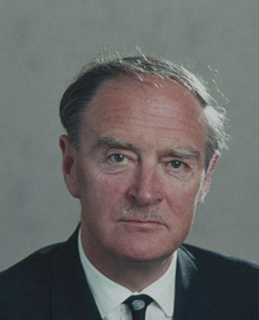
Birth of Kevin Christopher O’Higgins, Politician

iohiggs001p1

Kevin Christopher O’Higgins, Irish politician who serves as Minister for Economic Affairs from January 1922 to September 1922, Minister for External Affairs from June 1927 to July 1927, Minister for Justice from August 1922 to July 1927 and Vice-President of the Executive Council of the Irish Free State from 1922 to 1927, is born in Stradbally, Queen’s County (County Laois since 1922) on June 7, 1892. He serves as a Teachta Dála (TD) from 1921 to 1927 and is a Member of Parliament (MP) for Queen’s County from 1918 to 1921.

A man of intellectual power, O’Higgins is described by William Butler Yeats as “a great man in his pride confronting murderous men.” He is in fact murdered by maverick republicans while on his way to church.

Educated at University College Dublin, O’Higgins is apprenticed to his uncle, a lawyer. Following the Easter Rising in 1916, he joins the Sinn Féin nationalist movement and is imprisoned. In 1918, while still in jail, he is elected to Parliament from Queen’s County, and in the next year he becomes assistant to the minister of local government, William Thomas Cosgrave. He goes on to become a prominent member of Cumann na nGaedheal.

O’Higgins supports the Anglo-Irish Treaty with Great Britain that creates the Irish Free State. In 1922 he is appointed Minister for Economic Affairs and Vice-President of the Executive Council. He helps to draft the Irish Free State constitution and secures its passage through Dáil Éireann, lower house of the Oireachtas, the Irish parliament. Working for a united Ireland within the British Commonwealth, he plays an important part in the 1926 Imperial Conference. He also prominently represents the Free State in the League of Nations.

As Minister for Justice, O’Higgins establishes the Garda Síochána police force and takes summary measures to restore order following the civil war between the Free State forces and the Irish Republican Army (IRA). His role in the execution of 77 republicans in 1922–23 makes him many enemies, as does his sardonic wit, his inflammatory speeches during the civil war, and his curtailment of the liquor trade.

On Sunday, July 10, 1927, O’Higgins is assassinated at the age of 35 on the Booterstown Avenue side of Cross Avenue in Dublin, while on his way to Mass at the Church of the Assumption. The assassination is carried out by three anti-Treaty members of the IRA, Timothy Coughlan, Bill Gannon and Archie Doyle, in revenge for O’Higgins’ part in the executions of the 77 IRA prisoners during the Irish Civil War.

None of the three assassins is ever apprehended or charged, but Coughlan, a member of Fianna Fáil as well as the IRA, is killed in 1928 in Dublin by a police undercover agent whom he is attempting to murder. The other two benefit from the amnesty to IRA members issued by Éamon de Valera, upon his assumption of power in 1932. Gannon, who dies in 1965, joins the Communist Party of Ireland and plays a central role in organising Irish volunteers for the Spanish Civil War. Doyle remains a prominent IRA militant and takes part in various acts in the early 1940s. He lives to an old age, dying in 1980, and continues to take pride in having killed O’Higgins.
Leave a comment

Death of Liam Cosgrave, 6th Taoiseach of Ireland

liam-cosgrave

Liam Cosgrave, politician who serves as Taoiseach from February 1973 to July 1977, dies at the age of 97 in Tallaght, Dublin on October 4, 2017. He is the longest-lived Taoiseach, dying at the age of 97 years, 174 days.

Born in Castleknock, Dublin on April 13, 1920, Cosgrave is the son of William Thomas Cosgrave, the first President of the Executive Council and head of the government of the Irish Free State during the first 10 years of its existence (1922–32). He is educated at Castleknock College, Dublin, studies law at King’s Inns and is called to the Irish bar in 1943. In that same year he enters Dáil Éireann (the lower house of the Oireachtas, the Irish parliament), and he retains his seat until his retirement from politics in 1981.

In 1948, when the first inter-party government replaces Éamon de Valera’s Fianna Fáil regime, which had been in power for the previous 16 years, Cosgrave becomes Parliamentary Secretary to the Taoiseach and to the Minister for Industry and Commerce. It is a short-lived administration, going out of power in 1951 after three years of rule. But in a second inter-party government (1954–57), he becomes Minister for External Affairs and leads the first Irish delegation to the United Nations General Assembly in 1956.

Cosgrave succeeds James Dillon as leader of the Fine Gael party in 1965. Eight years later, as leader of a coalition government in which Fine Gael combines forces with the Labour Party, he becomes Taoiseach. He and British Prime Minister Edward Heath are the main participants in the intergovernmental conference at Sunningdale in December 1973 that gives birth to Northern Ireland’s first, though short-lived, power-sharing executive (1973–74). A devout Roman Catholic, he is intensely conservative on social issues and shocks his cabinet colleagues by voting against his own government’s bill on liberalizing the sale of contraceptives in 1974. The National Coalition is defeated in the 1977 Irish general election, largely on the economic issues of inflation and unemployment.

Cosgrave retires at the 1981 Irish general election. In 1981, he retires as Dáil Deputy for Dún Laoghaire to be replaced by his son, Liam T. Cosgrave. He reduces his involvement in public life but makes occasional appearances and speeches.

Liam Cosgrave dies on October 4, 2017, at the age of 97 of natural causes. He had been at Tallaght Hospital for several months prior to his death there. His funeral is held on October 7, 2017, after which he is interred alongside his father at Inchicore‘s Goldenbridge Cemetery.


Leave a comment

Liam Cosgrave Elected Taoiseach of Ireland

liam-cosgrave

Liam Cosgrave is elected the sixth Taoiseach of Ireland on March 14, 1973. He serves in the position from March 1973 to July 1977.

Cosgrave is born on April 13, 1920, in Castleknock, County Dublin. His father, William Thomas Cosgrave, was the first President of the Executive Council and head of the government of the Irish Free State during the first 10 years of its existence (1922–32). The eldest son, he is educated at Synge Street CBS, Castleknock College, Dublin, studies law at King’s Inns and is called to the Irish bar in 1943. In that same year he enters Dáil Éireann (the lower house of the Oireachtas, the Irish parliament), and he retains his seat until his retirement from politics in 1981.

In 1948, when the first inter-party government replaces Éamon de Valera’s Fianna Fáil regime, which had been in power for the previous 16 years, Cosgrave becomes parliamentary secretary to the Taoiseach and to the Minister for Industry and Commerce. It is a short-lived administration, going out of power in 1951 after three years of rule. But in a second inter-party government (1954–57), he becomes Minister for External Affairs and leads the first Irish delegation to the United Nations General Assembly in 1956.

Cosgrave succeeds James Dillon as leader of the Fine Gael party in 1965. Eight years later, as leader of a coalition government in which Fine Gael combines forces with the Labour Party, he becomes Taoiseach. He and British Prime Minister Edward Heath are the main participants in the intergovernmental conference at Sunningdale in December 1973 that gives birth to Northern Ireland’s first, though short-lived, power-sharing executive (1973–74).

A devout Roman Catholic, Cosgrave is intensely conservative on social issues and shocks his cabinet colleagues by voting against his own government’s bill on liberalizing the sale of contraceptives in 1974. The National Coalition is defeated in the general election of June 1977, largely on the economic issues of inflation and unemployment.

In 1981, Cosgrave retires as Dáil Deputy for Dún Laoghaire to be replaced by his son, Liam T. Cosgrave. He reduces his involvement in public life, but he makes occasional appearances and speeches. In October 2010 he attends the launch of The Reluctant Taoiseach, a book about former Taoiseach John A. Costello written by David McCullagh. He also appears in public for the Centenary of the Easter Rising in 2016, watching from a car as the military parade marches through Dublin. On May 8, 2016, in a joint appearance with the grandsons of Éamonn Ceannt and Cathal Brugha, he unveils a plaque commemorating the 1916 Rising at St. James’s Hospital, the former site of the South Dublin Union.

Liam Cosgrave dies on October 4, 2017, at the age of 97 of natural causes. He had been at Tallaght Hospital for several months prior to his death there. His funeral is held on October 7, 2017, after which he is interred alongside his father at Inchicore‘s Goldenbridge Cemetery.

Taoiseach Leo Varadkar says “Liam Cosgrave was someone who devoted his life to public service; a grateful country thanks and honours him for that and for always putting the nation first. Throughout his life he worked to protect and defend the democratic institutions of our State and showed great courage and determination in doing so. He always believed in peaceful co-operation as the only way of achieving a genuine union between the people on this island, and in the 1970s he celebrated that this country had embarked, in his own words, ‘on a new career of progress and development in the context of Europe’. I had the honour on a few occasions to meet and be in the presence of Liam Cosgrave, and I was always struck by his commanding presence and great humility, which in him were complementary characteristics.”


Leave a comment

Birth of Patrick McGilligan, Fine Gael Politician

patrick-mcgilligan

Patrick Joseph McGilligan, lawyer and Cumann na nGaedheal and Fine Gael politician, is born in Hanover Place, Coleraine, County Londonderry on April 12, 1889. He serves as the 14th Attorney General of Ireland from 1954 to 1957, Minister for Finance from 1948 to 1951, Minister for External Affairs from 1927 to 1932 and Minister for Industry and Commerce from 1924 to 1932. He serves as a Teachta Dála (TD) from 1923 to 1965.

McGilligan is the son of Patrick McGilligan, a draper, who serves as Member of Parliament (MP) for South Fermanagh from 1892 to 1895 for the Irish Parliamentary Party, and Catherine O’Farrell. He is educated at St. Columb’s College in Derry, Clongowes Wood College in County Kildare and University College Dublin. He joins Sinn Féin but is unsuccessful in his attempt to be elected as a MP at the 1918 general election. He is called to the bar in 1921.

McGilligan is elected as a Cumann na nGaedheal TD for the National University of Ireland at a by-election held on November 3, 1923. Between 1924 and 1932 he serves as Minister for Industry and Commerce, notably pushing through the Shannon hydroelectric scheme, then the largest hydroelectricity project in the world. In 1927 he sets up the Electricity Supply Board (ESB), and also the Agricultural Credit Corporation.

Also, in 1927 McGilligan takes over the External Affairs portfolio following the assassination of Kevin O’Higgins by the anti-Treaty elements of the Irish Republican Army (IRA), in revenge for O’Higgins’ support for the execution of Republican prisoners during the Irish Civil War. In this position he is hugely influential at the Committee on the Operation of Dominion Legislation and at the Imperial Conference in 1930 jointly with representatives of Australia, Canada, New Zealand, South Africa and the United Kingdom. The Statute of Westminster that emerges from these meetings gives greater power to dominions in the Commonwealth like the Irish Free State.

During McGilligan’s period in opposition from 1932 to 1948 he builds up a law practice and becomes professor of constitutional and international law at University College, Dublin. When the National University of Ireland representation is transferred to Seanad Éireann in 1937, he is elected as TD for the Dublin North-West constituency.

In 1948 McGilligan is appointed Minister for Finance in the first Inter-Party Government. As Minister he undertakes some major reforms. He instigates a new approach where Government invests radically in capital projects. Colleagues however complain of his frequent absence from the Cabinet table and the difficulty of contacting him at the Department of Finance. Between 1954 and 1957 he serves as Attorney General. He retires from Dáil Éireann at the 1965 general election, having served for over 40 years.

Patrick McGilligan dies in Dublin on November 15, 1979. Despite his well-known fondness for predicting that he would die young, he reaches the age of ninety. A later Attorney General, John M. Kelly, in the preface to his definitive text, The Irish Constitution (1980), notes the remarkable number of senior judges who are former students of McGilligan and suggests that, given his own firm belief in the value of judicial review, he deserves much of the credit for the remarkable development of Irish law in this field since the early 1960s.