seamus dubhghaill

Promoting Irish Culture and History from Little Rock, Arkansas, USA


Leave a comment

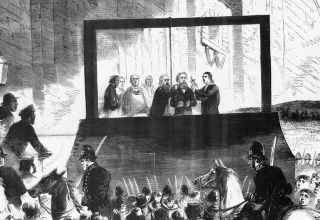
The Execution of Fenian Michael Barrett

Michael Barrett, Irish activist and a member of the Fenians, is executed on May 26, 1868, for his part in the Clerkenwell Gaol explosion in December 1867. From all the evidence, it is likely he is not guilty. He is the last man to be publicly hanged in England.

Barrett is born in 1841 in Drumnagreshial in the Ederney area of County Fermanagh. As a young man and in search of work, he moves to Glasgow where, at the age of 27, he joins the Irish Republican Brotherhood (IRB), often referred to as Fenians. In the 1860s, the IRB is a political movement that dominates Irish Republican politics and defies the Catholic Church, middle-class nationalists who advocate milder approaches and Irish Unionists. Tens of thousands of Irishmen in both Ireland and Great Britain are recruited into its ranks.

The Clerkenwell bombing is the most infamous action carried out by the Fenians in mainland Britain. It results in a long-lived backlash that foments much hostility against the Irish community in Britain.

The events that lead up to the bombing start with the arrest in November 1867 of Ricard O’Sullivan Burke, a senior Fenian arms agent who planned the “prison-van escape” in Manchester a few months earlier. O’Sullivan-Burke is subsequently imprisoned on remand in the Middlesex House of Detention, Clerkenwell. On December 13, an attempt to rescue him is made by blowing a hole in the prison wall. The explosion is seriously misjudged. It demolishes not only a large section of the wall, but also a number of tenement houses opposite in Corporation Lane (now Corporation Row), killing 12 people and wounding up to 120 more.

The bombing has a traumatic effect on British working-class opinion. The radical, Charles Bradlaugh, condemns the incident in his newspaper, the National Reformer, as an act “calculated to destroy all sympathy, and to evoke the opposition of all classes.”

The day before the explosion, Prime Minister Benjamin Disraeli bans all political demonstrations in London in an attempt to put a stop to the weekly meetings and marches that are being held in support of the Fenians. He fears that the ban might be challenged, but the explosion has the effect of turning public opinion in his favour.

Months earlier, Barrett had been arrested in Glasgow for illegally discharging a firearm and allegedly false evidence is used to implicate him in the Clerkenwell Prison explosion. In court, he produces witnesses who testify that he had been in Scotland on the date of the incident. The main case against him rests on the evidence of Patrick Mullany, a Dubliner known to have given false testimony before and whose price is a free passage to Australia, who tells the court that Barrett had informed him that he had carried out the explosion with an accomplice by the name of Murphy. After two hours of deliberation the jury pronounces Barrett guilty. On being asked if he has anything to say before sentence is passed, he delivers an emotional speech from the dock.

Many people, including a number of radical MPs, press for clemency. In Fermanagh, Barrett’s aged mother walks several miles in the snow to appeal to the local Irish Conservative Party MP, Captain Mervyn Edward Archdale, a staunch Orangeman, who rejects her.

Barrett is executed outside the walls of Newgate Prison on May 26, 1868, before a crowd of two thousand who boo, jeer and sing “Rule, Britannia!” and “Champagne Charlie” as his body drops. His execution is the last public hanging to take place in England. The hangman is William Calcraft.

Until their transfer to the City of London Cemetery, Barrett’s remains lay for 35 years in a lime grave inside the walls of Newgate Prison. When the prison is demolished in 1903 his remains are taken to their present resting place. Today the grave is a place of Fenian pilgrimage and is marked by a small plaque.

After the explosion, the Prime Minister Disraeli advocates the suspension of the Habeas Corpus Act 1862 in Great Britain, as is already the case in Ireland. Greater security measures are quickly introduced. Thousands of special constables are enrolled to aid the police and at Scotland Yard a special secret service department is established to meet the Fenian threat. Although a number of people are arrested and brought to trial, Barrett is the only one to receive the death sentence.

Within days of the explosion, the Liberal Party leader, William Ewart Gladstone, then in opposition, announces his concern about Irish Nationalist grievances and says that it is the duty of the British people to remove them. Later, he says that it is the Fenian action at Clerkenwell that turned his mind towards Home Rule. When Gladstone discovers at Hawarden later that year that Queen Victoria had invited him to form a government, he famously states, “my mission is to pacify Ireland.”

Leave a comment

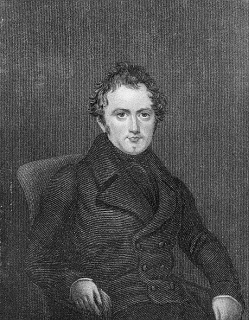
Death of James Bronterre O’Brien, Chartist Leader, Reformer & Journalist

James Bronterre O’Brien, Irish Chartist leader, reformer and journalist, dies of complications from bronchitis on December 23, 1684.

O’Brien is born near Granard, County Longford, in 1804 or 1805. He goes to a local church school, where one of his teachers recognises his intellectual abilities and arranges for him to be educated at the progressive Lovell Edgeworth School. In 1822 he proceeds to Trinity College, Dublin, where he wins several academic prizes including the Science Gold Medal. After studying law at King’s Inns, he moves to England in 1829 with the intention of becoming a lawyer in London.

In London he joins the Radical Reform Association where he meets Henry Hunt, William Cobbett, Henry Hetherington and other leaders of the struggle for universal suffrage. In 1836 he joins the London Working Men’s Association.

O’Brien begins contributing articles to Henry Hetherington’s Poor Man’s Guardian. He signs these articles with the pseudonym ‘Bronterre’ and he eventually adopts it as his middle name. He works very closely with Hetherington and when he is imprisoned for publishing an unstamped newspaper, O’Brien takes over the editorship of Poor Man’s Guardian. He and Hetherington also collaborate on other unstamped newspapers such as The Destructive and the London Dispatch. In 1837 he begins publishing Bronterre’s National Reformer. In an attempt to avoid paying stamp duty, the journal includes essays rather than ‘news items.’ During this period, he and Hetherington lead the struggle against the stamp duty and are consistent in their arguments that working people need cheap newspapers that contain political information.

O’Brien is influenced by the socialist writer François-Noël Babeuf, who had been executed during the French Revolution. In 1836 he begins publishing translations of Babeuf’s work in the Poor Man’s Guardian. He also includes Filippo Buonarroti‘s account of Babeuf and the Conspiracy of Equals. He becomes fascinated with the history of radicalism and begins work on books on Maximilien Robespierre, the French Revolution and the English Commonwealth. However, the authorities raid his house in 1838 and seize his manuscripts and the projects are never completed.

In 1838 O’Brien adds his support for a more militant approach to winning the vote that is being advocated by Feargus O’Connor and George Julian Harney through the London Democratic Association. However, he, unlike O’Connor, refuses to support the use of violence to achieve universal suffrage. He argues that the Chartists should adopt a policy that is midway between the petitioning supported by William Lovett and the Moral Force Chartists, and the violence being threatened by O’Connor’s Physical Force group.

After Bronterre’s National Reformer ceases publication, O’Brien works for O’Connor’s Northern Star. His articles play an important role in increasing the circulation of what had become the most important of the radical newspapers. As well as writing for the Northern Star, he also finds time to publish his own newspaper, The Operative.

O’Brien continues to be active in the Chartist movement and in 1840 he is arrested and charged with making a seditious speech in Manchester. He is convicted of sedition and sentenced to eighteen months in Lancaster Prison. When he is released from prison, he finds it difficult to continue working with Feargus O’Connor. The two men disagree over the issue of physical force. Another source of dispute concerns parliamentary elections. O’Brien favours the idea of putting up Chartist candidates whereas O’Connor prefers the tactic of putting pressure on the Whig government by threatening to vote for Tory candidates. He is involved in standing Chartist candidates against Government Ministers in key seats, particularly in standing against Henry John Temple, 3rd Viscount Palmerston in Tiverton.

O’Brien finally breaks with O’Connor when, along with Henry Vincent and Robert George Gammage, he joins the Complete Suffrage Union. He continues to publish newspapers. He joins with his old friend Henry Hetherington to revive the Poor Man’s Guardian in 1843, and this is followed by the National Reformer in 1844. These newspapers are not a financial success and by May 1847, both papers cease publication.

After the failure of these two newspapers, O’Brien concentrates on writing for other publications such as Reynold’s Weekly Newspaper and the Glasgow Sentinel. He also gives public lectures and in 1851 he opens the Eclectic Institute in Denmark Street, Soho, London, where adult education classes are offered in English, French, science and mathematics.

By the 1850s O’Brien’s poverty begins to damage his health. He suffers from bronchitis and his Chartist friends attempt to raise money in recognition of the great sacrifices that he had made in the struggle to win universal suffrage and the freedom of the press. However, the damage to his health is so bad that he spends his last years bedridden. He dies on December 23, 1864, and is buried in Abney Park Cemetery.


Leave a comment

The Clerkenwell Explosion

The Clerkenwell explosion, also known as the Clerkenwell Outrage, is a bombing that takes place in London on December 13, 1867. The Irish Republican Brotherhood (IRB), nicknamed the “Fenians“, explode a bomb to try to free one of their members being held on remand at Clerkenwell Prison. The explosion damages nearby houses, kills 12 people and causes 120 injuries. None of the prisoners escape.

The whole of Ireland has been under British rule since the end of the Nine Years’ War in 1603. The Irish Republican Brotherhood is founded on March 17, 1858 with the aim of establishing an independent democratic republic in Ireland, and the Fenian Brotherhood, ostensibly the American wing of the Irish Republican Brotherhood, is founded in New York City in 1859.

On November 20, 1867, Ricard O’Sullivan Burke and his companion Joseph Casey are arrested in Woburn Square in London. Burke had purchased weapons for the Fenians in Birmingham. Burke is charged with treason and Casey with assaulting a constable. They are remanded in custody pending trial, and imprisoned at the Middlesex House of Detention, also known as Clerkenwell Prison.

Burke’s IRB colleagues try to free him on Thursday, December 12, without success. They try to blow a hole in the prison wall while the prisoners are exercising in the prison yard but their bomb fails to explode. They try again at about 3:45 PM the following day, December 13, using a barrel of gunpowder concealed on a costermonger‘s barrow. The explosion demolishes a 60-foot section of the wall, but no one escapes. The prison authorities had been forewarned and the prisoners were exercised earlier in the day, so they are locked in their cells when the bomb explodes. The blast also damages several nearby tenement houses on Corporation Lane on the opposite side of the road, killing 12 people and causing many injuries, with estimates ranging from around 30 to over 120.

Charges are laid against eight, but two turn Queen’s evidence. Michael Barrett and five others are tried at the Old Bailey in April 1868. Lord Chief Justice Sir Alexander Cockburn and Baron George Bramwell preside with a jury. The prosecution is led by the Attorney General Sir John Karslake and the Solicitor General Sir William Baliol Brett supported by Hardinge Giffard QC and two junior counsel. Defence barristers included Montagu Williams and Edward Clarke.

Barrett, a native of County Fermanagh, protests his innocence, and some witnesses testify that he was in Scotland on December 13, but another identifies him as being present at the scene. Two defendants are acquitted on the instructions of the presiding judges in the course of the trial, leaving four before the jury. Following deliberations, three of the defendants are acquitted, but Barrett is convicted of murder on April 27 and sentenced to death. Barrett is hanged by William Calcraft on the morning of Tuesday, May 26, 1868, outside Newgate Prison. He is the last man to be publicly hanged in England, with the practice being ended from May 29, 1868, by the Capital Punishment Amendment Act 1868.

The trial of Burke and Casey, and a third defendant, Henry Shaw, begains on April 28, all charged with treason. The prosecution claims that Burke had been involved in finding arms for the Fenians in Birmingham in late 1865 and early 1866, where he was using the name “Edward C Winslow.” The case against Casey is ultimately withdrawn, but Burke and Shaw are found guilty of treason on April 30 and sentenced to 15 years and 7 years of penal servitude respectively.

The bombing enrages the British public, souring relations between England and Ireland and causing a panic over the Fenian threat. The radical, Charles Bradlaugh, condemns the incident in his newspaper, the National Reformer, as an act “calculated to destroy all sympathy, and to evoke the opposition of all classes.” The Metropolitan Police form a Special Irish Branch at Scotland Yard in March 1883, initially as a small section of the Criminal Investigation Department, to monitor Fenian activity.

In April 1867, the supreme council of the Irish Republican Brotherhood condemns the Clerkenwell Outrage as a “dreadful and deplorable event,” but the organisation returns to bombings in Britain in 1881 to 1885, with the Fenian dynamite campaign.

(Pictured: The House of Detention in Clerkenwell after the bombing as seen from within the prison yard)