Originally, North Tipperary County Council holds its meetings in Nenagh Courthouse. The county council relocates to a new facility, known as the Civic Offices, in 2005.
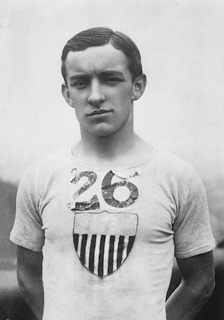
Born in New York City on April 10, 1886, to a family of Irish emigrants from Nenagh, County Tipperary, Hayes is probably best known for winning the controversial marathon race at the London Olympics. He is one of only three male American athletes to win the Olympic Marathon, the other two being Thomas Hicks in 1904 and Frank Shorter in 1972.
In 1905, Hayes joins Bloomingdale Brothers as an assistant to the manager of the sporting goods department. At night, he trains on a cinder track on the roof of the Bloomingdale’s building in New York. He is promoted to manager of the department after returning from his Olympic victory.
Hayes starts his athletics career with a fifth-place finish at the 1906 Boston Marathon, running for the St. Bartholemew Athletic Club in a time of 2:55:38. He improves on that the following year by finishing third in Boston with a time of 2:30:38 and winning the inaugural Yonkers Marathon. In 1908, he finishes second, 21 seconds behind Thomas Morrissey in the Boston Marathon with a time of 2:26:04 and thus qualifies for the Olympic Games held in London that same year.
The British Olympic Association wants to start the race in front of Windsor Castle and finish in front of the royal reviewing stand at the White City Stadium. As a result, the distance is 26 miles and 385 yards (42.195 km). It takes until 1921 for the IAAF to codify that distance as the official length of the marathon. Prior to this, races are usually about 25 miles (40 km).
At the race itself, Dorando Pietri from Italy is the first to enter the stadium. But Pietri has depleted himself to open a more than 10 minute lead over the field and is suffering extreme fatigue and dehydration. When he enters the stadium, he takes the wrong path, and when umpires redirect him, he falls down for the first time. He gets up with their help in front of 75,000 spectators.
Pietri falls four more times, and each time, the umpires help him up. He manages to finish the race first, with a time of 2 hours, 54 minutes, 46 seconds. During all these stumbles and the direct aid from the officials, Hayes has now entered the stadium, finishing the race second, with a time of 2 hours, 55 minutes, 18 seconds.
Pietri is disqualified after the U.S. officials file a protest. Despite the official result, Pietri achieves much more fame than Hayes when Queen Alexandra awards him a special silver cup.
All of the Olympic officials are British, and the Pietri incident joins a list of other controversial calls in the 1908 Olympics, prompting the International Olympic Committee to start appointing judges from a wide variety of countries instead of only the host country.
After the dramatic Olympic battle between Pietri and Hayes, public interest is such that a match race is organized by professional promoters in November 1908 at Madison Square Garden. Pietri wins the race by 75 yards. A second match race is held on March 15, 1909, and again Pietri wins. Both Pietri and Hayes turn professional after the Olympics and achieve great fame.
Hayes is a trainer for the U.S. team for the 1912 Summer Olympics. He later teaches physical education and is a food broker. Hayes dies on August 25, 1965, in Englewood, New Jersey.
The Shore Athletic Club of New Jersey (Shore AC) holds the Johnny Hayes collection as lifetime trustees. Included in the collection are numerous trophies, as well as the 1908 Olympic gold medal for the marathon. This represents the first Olympic gold medal to be won at the modern marathon distance of 26 miles, 385 yards.
Hayes is a guest on the television show I’ve Got a Secret as one of five former Olympic champions, which airs on October 13, 1954.
In 2002, three statues honoring Olympic champions with links to Nenagh, Matt McGrath, Johnny Hayes and Bob Tisdall, are unveiled in front of the Nenagh Courthouse.
Born to a family of Irish landed gentry, he lives on his father’s plantation in Ceylon until the age of five, when they return to the family home in Nenagh, County Tipperary. Following prep school at Mourne Grange, he goes on to Shrewsbury School, where he wins the Public Schools 402 metres, and at Gonville and Caius College, Cambridge, where he wins a record four events – 402 metres and 110 metres hurdles, long jump and shot put – in the annual match against Oxford. This record is only equaled nearly 60 years later.
Tisdall sets South African and Canadian records in the 201 metres low hurdles in 1929, a year later setting Greek records in the same event. While at Cambridge in March 1932, he decides to try for a place on the Irish Olympic squad and, after he runs a record 54.2 seconds for the Irish Championship 402 metres hurdles in June that year, the authorities agree to let him run in his new event at the Los Angeles Olympic Games.
Tisdall had run only six 400 metres hurdles when he wins the gold medal at the 1932 Olympic Games in a world record time of 51.7 seconds, which is not recognised under the rules of the time because he had a hit a hurdle. Later, because of the notoriety of this incident, the rules are changed and the President of the International Olympic Committee, Juan Antonio Samaranch, presents Tisdall with a Waterford Crystal rose bowl with the image of him knocking over the last hurdle etched into the glass. Though the International Amateur Athletic Federation (IAAF) did not recognise the record at the time, they now recognise the mark, giving Tisdall credit for setting the milestone of being the first man under 52 seconds.
Following his victory, Tisdall is invited to a dinner in Los Angeles where he is seated next to Amelia Earhart on one side and Douglas Fairbanks, Jr. on the other.
Later in life, Tisdall lives in South Africa, where he runs a gymnasium during the day, which he converts to a night club after dark. He grows coffee in Tanzania, but moves to Nambour, Queensland in 1969 with his wife Peggy, where he farms fruit crops and cattle. He admits to running his last race at the age of 80, though he runs in the Sydney Olympics torch relay at age 93. At that point he is the oldest living recipient of an individual track and field Olympic medal。
At the age of 96 Tisdall falls down a steep set of rock stairs and breaks his shoulder, ribs and ruptures his spleen. He never completely recovers and dies on July 27, 2004. At that time, he is the world’s oldest track and field Olympic Gold medalist. He does not want a funeral because “they are altogether too sad.” His wake is attended by family and a few friends.
In 2002, three statues honouring Olympic champions with links to Nenagh, Matt McGrath, Johnny Hayes and Bob Tisdall, are unveiled in front of the Nenagh Courthouse.



 seamus dubhghaill