seamus dubhghaill

Promoting Irish Culture and History from Little Rock, Arkansas, USA


Leave a comment

Founding of the Auxiliaries Division of the Royal Irish Constabulary

The Auxiliary Division, generally known as the Auxiliaries or Auxies, a paramilitary unit of the Royal Irish Constabulary (RIC) during the Irish War of Independence (1919-21), is founded on July 27, 1920, by Major-General Henry Hugh Tudor. It is made up of former British Army officers, most of whom come from Great Britain and had fought in World War I.

In September 1919, the Commander-in-Chief, Ireland, Sir Frederick Shaw, suggests that the police force in Ireland be expanded via the recruitment of a special force of volunteer British ex-servicemen. During a Cabinet meeting on May 11, 1920, the Secretary of State for War, Winston Churchill, suggests the formation of a “Special Emergency Gendarmerie, which would become a branch of the Royal Irish Constabulary.” Churchill’s proposal is referred to a committee chaired by General Sir Nevil Macready, Commander-in-Chief of the British forces in Ireland. Macready’s committee rejects Churchill’s proposal, but it is revived two months later, in July, by the Police Adviser to the Dublin Castle administration in Ireland, Major-General Henry Hugh Tudor. In a memo dated July 6, 1920, Tudor justifies the scheme on the grounds that it will take too long to reinforce the Royal Irish Constabulary (RIC) with ordinary recruits. Tudor’s new “Auxiliary Force” is to be strictly temporary with its members enlisting for a year. Their pay is to be £7 per week (twice what a constable is paid), plus a sergeant’s allowances, and are to be known as “Temporary Cadets.” At that time, one of high unemployment, a London advertisement for ex-officers to manage coffee stalls at two pounds ten shillings a week receives five thousand applicants.

The Auxiliary Division is recruited in Great Britain from among ex-officers who had served in World War I, especially those who had served in the British Army (including the Royal Flying Corps). Most recruits are from Britain, although some are from Ireland, and others come from other parts of the British Empire. Many have been highly decorated in the war and three, James Leach, James Johnson, and George Onions, have been awarded the Victoria Cross (VC). Enlisted men who had been commissioned as officers during the war often find it difficult to adjust to their loss of status and pay in civilian life, and some historians have concluded that the Auxiliary Division recruited large numbers of these “temporary gentlemen.”

Piaras Béaslaí, a former senior member of the Irish Republican Army (IRA) who supports the Anglo-Irish Treaty, while paying tribute to the bravery of the Auxiliaries, notes that the force is not composed exclusively of ex-officers but contains “criminal elements,” some of whom robbed people on the streets of Dublin and in their homes.

Recruiting began in July 1920, and by November 1921, the division is 1,900 strong. The Auxiliaries are nominally part of the RIC, but actually operate more or less independently in rural areas. Divided into companies, each about one hundred strong, heavily armed and highly mobile, they operate in ten counties, mostly in the south and west, where IRA activity is greatest. They wear either RIC uniforms or their old army uniforms with appropriate police badges, along with distinctive tam o’ shanter caps. They are commanded by Brigadier-General Frank Percy Crozier.

The elite ex-officer division proves to be much more effective than the Black and Tans especially in the key area of gathering intelligence. Auxiliary companies are intended as mobile striking and raiding forces, and they score some notable successes against the IRA. On November 20, the night before Bloody Sunday, they capture Dick McKee and Peadar Clancy, the commandant and vice-commandant of the IRA’s Dublin Brigade, and murder them in Dublin Castle. That same night, they catch Liam Pilkington, commandant of the Sligo IRA, in a separate raid. A month later, in December, they catch Ernie O’Malley completely by surprise in County Kilkenny. He is reading in his room when a Temporary Cadet opens the door and walks in. “He was as unexpected as death,” says O’Malley. In his memoirs, the commandant of the Clare IRA, Michael Brennan, describes how the Auxiliaries nearly capture him three nights in a row.

IRA commanders become concerned about the morale of their units as to many Volunteers the Auxiliaries seem to be “super fighters and all but invincible.” Those victories which are won over the Auxiliaries are among the most celebrated in the Irish War of Independence. On November 28, 1920, for example, a platoon of Auxiliaries is ambushed and wiped out in the Kilmichael Ambush by Tom Barry and the 3rd Cork Brigade. A little more than two months later, on February 2, 1921, another platoon of Auxiliaries is ambushed by Seán Mac Eoin and the North Longford Flying Column in the Clonfin Ambush. On March 19, 1921, the 3rd Cork Brigade of the IRA defeats a large-scale attempt by the British Army and Auxiliary Division to encircle and trap them at Crossbarry. On April 15, 1921, Captain Roy Mackinnon, commanding officer of H Company of the Auxiliary Division, is assassinated by the Kerry IRA.

Successes require reliable intelligence and raids often bring no result — or sometimes worse. In one case, they arrest a Castle official, Law Adviser W. E. Wylie, by mistake. In another, more notorious case, on April 19, 1921, they raid the Shannon Hotel in Castleconnell, County Limerick, on a tip that there are suspicious characters drinking therein. The “suspicious characters” turn out to be three off-duty members of the RIC. Both sides mistake the other for insurgents and open fire. Three people, an RIC man, an Auxiliary Cadet and a civilian, are killed in the shootout that follows.

The Auxiliary Division is disbanded along with the RIC in 1922. Although the 1921 Anglo-Irish Treaty requires the Irish Free State to assume responsibility for the pensions of RIC members, the Auxiliaries are explicitly excluded from this provision. Following their disbandment, many of its former personnel join the Palestine Police Force in the British-controlled territory.

The anti-insurgency activities of the Auxiliaries Division have become interchangeable with those conducted by the Black and Tans, leading to many atrocities committed by them being attributed to the Black and Tans. Nevertheless, both British units remain equally reviled in Ireland.

The Auxiliaries are featured in historical drama films like Michael Collins, The Last September, and The Wind That Shakes the Barley.

(Pictured: Cap badge design for F Company of the Auxiliary Division of the Royal Irish Constabulary)

Leave a comment

IRA Commander Seán Mac Eoin Captured at Mullingar

Seán Mac Eoin, Irish Republican Army (IRA) North Longford commander, is captured at Mullingar, County Westmeath, on March 1, 1921, and charged with the murder of a Royal Irish Constabulary (RIC) detective, dealing a severe blow to the IRA in that area.

Mac Eoin is born John Joseph McKeon on September 30, 1893, at Bunlahy, Granard, County Longford, the eldest son of Andrew McKeon and Catherine Treacy. After a national school education, he trains as a blacksmith at his father’s forge and, on his father’s death in February 1913, he takes over the running of the forge and the maintenance of the McKeon family. He moves to Kilinshley in the Ballinalee district of County Longford to set up a new forge.

Having joined the United Irish League in 1908, Mac Eoin’s Irish nationalist activities begin in earnest in 1913, when he joins the Clonbroney Company of the Irish Volunteers. Late that year he is sworn into the Irish Republican Brotherhood (IRB) and joins the Granard circle of the organization.

Mac Eoin comes to prominence in the Irish War of Independence as leader of an Irish Republican Army (IRA) flying column. In November 1920, he leads the Longford brigade in attacking Crown forces in Granard during one of the periodic government reprisals, forcing them to retreat to their barracks. On October 31, Inspector Philip St. John Howlett Kelleher of the RIC is shot dead in the Greville Arms Hotel in Granard. Members of the British Auxiliary Division set fire to parts of the town. The following day, Mac Eoin holds the village of Ballinalee situated on the Longford Road between Longford and Granard. They stand against superior British forces, forcing them to retreat and abandon their ammunition. In a separate attack on November 8, he leads his men against the RIC at Ballinalee. One constable is killed, and two others are wounded.

On the afternoon of January 7, 1921, a joint RIC and British Army patrol consisting of ten policemen appears on Anne Martin’s street. According to Mac Eoin’s own testimony at his trial he is in the house in partial uniform, wearing Sam Browne belt and revolver with two Mills No. 4 bombs in his pocket. Owing to some females being in the house, he has to get out as to not endanger them. He steps out on the street and opens fire with his revolver. The leading file falls and the second file brings their rifles to the ready. He then throws a bomb, after which he sees that the entire force has cleared away, save the officer who was dead or dying on the street.

On February 2, 1921, the Longford IRA ambushes a force of the Auxiliaries on the road at Clonfin, using a mine it had planted. Two lorries are involved, the first blown up, and the second strafed by rapid rifle fire. Four auxiliaries and a driver are killed and eight wounded. The IRA volunteers capture 18 rifles, 20 revolvers and a Lewis gun. At the Clonfin Ambush, Mac Eoin orders his men to care for the wounded British, at the expense of captured weaponry, earning him both praise and criticism. He is admired by many within the IRA for leading practically the only effective column in the midlands.

Mac Eoin is captured at Mullingar railway station on March 1, 1921, imprisoned and sentenced to death for the murder of an RIC district inspector in the shooting at Anne Martin’s street in January 1921.

In June 1921, Henry Wilson, the British Chief of the General Staff (CIGS), is petitioned for clemency by Mac Eoin’s mother, his brother Jemmy, and the local Church of Ireland vicar, but passes on the appeals out of respect for the latter two individuals. Three auxiliaries had already given character references on his behalf after he had treated them chivalrously at the Clonfin Ambush in February 1921. However, Nevil Macready, British Commander-in-Chief, Ireland, confirms the death sentence describing Mac Eoin as “nothing more than a murderer.”

While imprisoned Mac Eoin is elected to Dáil Éireann at the 1921 Irish elections, as a TD for Longford–Westmeath. He is eventually released from prison, along with all other members of the Dáil, after Michael Collins threatens to break off treaty negotiations with the British government unless they are freed.

Mac Eoin joins the National Army and is appointed GOC Western Command in June 1922. His military career soars after the Irish Civil War. He is appointed GOC Curragh Training Camp in August 1925, Quartermaster General in March 1927, and Chief of Staff in February 1929.

Mac Eoin resigns from the Army in 1929 and is elected at a by-election to Dáil Éireann for the Leitrim–Sligo constituency, representing Cumann na nGaedheal. At the 1932 Irish general election, he returns to the constituency of Longford–Westmeath and continues to serve the Longford area as TD until he is defeated at the 1965 Irish general election.

During a long political career Mac Eoin serves as Minister for Justice (February 1948 – March 1951) and Minister for Defence (March–June 1951) in the First Inter-Party Government, and again as Minister for Defence (June 1954 – March 1957) in the Second Inter-Party Government. He unsuccessfully stands twice as candidate for the office of President of Ireland, against Seán T. O’Kelly in 1945 and Éamon de Valera in 1959.

Mac Eoin retires from public life after the 1965 general election and dies in Dublin on July 7, 1973.


Leave a comment

Assassination of Field Marshal Sir Henry Hughes Wilson

Field Marshal Sir Henry Hughes Wilson is shot and killed by two Irish Republican Army (IRA) men in London on June 22, 1922.

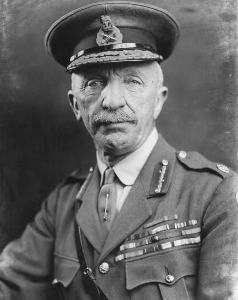
Wilson is born in County Longford and a long-time opponent of the Irish Home Rule movement. He joins the British army in 1884 and sees action during the Boer War. He is assigned to British army headquarters during the infamous Curragh incident and supports the near-mutiny of British officers who refuse to lead troops against Ulster opponents of home rule. He serves in France during the World War I and, when the war ends, continues his staunch support of the Unionist cause while serving as Chief of General Staff. He is a strong supporter of the coercion tactics of the British in Ireland during the Irish War of Independence, even suggesting that the leaders of Sinn Féin be executed. He leaves the army when David Lloyd George decides not to renew his term as chief of staff and is elected Member of Parliament (MP) for North Down as a Conservative in 1922. In Parliament, he urges even stronger coercion methods than those then being carried out by the Black and Tans.

On June 22, 1922, two London-based volunteers of the Irish Republican Army, Reginald Dunne and Joseph O’Sullivan, assassinate Wilson outside his house at 36 Eaton Place at approximately 2:20 PM. He is in full uniform as he is returning from unveiling the Great Eastern Railway War Memorial at Liverpool Street station at 1:00 PM. He has six wounds, two of them fatal wounds to the chest.

Stories later circulate that the first shot misses but rather than taking shelter in the house, he draws his sword and advances on his attackers, who are able to shoot and kill him. These stories often stress that he dies a martyr. His housemaid testifies that she found his drawn sword lying by his side. These details do not feature in the witness accounts by Reginald Dunne, which is smuggled out of prison, the inquest testimony of one of two road menders working nearby, and the taxi driver who had just dropped Wilson off. One of the road mender’s accounts, as published in the Daily Mail, mentions Wilson turning on his attackers with the words “you cowardly swine!” but this is believed to be a possible embellishment by the newspaper.

Two police officers and a chauffeur are also shot as the men attempt to avoid capture. They are then surrounded by a crowd and arrested by other policemen after a struggle. Dunne and O’Sullivan are convicted of murder and hanged on August 10, 1922. On the day Wilson’s killers were hanged, Currygrane, the family homesite in Ballinalee, County Longford is burned to the ground, possibly as a reprisal although possibly as an unrelated part of the unrest in that county.

Wilson’s widow blames the government for his death and is only persuaded to allow government representation at the funeral on the grounds that not to do so would be disrespectful to the King. Wilson’s funeral is a public affair attended by David Lloyd George and the cabinet, Ferdinand Foch, Robert Nivelle and Maxime Weygand from France as well as many of his former army colleagues including John French, Nevil Macready, Douglas Haig and William Robertson. He is buried in the crypt of St. Paul’s Cathedral in London.


Leave a comment

Dáil Éireann Declares War with Great Britain

first-dail

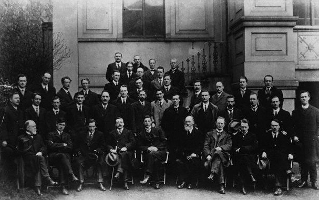
The President of the Dáil Éireann, Éamon de Valera, secures on March 11th, 1921, the chamber’s support for a formal declaration of war with Great Britain.

In January 1921, at his first Dáil meeting after his return to a country gripped by the War of Independence, de Valera introduces a motion calling on the Irish Republican Army (IRA) to desist from ambushes and other tactics that are allowing the British to successfully portray it as a terrorist group, and to take on the British forces with conventional military methods. This they strongly oppose, and de Valera relents, issuing a statement expressing support for the IRA, and claims it is fully under the control of the Dáil. He then, along with Cathal Brugha and Austin Stack, bring pressure to bear on Michael Collins to undertake a journey to the United States himself, on the pretext that only he can take up where de Valera had left off. Collins successfully resists this move and stays in Ireland.

The British government’s proposal of a Truce and negotiations over Ireland’s future is a result of both domestic and international factors. The British have been unable to defeat the Irish struggle for independence and there is a danger that the longer it continues the more radicalised it is becoming. In March 1921 Southern Unionist leader Lord Midleton also points to the strengthening of the independence movement, telling David Lloyd George and Hamar Greenwood that the resistance is now three times stronger than in July 1920. The following month Greenwood himself is talking of pacification taking years rather than months. British government policy in Ireland is also creating problems for it both internationally (especially in the United States) and in Britain itself. At the same time Britain is facing growing independence struggles in Egypt and India. It also faces an increasingly difficult financial situation. British foreign trade suffers a substantial collapse in 1921 as its exports fall by 48 percent over a twelve-month period, its imports drop by 44 percent, and unemployment rapidly increases. The Economist describes 1921 as one of the worst years of depression since the industrial revolution began.

There is a substantial debate in the British Cabinet about whether or not to proceed along these lines. An example of this is the May 12, 1921 Cabinet meeting. Greenwood appears to have revised his view about how long pacification will take. He is opposed to the Truce proposal at this stage, feeling that the republicans are being worn down. Health Minister Christopher Addison disagrees and favours a truce. Winston Churchill, who has been in favour of the substantial escalation of coercion, now supports a truce partly because things are getting “very unpleasant as regards the interests of this country all over the world; we are getting an odious reputation; poisoning our relations with the United States.” Herbert Fisher, who is a historian and head of the Board of Education as well as a politician, also worries, “the present situation is degrading to the moral life of the whole country; a truce would mean a clear moral and political gain” and that if the IRA accepts the truce it will be hard for them to start up again, it will also “create a big rift in Sinn Féin ranks, the moderate Sinn Féin would have to come out into the open.” This meeting rejects the idea of a truce. In June, however, a memorandum from Nevil Macready states that beating the republicans will require coercion being carried out to the maximum and if this is done the cabinet will have to stand by 100 executions a week. Such a policy is a political impossibility. In this situation, Lloyd George proposes an Anglo-Irish conference and negotiations.


Leave a comment

Last British Troops Leave the Irish Free State

british-troops-leave-ireland

The last British troops leave the Irish Free State on December 17, 1922. They are the remnants of a 5,000 strong garrison maintained up to that point in Dublin, commanded by Nevil Macready.

It appears to be a friendly farewell, even while Ireland is embroiled in its own Civil War. The Union Jack is lowered at the hospital and Macready goes to review the final contingent of troops as they leave the Royal barracks, later known as the Collins barracks. He then motors to Kingstown, now Dún Laoghaire, where he receives a 17-gun salute and joins Admiral Cecil Fox, the Sligo-born naval commander in the area, on board the cruiser HMS Dragon to sail home to England and retirement.

Meanwhile, the troops, 3,500 men mostly from the Leicester, Worchester, and Border regiments, march to the port. At Beresford Place they are greeted by 500 members of the Legion of Irish Ex-Servicemen, in civilian clothes but wearing their decorations. Thousands of other people line the quays and the armoured cars and the Dublin Metropolitan Police stand by, but there is no trouble. Embarkation onto six ships begins around 1:15 PM. At 3:10 PM, the last ship to leave, the steamer Arvonia chartered from the London and North Western Railway, weighs anchor while a band on deck plays “God Save the King” and a crowd breaks into the North Wall Extension to wave a final farewell as it enters Alexandra Basin.

The armoured cars them drive north to Ulster and the evacuation of the Irish Free State, apart from the Treaty ports, is over. General Richard Mulcahy, who takes over the Royal barracks that day, claims “the incubus of occupation that has lain as a heavy hand on the country for years has been removed.”

In his memoirs, Macready expresses annoyance that a photograph of Fox and himself published in The Irish Times on December 18 has the caption “two gallant Irishmen.” Although he has an Irish grandfather, he cordially loathes Ireland.

The British leave fully outfitted barracks to the Irish Army and artifacts including a large card in the Headquarters in Parkgate Street printed with the admonition “LOVE ONE ANOTHER.”