seamus dubhghaill

Promoting Irish Culture and History from Little Rock, Arkansas, USA


Leave a comment

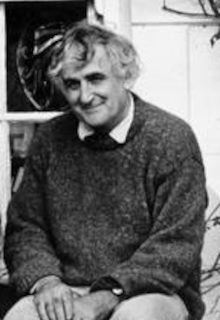
Death of Sculptor Conor Fallon

Irish sculptor Conor Hubert Fallon dies of lung cancer at the Blackrock Clinic, County Dublin, on October 3, 2007.

Fallon is born at Holles Street Hospital, Dublin, on January 30, 1939, the third of six sons of Padraic Fallon, the Irish poet and playwright, and Dorothea Maher. The family moves to Clonard, County Wexford, where he grows up. He has three surviving brothers, Brian, Ivan and Padraic, who have all had journalism careers. His early interest in literature and the arts is nourished by his father and elder brothers, and by contact with the cultured circle of writers, artists, musicians and intellectuals within which his father moves.

Fallon is educated at St. Peter’s College, Wexford, and Trinity College, Dublin. He begins painting in 1957 while at Trinity College, where he is studying natural science but is advised to pay more attention to his art. His interest in painting is probably inspired by the example of Tony O’Malley, a close family friend. As a compromise with his father, who does not see his talent, he also studies accountancy at night.

Largely self-taught in painting, he learns fundamentals of technique from Richard Kingston, to whom he is introduced by O’Malley. He largely paints landscapes in acrylic and gouache, in a manner heavily influenced by that of Jack Butler Yeats.

In 1964, Fallon visits O’Malley in St. Ives, Cornwall, where he had emigrated several years earlier, intending also to meet the Cornish abstract landscape painter Peter Lanyon, the chief creative force in the thriving artists’ colony centred on St. Ives. His arrival, however, coincides with Lanyon’s death from injuries suffered in a gliding accident. A gently sympathetic stranger amid the bereaved artistic community, he finds an immediate empathy and rapport with Nancy Wynne-Jones, a Welsh-born painter sixteen years his senior who had studied under Lanyon. They marry in 1966. They adopt two children in 1970, siblings John and Bridget.

Encouraged to take up sculpture, English sculptor Denis Mitchell becomes Fallon’s mentor in Cornwall, and with Breon O’Casey, he develops his sculpting. He becomes notable for his cast steel and bronze work, especially birds, horses and hares. He has his first solo exhibition in Newlyn in 1972, showing both painting and sculpture.

In May 1972, Fallon moves with his family back to Ireland, settling at Scilly House, on a hillside overlooking the harbour at Kinsale, County Cork. Removed from any centre of artistic activity, he devotes himself fulltime to a solitary development of his sculpture, refining his methodology and technique, and his skills in working various metals, beginning in 1974 to work in steel. In 1975, he first exhibits in Ireland at a solo show at the Emmet Gallery, Dublin, again showing both painting and sculpture, including his first steel sculptures to be exhibited.

Beginning in 1983, Fallon exhibits regularly with the Taylor Galleries, Dublin. Desiring closer proximity to Dublin art activities, and with their children attending university in the city, Fallon and his wife move in 1987 to Ballard House, Ballinaclash, Rathdrum, County Wicklow.

In 1980, Fallon is awarded the Oireachtas gold medal for sculpture. He becomes an honorary associate of the National College of Art and Design in 1993. He is secretary of the Royal Hibernian Academy, becoming a full member in 1989, and on the board of the National Gallery of Ireland. He is also elected to Aosdána in 1984.

In the summer of 2007, some six months after his wife’s death, Fallon wis diagnosed with advanced metastatic lung cancer. He dies on October 3, 2007, at the Blackrock Clinic, County Dublin, and is buried beside his wife in Ballinatone churchyard, Greenan, Rathdrum, County Wicklow.

Leave a comment

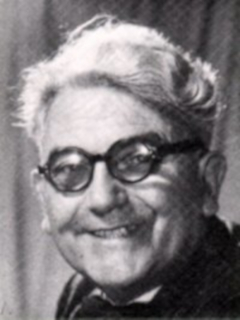
Death of Padraic Fallon, Poet & Playwright

padraic-fallon

Padraic Fallon, Irish poet and playwright, dies on October 9, 1974, in Aylesford, England.

Fallon is born in Athenry, County Galway on January 3, 1905. His upbringing and his early impressions of the town and the surrounding landscape are intimately described in his poetry. After passing the civil service exams in 1923 he moves to Dublin to work in the Customs House. In Dublin he becomes part of the circle of George William Russell (Æ) who encourages his literary ambitions and arranges for the publication of his early poetry. He forms close friendships with Seumas O’Sullivan, editor of The Dublin Magazine, the poets Austin Clarke, Robert Farren, F.R. Higgins and Patrick McDonagh, and later the novelist James Plunkett.

In 1939, Fallon leaves Dublin to serve as a Customs official in County Wexford, living in Prospect House, near Wexford with his wife, Dorothea (née Maher) and his six sons. During this time, he becomes a close friend of the painter Tony O’Malley.

Fallon’s early poetry, short stories and literary criticism are published in The Dublin Magazine and The Bell. He is a regular contributor to Raidió Éireann in the 1940s and 1950s, serving variously as a journalist, scriptwriter and literary critic. A number of his short stories and early dramatic pieces are broadcast by the station during the 1940s. The first of his verse plays for radio, Diarmuid and Gráinne, is broadcast by Raidió Éireann in November 1950. This is followed by The Vision of Mac Conglinne (1953), Two Men with a Face (1953), The Poplar (1953), Steeple Jerkin (1954), The Wooing of Étain (1954), A Man in the Window (1955), Outpost (1955), Deirdre’s King (1956), The Five Stations (1957), The Hags of Clough (1957), The Third Bachelor (1958), At the Bridge Inn (1960) and Lighting up Time (1961).

Three plays adapted from Irish mythology, Diarmuid and Gráinne, The Vision of Mac Conglinne and Deirdre’s King, receive particular contemporary critical acclaim. The landscape, mythology and history of Ireland, interwoven with classical themes and religious symbolism, are frequent themes in his poetry and dramatic works. A number of Fallon’s radio plays are later broadcast on BBC Third Programme and, in translation, in Germany, the Netherlands, and Hungary. The play The Seventh Step is staged at The Globe Theatre in Dublin in 1954. A second one, Sweet Love ’till Morn, is staged at the Abbey Theatre in 1971. He also writes dramatic pieces for television such as A Sword of Steel (1966) and The Fenians (1967), the latter produced by James Plunkett. In a number of his plays and radio dramas he cooperates with contemporary composers providing incidental music, an example being The Wooing of Étain (1954) with music by Brian Boydell.

Fallon retires from the Civil Service in 1963, returning to Dublin before moving to Cornwall in 1967 to live with his son, the sculptor Conor Fallon and his daughter-in-law, the artist Nancy Wynne-Jones. He and his wife return to Ireland in 1971. He spends his last years in Kinsale. He is visiting his son Ivan Fallon in Kent at the time of his death.

While Fallon’s poetry had previously appeared in The Dublin Magazine, The Bell, The Irish Times and a number of anthologies, his first volume of collected poetry, Poems, incorporating a number of previously unpublished poems, is not produced until 1974, months before his death. Three volumes of his poetry, edited by his son, the journalist and critic Brian Fallon, are published after his death: Poems and Versions in 1983, Collected Poems in 1990, and A Look in the Mirror and Other Poems in 2003. In 2005, three of his verse plays, The Vision of Mac Conglinne, The Poplar, and The Hags of Clough, are published in a single volume. A selection of his prose writings and criticism edited by Brian Fallon, A Poet’s Journal, is published in the same year.


2 Comments

Birth of Padraic Fallon, Poet & Playwright

padraic-fallon

Padraic Fallon, Irish poet and playwright, is born in Athenry, County Galway, on January 3, 1905.

Fallon’s upbringing and his early impressions of Athenry and the surrounding landscape are intimately described in his poetry. After passing the civil service exams in 1923 he moves to Dublin to work in the Customs House. In Dublin he becomes part of the circle of George William Russell (Æ) who encourages his literary ambitions and arranges for the publication of his early poetry. His early poetry, short stories, and literary criticism are published in The Dublin Magazine and The Bell.

He forms close friendships with Seumas O’Sullivan, editor of The Dublin Magazine, the poets Austin Clarke, Robert Farren, F.R. Higgins, and Patrick McDonagh and later the novelist James Plunkett. In 1939, Fallon leaves Dublin to serve as a Customs official in County Wexford, living in Prospect House, near Wexford Town with his wife, Dorothea (née Maher) and his six sons. During this time, he becomes a close friend of the painter Tony O’Malley.

Fallon is a regular contributor to Radio Éireann in the 1940s and 1950s, serving variously as a journalist, scriptwriter, and literary critic. A number of his short stories and early dramatic pieces are broadcast by the station during the 1940s. The first of Fallon’s verse plays for radio, Diarmuid and Gráinne, is broadcast by Radio Éireann in November 1950. This is followed by The Vision of Mac Conglinne (1953), Two Men with a Face (1953), The Poplar (1953), Steeple Jerkin (1954), A Man in the Window (1955), Outpost (1955), The Wooing of Étain (1955), Deirdre’s King (1956), The Five Stations (1957), The Hags of Clough (1957), The Third Bachelor (1958), At the Bridge Inn (1960), and Lighting up Time (1961).

Three plays adapted from Irish mythology, Diarmuid and Gráinne, The Vision of Mac Conglinne, and Deirdre’s King receive particular contemporary critical acclaim. The landscape, mythology, and history of Ireland, interwoven with classical themes and religious symbolism, are frequent themes in his poetry and dramatic works.

A number of his radio plays are later broadcast on the BBC Third Programme, and, in translation, in Germany, Holland, and Hungary. A stage play, The Seventh Step, is staged at The Globe Theatre in Dublin in 1954. A second stage play, Sweet Love ’till Morn, is staged in the Abbey Theatre in 1971. Fallon also writes dramatic pieces for television such as A Sword of Steel (1966) and The Fenians (1967), the latter produced by James Plunkett.

Fallon retires from the Civil Service in 1963, returning to Dublin before moving to Cornwall in 1967 to live with his son, the sculptor Conor Fallon and his daughter-in-law, the artist Nancy Wynne-Jones. He and his wife return to Ireland in 1971. He spends his last years in Kinsale. He is visiting his son Ivan Fallon in Kent at the time of his death on October 9, 1974.

While his poetry has previously appeared in The Dublin Magazine, The Bell, The Irish Times, and a number of anthologies, his first volume of collected poetry, Poems, incorporating a number of previously unpublished poems, is not produced until 1974, months before his death. Three volumes of his poetry, edited by his son, the journalist and critic Brian Fallon, are published after his death – Poems and Versions (1983), Collected Poems (1990), with an introduction by Seamus Heaney, and A Look in the Mirror and Other Poems (2003), with an introduction by Eavan Boland. In 2005, three of Fallon’s verse plays, The Vision of Mac Conglinne, The Poplar, and The Hags of Clough are published in a single volume. A selection of his prose writings and criticism edited by Brian Fallon, A Poet’s Journal, is published in the same year.