seamus dubhghaill

Promoting Irish Culture and History from Little Rock, Arkansas, USA


Leave a comment

Birth of Sir Ronald Flanagan, Northern Irish Police Officer

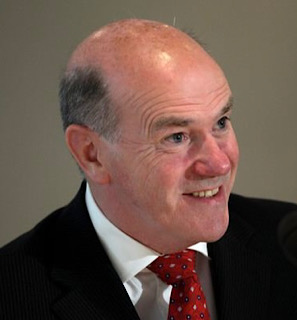
Sir Ronald Flanagan, a retired senior Northern Irish police officer, is born in Belfast, Northern Ireland, on March 25, 1949. He is the Home Office (HO) Chief Inspector of Constabulary for the United Kingdom excluding Scotland. He is previously the Chief Constable of the Police Service of Northern Ireland (PSNI) since its creation in 2001 to 2002, and is Chief Constable of its predecessor, the Royal Ulster Constabulary (RUC) until 2001.

Flanagan joins the Royal Ulster Constabulary (RUC) in 1970 while studying physics at Queen’s University Belfast (QUB). He serves his first three years in the Queen Street Police Station before achieving the rank of sergeant and transferring to the Castlereagh station. He is promoted to Inspector in 1976. In 1982, he becomes a Detective Inspector in the Special Branch and is promoted the following year to Chief Inspector.

In 1990, Flanagan takes on the role of Chief Superintendent and transfers to the Police Staff College in Bramshill, Hampshire, England, where he is the First Director of the Intermediate Command Course, progressing to the Senior Command Course.

In 1992, Flanagan returns to duty with the RUC as Assistant Chief Constable of Operations, later taking on the responsibilities of Operational Commander for Belfast. He is appointed as head of Special Branch in 1994 and is promoted to Acting Deputy Chief Constable the following year. He becomes the Deputy Chief Constable proper in 1996, and when Chief Constable Hugh Annesley retires later that year, he succeeds him. When the PSNI is established in 2001, he serves as Chief Constable until his retirement the following year. He is replaced by Hugh Orde.

Since then Flanagan has served in Her Majesty’s Inspectorate of Constabulary and is appointed as HM Chief Inspector of Constabulary in 2005. He is tasked to review the police arrangements in Iraq in December 2005 as part of the British involvement there. Following his retirement in December 2008, Denis O’Connor succeeds him as Her Majesty’s Acting Chief Inspector of Constabulary.

After leaving British policing, Flanagan takes up the post of strategic adviser to the Abu Dhabi Police Force, a post he holds for almost two years until he succeeds Paul Condon, Baron Condon, as chairman of the International Cricket Council‘s Anti-Corruption & Security Unit (ACSU).

On January 22, 2007, a report by the Police Ombudsman for Northern IrelandNuala O’Loan, makes findings of collusion between members of the proscribed paramilitary organisation, the Ulster Volunteer Force (UVF), and officers under the command of Flanagan. The reports are acknowledged by the then Chief Constable Sir Hugh Orde who apologises for the wrongdoing of his officers, and by the then British Secretary of State for Northern Ireland Peter Hain.

Flanagan denies any wrongdoing or acting with any knowledge of the events in question. He agrees that these events had taken place. In the aftermath of the ombudsman’s report, Irish nationalist politicians say he should be forced to resign from his job as Chief Inspector of Constabulary.

The Police Ombudsman criticises Flanagan’s role in the RUC inquiry into the Omagh Bombing of August 15, 1998, in a report published in 2001, to which his response is that he would “publicly commit suicide” if he believed her report was correct, though he later apologises for the form of words he used.

In July 2010, Flanagan appears before the Iraq Inquiry into the UK’s role in the Iraq War. In 2005, he had conducted a review into the UK’s contribution to policing reform in Iraq. As he gives evidence, he has to apologise for the amount of acronyms in his report on Iraq, which is presented to the government in January 2006:

“In my view, and I would like to almost apologise for the number of acronyms in this report – but it wasn’t written with a view to being read publicly. It was written for the people who invented the acronyms…”


Leave a comment

Birth of David Ervine, Northern Ireland Unionist Politician

David Ervine, Northern Irish Unionist politician, is born into a Protestant working-class family in east Belfast on July 21, 1953. He serves as leader of the Progressive Unionist Party (PUP) from 2002 to 2007 and is also a Member of the Legislative Assembly (MLA) for Belfast East from 1998 to 2007. As a leading PUP figure, he helps to deliver the loyalist ceasefire of 1994.

Ervine leaves Orangefield High School at age 14 and joins the Orange Order at age 18, however his membership does not last long. The following year he joins the Ulster Volunteer Force (UVF), believing this to be the only way to ensure the defence of the Protestant community after the events of Bloody Friday.

Ervine is arrested in November 1974, while an active member of the UVF. He is driving a stolen car containing five pounds of commercial explosives, a detonator and fuse wire. After seven months on remand in Crumlin Road Gaol he is found guilty of possession of explosives with intent to endanger life. He is sentenced to 11 years and imprisoned at The Maze.

While in prison, Ervine comes under the influence of Gusty Spence who makes him question what his struggle is about and unquestionably changes Ervine’s direction. After much study and self-analysis, he emerges with the view that change through politics is the only option. He also becomes friends with Billy Hutchinson while in prison.

Ervine is released from prison in 1980 and takes up full-time politics several years later. He stands in local council elections as a Progressive Unionist Party (PUP) candidate in 1985 Northern Ireland local elections. In 1996, he is elected to the Northern Ireland Forum from the regional list, having been an unsuccessful candidate in the Belfast East constituency. In 1998, he is elected to the Northern Ireland Assembly to represent Belfast East and is re-elected in 2003. He is also a member of Belfast City Council from 1997.

Ervine plays a pivotal role in bringing about the loyalist ceasefire of October 1994. He is part of a delegation to Downing Street in June 1996 that meets then British Prime Minister John Major to discuss the loyalist ceasefire.

Ervine suffers a massive heart attack, a stroke and brain hemorrhage after attending a football match between Glentoran F.C. and Armagh City F.C. at The Oval in Belfast on Saturday January 6, 2007. He is taken to the Ulster Hospital in Dundonald and is later admitted to the Royal Victoria Hospital in Belfast, where he dies on Monday, January 8, 2007. His body is cremated at Roselawn Crematorium after a funeral service on January 12 in East Belfast attended by Mark Durkan, Gerry Adams, Peter Hain, Dermot Ahern, Hugh Orde and David Trimble among others.


Leave a comment

Paisley & Adams Commit to Forming Powersharing Executive

On March 26, 2007, Democratic Unionist Party (DUP) leader Ian Paisley and Sinn Féin leader Gerry Adams commit themselves to forming a powersharing executive by May 8, 2007, after engaging directly for the first time at Parliament Buildings, Stormont. Taoiseach Bertie Ahern and British prime minister Tony Blair hail this first meeting and agreement as a historic, reconciliatory, and transforming moment in British-Irish history.

The government had set this date as a final deadline for a restoration of power-sharing before direct rule from London is restored permanently and now has to rush emergency legislation through the House of Commons to prevent this.

“After a long and difficult time in our province, I believe that enormous opportunities lie ahead for our province,” Paisley tells reporters, as he sits at a conference table next to Adams. The agreement “marks the beginning of a new era of politics on this island,” Adams agrees, but adds that he finds it “disappointing” that Northern Ireland‘s political institution cannot be restored immediately.

British prime minister Tony Blair hails the agreement, saying “This is a very important day for the people of Northern Ireland but also for the people and the history of these islands.” After talking by phone with his Irish counterpart, Taoiseach Bertie Ahern, he tells reporters, “In a sense, everything we have done over the last ten years has been a preparation for this moment, because the people of Northern Ireland have spoken through the election. They have said we want peace and power-sharing, and the political leadership has then come in behind that and said we will deliver what people want.”

In Ireland, Ahern calls the day’s developments “unprecedented and very positive,” and says both governments will cooperate with the new May 8 date for devolution.

The Secretary of State for Northern Ireland, Peter Hain, says a one clause emergency bill will be put through parliament with the agreement of opposition parties, and will need royal assent before midnight the following evening to prevent the dissolution of the Stormont assembly. He describes the day’s events as “really, really momentous.”

“Today the clouds have lifted, and the people can see the future,” Hain tells BBC Radio 4‘s The World at One. “These pictures of Ian Paisley and Gerry Adams will resonate around the world. They are a graphic manifestation of the power of politics over bigotry and conflict, bitterness and horror.”

The crucial meeting sees delegations from the DUP and Sinn Féin spend an hour together inside a room at Stormont to hammer out the final agreement for a return to power-sharing. Afterwards, both leaders talk about the work still needing to be done, including regular meetings between Paisley and Sinn Féin’s Martin McGuinness as the de facto first and deputy first ministers.

Clearly conscious of the historical significance of their talks, Paisley and Adams speak of the suffering caused by the decades of inter-community violence and their responsibility to ensure permanent peace and reconciliation. Northern Ireland’s politicians must “never forget those who have suffered during the dark period from which we are, please God, emerging,” Paisley says. “I want to make it clear that I am committed to delivering not only for those who voted for the DUP but for all the people of Northern Ireland. We must not allow our justified loathing for the horrors and tragedies of the past to become a barrier to creating a better and more stable future for our children,” he adds.

Adams says there is now new hope for the future, following the previous “sad history of orange and green.” He adds, “There are still many challenges, many difficulties, to be faced. But let us be clear: the basis of the agreement between Sinn Féin and the DUP follows Ian Paisley’s unequivocal and welcome commitment to support and participate fully in the political institutions on May 8. We’ve all come a very long way in the process of peace making and national reconciliation. We are very conscious of the many people who have suffered. We owe it to them to build the best future possible.”

The proposal for the historic meeting comes after a frantic weekend of consultation in Belfast and Berlin, where Blair and Ahern are attending a ceremony to mark 50 years of the European Union. Both prime ministers had repeatedly insisted the assembly would be dissolved if no agreement on an executive had been reached by today’s legal deadline. Britain is forced into a last-minute change of strategy after Paisley’s DUP agrees in principle on March 24 to share power with Sinn Féin but demands an extension of the deadline for the formation of the executive until May.

The DUP, which is badly split, says they need the additional time to see if Sinn Féin will comply with its commitment to cooperate with the Police Service of Northern Ireland. Until now Paisley’s DUP has always refused to meet Sinn Féin. Each represents what used to be seen as the two extremes of Northern Ireland sectarian politics.

(From: “Paisley and Adams agree deal” by Peter Walker and Owen Bowcott, The Guardian (www.theguardian.com), March 26, 2007 | Pictured: Ian Paisley and Gerry Adams hold their first face-to-face talks. Photograph: Paul Faith/ PA)


Leave a comment

Death of Unionist Politician David Ervine

CREATOR: gd-jpeg v1.0 (using IJG JPEG v80), quality = 82

David Ervine, Northern Irish Unionist politician from Belfast and the leader of the Progressive Unionist Party (PUP), dies on January 8, 2007, following a massive heart attack, a stroke and brain hemorrhage.

Ervine is born into a Protestant working-class family in east Belfast on July 21, 1953. He leaves Orangefield High School at age 14 and joins the Orange Order at age 18, however his membership does not last long. The following year he joins the Ulster Volunteer Force (UVF), believing this to be the only way to ensure the defence of the Protestant community after the events of Bloody Friday.

Ervine is arrested in November 1974, while an active member of the UVF. He is driving a stolen car containing five pounds of commercial explosives, a detonator and fuse wire. After seven months on remand in Crumlin Road Gaol he is found guilty of possession of explosives with intent to endanger life. He is sentenced to 11 years and imprisoned in The Maze.

While in prison, Ervine comes under the influence of Gusty Spence who makes him question what his struggle is about and unquestionably changes Ervine’s direction. After much study and self-analysis, he emerges with the view that change through politics is the only option. He also becomes friends with Billy Hutchinson while in prison.

Ervine is released from prison in 1980 and takes up full-time politics several years later. He stands in local council elections as a Progressive Unionist Party (PUP) candidate in 1985 Northern Ireland local elections. In 1996 he is elected to the Northern Ireland Forum from the regional list, having been an unsuccessful candidate in the Belfast East constituency. In 1998, he is elected to the Northern Ireland Assembly to represent Belfast East and is re-elected in 2003. He is also a member of Belfast City Council from 1997.

Ervine plays a pivotal role in bringing about the loyalist ceasefire of October 1994. He is part of a delegation to Downing Street in June 1996 that meets then British Prime Minister John Major to discuss the loyalist ceasefire.

Ervine suffers a massive heart attack, a stroke and brain hemorrhage after attending a football match between Glentoran F.C. and Armagh City F.C. at The Oval in Belfast on Saturday January 6, 2007. He is taken to the Ulster Hospital in Dundonald and is later admitted to the Royal Victoria Hospital in Belfast, where he dies on Monday, January 8, 2007. His body is cremated at Roselawn Crematorium after a funeral service on January 12 in East Belfast attended by Mark Durkan, Gerry Adams, Peter Hain, Dermot Ahern, Hugh Orde and David Trimble among others.