
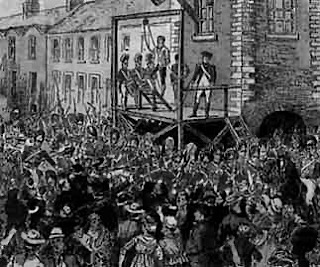
Matthew Tone, brother of Society of United Irishmen leader Theobald Wolfe Tone, is executed on September 29, 1798, at Arbour Hill Prison in Dublin after being captured at the Battle of Ballinamuck during the Irish Rebellion of 1798.
Tone is a French Army officer serving under General Jean Joseph Amable Humbert in the Irish expedition of 1798. He leaves Ireland for France in 1794, later moves to the United States, and rejoins Humbert in Paris in November 1797. At Ballinamuck, the French-led Irish forces are decisively defeated by British troops. Disguised as a peasant, he is captured on September 8, 1798.
Tone is imprisoned in the Provost prison at Dublin barracks and put on trial before a court-martial on September 21, 24 and 26, 1798. In his defence, he claims he had left Ireland before war was declared, that his imprisonment in France proved his innocence, and that he had tried to prevent the rebels from committing acts of revenge and plunder. He is, however, found guilty of high treason.
On September 29, 1798, Tone is hanged at Arbour Hill Prison and buried at Bodenstown Graveyard, County Kildare. He is unmarried but has a daughter raised by his sister Margaret.
Tone is one of roughly 200 Irish prisoners hanged after the Battle of Ballinamuck, alongside other United Irishmen and French sympathisers. The battle marks a turning point in the Irish Rebellion of 1798, leading to the repatriation of most French soldiers but the summary execution of many Irish insurgents.
In summary, Matthew Tone’s execution on September 29, 1798, is a direct consequence of his role in the French-led Irish expedition, his capture at the Battle of Ballinamuck, and the British government’s harsh response to the defeat, which sees widespread executions of captured rebels.

