seamus dubhghaill

Promoting Irish Culture and History from Little Rock, Arkansas, USA


Leave a comment

The Drummuckavall Ambush

The Drummuckavall ambush, an attack by the South Armagh Brigade of the Provisional Irish Republican Army (IRA) on a British Army observation post in Drummuckavall, southeast of Crossmaglen, County Armagh, takes place on November 22, 1975. The attack, which occurs along the border with the Republic of Ireland, results in the deaths of three British soldiers and underlines the inefficiency of conventional military skills to deal with the situation in South Armagh, prompting the deployment of the Special Air Service (SAS) in this area.

During the mid-1970s, the most violent decade of the Troubles in Northern Ireland, the monitoring of the border between south County Armagh and the Republic of Ireland by the British Army is carried out from several static observation posts. The main goal of these observation posts is to prevent attacks launched from beyond the border. These part-time manned positions are highly vulnerable to attack, as proved by a 1974 bomb attack which claims the lives of two Royal Marines at the outpost of Drummuckavall, a townland 3 kilometers southeast of Crossmaglen close to the border.

It is not until 1986, when the first surveillance watchtowers are erected in operations Condor and Magistrate that the British Army tries to regain the initiative in the region from the IRA.

The intelligence and control over the area relies until then, and for a lapse of ten years, mostly on mobile posts comprising small, uncovered infantry sections.

A section of four soldiers from the Royal Regiment of Fusiliers, coming from Crossmaglen, mount an observation post at 2:00 a.m. on November 21, 1975. The observation post is on a slope at Drummuckavall behind bushes overlooking a small stream that runs along the border. Unknown to them, locals had spotted their position and informed the IRA. At 4:20 p.m. the next day, an IRA unit of up to twelve members attacks the observation post. Heavy gunfire kills three of the Fusiliers and disables their communications equipment. A later inquest finds that the IRA unit had fired from two positions inside the Republic. Those killed are James Duncan (19), Peter McDonald (19), and Michael Sampson (20). The only fusilier on guard duty is McDonald, who is manning a light machine gun. The other soldiers are resting or taking a meal. The lance corporal in charge of the party, Paul Johnson, survives the first burst unscathed. He remains flat on the ground but is seriously injured on the wrist, side and back by a second burst of automatic fire after the IRA unit calls on him to surrender. A second call to surrender is made, followed by more gunfire. The IRA unit then withdraws across the border. According to Johnson, they were shouting “Up the ‘RA!” and laughing. Johnson manages to slip away by crawling 25 yards toward a nearby road, where British troops eventually airlift him to safety in a helicopter.

One of the AR-15 rifles used in the attack is found to have been used by the South Armagh Republican Action Force in an attack on the Tullyvallen Orange Hall on September 1, 1975, that killed five civilians.

Shortly after the attack, Merlyn Rees, Secretary of State for Northern Ireland, issues a famous statement dubbing South Armagh Bandit Country. The next year, the British Government declares it is deploying the Special Air Service (SAS) in Northern Ireland, although they had already been deployed unofficially for a number of years. The secretive and undercover nature of this elite force means they are considered the best choice to infiltrate the South Armagh area, after the official report on the action exposes several flaws in the layout of the observation post.

As a complement to the SAS operations, the British Army also changes tactics. Major General Richard Trant establishes small teams of troops, called COPs (Close Observation Platoons), to gather information, often in plain clothes or camouflaged in the landscape. They are also able to set up ambushes, like the ill-fated Operation Conservation on May 6, 1990.

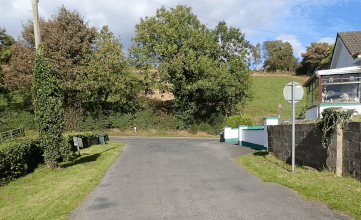
(Pictured: The Drummuckavall border crossing as viewed from the Irish Republic side of the border. At the border the unnamed road crosses a culverted stream to join the Dundalk Road. Photo by Eric Jones and licensed for reuse under Creative Commons License)

Leave a comment

Death of Martin McCaughey, Sinn Féin Councillor & IRA Volunteer

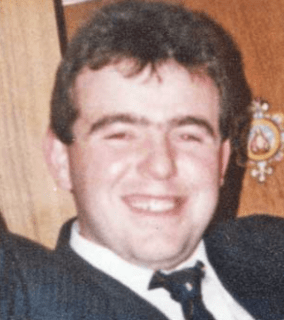
Gerard Patrick Martin McCaughey, Sinn Féin councillor and volunteer in the East Tyrone Brigade of the Provisional Irish Republican Army (IRA), is killed by undercover British Army soldiers in County Armagh on October 9, 1990, along with fellow IRA volunteer Dessie Grew.

McCaughey, from Aughnagar, Galbally, County Tyrone, Northern Ireland, is born on February 24, 1967, the oldest son of Owen and Bridget McCaughey. He is a boyhood friend of several of the “Loughgall Martyrs” including Declan Arthurs, Seamus Donnelly, Tony Gormley and Eugene Kelly, with whom he travels to local discos and football matches when they are growing up.

McCaughey is a talented Gaelic football player who plays for local side Galbally Pearses and is also selected for the Tyrone minor Gaelic team.

McCaughey is elected as a Sinn Féin councillor for Dungannon and South Tyrone Borough Council and at the time is the youngest elected representative on the island of Ireland.

Two months prior to his shooting, McCaughey is disqualified from holding his office on the council as he had failed to appear for a monthly council meeting. After his death, the Royal Ulster Constabulary (RUC) reveals the explanation behind his disappearance. He had been shot and wounded in a shoot-out with undercover British Army security forces near Cappagh, County Tyrone. He is then taken south across the Irish border into the Republic of Ireland where he is given hospital treatment and therefore unable to attend the meetings.

Ulster Unionist MP and fellow Dungannon councillor Ken Maginnis alleges that McCaughey had conspired to kill him while both sat as councillors.

McCaughey is shot dead on October 9, 1990, along with Dessie Grew, in an operation by undercover British soldiers. A secret undercover intelligence unit named 14 Intelligence Company, also known as the DET, are monitoring three AK-47s at a farm building in a rural part of County Armagh and are aware that the pair are due to remove the guns.

As McCaughey and Grew are approaching an agricultural shed which is being used to grow mushrooms and also thought to be an IRA arms dump, as many as 200 shots are fired at the two men. British Army reports of the shooting state that the two men left the shed holding two rifles. Republican sources state the men were unarmed.

McCaughey is buried at Galbally Cemetery in October 1990.

The family of McCaughey claims that he and Grew were ambushed after a stakeout by the Special Air Service (SAS). In January 2002, Justice Weatherup, a Northern Ireland High Court judge, orders that official military documents relating to the shooting should be disclosed. However, Police Service of Northern Ireland (PSNI) Chief Constable Hugh Orde has the ruling overturned on appeal in January 2005.

Fellow Sinn Féin representative, Francie Molloy, replaces McCaughey on Dungannon Council after a by-election is held following McCaughey’s death.

In January 2007, the lawyers representing McCaughey and another volunteer, Pearse Jordan, apply to the House of Lords to challenge the details of how the inquests into their deaths are to proceed.

McCaughey’s father, Owen, seeks to compel Chief Constable Hugh Orde to produce key documents including intelligence reports relevant to the shooting and the report of the RUC’s investigating officer.

In 2010, a commemorative portrait of McCaughey is unveiled in the mayor’s parlour at Dungannon council.


Leave a comment

Assassination of Norman and James Stronge

Sir Charles Norman Lockhart Stronge and his son James, both former Ulster Unionist Party (UUP) Members of Parliament, are assassinated by the Provisional Irish Republican Army (IRA) at their home, Tynan Abbey, on January 21, 1981. The home is then burned to the ground.

Before his involvement in politics Stronge fights in World War I as a junior officer in the British Army. He fights in the Battle of the Somme in 1916 and is awarded the Military Cross. His positions after the war include Speaker of the House of Commons of Northern Ireland for twenty-three years.

Stronge (86) and his son, James (48), are watching television in the library of Tynan Abbey when members of the Provisional Irish Republican Army, armed with machine guns, use grenades to break down the locked heavy doors to the home.

The Stronge family home is then burned to the ground as a result of two bomb explosions. On seeing the explosions at the house, as well as a flare Stronge lit in an attempt to alert the authorities, the Royal Ulster Constabulary and British Army troops arrive at the scene and establish a roadblock at the gate lodge. They encounter at least eight fleeing gunmen. A twenty-minute gunfight ensues in which at least two hundred shots are fired. There are no casualties among the security forces but the gunmen escape. The bodies of the father and son are later discovered in the library of their burning home, each with gunshot wounds in the head. It is not known who died first, Norman or James. Under the legal fiction known as the doctrine of survival, James is still listed as succeeding to the baronetcy.

The village of Tynan is crowded for the joint funeral of Stronge and his son. Mourners come from throughout the province and from England, including lords, politicians, policemen, judges and church leaders. The coffin is carried by the 5th Battalion the Royal Irish Rangers, the successors to his old regiment. The sword and cap of the Lord Lieutenant of Tyrone, Major John Hamilton-Stubber, are placed on his coffin in lieu of his own, which had been destroyed with his other possessions in the fire. During the service, a telegram sent from Queen Elizabeth II to one of Sir Norman’s daughters, is read. After the service, the chief mourners move out into the churchyard where the “Last Post” is sounded, and a Royal British Legion farewell is given. The two coffins are laid in the family plot, where Lady Stronge, Sir Norman’s wife and mother of James, was buried a year previously.

The Secretary of State for Northern Ireland, Humphrey Atkins, is informed by friends of the Stronge family that he would not be welcome at the funeral because of government policy on Irish border security. Atkins leaves the Northern Ireland Office later that year, to be replaced by Jim Prior. Stronge is commemorated with a tablet in the Northern Ireland Assembly Chamber in Parliament Buildings on the Stormont Estate.

The IRA releases a statement in Belfast, quoted in The Times, claiming that “This deliberate attack on the symbols of hated unionism was a direct reprisal for a whole series of loyalist assassinations and murder attacks on nationalist peoples and nationalist activities.” This follows the loyalist attempted murder of Bernadette McAliskey and her husband Michael McAliskey on January 16, and the loyalist assassinations of four republican activists (Miriam Daly, John Turnley, Noel Lyttle and Ronnie Bunting) which had taken place since May 1980.

The killings are referred to as murder by multiple media sources including The Daily Telegraph, The Scotsman, The New York Times and Time magazine, by the Reverend Ian Paisley in the House of Commons and by Alec Cooke, Baron Cooke of Islandreagh in the House of Lords.

Stronge is described at the time of his death by Social Democratic and Labour Party politician Austin Currie as having been “even at 86 years of age … still incomparably more of a man than the cowardly dregs of humanity who ended his life in this barbaric way.”

The ruins of Tynan Abbey are demolished in 1998, having stood for 249 years.