seamus dubhghaill

Promoting Irish Culture and History from Little Rock, Arkansas, USA


Leave a comment

The Drummuckavall Ambush

The Drummuckavall ambush, an attack by the South Armagh Brigade of the Provisional Irish Republican Army (IRA) on a British Army observation post in Drummuckavall, southeast of Crossmaglen, County Armagh, takes place on November 22, 1975. The attack, which occurs along the border with the Republic of Ireland, results in the deaths of three British soldiers and underlines the inefficiency of conventional military skills to deal with the situation in South Armagh, prompting the deployment of the Special Air Service (SAS) in this area.

During the mid-1970s, the most violent decade of the Troubles in Northern Ireland, the monitoring of the border between south County Armagh and the Republic of Ireland by the British Army is carried out from several static observation posts. The main goal of these observation posts is to prevent attacks launched from beyond the border. These part-time manned positions are highly vulnerable to attack, as proved by a 1974 bomb attack which claims the lives of two Royal Marines at the outpost of Drummuckavall, a townland 3 kilometers southeast of Crossmaglen close to the border.

It is not until 1986, when the first surveillance watchtowers are erected in operations Condor and Magistrate that the British Army tries to regain the initiative in the region from the IRA.

The intelligence and control over the area relies until then, and for a lapse of ten years, mostly on mobile posts comprising small, uncovered infantry sections.

A section of four soldiers from the Royal Regiment of Fusiliers, coming from Crossmaglen, mount an observation post at 2:00 a.m. on November 21, 1975. The observation post is on a slope at Drummuckavall behind bushes overlooking a small stream that runs along the border. Unknown to them, locals had spotted their position and informed the IRA. At 4:20 p.m. the next day, an IRA unit of up to twelve members attacks the observation post. Heavy gunfire kills three of the Fusiliers and disables their communications equipment. A later inquest finds that the IRA unit had fired from two positions inside the Republic. Those killed are James Duncan (19), Peter McDonald (19), and Michael Sampson (20). The only fusilier on guard duty is McDonald, who is manning a light machine gun. The other soldiers are resting or taking a meal. The lance corporal in charge of the party, Paul Johnson, survives the first burst unscathed. He remains flat on the ground but is seriously injured on the wrist, side and back by a second burst of automatic fire after the IRA unit calls on him to surrender. A second call to surrender is made, followed by more gunfire. The IRA unit then withdraws across the border. According to Johnson, they were shouting “Up the ‘RA!” and laughing. Johnson manages to slip away by crawling 25 yards toward a nearby road, where British troops eventually airlift him to safety in a helicopter.

One of the AR-15 rifles used in the attack is found to have been used by the South Armagh Republican Action Force in an attack on the Tullyvallen Orange Hall on September 1, 1975, that killed five civilians.

Shortly after the attack, Merlyn Rees, Secretary of State for Northern Ireland, issues a famous statement dubbing South Armagh Bandit Country. The next year, the British Government declares it is deploying the Special Air Service (SAS) in Northern Ireland, although they had already been deployed unofficially for a number of years. The secretive and undercover nature of this elite force means they are considered the best choice to infiltrate the South Armagh area, after the official report on the action exposes several flaws in the layout of the observation post.

As a complement to the SAS operations, the British Army also changes tactics. Major General Richard Trant establishes small teams of troops, called COPs (Close Observation Platoons), to gather information, often in plain clothes or camouflaged in the landscape. They are also able to set up ambushes, like the ill-fated Operation Conservation on May 6, 1990.

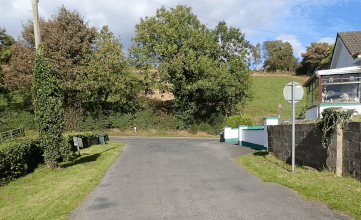
(Pictured: The Drummuckavall border crossing as viewed from the Irish Republic side of the border. At the border the unnamed road crosses a culverted stream to join the Dundalk Road. Photo by Eric Jones and licensed for reuse under Creative Commons License)

Leave a comment

Birth of Molesworth Phillips, Companion of Captain Cook

molesworth-phillips

Molesworth Phillips, sailor and companion of Captain James Cook, is born in Swords, County Dublin on August 15, 1755.

Phillips is the son of John Phillips of Swords. His father is a natural son of Richard Molesworth, 3rd Viscount Molesworth, whence Phillips acquires his Christian name. He first enters the Royal Navy, but on the advice of his friend Sir Joseph Banks he accepts a commission as second lieutenant in the Royal Marines on January 17, 1776. In this capacity he is selected to accompany Captain Cook on his last voyage, extending over nearly three years. He sails with Cook from Plymouth on July 12, 1776, and is with the marines who escort Cook when he lands at Hawaii on February 14, 1779.

In John Webber‘s painting “The Death of Captain Cook” Phillips is represented kneeling and firing at a native who is clubbing Cook. Phillips is himself wounded, but, after swimming back to the boat, he turns back and helps another wounded marine to the boats.

On November 1, 1780, Phillips is promoted to captain. On January 10, 1782, he marries Susanna Elizabeth, third daughter of Dr. Charles Burney (1726-1814), and sister of Frances Burney and of James Burney, Phillips’s friend, who, like him, had accompanied Cook on his last voyage. He has no further active service, but is promoted brevet major on March 1, 1794, and brevet lieutenant colonel on January 1, 1798. From 1784, for the sake of his wife’s health, he lives for a time at Boulogne, but after the French Revolution he resides chiefly at Mickleham, Surrey, not far from Juniper Hall, where Frances Burney entertains numbers of French emigres. From 1796 to 1799, during the alarm of a French invasion of Ireland, Phillips feels it his duty to reside on the Irish estates at Beleotton, which he had inherited from an uncle. On January 6, 1800, his wife dies.

After the Treaty of Amiens, Phillips visits France in 1802, and he is one of those who are seized by Napoleon on the renewal of the war. He is detained in France until the peace of 1814. During this detention he makes friends with the Prince of Talleyrand and other well-known Frenchmen. After his return to England, he becomes acquainted with Robert Southey, Mary and Charles Lamb, who describe him as “the high-minded associate of Cook, the veteran colonel, with his lusty heart still sending cartels of defiance to old Time,” and with John Thomas Smith (1766-1833), whom he supplies with various anecdotes for his Nollekens and his Times.

Phillips dies of cholera at his house in Lambeth on September 11, 1832, and is buried in St. Margaret’s, Westminster, where an inscription commemorates him and James and Martin Burney (1788-1852).

(Pictured: Etching of Molesworth Phillips by Andrew Geddes, circa 1825, bequeathed by Frederick Leverton Harris, 1927, National Portrait Gallery, London)


Leave a comment

Birth of Irish-German Actor, Michael Fassbender

michael-fassbender

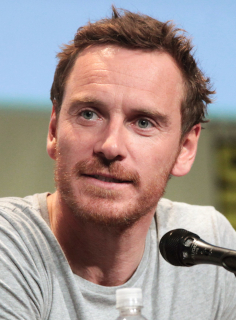
Michael Fassbender, Irish-German actor, is born in Heidelberg, Baden-Württemberg, West Germany on April 2, 1977.

Fassbender’s mother, Adele, is from Larne, County Antrim, while his father, Josef Fassbender, is German. According to Fassbender family lore, his mother is the great-grand-niece of Michael Collins, the Irish leader during the Irish War of Independence. When he is two years old, his parents move to Killarney, County Kerry, where they run the West End House, a restaurant where his father works as a chef. His parents move to Kerry as they want their children to grow up in the countryside rather than the industrial backdrop of their previous residence in Germany. He is raised Catholic and serves as an altar boy at the church his family attends. He has an older sister, Catherine, who is a neuropsychologist.

Fassbender attends Fossa National School and St. Brendan’s College, both in Killarney. He decides that he wants to be an actor at age 17 when he is cast in a play by Donal Courtney. At 19, he moves to London to study at the Drama Centre London, a constituent school of Central Saint Martins. In 1999, he drops out of the Drama Centre and tours with the Oxford Stage Company to perform the play Three Sisters. Before he finds work as an actor, he works as a bartender and postman. Other jobs include labour work, market research for the Royal Mail and working for Dell computers.

Fassbender’s feature film debut is in the fantasy war epic 300 (2007) as a Spartan warrior. His earlier roles include various stage productions, as well as starring roles on television such as in the HBO miniseries Band of Brothers (2001) and the Sky One fantasy drama Hex (2004–05). He first comes to prominence for his role as Provisional Irish Republican Army (IRA) activist Bobby Sands in Hunger (2008), for which he wins a British Independent Film Award. Subsequent roles include in the independent film Fish Tank (2009), as a Royal Marines lieutenant in Inglourious Basterds (2009), as Edward Rochester in the 2011 film adaptation of Jane Eyre, as Carl Jung in A Dangerous Method (2011), as the sentient android David 8 in Prometheus (2012) and its sequel, Alien: Covenant (2017), and in the musical comedy-drama Frank (2014) as an eccentric musician loosely inspired by Frank Sidebottom.

In 2011, Fassbender debuts as the Marvel Comics supervillain Magneto in X-Men: First Class and goes on to share the role with Ian McKellen in X-Men: Days of Future Past (2014), before reprising it again in X-Men: Apocalypse (2016) and Dark Phoenix (2019). Also in 2011, his performance as a sex addict in Shame earns him the Volpi Cup for Best Actor at the Venice International Film Festival and is nominated for Golden Globe and BAFTA Awards. In 2013, his role as slave owner Edwin Epps in the slavery epic 12 Years a Slave is similarly praised, earning him his first Oscar nomination for Best Supporting Actor. In 2013, he appears in another Ridley Scott film, The Counselor. In 2015, he portrays the title role in the Danny Boyle-directed biopic Steve Jobs (2015) and played Macbeth in Justin Kurzel‘s adaptation of William Shakespeare‘s play. For the former, he receives Academy Award, BAFTA, Golden Globe and SAG nominations. In 2015, he produces the western Slow West, in which he also stars.

In December 2014, Fassbender begins dating Swedish actress Alicia Vikander, whom he met on the set of The Light Between Oceans. The two marry in a private ceremony on October 14, 2017, in Ibiza, Spain. As of 2017, they reside in Lisbon, Portugal.


Leave a comment

The Clive Barracks Bombing

clive-barracks-bombing

The Clive Barracks bombing, a bomb attack carried out by the Provisional Irish Republican Army on a British Army barracks at Ternhill, Shropshire, takes place on February 20, 1989. The attack injures two soldiers from the Parachute Regiment and destroys a large part of the barracks.

The IRA intensifies their campaign outside of Northern Ireland in 1988. In May 1988 the IRA enjoys one of their most successful ambushes on British Military figures in mainland Europe with attacks in the Netherlands where they kill three and injured three Royal Air Force soldiers. Four months later in August 1988, the Provisional IRA carries out the Inglis Barracks bombing, which kills one British soldier and injures ten others. It is the first IRA attack in England since the infamous Brighton hotel bombing in October 1984.

On Monday, February 20, 1989, the Provisional IRA explodes two bombs at Clive Barracks at Ternhill. Only two of the planned three bombs are primed and ready to explode when the two IRA members, both of whom are wearing combat jackets, are spotted and approached by a sentry, Lance-Corporal Alan Norris, who raises the alarm. They throw the third bomb, which was inside a backpack, at him and run to a car they had stolen earlier and drive away. Soldiers fire three rounds at the IRA members as they are fleeing but no shots hit their target.

The bombs explode about ten minutes after the IRA men escape. Even though nobody is killed in the attack, the explosions cause large damage to the barracks. The alarm sounded by Norris gives about fifty British soldiers a chance to escape almost certain death. Only two soldiers are injured, one being hit by flying glass the other with only minor injuries.

The IRA claims responsibility for the bombings and British police believe IRA fugitive Patrick Sheehy is the main operator in the attack. The IRA issues a statement saying, “While Britain maintains its colonial grip on the north of Ireland, the IRA will continue to strike at those who oversee and implement British Government policy in our country.”

Five months later, in July 1989, the IRA kills a British soldier in Hanover, West Germany when they place a booby trap IED under his car. On September 7 the IRA mistakenly shoots dead Heidi Hazell, the German wife of a British soldier, in a hail of bullets in Dortmund. In the climax of the England and European campaign by the IRA is the Deal barracks bombing in which the IRA kills eleven Royal Marines and seriously injures 22 others. It is the highest death toll from an operation in England in seven years since the Hyde Park and Regent’s Park bombings on September 22, 1982, which kill 11 soldiers and injured more than fifty.