seamus dubhghaill

Promoting Irish Culture and History from Little Rock, Arkansas, USA


Leave a comment

Birth of Mary Irvine, First Female President of the High Court

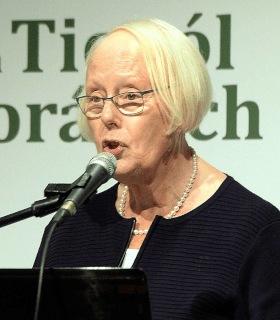
Mary Irvine, Irish judge who is the President of the Irish High Court between 2020 and 2022, is born on December 10, 1956, in Clontarf, Dublin. She first practiced as a barrister. She is a judge of the High Court between 2007 and 2014, a judge of the Court of Appeal from 2014 to 2019 and serves as a judge of the Supreme Court of Ireland from May 2019 until becoming President of the High Court on June 18, 2020. In addition to being the first woman to hold that position, she is the first judge to have held four judicial offices. She is an ex officio member of the Supreme Court and the Court of Appeal.

Irvine is born to John and Cecily Irvine, her father once being deputy director of RTÉ. She is educated at Mount Anville Secondary School, University College Dublin (UCD) and the King’s Inns. She is an international golf player, winning the Irish Girls Close Championship in 1975.

Irvine is called to the Bar in 1978 and becomes a Senior Counsel in 1996. She is the secretary of the Bar Council of Ireland in 1992. She is elected a Bencher of the King’s Inns in 2004.

Irvine specialises in medical law, appearing in medical negligence cases on behalf of and against health boards in actions. She is a legal advisor to an inquiry into deposit interest retention tax (DIRT) conducted by the Public Accounts Committee, along with future judicial colleagues Frank Clarke and Paul Gilligan. She represents the Congregation of Christian Brothers at the Commission to Inquire into Child Abuse.

Irvine’s practice also extends to constitutional law. As a junior counsel, she represents the plaintiff in Cahill v. Sutton in 1980 in the Supreme Court with seniors Niall McCarthy and James O’Driscoll. The case establishes the modern Irish law of standing for applicants to challenge the constitutional validity of statutes. She appears with Peter Kelly to argue on behalf the right of the unborn in a reference made by President of Ireland Mary Robinson under Article 26 of the Constitution to the Supreme Court in 1995 regarding the Information (Termination of Pregnancies) Bill 1995.

Irvine is appointed as a Judge of the High Court in June 2007. She is in charge of the High Court Personal Injuries list from 2009 to 2014 and subsequently becomes the second Chair of the Working Group on Medical Negligence and Periodic Payments, established by the President of the High Court.

Irvine is appointed to Court of Appeal on its establishment in October 2014. Some of her judgments on the Court of Appeal reduce awards given by lower courts for personal injuries compensation. She writes “most of the key” Court of Appeal judgments between 2015 and 2017 which have the effect of reducing awards arising from subsequent actions in the High Court.

Irvine is appointed to chair a statutory tribunal to conduct hearings and deal with cases related to the CervicalCheck cancer scandal in 2019. However, following her appointment as President of the High Court in 2020, she is unable to continue with the position.

On April 4, 2019, Irvine is nominated by the Government of Ireland as a Judge of the Supreme Court. She is appointed by the President of Ireland, Michael D. Higgins, on May 13, 2019. She writes decisions for the court in appeals involving planning law, the law of tort, intellectual property law, judicial review, and chancery law.

Irvine is appointed by Chief Justice Frank Clarke in 2019 to chair the Personal Injuries Guidelines Committee of the Judicial Council. The purpose of the committee is to review the levels of compensation issues in court cases arising out of personal injuries. Minister of State at the Department of Finance Michael W. D’Arcy writes a letter to congratulate her on her appointment and outlines his views that personal injuries awards in Ireland should be “recalibrated.” She responds to the letter by saying it is the not the committee’s duty to tailor its findings “in a manner favourable to any particular interest group.”

Following a cabinet meeting on June 12, 2020, it is announced that Irvine will be nominated to succeed Peter Kelly as President of the High Court. A three-person panel consisting of the Chief Justice Frank Clarke (later substituted by George Birmingham), the Attorney General Séamus Woulfe and a management consultant, Jane Williams, reviews applications for the position, before making recommendations to cabinet. The President of the Law Society of Ireland welcomes her appointment, describing her as an “outstandingly able judge.” She is the first woman to hold the role. As she is previously an ordinary judge of three courts, her appointment as President of the High Court makes her the first person to have held four judicial offices. She is appointed on June 18, 2020, and makes her judicial declaration on June 19.

Irvine takes over as president in the midst of the COVID-19 pandemic in the Republic of Ireland. She issues guidelines for lawyers to negotiate personal injuries cases outside of court due to the backlog formed by delays in hearings. She issues a practice direction in July 2020 that face coverings are to be worn at High Court hearings. She criticises barristers and solicitors in October 2020 for not wearing masks in the Four Courts.

In Irvine’s first week as president, she presides over a three-judge division of the High Court in a case taken by a number of members of Seanad Éireann. The plaintiffs seek a declaration that the Seanad should sit even though the nominated members of Seanad Éireann have not been appointed. The court refuses the relief and finds for the State. In 2021, she also presides over a three-judge division on a Seanad Éireann voting rights case, where the plaintiff argues for the extension of voting rights to graduates of all third-level educational institutions and the wider population. The court finds against the plaintiff.

Irvine continues to sit in the Supreme Court following her appointment.

In April 2022, Irvine announces her intention to retire in July 2022. She retires on July 13, 2022, and is succeeded by David Barniville.

Irvine is formerly married to retired judge Michael Moriarty, with whom she has three children. Her only known son, Mark Moriarty, dies suddenly on August 19,2022.

(Pictured: Justice Mary Irvine with the President of Ireland, Michael D. Higgins, on her appointment on the Supreme Court in 2019)

Leave a comment

Birth of Thomas Finlay, Judge, Politician & Barrister

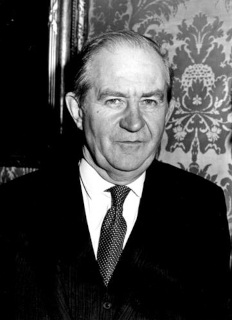
Thomas Aloysius Finlay, Irish judge, politician and barrister, is born on September 17, 1922, in Blackrock, Dublin. He serves as a Teachta Dála (TD) for the Dublin South-Central constituency from 1954 to 1957, a Judge of the High Court from 1971 to 1985, President of the High Court from 1974 to 1985 and Chief Justice of Ireland and a Judge of the Supreme Court from 1985 to 1994.

Finlay is the second son of Thomas Finlay, a politician and senior counsel whose career is cut short by his early death in 1932. He is educated at Clongowes Wood College, University College Dublin (UCD) and King’s Inns. While attending UCD, he is elected Auditor of the University College Dublin Law Society. His older brother, William Finlay, serves as a governor of the Bank of Ireland.

Finlay is called to the Bar in 1944, practicing on the Midlands circuit and becomes a senior counsel in 1961.

Finlay is elected to Dáil Éireann as a Fine Gael TD for the Dublin South-Central constituency at the 1954 Irish general election. He loses his seat at the 1957 Irish general election.

Following his exit from politics in 1957, having lost his Dáil seat, Finlay resumes practicing as a barrister. He successfully defends Captain James Kelly in the infamous 1970 arms trial.

In 1971, Finlay is tasked by the Fianna Fáil government with representing Ireland before the European Commission of Human Rights, when, in response to the ill treatment of detainees by security forces in Northern Ireland, they charge the British government with torture. Despite the notional recourse such prisoners would have within the British legal system, the Commission rules the complaint admissible.

Finlay is subsequently appointed a High Court judge and President of the High Court in January 1974. In 1985, Taoiseach Garret FitzGerald and his government nominates him to the Supreme Court and to the office of Chief Justice of Ireland. On October 10, 1985, he is appointed by President Patrick Hillery to both roles.

During this period Finlay presides over a number of landmark cases, including Attorney General v X in 1992, when he overturns a High Court injunction preventing a pregnant teenage rape victim travelling to the UK for an abortion.

When, in the same year, Judge Liam Hamilton of the High Court, chair of the Beef Tribunal, seeks disclosure of the cabinet’s minutes for a particular meeting, Chief Justice Finlay along with the majority of the Supreme Court deny the request ruling that the concept of collective government responsibility in the Constitution takes precedence.

Finlay announces his resignation as Chief Justice of Ireland and retirement as a judge in 1994.

After his retirement, Finlay presides over a number of public inquiries.

In 1996, Finlay oversees the inquiry into the violence by English fans at the aborted 1995 friendly soccer match versus the Republic of Ireland at Lansdowne Road. His report to Bernard Allen, Minister for Sport, is critical of security arrangements on the night and recommends improvements to ticketing, seat-allocation, fan-vetting and policing arrangements. The Irish Government shares his report with the British Home Office.

After the collapse of The Irish Press group in 1995, the Minister for Enterprise and Employment, John Bruton, receives a damming report from the Competition Authority that Independent Newspapers has abused its dominant position and acted in an anti-competitive manner by purchasing a shareholding in The Irish Press. In September 1995, Bruton announces the Commission on the Newspaper Industry with an extremely wide remit to examine diversity and ownership, competitiveness, editorial freedom and standards of coverage in Irish newspapers as well as the impact of the sales of the British press in Ireland. Minister Bruton appoints 21 people to the commission and appoints Finlay chair. Due to the wide remit and huge number of submissions, the commission’s report is delayed but is eventually published at the end of July recommending widespread reforms.

Following the discovery of the BTSB anti-D scandal, in 1996, Finlay is appointed the chair and singular member of the Tribunal of Inquiry into the Blood Transfusion Service Board. The speed and efficiency with which his BTSB Tribunal conducts its business, restores confidence in the Tribunal as a mechanism of resolving great controversies in the public interest.

Finlay also sits on an Irish Rugby Football Union (IRFU) panel to adjudicate on the cases of Rugby players accused of using banned performance-enhancing substances.

Finlay is married to Alice Blayney, who predeceases him in 2012. They have five children, two of whom follow in his family’s legal tradition: his son John being a Senior Counsel and his daughter Mary Finlay Geoghegan a former judge of the High Court, Court of Appeal and Supreme Court. Whenever his work schedule allows, he escapes to County Mayo where he indulges his passion for fishing.

Thomas Finlay dies at the age of 95 in Irishtown, Dublin, on December 3, 2017.


Leave a comment

Birth of Gerard Hogan, Judge, Lawyer & Academic

Gerard William Augustine Hogan, MRIA, Irish judge, lawyer and academic who has served as a Judge of the Supreme Court of Ireland since October 2021, is born on August 13, 1958, in Carrick-on-Suir, County Tipperary. He previously serves as Advocate General of the European Court of Justice from 2018 to 2021, a Judge of the Court of Appeal from 2014 to 2018 and a Judge of the High Court from 2010 to 2014. He first works as a barrister and lecturer in law specialising in constitutional and administrative law.

Hogan is born to Mai and Liam Hogan. His father is the deputy principal of the Christian Brothers secondary school in the town. He is educated at University College Dublin (UCD), from where he receives BCL and LLM degrees in 1979 and 1981. He co-authors his first book Prisoners’ Rights: A Study in Irish Prison Law in 1981 with Paul McDermott and Raymond Byrne. He obtains a John F. Kennedy memorial scholarship to study for an LLM at the University of Pennsylvania Law School. He subsequently attends the King’s Inns. He holds two doctorates – an LLD from UCD and a PhD in law from Trinity College Dublin in 2001.

In 1986, early in his legal career, he supports the Anti-Apartheid Movement with other legal scholars, including Mary McAleese, Mary Robinson and Bryan MacMahon. He is involved with the Progressive Democrats and in 1988 writes the party’s proposed new Constitution of Ireland with Michael McDowell. In May 2021, he is made a member of the Royal Irish Academy.

Hogan is called to the Bar in July 1984 and becomes a Senior Counsel in 1997. He appears domestically in cases in the High Court and the Supreme Court and internationally at the European Court of Human Rights and the European Court of Justice.

Hogan is noted in particular for his experience in constitutional law. He acts for the Attorney General of Ireland in references made by President Mary Robinson under Article 26 of the Constitution of Ireland to the Supreme Court regarding the Information (Termination of Pregnancies) Bill 1995 and the Employment Equality Bill of 1997. He appears again for the Attorney General (with Dermot Gleeson and Paul Gallagher) in another reference made by President Mary McAleese regarding the Health (Amendment) (No. 2) Bill 2004.

Hogan is a law lecturer and fellow at Trinity College Dublin from 1982 to 2007. He lectures on constitutional law, competition law and the law of tort. He is regarded as “one of the foremost constitutional and administrative lawyers in Ireland.” He is the co-author of Administrative Law in Ireland and JM Kelly: The Irish Constitution, the core Irish legal texts in Irish administrative and constitutional law respectively. He also writes a text on political violence and a book chronicling the origins of the Constitution of Ireland.

During his career as a barrister, Hogan is involved in cases involving employment law, habeas corpus, immigration law, judicial review, company law and commercial law.

Hogan appears for Katherine Zappone and Ann Louise Gilligan in Zappone v. Revenue Commissioners in the High Court and Miss D in her case related to the rights to travel abroad for an abortion. He represents the State in the High Court and the Supreme Court in litigation that emerges following a court finding that an offence of unlawful carnal knowledge is unconstitutional. In 2008, he acts for Colm Murphy and Seamus Daly in the Supreme Court who are contesting an action taken by families of victims of the Omagh bombing when they are refused access to books of evidence.

Hogan is involved in several tribunals and Oireachtas committee investigations, appearing either in the actual proceedings or in related court proceedings. He represents Desmond O’Malley at the Beef Tribunal in 1992, Dermot Desmond at the Moriarty Tribunal in 2004, and Jim Higgins and Brendan Howlin in actions related to the Morris Tribunal. He acts for the Committee on Members’ Interests of Seanad Éireann in action taken by Ivor Callely.

Hogan is the first barrister to appear in an Irish court without a wig, following the enactment of the Courts and Court Officers Act 1995.

Throughout his career, Hogan has been a member of committees and boards in areas requiring legal expertise. He chairs the Department of Justice‘s Balance in Criminal Law Review Group and is a member of three other review groups: the Constitution Review Group, the Competition and Mergers Review Group and the Offences Against the State Acts Review Group. He is also a member of the Competition Authority‘s Advisory Panel and the Committee on Court Practice and Procedure.

Hogan is appointed a Judge of the High Court in 2010. Soon after his appointment, he holds an emergency hearing in his home regarding a blood transfusion for a sick baby. He is one of three judges who hears a case taken by Marie Fleming, seeking a right to die in 2012. His reference to the European Court of Justice in 2014 regarding the International Safe Harbor Privacy Principles, results in a declaration by the Grand Chamber that the Safe Harbour Decision is invalid. He subsequently becomes a Judge of the Court of Appeal upon its establishment in October 2014.

In May 2018, Hogan is nominated by the Government of Ireland for appointment as the Advocate General to the European Court of Justice. His term begins in October 2018 and was scheduled to expire in October 2024. Anthony Collins is appointed in 2021 to complete his term following his appointment to the Supreme Court. He concludes his term on October 7, 2021.

In one of his first opinions, on a reference from the French Conseil d’État, Hogan finds that Regulation (EU) No 1169/2011 of the European Parliament and of the Council of October 25, 2011, requires that products originating from Israeli-occupied territories should indicate if these products come from such a territory. His opinion is followed by the Court of Justice.

In April 2021, the Irish government nominates Hogan to the Supreme Court of Ireland. He is appointed in October 2021.


Leave a comment

The 23rd Government of Ireland is Formed

The 23rd Government of Ireland is formed on January 12, 1993, following the 1992 Irish general election to the 27th Dáil held on November 25, 1992. It is a coalition of Fianna Fáil, with leader Albert Reynolds as Taoiseach, and the Labour Party, with leader Dick Spring as Tánaiste. It is the first time that these two parties are in government together. On each previous occasion Labour was in government, it was a junior coalition party with Fine Gael. The government lasts for 675 days from its appointment until its resignation on November 17, 1994, and continues to carry out its duties for an additional 28 days until the appointment of its successor, giving a total of 703 days.

The 27th Dáil lasts until 1997, but the first government falls in 1994 following the breakdown of relations between the two parties. It is succeeded in December 1994 by the 24th Government, a coalition of Fine Gael, with leader John Bruton as Taoiseach, Labour, with Dick Spring serving again as Tánaiste, and Democratic Left, led by Proinsias De Rossa. This is the only time a government with a new coalition of parties is formed within a single Dáil term.

The 27th Dáil first meets on December 14, 1992. In the debate on the nomination of Taoiseach, Fianna Fáil leader and outgoing Taoiseach Albert Reynolds, Fine Gael leader John Bruton and Labour Party leader Dick Spring are each proposed. None of these proposals are passed by the Dáil: Reynolds receives 68 votes in favour with 94 against, Bruton receives 55 in favour to 107 against, and Spring receives 39 in favour to 122 against. Reynolds resigns as Taoiseach and continues in a caretaker capacity.

On January 12, 1993, Albert Reynolds and John Bruton are again proposed for the nomination of the Dáil for the position of Taoiseach, and on this occasion, the nomination of Reynolds is successful by 102 votes to 60. Reynolds is then appointed as Taoiseach by President Mary Robinson.

After his appointment as Taoiseach by the president, Reynolds proposes the members of the government, and they are approved by the Dáil. They are appointed by the president on the same day.

Harry Whelehan SC is appointed by the president as Attorney General on the nomination of the Taoiseach. He resigns as Attorney General on November 11, 1994, on his nomination as President of the High Court, a position he serves in for only two days. Following Whelehan’s resignation, Eoghan Fitzsimons SC is appointed by the president as Attorney General on the nomination of the Taoiseach.

The Government on the nomination of the Taoiseach appoints Noel Dempsey to the post of Minister of State at the Department of the Taoiseach with special responsibility as Government Chief Whip. The Government on the nomination of the Taoiseach appoints the other Ministers of State as well.

After the sum of European Structural and Investment Funds allocated to Ireland is lower than previously announced, a motion of no confidence is proposed in the government. This is then debated on October 28, 1993, as a motion of confidence in the government, proposed by the Taoiseach. It is approved by a vote of 94 to 55.

In November 1994, following the resignation of Attorney General Harry Whelehan, it emerges that he had failed to expedite the extradition of Fr. Brendan Smyth to Northern Ireland for sexual offences committed against children. The appointment of Whelehan to the court despite this leads to a motion of no confidence in the government. Reynolds responds on November 16 by proposing a motion reaffirming the confidence of the Dáil in the Taoiseach and the Government.

On the following day, November 17, Labour withdraws from the government and Reynolds resigns as Taoiseach. The motion of confidence in the government is withdrawn. Reynolds and the Fianna Fáil ministers continue to carry on their duties until their successors are appointed on December 15.


Leave a comment

Birth of Mary Laffoy, Retired High Court & Supreme Court Judge

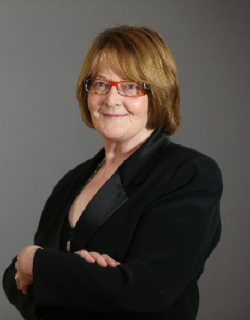
Mary Eleanor Laffoy, SC, retired Irish judge who is currently President of the Law Reform Commission, is born on North Circular Road, Dublin, on June 17, 1945. She previously serves as a Judge of the Supreme Court of Ireland from 2013 to 2017, and a Judge of the High Court from 1995 to 2013. She chairs the Citizens’ Assembly between 2016 and 2018.

Laffoy moves to Manorhamilton and Swinford, before returning to Dublin to live in Donabate following the death of her father. She attends Tourmakeady College in Toormakeady, County Mayo.

Initially after leaving school Laffoy tries primary school teaching at Carysfort College and joins the civil service. She is subsequently educated at University College Dublin (UCD) and King’s Inns. She receives the John Brooks Scholarship at the Inns for achieving the highest marks. She receives a BA from UCD in 1968 and a BCL in 1971.

Laffoy is called to the Bar in 1971 and to the Inner Bar in 1987. She devils for Brian McCracken. She becomes a Senior Counsel on the same day as future Supreme Court colleagues Susan Denham and Liam McKechnie and at the time is only one of four women seniors.

Laffoy’s expertise at the Bar is in property law. She appears in the Cityview Press case which clarifies the law on the nondelegation doctrine in Ireland. In 1983, she is appointed by the Supreme Court to argue against the constitutionality of the Electoral (Amendment) Bill 1983 following a reference made by President Patrick Hillery under Article 26 of the Constitution of Ireland. She appears in another Article 26 reference made by Mary Robinson regarding the Matrimonial Home Bill 1993. For both references, the Supreme Court finds for her side.

In 1986, Laffoy appears on The Late Late Show in a simulated court case to argue for a vote against the Fifteenth Amendment of the Constitution of Ireland.

Laffoy is appointed as a judge of the High Court in 1995, primarily presiding over cases involving chancery law.

Laffoy presides over the Commission to Inquire into Child Abuse from 1999 to 2003, an inquiry into child abuse. Her decision to resign as chair before the commission completes its report is controversial. In her letter of resignation from the commission of September 2, 2003, she outlines her belief that the actions of the Government and the Department of Education have frustrated her efforts and have slowed the commission’s work. She feels that “the cumulative effect of those factors effectively negated the guarantee of independence conferred on the Commission and militated against it being able to perform its statutory functions.” The commission is chaired from 2003 to 2009 by Judge Sean Ryan.

Laffoy presides over the High Court hearing in A v Governor of Arbour Hill Prison, ordering the release of a prisoner convicted of statutory rape due an earlier finding that the offence he was convicted of was contrary to the Constitution of Ireland. Her decision is overturned on appeal to the Supreme Court. In 2012, she dismisses an action taken by Thomas Pringle regarding the legality of the European Stability Mechanism. The European Court of Justice, after reference from the Supreme Court, also rejects his claim. During her time at the High Court, ten percent of reported judgments are written by her.

Laffoy is appointed to the Supreme Court of Ireland in July 2013. She retires from the Supreme Court on June 16, 2017. A portrait of her is unveiled in the King’s Inns in March 2020.

In July 2016, Laffoy is appointed by Taoiseach Enda Kenny to chair the Citizens’ Assembly, which she chairs until June 2018. She becomes the president of the Law Reform Commission in 2018.


Leave a comment

Birth of Susan Denham, First Female Chief Justice of Ireland

Susan Jane Denham, SC (née Gageby), Irish judge who is the first woman to hold the position of Chief Justice of Ireland (2011-17), is born in Dublin on August 22, 1945. She serves as a Judge of the Supreme Court of Ireland (1992-2017) and is the longest-serving member of the court on her retirement. She also serves as a Judge of the High Court (1991-92).

Gageby is the daughter of the former editor of The Irish Times, Douglas Gageby, the sister of another barrister, Patrick Gageby, and maternal granddaughter of Seán Lester. She is from a Church of Ireland background. She is educated at Alexandra College, Dublin, and attends Trinity College Dublin, the King’s Inns, and the Law School of Columbia University, New York City (LL.M. 1972). She is involved with the Free Legal Advice Centres while studying in Dublin and is a founder and president of the Archaeology and Folklife Society at Trinity College.

Gageby is called to the bar in July 1971 and becomes a Senior Counsel in October 1987. She is the fourth woman to enter the Inner Bar. She becomes a senior counsel on the same day as future Supreme Court colleague Mary Laffoy. She works on the Midland circuit until 1979, following which she is based in Dublin. She is involved in a number of leading cases while a junior barrister and a Senior Counsel particularly in the area of judicial review. She becomes a High Court judge in 1991.

Gageby marries paediatrician Dr. Brian Denham in 1992. Also in 1992, at the age of 47, Denham is the first woman appointed to the Supreme Court. She is considered for appointment to the role of President of the High Court in 1994 but declines to have her name put forward. She makes two dissents early on in her period on the Court. Throughout her tenure as a judge, she is seen by commentators to be a “liberal” judge.

In Kelly v Hennessy in 1996, Denham outlines criteria for a court to consider the evidence of the existence of nervous shock in Ireland. In 2001, she is the sole member of the Supreme Court to dissent in TD v Minister for Education. The court overturns a decision of Peter Kelly in the High Court to direct the government to build secure care units for certain children.

From 1995 to 1998, Denham chairs the Working Group on a Courts Commission, which is responsible for a significant reform of the organisation of the courts since the foundation of the state. It leads to the establishment of the Courts Service. She is on the Interim Board of the Court Service and serves on the Board of the Court Service from its inception and chairs the board from 2001 to 2004. She chairs the Committee on Court Practice and Procedure which recommends in 2002 the establishment of a commercial court within the High Court.

From 2006, Denham chairs the Working Group on a Court of Appeal. The report of the group is published by the government in August 2009 and recommends the establishment of a general Court of Appeal. This is ultimately established in 2014, after a referendum in 2013.

Denham is part of the Irish delegation which, with the Netherlands and Belgium, establishes the European Network of Councils for the Judiciary (ENCJ) and she continues an involvement in this Network. From January 1, 2015, to December 31, 2016, she is President of the Network of the Presidents of the Supreme Judicial Courts of the European Union which is an association of Supreme Court Presidents and Chief Justices of EU Member States.

Denham writes the judgment in McD v. L (2009), upholding the parental rights of a sperm donor.

On July 4, 2011, Denham is nominated by Taoiseach Enda Kenny to become Chief Justice of Ireland and is appointed as Chief Justice by President Mary McAleese on July 25, 2011. She is the first woman appointed to the office and as a member of the Church of Ireland, she is the first non-Catholic to hold the position. She is also the first graduate of Trinity College Dublin to have been appointed as Chief Justices have largely been graduates of University College Dublin. She succeeds John L. Murray.

During Denham’s tenure as Chief Justice, the Supreme Court issues suspended declarations of unconstitutionality for the first time. The possibility to delay the effect of a court declaration that a piece of legislation is contrary to the Constitution is first explored by Denham in A v Governor of Arbour Hill Prison. The court first adopts this approach in N.V.H. v Minister for Justice & Equality in May 2017.

As Chief Justice, Denham oversees changes in the operations of the Supreme Court and the courts generally. She oversees the removal of the requirement for judges to wear wigs while hearing cases. In 2015, the Supreme Court sits outside Dublin for the first time since 1931, sitting in Cork. She corresponds with the Office of Public Works over the lack of heating in the Four Courts, threatening to cancel sittings if the issue is not resolved. She advocates for the inclusion of a new courtroom for the Supreme Court in plans to develop a new family court complex on Hammond Lane.

In her capacity as Chief Justice, Denham oversees the administration of the Presidential Declaration of Office at the inauguration of President Michael D. Higgins in Dublin Castle in November 2011.

Denham retires from the position in July 2017 and is succeeded by Judge Frank Clarke. She is the third-longest serving Supreme Court judge ever at the time of her retirement. In her remarks on her retirement, she draws attention to the government’s failure to institute a judicial council, having first attempted to persuade the government to establish one in 1997.

In 2019, Denham is made an honorary fellow of Trinity College Dublin, where she was a Pro-Chancellor from 1996-2010.

The Courts Service announces on August 24, 2020, that the Supreme Court has appointed Denham to review the attendance of Supreme Court judge Séamus Woulfe at a dinner organised by the Oireachtas Golf Society. She is appointed on a non-statutory basis as the relevant section in the Judicial Council Act 2019 on judicial conduct has not yet been commenced.


Leave a comment

Resignation of Attorney General Patrick Connolly

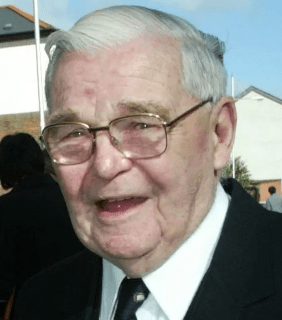
Patrick James Connolly, Irish barrister who serves as Attorney General of Ireland from March 1982 to August 1982, resigns on August 17, 1982, after Malcolm McArthur, wanted for, and later convicted of murder is found to be his house guest. The fallout from the incident leads to one of the most famous acronyms in Irish politics.

Connolly is born on May 25, 1927, the elder of the two sons of a headmaster and a teacher in Fingal, County Dublin. He is educated at St. Joseph’s College, University College Dublin and the King’s Inns, after which he is called to the Bar in 1949. His practice, which focuses on personal injury cases, is widely successful. On March 9, 1982, Taoiseach Charles Haughey names him as Attorney General of Ireland.

Connolly resigns on August 17, 1982 after Malcolm MacArthur, who had been a house-guest of Connolly’s, is arrested for murder. MacArthur, the domestic partner of Connolly’s friend Brenda Little, had committed a horrific double murder in the midst of a botched carjacking and robbery in 1982. Though Connolly is not implicated in the murder and is completely unaware of McArthur’s activities, he is forced to resign at midnight the night of MacArthur’s arrest and never again serves in government.

The much reviled, and correspondingly much loved Taoiseach, Charles Haughey, describes the incident as “a bizarre happening, an unprecedented situation, a grotesque situation, an almost unbelievable mischance.” Conor Cruise O’Brien, one of Haughey’s political opponents who despises the most corrupt Taoiseach in Irish history coins the phrase GUBU – Grotesque, Unprecedented, Bizarre, Unbelievable – to describe not just what happened but Haughey’s overall response.

Connolly returns to practice at the Irish bar and to work as a senior counsel in Dublin. A life-long bachelor, he dies at the age of 88 on January 7, 2016. Though he never marries, he has a very close relationship with his extended family, including his nephew and two nieces who speak at his funeral Mass. He is buried in Deans Grange Cemetery.


Leave a comment

Fidelma Macken Nominated for European Court of Justice

fidelma-macken

Fidelma Macken is nominated for the European Court of Justice on July 14, 1999, the first time a woman judge from any member country has reached such a high rank. She serves as a Judge of the Supreme Court of Ireland, the High Court and the European Court of Justice.

Macken (née O’Kelly) is born in Dublin on February 28, 1942. She is educated at King’s Inns and Trinity College Dublin. She becomes a barrister in 1972, practices as legal adviser, Patents and Trade Marks Agents (1973–1979) and becomes a Senior Counsel in 1995.

As a lawyer, Macken specialises in medical defense work and pharmaceutical actions. She acts as defense counsel in a series of cases brought by children against whooping cough vaccine manufacturers for damage allegedly caused by the vaccine. The Supreme Court nominates her to act in three referrals by the President of Ireland querying the constitutionality of new legislation before she becomes a judge.

Macken succeeds John L. Murray as Ireland’s appointee on the European Court of Justice (ECJ) from October 5, 1999, to September 22, 2004. Appointed initially for a five-year term, she is the first female appointee to the European Court of Justice but has her mandate renewed in 2003. She is reappointed a Judge of the High Court on October 18, 2004, on her return to Ireland. She serves as a Judge of the Supreme Court from 2005 to 2012.

Macken has been a lecturer in Legal Systems and Methods and Averil Deverell Lecturer in Law at Trinity College Dublin.


Leave a comment

Mary Robinson Elected First Woman President of the Republic

mary-robinson-1

Mary Robinson becomes the first woman to be elected President of the Republic of Ireland on November 7, 1990. She becomes the first Labour Party candidate, the first woman, and the first non-Fianna Fáil candidate in the history of contested presidential elections to win the presidency.

Brian Lenihan, the Tánaiste and Minister for Defence is chosen by Fianna Fáil as their candidate, though he faces a late challenge for the party nomination from another senior minister, John P. Wilson, TD. Lenihan is popular and widely seen as humorous and intelligent. He has delivered liberal policy reform (relaxed censorship in the 1960s) and is seen as a near certainty to win the presidency.

Fine Gael, after trying and failing to get former Taoiseach Garret FitzGerald and former Tánaiste Peter Barry to run, ultimately nominate the former civil rights campaigner and Social Democratic and Labour Party (SDLP) member Austin Currie. Currie is elected to Dáil Éireann in the 1989 general election and has been a minister in Brian Faulkner‘s power-sharing executive in Northern Ireland from 1973–1974. However, Currie has little experience in the politics of the Republic and is widely seen as the party’s last choice, nominated only when no one else is available.

The Labour Party lets it be known that it would for the first time run a candidate. Along with the Workers’ Party, Labour nominates the independent candidate Mary Robinson, SC, a former Labour Party member and senator, and liberal campaigner. Robinson is a former Reid Professor of Law in the Trinity College, Dublin. She is previously involved in the Campaign for Homosexual Law Reform and the campaign to save Wood Quay.

Lenihan enters the race as odds-on favourite. No Fianna Fáil candidate has ever lost a presidential election. However, Lenihan is derailed when he confirms in an on-the-record interview with freelance journalist and academic researcher Jim Duffy that he has been involved in controversial attempts to pressurise the President, Patrick Hillery, over a controversial parliamentary dissolution in 1982. As a result of the contrast between his public denials during the campaign and his confirmation during an earlier interview recorded in May, he is dismissed from the Irish government.

At this point a cabinet colleague, Pádraig Flynn, launches a controversial personal attack on Mary Robinson “as a wife and mother,” an attack that is itself attacked in response as “disgraceful” on live radio by Michael McDowell, a senior member of the Progressive Democrats, then in coalition with Fianna Fáil and up to that point supporting Lenihan’s campaign. Flynn’s attack is a fatal blow to Lenihan’s campaign, causing many female supporters of Lenihan to vote for Robinson in a gesture of support.

Lenihan nonetheless receives a plurality of first-choice votes. Mary Robinson beats Austin Currie, forcing Fine Gael’s candidate into third place. Under Ireland’s system of single transferable vote, Robinson receives over 75% of the transfers when Austin Currie is eliminated, beating Lenihan into second place and becoming the seventh President of Ireland.

While the role of the presidency in day-to-day politics is a very limited one, the Robinson presidency is regarded by many observers as a watershed in Irish society, symbolising the shift away from the conservative ultra-Catholic male-dominated Ireland which existed up until the end of the 1980s to the more liberal society symbolised by Robinson.

Robinson is generally credited with raising the profile of the office of president, which has been considered little more than an honorary figurehead position under her predecessors. Prior to Mary Robinson’s presidency it was not unusual to hear commentators advocating the abolition of the office of president, a viewpoint that is almost never advanced nowadays.