seamus dubhghaill

Promoting Irish Culture and History from Little Rock, Arkansas, USA


Leave a comment

Death of Jonathan Christian, Irish Judge

Jonathan ChristianSLQCPC (I), Irish judge, dies in Dublin on October 29, 1887. He serves as Solicitor-General for Ireland from 1856 to 1858. He is a judge of the Court of Common Pleas (Ireland) from 1858 to 1867 when he is appointed Lord Justice of Appeal in Chancery. On the creation of the new Irish Court of Appeal in 1878, he serves briefly on that Court, but retires after a few months.

Christian is considered one of the best Irish lawyers of his time, but as a judge, he regularly courts controversy. His bitter and sarcastic temper and open contempt for most of his colleagues leads to frequent clashes both in Court and in the Press. Though he is rebuked for misconduct several times by the House of Commons, no serious thought is given to removing him from office.

Christian is born in Carrick-on-Suir, County Tipperary, the third son of George Christian, a solicitor, and his wife Margaret Cormack. He is educated at the Trinity College Dublin, enters Gray’s Inn in 1831 and is called to the Irish Bar in 1834. He marries Mary Thomas in 1859 and they have four sons and four daughters. He lives at Ravenswell, Bray, County Wicklow.

Christian’s early years at the Bar are not successful, and he admits to being near to despair at times about his prospects. His practice lays in the Court of Chancery, with procedures that are extremely complex and he finds at first almost unintelligible. Gradually he masters the intricacies of Chancery practice becoming a leader of the Bar, and took silk in 1841. It is said that his expertise in Chancery procedures leave even the Lord Chancellor himself quite unable to argue with him.

Christian is appointed Law Adviser to the Lord Lieutenant of Ireland, an influential post which involves assisting the Attorney-General and Solicitor-General in advising the Crown in 1850, but resigns after only a few months on the grounds that it interferes with his private practice. He is appointed Third Sergeant later the same year but resigns in 1855, allegedly because he is disappointed at not receiving further promotion. Promotion does in time come his way. He is appointed Solicitor-General the following year and a judge of the Court of Common Pleas in 1858. He is unusual in having no strong political loyalty; it is said that his political allegiance is known only to himself.

As a judge of the Court of Common Pleas, Christian gets on well with his colleagues, and any dissenting judgements he writes are short and courteous. It is after his appointment as a Lord Justice of Appeal in Chancery in 1867 that his behaviour begins to attract unfavourable comment, as he goes out of his way to court controversy on a wide variety of topics.

His criticisms of legal rulings and arguments are invariably delivered in the form of a personal attack. Such exchanges are frequently continued through the letters page of The Times. Conservative in politics, he objects to the appointment of Thomas O’Hagan as Lord Chancellor in December 1868, dismissing him as a liberal “political necessity.” He goes to great lengths to point out legal flaws in the Landlord and Tenant (Ireland) Act 187, to the great annoyance of the Prime Minister, William Ewart Gladstone. His final public diatribe comes in 1877 when he launches an attack on the quality of law reporting, dismissing the contents of the Irish Reports as “a mass of utterly worthless rubbish.” He is vilified in the legal press and is the subject of cartoons in Dublin satirical journals. Pleading deafness, he retires in December 1878.

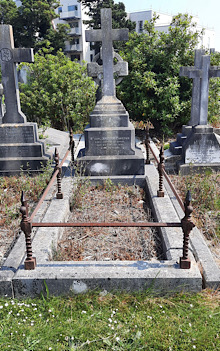
Christian dies on October 29, 1887, at his Dublin residence, 53 Merrion Square, and is buried in Dean’s Grange Cemetery, Deansgrange, County Dublin. In his will, approved in Dublin on December 3, 1887, he leaves an estate worth over £70,000. There is a fine portrait by Frank Reynolds in the dining hall of the Honourable Society of King’s Inns, Dublin.


Leave a comment

Birth of Anthony Malone, Lawyer & Politician

anthony-malone

Anthony Malone, Irish lawyer and politician, is born on December 5, 1700, the eldest son of Richard Malone of Baronston, County Westmeath, and Marcella, daughter of Redmond Molady. Edmund Malone is his nephew, and a younger brother, Richard Malone (1706–1759), is MP for Fore from 1741.

Malone is educated at Mr. Young’s school in Abbey Street, Dublin, and on April 6, 1720 is admitted a gentleman-commoner of Christ Church, Oxford. After two years at university he enters the Middle Temple and is called to the Irish bar in May 1726. In 1737 he is created LL.D. of Trinity College, Dublin.

In 1733, Malone marries Rose, daughter of Sir Ralph Gore, 4th Baronet, speaker of the Irish House of Commons. The marriage results in no children.

Malone makes a successful career as a lawyer. From 1727 to 1760, and again from 1769 to 1776, he represents the county of Westmeath, and from 1761 to 1768 the borough of Castlemartyr, in the Irish parliament. In 1740 he is appointed Serjeant-at-law, but is dismissed from office in 1754 for opposing the claim of the crown to dispose of unappropriated revenue. In 1757 he is made Chancellor of the Exchequer of Ireland, but his attitude in council in regard to the Money Bill of 1761 leads to his again being removed from office. His treatment is regarded as too severe by William Pitt, 1st Earl of Chatham, and Malone, who draws a distinction between advice offered in council and his conduct in parliament, introduces the measure as chairman of the committee of supply. He is shortly afterwards granted a patent of precedence at the bar, but is charged with having sold his political principles for money.

Malone supports John Monck Mason‘s bill for enabling Roman Catholics to invest money in mortgages on land. In 1762 he is appointed, with Sir Richard Aston, to try the Whiteboys of Munster. They agree in ascribing the rural violence to local and individual grievances.

Malone dies at the age of 75 on May 8, 1776. At one time, a marble bust of him adorned Baronston House. By his will, made in July 1774, he leaves all his estates in the counties of Westmeath, Roscommon, Longford, Cavan, and Dublin to his nephew, Richard Malone, 1st Baron Sunderlin as he became, eldest son of his brother Edmund. On his death in 1816 the right of succession is disputed.


Leave a comment

Death of John Hely-Hutchinson, Lawyer & Statesman

CH35304

John Hely (later Hely-Hutchinson), Irish lawyer, statesman, and Provost of Trinity College Dublin, dies on September 4, 1794, at Buxton, Derbyshire, England.

Hely is born in 1724 at Gortroe, Mallow, son of Francis Hely, a gentleman of County Cork. He is educated at Trinity College Dublin (BA 1744) and is called to the Irish bar in 1748. He takes the additional name of Hutchinson upon his marriage in 1751 to Christiana Nixon, heiress of her uncle, Richard Hutchinson.

Hely-Hutchinson is elected member of the Irish House of Commons for the borough of Lanesborough in 1759, but from 1761 to 1790 he represents Cork City. He at first attaches himself to the patriotic party in opposition to the government, and although he afterwards joins the administration, he never abandons his advocacy of popular measures.

After a session or two in parliament he is made a privy councillor and prime Serjeant-at-law. From this time, he gives a general, though by no means invariable, support to the government. In 1767 the ministry contemplates an increase of the army establishment in Ireland from 12,000 to 15,000 men, but the Augmentation Bill meets with strenuous opposition, not only from Henry Flood, John Ponsonby and the habitual opponents of the government, but from the Undertakers, or proprietors of boroughs, on whom the government has hitherto relied on to secure them a majority in the House of Commons.

It therefore becomes necessary for Lord Townshend to turn to other methods for procuring support. Early in 1768 an English Act is passed for the increase of the army, and a message from King George III setting forth the necessity for the measure is laid before the House of Commons in Dublin. An address favourable to the government policy is, however, rejected as Hely-Hutchinson, together with the speaker and the attorney general, do their utmost both in public and private to obstruct the bill. Parliament is dissolved in May 1768, and the lord lieutenant sets about the task of purchasing or otherwise securing a majority in the new parliament. Peerages, pensions and places are bestowed lavishly on those whose support could be thus secured. Hely-Hutchinson is won over by the concession that the Irish army should be established by the authority of an Irish act of parliament instead of an English one.

The Augmentation Bill is carried in the session of 1769 by a large majority. Hely-Hutchinson’s support had been so valuable that he receives as reward an addition of £1,000 a year to the salary of his sinecure of alnager, a major’s commission in a cavalry regiment, and a promise of the Secretaryship of State. He is at this time one of the most brilliant debaters in the Irish parliament and is enjoying an exceedingly lucrative practice at the bar. This income, however, together with his well-salaried sinecure, and his place as prime serjeant, he surrenders in 1774 to become provost of Trinity College, although the statute requiring the provost to be in holy orders has to be dispensed with in his favour.

For this great academic position Hely-Hutchinson is in no way qualified and his appointment to it for purely political service to the government is justly criticised with much asperity. His conduct in using his position as provost to secure the parliamentary representation of the university for his eldest son brings him into conflict with Patrick Duigenan, while a similar attempt on behalf of his second son in 1790 leads to his being accused before a select committee of the House of Commons of impropriety as returning officer. But although without scholarship Hely-Hutchinson is an efficient provost, during whose rule material benefits are conferred on Trinity College.

Hely-Hutchinson continues to occupy a prominent place in parliament, where he advocates free trade, the relief of the Catholics from penal legislation, and the reform of parliament. He is one of the very earliest politicians to recognise the soundness of Adam Smith‘s views on trade and he quotes from the Wealth of Nations, adopting some of its principles, in his Commercial Restraints of Ireland, published in 1779, which William Edward Hartpole Lecky pronounces one of the best specimens of political literature produced in Ireland in the latter half of the 18th century.

In the same year, the economic condition of Ireland being the cause of great anxiety, the government solicits from several leading politicians their opinion on the state of the country with suggestions for a remedy. Hely-Hutchinson’s response is a remarkably able state paper, which also shows clear traces of the influence of Adam Smith. The Commercial Restraints, condemned by the authorities as seditious, goes far to restore Hely-Hutchinson’s popularity which has been damaged by his greed of office. Not less enlightened are his views on the Catholic question. In a speech in parliament on Catholic education in 1782 the provost declares that Catholic students are in fact to be found at Trinity College, but that he desires their presence there to be legalised on the largest scale.

In 1777 Hely-Hutchinson becomes Secretary of State. When Henry Grattan in 1782 moves an address to the king containing a declaration of Irish legislative independence, he supports the attorney general’s motion postponing the question. On April 16, however, after the Easter recess, he reads a message from the Lord Lieutenant, the William Cavendish-Bentinck, 3rd Duke of Portland, giving the king’s permission for the House to take the matter into consideration, and he expresses his personal sympathy with the popular cause which Grattan on the same day brings to a triumphant issue. Hely-Hutchinson supports the opposition on the regency question in 1788, and one of his last votes in the House is in favour of parliamentary reform. In 1790 he exchanges the constituency of Cork for that of Taghmon in County Wexford, for which borough he remains member until his death at Buxton, Derbyshire on September 4, 1794.

(Pictured: Portrait, oil on canvas, of John Hely-Hutchinson (1724–1794) by Sir Joshua Reynolds (1723–1792))


1 Comment

Birth of Barrister Alexander Martin Sullivan

alexander-martin-sullivan

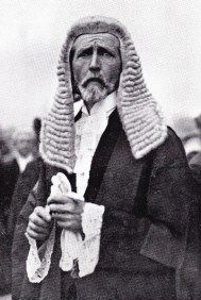
Alexander Martin Sullivan, Irish lawyer best known as the leading counsel for the defence in the 1916 treason trial of Roger Casement, is born in Dublin on January 14, 1871. He is the last barrister in either Ireland or England to hold the rank of Serjeant-at-Law, hence his nickname The Last Serjeant.

A younger son of A.M. Sullivan and Frances Donovan, Sullivan is educated at Ushaw College, Belvedere College, Trinity College, Dublin and King’s Inns. He is called to the Irish Bar in 1892 and practises on the Munster Circuit.

Sullivan is appointed an Irish KC in 1908 and King’s Third Serjeant-at-law (Ireland) in 1912 advancing to Second Serjeant in 1913 and First Serjeant in 1919, the last holder of that position.

A moderate constitutional nationalist and supporter of the Irish Parliamentary Party, Sullivan is a prominent campaigner for the recruitment of Irishmen into the British Army during World War I. His opposition to Sinn Féin republicanism and his prominent role in conducting prosecutions on behalf of the Crown during the Irish War of Independence lead to at least one attempt on his life. As a result, he relocates to England in 1921 and establishes a career at the English Bar, having previously been called to the Middle Temple in 1899. He subsequently becomes a Bencher and Treasurer of Middle Temple. By courtesy, he is always referred to as Serjeant Sullivan, even though that rank no longer exists in England.

Sullivan remains a member of the Irish Bar and returns at least once to appear in the celebrated case of Croker v Croker, where the children of the former leader of Tammany Hall, Richard “Boss” Croker attempt to overturn his will, which leaves his entire estate to their stepmother.

Sullivan is noted as a fearless advocate, who brings to his English practice the robust manners he had learned in the Irish county courts. He does not hesitate to interrupt the judge, and if he feels that he is not receiving a fair hearing, he is quite capable of walking out of Court.

In 1916 Sullivan is retained as lead counsel in the trial of Sir Roger Casement for treason. No English barrister will defend Casement, and Sullivan is persuaded to take the case by George Gavan Duffy, whose wife Margaret is Sullivan’s sister. Despite his rank of Serjeant at law and King’s Counsel at the Irish bar he is only ranked as a junior barrister in England. As the facts relied on by the prosecution are largely undisputed, Sullivan is limited to arguing a technical defence that the Treason Act 1351 only applies to acts committed “within the realm” and not outside it. The Act’s terms had however been expanded by case law over the previous 560 years, and the defence is rejected by the trial judges and by the Court of Criminal Appeal.

Sullivan writes two books: Old Ireland in 1927 and The Last Serjeant in 1952. He retires from legal practice in 1949. He dies on January 9, 1959.