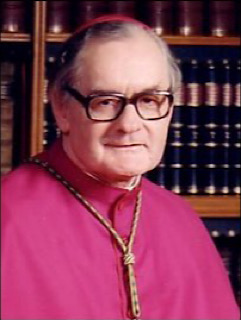
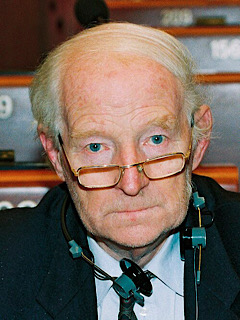
McNamara and Newman are particularly outspoken on the issue of a proposed anti-abortion amendment to the Constitution of Ireland. While other bishops advocate people vote with their conscience in the referendum on the issue, McNamara and Newman instruct Catholics that they have a duty to “vote yes” to the referendum.
In 1984, the Archdiocese of Dublin becomes vacant when Archbishop Ryan is given a senior appointment in the Roman Curia. Ryan is expected to be made a cardinal as a result of the appointment but dies suddenly in office before a consistory can be held. McNamara’s selection to replace the more liberal Ryan in Dublin creates media reports linking his appointment to the ongoing tensions between the papal nuncio in Ireland, Archbishop Gaetano Alibrandi, and the liberal Fine Gael–Labour Partycoalition under Garret FitzGerald. Relations between Alibrandi and the coalition break down, with the government requesting that Alibrandi be removed because of his suspected closeness to Irish republicans in Sinn Féin and to the opposition Fianna Fáil party and in particular its leader, Charles Haughey. Critics accused Alibrandi of engineering McNamara’s appointment in the belief that the outspoken McNamara can help derail the coalition’s liberal policies on divorce and contraception.
McNamara, as expected, takes a far more outspoken stance of issues than had Ryan previously. While the coalition succeeds in liberalising the law on contraception, its efforts to amend the constitution on divorce are defeated.
McNamara’s service in Dublin is short-lived. Already suffering from what proves to be terminal cancer, he dies on April 8, 1987 after a three year battle with the disease, months after the Fine Gael minority government is defeated in the 1987 Irish general election. He is succeeded as archbishop by a university lecturer, Desmond Connell.
In the early 2000s, amid growing scandals within the Catholic Church in Ireland about clerical sex abuse, it is revealed that as archbishop McNamara had sought legal advice as to the Church’s liability arising from such abuse.
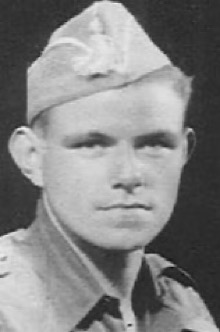
O’Riordan is born at 37 Pope’s Quay, Cork, County Cork, on November 11, 1917, the youngest of five children. His parents come from the West Cork Gaeltacht of Ballingeary–Gougane Barra. Despite his parents being native speakers of the Irish language, it is not until he is interned during World War II that he learns Irish.
As a teenager, O’Riordan joins the republican youth movement, Fianna Éireann, and then the Irish Republican Army (IRA). Much of the IRA at the time is inclined toward left-wing politics. A lot of its activity at the time involves street fighting with the quasi-fascistBlueshirt movement, and he fights the Blueshirts on the streets of Cork in 1933–34. He Is friends with left-wing inclined republicans such as Peadar O’Donnell and Frank Ryan, and in 1934, he follows them into the Republican Congress – a short-lived socialist republican party.
O’Riordan joins the Communist Party of Ireland (1933) in 1935 while still in the IRA and works on the communist newspaper The Irish Workers’ Voice. In 1937, following the urgings of Peadar O’Donnell, several hundred Irishmen, mostly IRA or ex-IRA men, go to fight for the Spanish Republic in the Spanish Civil War with the XVth International Brigade. They are motivated in part by enmity towards the 800 or so Blueshirts, led by Eoin O’Duffy who went to Spain to fight on the “nationalist” side in the Irish Brigade. He accompanies a party led by Frank Ryan. In the Republic’s final offensive of July 25, 1938, he carries the flag of Catalonia across the River Ebro. On August 1 he is severely injured by shrapnel on the Ebro front. He is repatriated to Ireland the following month, after the International Brigades are disbanded.
In 1938, O’Riordan is offered an Irish Army commission by the Irish Free State but chooses instead to train IRA units in Cork. As a result of his IRA activities during World War II, he is interned in the Curragh Camp from 1939 until 1943 where he is Officer Commanding of the Cork Hut and partakes in Máirtín Ó Cadhain‘s Gaelic League classes as well as publishes Splannc (Irish for “Spark”, named after Vladimir Lenin‘s newspaper). He is secretary of the “Connolly group,” composed of leftist internees. Following his release from internment, he terminates his IRA membership.
In 1944, O’Riordan is founding secretary of the Liam Mellows Branch of the Labour Party. This branch becomes infamous for what is regarded during the period as its controversial nature and becomes an intractable enemy of Branch Chair Timothy Quill. The branch is initially established by former members of the Curragh Camp’s Communist Group, including Bill Nagle and Jim Savage. During this time, the Irish Transport and General Workers’ Union (ITGWU) disaffiliates from the Labour Party and the National Labour Party is established on the basis that communists have infiltrated the party. Quill, who is made branch chair by the Labour Party, allegedly has O’Riordan and his fellow members expelled, with the branch being dissolved. O’Riordan later accuses Quill of antisemitism and both Quill and Timothy J. Murphy of “red-baiting.” In 2001, he claims that any attempt to raise the issue of defence of communist Spain “was shouted down at Labour Party Conferences.” In 1945, he is a founding secretary of the Cork Socialist Party.
O’Riordan subsequently works as a bus conductor in Cork and is active in the ITGWU. He stands as a Cork Socialist Party candidate in the 1946 Cork Boroughby-election, placing third behind Fianna Fáil‘s Patrick McGrath and Fine Gael‘s Michael O’Driscoll with 3,184 votes. Afterward, he moves to Dublin where he lives in Victoria Street with his wife Kay, and continues to work as a bus conductor and remains active in the ITGWU.
In 1948, O’Riordan is a founding secretary of the Irish Workers’ League and general secretary thereafter, and of its successor organisation the Irish Workers’ Party from 1962 to 1970.
O’Riordan meets and befriends folk musician Luke Kelly, and the two develop a “personal-political friendship.” Kelly endorses him for election, and holds a rally in his name during campaigning in 1965.
In all O’Riordan runs for election five times, campaigning throughout for the establishment of a socialist republic in Ireland but given Ireland’s Catholic conservatism and fear of communism, he does so without success. He does, however, receive playwright Seán O’Casey‘s endorsement in 1951. O’Casey writes: “Mr. O’Riordan is his own message. He has nothing to sell but his soul. But he hasn’t done that, though he will be told he’ll lose it by holding on to it.”
O’Riordan’s participation in the Spanish Civil War is always an important part of his political identity. In 1966, he attends the International Brigades’ Reunion in Berlin and is instrumental in having Frank Ryan’s remains repatriated from Germany to Ireland in 1979.
O’Riordan is a member of the Irish Chile Solidarity Committee and attends the 1st Party Congress of the Communist Party of Cuba in 1984. He also campaigns on behalf of the Birmingham Six and attends their appeal trial in 1990. He serves between 1970 and 1983 as General Secretary of the Communist Party of Ireland (CPI) and from 1983 to 1988 as National Chairman of the party publishing many articles under the auspices of the CPI. Hus staunchly pro-Soviet direction of the party leads to a number of members leaving to form the EurocommunistIrish Marxist Society.
O’Riordan’s last major public outing is in 2005 at the re-dedication of the memorial outside Dublin’s Liberty Hall to the Irish veterans of the Spanish Civil War. With other veterans, he Is received by President of IrelandMary McAleese. He is also presented with Cuba’s Medal of Friendship by the Cuban Consul Teresita Trujillo to Ireland on behalf of Cuban President Fidel Castro.
In 1969, according to Soviet dissident Vasili Mitrokhin, O’Riordan is approached by IRA leaders Cathal Goulding and Seamus Costello with a view to obtaining guns from the Soviet KGB to defend Irish republican areas of Belfast during the communal violence that marked the outbreak of the Troubles. Mitrokhin alleges that O’Riordan then contacts the Kremlin, but the consignment of arms does not reach Ireland until 1972. The operation is known as Operation Splash.
In the meantime, the IRA has split into the Provisional IRA and the Official IRA and it is the latter faction who receives the Soviet arms. Mitrokhin’s allegations are repeated in Boris Yeltsin‘s autobiography. After the split in the Republican movement, O’Riordan unsuccessfully attempts to bring about a reunification of the two sides.
O’Riordan’s book, Connolly Column: The Story of the Irishmen who fought for the Spanish Republic, 1936–1939, published in 1979, deals with the Irish volunteers of the International Brigade who fought in support of the Spanish Republic against Francisco Franco in the Spanish Civil War (1936–39). An updated version of the book is reprinted in 2005 and is launched by the Lord Mayor of Dublin, Cllr. Michael Conaghan at a book launch at SIPTU headquarters, Liberty Hall. The book is the inspiration for Irish singer-songwriter Christy Moore‘s famous song Viva la Quinta Brigada.
In 1991, O’Riordan’s wife, Kay Keohane of Clonakilty, County Cork dies at their home at the age of 81. He continues to live in their family home before moving to Glasnevin in 2000 to be close to his son Manus who lives nearby. In 1999, he describes himself as an atheist and believes that communism will rise again. He lives there until falling ill in November 2005 and is taken to the Mater Hospital. His health rapidly deteriorates and he quickly develops Alzheimer’s disease. Soon afterward he is moved to St. Mary’s Hospital in the Phoenix Park where he spends the final few months of his life, before his death at the age of 88 on May 18, 2006. Then Labour Party leader Ruairi Quinn praises O’Riordan after his death, saying, “As leader of the Labour Party I had the honour of ensuring he received a special citation at our 2001 national conference. Michael O’Riordan stood out against the tide of Irish conservatism and clerical domination that kept Ireland backward and isolated in the 1930s, 1940s and 1950s.”
O’Riordan’s funeral at Glasnevin Crematorium is attended by over a thousand mourners. Following a wake the previous night at Finglas Road, hundreds turn up outside the house of his son and traffic grinds to a halt as family, friends and comrades – many of whom are waving the red flag of the Communist Party of Ireland – escort O’Riordan to Glasnevin Cemetery. A secular ceremony takes place led by Manus O’Riordan (Head of Research at SIPTU) with contributions from O’Riordan’s family, Communist Party general secretary Eugene McCartan and IBMT representative Pauline Frasier.
The Catholic Association is the latest in a series of similar associations formed over the previous ten years or so, none of which had prospered. Like the other associations, this new association is composed mainly of the middle class elite: an annual subscription amounting to a guinea, an amount equivalent to what an average farmer would pay for six months’ rent. In 1824, the Catholic Association begins to use the money that it has raised to campaign for Catholic emancipation.
In 1824, the association creates a new category of associate members at the cost of a penny per month, the so-called Catholic Rent. The reasoning behind the creation of this new membership category is to stimulate a swelling in association numbers. This new, cheaper category ensures Catholics from a poorer background can join, and thus the association’s initial class-based entry barriers are removed. The Catholic rent transforms the association and Catholic political advocacy more broadly. In terms of the association, the rent catalyzes a transformation in a number of ways. Firstly, as previously mentioned, it gives the Catholic Association a constant source of money, which enables O’Connell to run a consistent campaign. Secondly, it facilitates easy calculation of total association membership numbers so that O’Connell can say with confidence that he has the support of so many people. This is important as it can be used to apply pressure against the British government. Third, and perhaps most importantly, however, it announces the arrival of mass mobilization politics, being the first such populist movement in Europe. O’Connell decides to add this additional membership level, at a reduced price of a penny a month, deliberately. The benefits are clear. With the membership subscription set at a relatively cheap price, a large number of the peasant and working classes can join. Affordability ensures large numbers. In effect, it becomes a universal Catholic organization that is transparent and populist. The fact that each member contributes financially to the association also ensures that they are more deeply involved in pushing the cause of Catholic emancipation. People want value for their money. Thus, this ensures a cheap method for O’Connell to get the message of Catholic emancipation spread throughout Ireland.
The Catholic Association’s funds are diffused widely in a variety of areas. Some is spent campaigning for Catholic emancipation, defraying the costs of sending petitions to Westminster, and training of priests. Following the 1826 election campaign, funds are used to support the members of the organization who had voted against their landlords. The money is used for those who have been evicted from land by the landlords because of their connection to the Catholic organization or for those who were boycottingabsentee landlord. For the Catholic peasants that are in this situation, the future would be grim as they would be unable to continue the boycott without food and money, and they would be unable to lease land from any landlord as the peasants would be boycotted against in return. The Catholic Association’s funds are used to support these boycotts so that they can continue and live well enough to have enough food to survive.
The Catholic Association is originally aristocratic in its composition, and some of the gentry (such as Richard Lalor Sheil) hold relatively conservative views. However, O’Connell holds an enormous influence over society and largely dictates the policies it pursues. It is radical in nature but also extremely loyal to the Crown in appearance. This had been the strategy of the previous major Catholic group, the Catholic Committee of the 1790s, which achieved major Catholic Relief in 1793.
Since the aims of the Catholic Association are fairly moderate and the organization remains loyal to the monarch, British MPs are conceptually more willing to pass Catholic emancipation. The matter had been discussed in London since the Acts of Union 1800, when Prime MinisterWilliam Pitt and most of his colleagues resign from the cabinet when emancipation is denied by the king. Henry Grattan continues to support the cause, and Catholic emancipation had been passed by the House of Commons previously by a majority of six, but it is rejected in the House of Lords and generally by King George III, who reigns until 1820.
The biggest strength of the Catholic Association is that the Catholic Church helps in the collection of the Catholic rent. Catholic priests also hold sermons in favor of Catholic emancipation. This means that it is easy for the members to pay the Catholic rent, and it will attract more members as the message of Catholic emancipation is being spread throughout Ireland. Sir Robert Peel believes the alliance of the Catholic Association and the Catholic Church is a “powerful combination.”
In 1826, the Catholic Association begins to use its funds to support pro-emancipation MPs in elections. They use their money and manpower to campaign for the candidate to be elected into parliament to pressure the government from within to pass Catholic emancipation.
The turning point comes in 1828, when two factors come into play. The first is that the Catholic Church takes over the collection of the Catholic Rent and effectively the Catholic Association itself. The other is that by 1828, O’Connell’s reputation has increased dramatically. He is an internationally recognized figure and is seen as one of the leading figures in liberal thinking. This successful campaign leads on to, but is distinguished from, his later efforts to end the union with Britain, to increase the franchise, and to end the payment of tithes. His particular talent is to push the emancipation process along in an organized way.
In May 1828, the Sacramental Test Act 1828 repeals the Test Acts 1673 & 1678 against non-AnglicanProtestants. This gives non-Catholic non-conformists greater political freedom and equality in Britain. The repeal has two effects: it gives Catholics hope that a similar act will be passed that will include Catholics; it also alienates Catholics, as they have become the only Christians not to have political freedom and equality.
In May 1828, William Huskisson resigns from the cabinet, and William Vesey-Fitzgerald is chosen as the President of the Board of Trade. According to the law, there is to be a by-election in his constituency of Clare. O’Connell decides to exploit a loophole in the Acts of Union 1800. It requires MPs to take the Oath of Allegiance, but the oath is not required of candidates for election. He stands in the by-election and wins. Since he is a Catholic, he cannot take his seat in parliament. Demand rises to allow him to become an MP for Clare, as it does not have representation.
Sir Robert Peel and Arthur Wellesley, 1st Duke of Wellington, see that if O’Connell is not allowed to take his seat, then there could be a revolution in Ireland. While using non-violent methods, O’Connell hints that he will get more Catholics elected to force the situation. In an emotive speech, he says, “They must crush us or conciliate us.”
Peel decides to change the government’s approach and submits the Roman Catholic Relief Act 1829 in February 1829. The bill is passed. It is a momentous victory for O’Connell and the Catholic middle class, and he becomes known as “the liberator” and the “uncrowned king of Ireland.” However, the simultaneous enactment of the Parliamentary Elections (Ireland) Act 1829 restricts the franchise in the county constituencies in Ireland. The archive of the Catholic Association is housed with the archives of Dublin Diocese in Holy Cross College, Dublin.
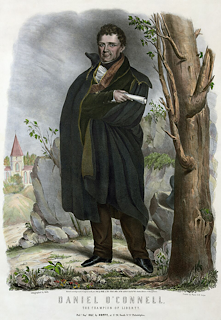
(Pictured: “Daniel O’Connell: The Champion of Liberty” poster published in Pennsylvania, 1847)
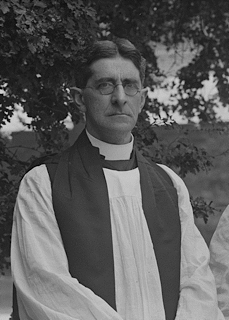
Though Gregg is instinctively conservative, his awareness of contemporary trends make him responsive to demands for change: he supports the resolution for women to hold parochial office and presents a petition to the General Synod in 1914, signed by 1,400 women. Though the motion is lost, he perseveres undaunted, and a bill for the ecclesiastical enfranchisement of women is finally carried in 1920. A unionist, he is also one of three Anglican and seventeen Catholic bishops to sign the declaration against partition in 1917, which is organised by the Catholic Bishop of Derry, Charles McHugh.
From the 1920s the Irish church is dominated by Gregg, first as Archbishop of Dublin (1920–39) and later as Archbishop of Armagh and Primate of All Ireland (1939–59). He provides stability to the church during a turbulent period of political and social change and is outspoken in defence of its interests, pragmatically espousing policies that will lead to the greater integration of the Protestant community into the new Irish state, as in his acceptance of the teaching of compulsory Irish in national schools. Despite a declining Protestant community in the south of Ireland, he maintains the unity of the church, overcoming the political division of the country into two entities. He regrets constitutional change but pledges the loyalty of the church to the Irish Free State. While recognising that the Protestant ethos is different from that of the majority of Irishmen, he maintains that “whatever our religious or political outlook may be, here is our home, and we have a right to be here.” He is elected to the first Irish Free State senate, and is subsequently consulted by Éamon de Valera, who later describes him as “a most learned and kindly gentleman, and . . . a highly valued friend,” in framing the text of the 1937 constitution. In 1949, he adapts, albeit with sadness, the state prayers to fit the republican form of government, observing that “the republic is a fact” and that “in our prayers, above all, there must be reality.”
Gregg is an able administrator, and his courage and integrity in facing difficult situations and his scholarship and devotion to the church earn him respect in the councils of the wider Anglican communion. He is known as “the churchman’s bishop” for his emphasis on doctrinal orthodoxy, ecclesiastical discipline, and loyalty to the clergy. Though conservative in his approach to church unity, he seeks closer relations between the Christian churches and frequently visits the reformed churches of the Iberian Peninsula, where a portrait plaque is unveiled in 1950 in St. John’s Church, Vila Nova de Gaia, Portugal. A baptistry in St. Paul’s Cathedral, Lisbon, is dedicated to his memory. Well known in England as a writer and preacher, he is appointed select preacher at the University of Cambridge (1916, 1930, 1936) and the University of Oxford (1946, 1947) and supports the institution of annual theological lectures at Queen’s University Belfast (QUB). His publications include Epistle of St. Clement of Rome (1899) and The Primitive Faith and Roman Catholic Developments (1909) – a minor classic which is used as a textbook for ordinands of the Church of England. He writes the introduction and notes to the revised version of the Wisdom of Solomon for the Cambridge Bible for Schools (1909) and publishes sermons and articles in religious journals. Elected Member of the Royal Irish Academy (MRIA) in 1914, he is elected to honorary fellowship in 1934 by Christ’s College, Cambridge, is awarded an honorary Doctor of Divinity (DD) in 1949 by QUB, and is created Order of the Companions of Honour (CH) in 1957.
A commanding figure, tall, thin, with raven-black hair, piercing eyes, and fine features, Gregg has an air of sacerdotal austerity, lightened on occasion by his dry sense of humour. He maintains a well regulated daily timetable and keeps a diary, writing his most personal thoughts in Greek. He makes time for recreation, a daily walk of two miles, tennis, and (from 1929) sailing, and holidays in Ireland and on the Continent. He has a great love of English literature and church music. In 1959, he retires to the Woodhouse, Rostrevor, County Down. Though incapacitated by blindness, deafness, and lameness, he never complains, and according to his wife, his life of prayer is enriched. He dies on May 2, 1961, at his home and is buried in Enniskerry, County Wicklow, beside his first wife and son.
Gregg marries Anna Alicia Jennings on November 26, 1902. They have two sons and two daughters. Anna dies in 1945. On January 22, 1947, he marries secondly Leslie Alexandra, daughter of the Rev. T. J. McEndoo, dean of Armagh, who officiates at the marriage of his daughter and of his archbishop.
(From: “Gregg, John Allen Fitzgerald” by Helen Andrews, Dictionary of Irish Biography, http://www.dib.ie, October 2009)
Maher is born on April 29, 1922, at Castlemoyle, Boherlahan, Cashel, County Tipperary, the seventh child of Thomas Maher, farmer, and his wife Julianne Maher. Raised on the family’s forty-five-acre holding and educated locally at Ardmaylenational school and at the Christian Brothers school and VEC school in Cashel, he takes over the farm in 1948 when ill health forces his father into retirement. He subsequently enlarges it to 120 acres. Mechanically adept, a talented sportsman, and a member of Cashel Dramatic Society, he joins Macra na Feirme and is a founder member of the National Farmers’ Association (NFA) in January 1955.
Maher is a member and chairman of the dairy committee of the NFA before coming to national attention through his participation in the historic farmers’ rights march to Dublin led by Rickard Deasy (October 7-19, 1966), part of the militant campaign for fairer agricultural prices and for reform of taxation and rates on farmland. His part in the subsequent three-week sit-down protest and meeting with incoming minister Neil Blaney, at the Department of Agriculture, confirms his reputation as a tenacious campaigner for agricultural causes. In August 1967, shortly after 100 farmers have served prison sentences for withholding rates, he succeeds Deasy as NFA president. Charismatic, articulate, and decisive, he also has a strong sense of personal responsibility, which governs his expectations of colleagues and associates. With exhausting rounds of travel and meetings, he is impossible to ignore and grist to the media mill, with his apparently impromptu but, in reality, carefully rehearsed speeches criticising politicians, parties, bureaucracy, and tardy national policy. He warns of national economic failure unless government and public services take radical modernising initiatives. He is at once nationalist, internationalist, and a revolutionary campaigner for change, an idealistic firebrand who is essentially conservative in social matters.
Maher’s campaign for agriculture is tempered by a wider interest in the social and economic future of Ireland ahead of crucial negotiations for membership of the European Economic Community (EEC). He becomes a household name, gadfly of bureaucrats and hero of farmers. In November 1967 he attends the European Congress of the International Federation of Agricultural Producers in Rome as an advance action prior to taking part in the subsequent negotiations leading to Ireland’s “entry to Europe” in January 1973. He is re-elected president of the NFA in 1970.
Amalgamating the NFA with several of the agricultural producers’ organisations, Maher oversees its reemergence as the Irish Farmers’ Association (IFA) in January 1971 and remains president until 1976. Strengthened by his pro-European leadership, the IFA withstands the counter-propaganda which, in the referendum of May 1972, urges rejection of the EEC on economic, social, and religious grounds. Despite his own moderately conservative social views and unequivocal opposition to abortion in Ireland, his commitment to European integration is not in question.
Maher is a director of prestigious state-sponsored bodies including Bord Bainne, the Irish Sugar Company, and the B & I shipping line. He also serves six terms between 1976 and 1983 as president of the Irish Co-operative Organisation Society (ICOS). Such relative sinecures are balanced by adherence to humanitarian causes that occupy most of his subsequent life. Passionate about practical support for developing countries, he becomes a founder and chairman of Bóthar, the Irish self-help relief agency for supply of livestock overseas. He urges prison reform and supports Amnesty International in its prisoners’ rights campaigns. Running as an independent candidate, he is elected Member of the European Parliament (MEP) for Munster in 1979, beating the strong Fine Gael candidate Alan Dukes. Describing himself as a public representative rather than a politician, he sits in the Liberal and Democratic parliamentary group and continues to fly agricultural and other kites as a non-party deputy. Typically, he criticises the scale of Irish embassies abroad, suggesting alternative teams of trade and tourism personnel. He advocates fairer agricultural policies towards developing countries in spite of prevailing European attitudes of self-interest, and urges the transfer of Northern Ireland from British jurisdiction to European protectorate status. At home he seeks all-party consensus on economic recovery from the depressed condition of the mid 1980s, well intentioned and lonely causes that fail to draw significant political support.
Maher’s habit of traveling with tools to unlock sealed hotel windows is an example of his sometimes eccentric practicality. His unsuccessful attempt to win a Dáil seat for Tipperary South in the 1981 Irish general election postpones his return to Ireland, although he is twice reelected an MEP before retiring in 1994. During his time in Strasbourg he is a quaestor of the European Parliament and a member of its committees on rural development, regions and petitions. He advocates decentralisation of power in Ireland while also criticising local authorities for laxity in their commitment to environmental protection.
For all his outspokenness, Maher is widely respected for the courageous positions he adopts. When time permits, he is an avid reader of history. He maintains his rural pastimes, especially attendance at Gaelic sports, where he can test the political pulse of his constituents. Following a short illness, he dies on April 19, 2002, aged 79, at St. Vincent’s Hospital, Dublin. He is buried at Boherlahan cemetery following a Requiem Mass, celebrated by his surviving brother, the Rev. Michael Maher CSSp (a former veterinary surgeon), and his cousin Denis.
Maher marries Elizabeth (Betty) Kennedy from Bansha, near Cashel, on January 8, 1958. They live at Castlemoyle and have one daughter, Julianne, and two sons, Thomas and Denis. His brother James (Jamesie), who predeceases him in October 1975, had been a medical consultant at St. Vincent’s and consultant surgeon to the Irish Rugby Football Union (IRFU).
(From: “Maher, Thomas Joseph” by Patrick Long, Dictionary of Irish Biography, http://www.dib.ie, October 2009)
Christian is considered one of the best Irish lawyers of his time, but as a judge, he regularly courts controversy. His bitter and sarcastic temper and open contempt for most of his colleagues leads to frequent clashes both in Court and in the Press. Though he is rebuked for misconduct several times by the House of Commons, no serious thought is given to removing him from office.
Christian’s early years at the Bar are not successful, and he admits to being near to despair at times about his prospects. His practice lays in the Court of Chancery, with procedures that are extremely complex and he finds at first almost unintelligible. Gradually he masters the intricacies of Chancery practice becoming a leader of the Bar, and took silk in 1841. It is said that his expertise in Chancery procedures leave even the Lord Chancellor himself quite unable to argue with him.
Christian is appointed Law Adviser to the Lord Lieutenant of Ireland, an influential post which involves assisting the Attorney-General and Solicitor-General in advising the Crown in 1850, but resigns after only a few months on the grounds that it interferes with his private practice. He is appointed Third Sergeant later the same year but resigns in 1855, allegedly because he is disappointed at not receiving further promotion. Promotion does in time come his way. He is appointed Solicitor-General the following year and a judge of the Court of Common Pleas in 1858. He is unusual in having no strong political loyalty; it is said that his political allegiance is known only to himself.
As a judge of the Court of Common Pleas, Christian gets on well with his colleagues, and any dissenting judgements he writes are short and courteous. It is after his appointment as a Lord Justice of Appeal in Chancery in 1867 that his behaviour begins to attract unfavourable comment, as he goes out of his way to court controversy on a wide variety of topics.
His criticisms of legal rulings and arguments are invariably delivered in the form of a personal attack. Such exchanges are frequently continued through the letters page of The Times. Conservative in politics, he objects to the appointment of Thomas O’Hagan as Lord Chancellor in December 1868, dismissing him as a liberal “political necessity.” He goes to great lengths to point out legal flaws in the Landlord and Tenant (Ireland) Act 187, to the great annoyance of the Prime Minister, William Ewart Gladstone. His final public diatribe comes in 1877 when he launches an attack on the quality of law reporting, dismissing the contents of the Irish Reports as “a mass of utterly worthless rubbish.” He is vilified in the legal press and is the subject of cartoons in Dublin satirical journals. Pleading deafness, he retires in December 1878.
Hughes is brought up as a devout Roman Catholic and speaks both Irish and English fluently. He starts working at age 12 as a baker’s boy in Armagh and around 1822 tries unsuccessfully to set up his own bakery. To enhance his career prospects, he moves to Belfast in the mid-1820s and becomes a journeyman baker. He soon proves to be a highly skilled and reliable worker and in 1833 is appointed operations manager at the Public Bakery, Church Street.
Hughes is a great admirer of Daniel O’Connell and is part of the delegation that meets him when he visits Belfast in 1840. However, his employer does not share his views on liberal reform, and strained relations lead to Hughes setting up his own bakery in December 1840. At this point he must have already gained a reputation as a highly respected citizen in Belfast, as he is able to borrow £1,400 for the new factory that is built at 71 Donegall Street. This proves a wise investment, as within two years his factory produces more bread than any other bakery in the town. Demand for his loaves and his famous “Belfast bap” is fueled by the thousands of poor Catholics who migrate to the city in search of employment in the two decades before the famine.
Hughes is probably the first entrepreneur in Ireland to appreciate how machinery can create economies of scale in food production. He keeps enlarging his factory by adding ovens (using his own patent design) and dough‐mixing machines, and in 1847 opens another bakery on Donegall Place, which becomes known as the “railway bakery” on account of the rails that are used to transport raw materials by cart between various parts of the site. By using new technology, he is able to produce large quantities of consistently high‐quality bread at prices that are up to 20% cheaper than his local competitors. By 1851 he employs up to a third of those in the Belfast baking trade. He removes much of the human drudgery in the baking process, and higher productivity means that his employees can sleep at home rather than on the bakery floor. The population growth of Belfast continues to increase steeply after the famine years, and in 1858 he opens a third bakery on Divis Street, in the Falls area of the town. Distribution problems during the 1840s had convinced Hughes that he needs tighter control over all elements of the food production chain. By the 1870s his empire includes flour mills, ships to import grain, a brewery, shops, and a fleet of horse‐drawn vans.
Hughes is an enlightened employer and throughout his life he gives generously to the poor in Belfast. During the famine years of the 1840s he keeps the price of bread as low as possible, and on special days such as Christmas gives away thousands of loaves. In July 1842 he confronts a mob of up to 2,000 hungry and agitated weavers who are intent on causing damage to his bakery. He convinces them that he is a friend of the people. This is borne out by the fact that he is the largest single donor to both the Belfast Relief Committee and the Belfast Relief Fund for Ireland during the great famine. Though he is not politically ambitious, he does feel that he can use his status as one of the largest employers in Belfast and the wealthiest Catholic layman to promote the liberal cause. He is particularly appalled by the way in which the members of the conservative‐dominated council are able to indemnify themselves against the £84,000 debt which they had accrued while in office during the 1840s and 1850s.
Hughes is the first Catholic to be elected to the Belfast town council (1855–58, 1871–72) and the first Catholic alderman (1872–78). There are numerous attempts to smear his reputation, and articles in the Belfast News Letter lampoon his thick Armagh accent. As councillor he imprudently remarks on one public occasion that Belfast is “governed by Protestants, but the bone and sinew of the town is Roman Catholic.” This is seized upon by his conservative adversaries as evidence of an anti‐Protestant stance. In reality, he is always even‐handed and against any form of violent action. In his Smithfield ward there are large groups of poor Catholics and Protestants in close proximity to each other and this leads to regular disturbances. As a JP (1867–78) he urges fellow members of the Belfast Home Rule Association to avoid the tactics of the Fenians. In 1878 he is one of a group of magistrates who upholds the right of the Protestant shipyard workers to hold processions in Belfast.
Hughes’s fair mindedness sometimes brings him into collision with his more zealous Catholic friends. In 1876 he is heavily criticised for supporting the campaign to have a statue of the Rev. Henry Cooke, the Presbyterian preacher with strong anti‐Catholic views, erected in a prominent position in Belfast. He contributes funds to the Catholic Institute in Belfast, donates the site for St. Peter’s Church in 1858, and pays for the Lady Chapel. Despite his generosity, Patrick Dorrian, the coadjutor bishop of Down and Connor, vetoes a plan by the Vatican to award him a papal honour.
Hughes dies on September 23, 1878, and is buried privately at Friar’s Bush Graveyard. His son Edward, later appointed the first chairman of The Irish News at its launch in 1891, takes over the business and builds a large “model bakery” on a two‐acre site on the Springfield Road which is one of the largest and most technically sophisticated factories of its kind in Europe.
(From: “Hughes, Bernard (‘Barney’)” by Daniel Beaumont, Dictionary of Irish Biography, http://www.dib.ie, October 2009)
In 1926, Quill emigrates to New York City. After a series of brief jobs, in 1929 he secures employment with the Interborough Rapid Transit Company (IRT) as a subway station change-maker. Attracted to socialism and militant industrial unionism by his reading of James Connolly, in 1933 he is one of a small group of workers seeking to initiate a trade union independent of the IRT’s complacent company union. Comprised largely of ex-IRA men linked by membership of Clan na Gael and the leftist Irish Workers’ Clubs, his group soon joins forces with a New York transit-industry organising effort by the Communist Party, resulting in the launch in April 1934 of the Transport Workers Union (TWU).
With a convivial personality and a flair for oratory, Quill quickly emerges as one of the union’s most effective organisers. During 1935 he leaves his IRT job to work full-time as union organiser. In December 1935 he is elected TWU president, a position he holds until his death. By autumn 1936 the TWU has established a solid base on the IRT and intensifies organisation on New York’s other transit lines: subways, buses, elevated trains, and trolleys. In May 1937 the TWU affiliates with the incipient Congress of Industrial Organizations (CIO). After winning, mostly by large majorities, a series of union representation elections in May–June 1937, the TWU negotiates closed-shop contracts with various New York transit companies, obtaining for its 30,000 members substantial wage increases and benefits and a work-week reduction to forty-eight hours. The ethnic profile of the TWU, which is colloquially nicknamed “the Irish union,” reflects that of New York’s transit workforce, about half of which is Irish born.
First elected to the New York City Council in November 1937 as candidate of the American Labor Party, Quill serves on the body intermittently until 1949. After 1940 he leads the TWU into expansion outside New York, organising in mass transit in other cities, in airlines, and in railroads. Despite modest membership numbers (135,000 by the mid-1960s), the TWU is the United States‘ largest transit union, and Quill maintains a high public profile, owing to his union’s situation in a key economic sector, its base in the country’s largest city, and the colourful and the controversial features of his personality and politics. The 1940 municipal buy-out of New York’s private subway companies and subsequent evolution of a unified civically operated transport system precipitates a lengthy TWU struggle to establish collective bargaining rights and procedures for the transport workforce as public employees. This campaign, by setting precedents for public-sector union organisation nation-wide, marks Quill’s most enduring legacy to the American labour movement.
Quill denies repeated charges that he is a Communist, while retorting that he would “rather be called a Red by the rats than a rat by the Reds.” Communists hold influential positions at all levels in the TWU until the union’s December 1948 convention, when, after months of rancorous conflict over policy, he secures the expulsion from union office of all Communist Party members. His own politics, nevertheless, remain conspicuously leftist in the America of the 1950s and 1960s, as he condemns both the McCarthyite anti-Red witch-hunt and the Vietnam War. Elected a CIO vice-president in 1950, he eschews redefinition as “a labour statesman,” and advocates a national labour party and nationalisation of major industries. A strenuous opponent of racial discrimination by employers and within trade-union structures, he actively supports the black civil rights movement. He is the only top CIO official to oppose its 1955 merger with the conservative, craft-dominated American Federation of Labor (AFL), which he accuses of “the three Rs” of raiding, racketeering, and racism.
Quill’s final battle is his most dramatic. On January 1, 1966, he defies public-sector anti-strike legislation and a court injunction and leads TWU Local 100 into the first total subway-and-bus strike in New York City history, paralysing traffic for twelve days. Arrested on January 4, Quill, who has a history of serious heart disease, collapses during admission to prison and is transferred to hospital under police custody. On January 13 the strike is settled with a 15 percent wage increase, the highest of Quill’s TWU presidency. On January 28, several days after discharge from hospital, he dies of heart failure in his home. He is interred at Gate of Heaven Cemetery in Hawthorne, New York, after a funeral Mass at St. Patrick’s Cathedral, his casket draped by the Irish tricolor.
Speaking after his death, Martin Luther King Jr. eulogises Quill with the following: “Mike Quill was a fighter for decent things all his life—Irish independence, labor organization, and racial equality. He spent his life ripping the chains of bondage off his fellowman. When the totality of a man’s life is consumed with enriching the lives of others, this is a man the ages will remember—this is a man who has passed on but who has not died. Negroes had desperately needed men like Mike Quill who fearlessly said what was true even when it offended. That is why Negroes shall miss Mike Quill.”
Quill marries Maria Theresa O’Neill of Cahersiveen, County Kerry, in 1937. They have one son. Maria dies in 1959. He then marries Shirley Garry (née Uzin) of Brooklyn, New York, his long-serving administrative assistant, in 1961. They have no children. The Michael J. Quill Centre at Ardtully, Kilgarvan, County Kerry, houses a commemorative museum.
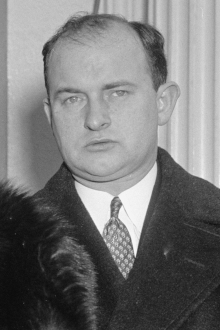
(From: “Quill, Michael Joseph” by Lawrence William White, Dictionary of Irish Biography, http://www.dib.ie | Pictured: Irish-American Trade Unionist Mike Quill during a visit to the White House in 1938)
Salmon, the son of Michael Salmon and Helen Weekes, spends his boyhood in Cork, where his father is a linen merchant. There he attends Hamblin and Porter’s Grammar School before attending Trinity College in 1833, graduating with First Class Honours in mathematics in 1839. In 1841 he attains a paid fellowship and teaching position in mathematics at Trinity. In 1845 Salmon is additionally appointed to a position in theology at the university, after having been ordained a deacon in 1844 and a priest in the Church of Ireland in 1845.
In the late 1840s and the 1850s Salmon is in regular and frequent communication with Arthur Cayley and J. J. Sylvester. The three of them together with a small number of other mathematicians develop a system for dealing with n-dimensional algebra and geometry. During this period, he publishes about 36 papers in journals.
In 1844 Salmon marries Frances Anne Salvador, daughter of Rev. J. L. Salvador of Staunton-upon-Wye in Herefordshire, with whom he has six children, of which only two survive him.
In 1848 Salmon publishes an undergraduate textbook entitled A Treatise on Conic Sections. This text remains in print for over fifty years, going through five updated editions in English, and is translated into German, French and Italian. From 1858 to 1867 he is the Donegall Lecturer in Mathematics at Trinity.
In 1859 Salmon publishes the book Lessons Introductory to the Modern Higher Algebra. This is for a while simultaneously the state-of-the-art and the standard presentation of the subject, and goes through updated and expanded editions in 1866, 1876 and 1885, and is translated into German and French. He also publishes two other mathematics texts, A Treatise on Higher Plane Curves (1852) and A Treatise on the Analytic Geometry of Three Dimensions (1862).
In 1858 Salmon is presented with the Cunningham Medal of the Royal Irish Academy. In June 1863 he is elected a Fellow of the Royal Society followed in 1868 by the award of their Royal Medal. In 1889 he receives the Copley Medal of the society, the highest honorary award in British science, but by then he has long since lost his interest in mathematics and science.
From the early 1860s onward Salmon is primarily occupied with theology. In 1866 he is appointed Regius Professor of Divinity at Trinity College, at which point he resigns from his position in the mathematics department. In 1871 he accepts an additional post of chancellor of St. Patrick’s Cathedral, Dublin.
Salmon is Provost of Trinty College from 1888 until his death in 1904. The highlight of his career is likely when in 1892 he presides over the great celebrations marking the tercentenary of the College, which had been founded by Queen Elizabeth I. His deep conservatism leads him to strongly oppose women receiving degrees from the University.
Salmon dies at the Provost’s House on January 22, 1904, and is buried in Mount Jerome Cemetery, Dublin. An avid reader throughout his life, his obituary refers to him as “specially devoted to the novels of Jane Austen.”
Salmon’s theorem [ru] is named in honor of George Salmon.
Butt is called to the Irish bar in 1838 and the English bar in 1859. Intermittently from 1852 he represents, successively, one English and two Irish constituencies in the House of Commons. In 1848 he undertakes the defense of the Young Ireland leaders, who are charged with high treason for their abortive insurrection that year. From 1865 to 1869 he is the principal defense counsel for the imprisoned leaders of the Fenians (Irish Republican, or Revolutionary, Brotherhood).
Despite his legal work for the Fenians, Butt, who is basically a conservative, fears the consequences of a successful Fenian revolt. Disillusioned, however, by the British government’s failure to relieve the Irish Great Famine of the late 1840s, he becomes convinced that a native parliament is required for Irish land reform and other needs. In May 1870 he calls for an Irish Parliament subordinate to the imperial Parliament at Westminster, and later that year he forms the Home Government Association. From 1871 he quickens the Irish nationalist agitation in the House of Commons but gradually loses his leadership, partly because he disapproves of Parnell’s tactics of obstructing routine parliamentary business.
Butt amasses debts and pursues romances. It is said that at meetings he is occasionally heckled by women with whom he had fathered children. He is also involved in a financial scandal when it is revealed that he had taken money from several Indian princes to represent their interests in parliament.
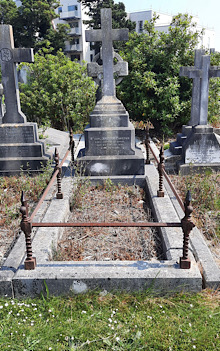
Isaac Butt dies on May 5, 1879, in Clonskeagh in Dublin. His remains are brought by train to Stranorlar, County Donegal, where he is buried in a corner of the Church of Ireland cemetery beneath a tree by which he used to sit and dream as a boy. His grave has been restored and the memorial now includes a wreath.
Despite his chaotic lifestyle and political limitations, Butt is capable of inspiring deep personal loyalty. Some of his friends, such as John Butler Yeats and the future Catholic Bishop of Limerick, Edward Thomas O’Dwyer, retain a lasting hostility towards Parnell for his role in Butt’s downfall.
In May 2010 the Church of Ireland parishes of Stranorlar, Meenglass and Kilteevogue instigate an annual memorial Service and Lecture in Butt’s honour, inviting members of the professions of law, politics and journalism to reflect aspects of his life. Speakers have included Dr. Joe Mulholland, Senator David Norris, Dr. Chris McGimpsey and Prof. Brian Walker.
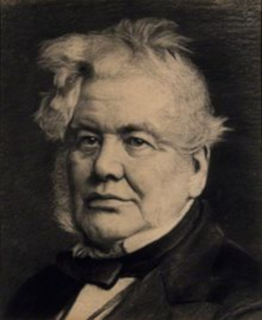
(Pictured: Isaac Butt, portrait by John Butler Yeats)