seamus dubhghaill

Promoting Irish Culture and History from Little Rock, Arkansas, USA


Leave a comment

Death of John Ford, Irish American Film Director

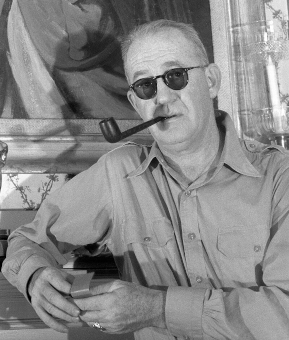
John Ford, American film director of Irish descent and one of the most important and influential filmmakers of his generation, dies in Palm Desert, California, on August 31, 1973.

Ford is born John Martin Feeney on February 1, 1894, at Cape Elizabeth, Maine. He is the fourth son among five sons and six daughters of Seán Feeney, Roman Catholic farmer and saloonkeeper, and Barbara ‘Abby’ Feeney (née Curran). His father had emigrated to the United States from Spiddal, County Galway, and his mother from Kilronan, Inishmore, one of the Aran Islands.

From an early age Ford has an interest in painting and sailing, and in July 1914 moves to California, where his older brother Francis is an actor with a small film company. Adopting the name ‘Jack Ford,’ he learns his trade as a filmmaker and acts in a number of silent films. Reveling in his Irish heritage, he makes his director’s debut with The Tornado (1917) and follows it with more than forty movies over the next six years. On July 3, 1920, he marries Mary McBryde Smith, a former officer in the army medical corps. They meet at a party thrown by the director Rex Ingram and have one son and one daughter.

In 1921 Ford visits Ireland for the first time and later claims to have travelled on the same boat that brought Michael Collins back from the treaty negotiations. He meets his relatives at Spiddal, falls in love with the countryside, and becomes a fervent Irish nationalist. It is later claimed that he brought over funds for his cousin Martin Feeney, a member of an Irish Republican Army (IRA) flying column.

Returning to Hollywood, Ford becomes friends with the retired marshal Wyatt Earp and makes a number of commercially successful films, now as ‘John Ford’. In 1926 he directs The Shamrock Handicap, a horse-racing yarn partly set in Ireland. In 1928 he shoots Mother Machree, a movie about Irish emigration, starring Victor McLaglen, a regular collaborator. McLaglen also stars in Hangman’s House, made the same year, Ford’s first major movie about Ireland.

In 1934 Ford purchases a luxury yacht which he names the Araner after the Aran Islands. He also begins shooting The Informer, a film set in Ireland during the Irish War of Independence and based on a short novel by Liam O’Flaherty. The picture is a major box office success and wins four Academy Awards, including Best Director. O’Flaherty is so impressed with the film that he dedicates his next book, Famine, to Ford.

In 1934 Ford visits Ireland for the second time, and approaches Seán O’Casey about directing a version of The Plough and the Stars. Released in 1936, the film stars Barry Fitzgerald as Fluther, but it is reedited by the studio, much to Ford’s fury, and is a commercial and critical flop.

Stagecoach, shot in 1938, is one of Ford’s masterpieces. It was a western starring his protégé, John Wayne, and marks the beginning of his golden decade. In 1940 and 1941 he wins Best Director Oscars successively for The Grapes of Wrath and How Green Was My Valley. With American entry into World War II, he serves in the U.S. Navy, and makes important documentaries such as The Battle of Midway (1942).

In 1952 Ford returns to Ireland to film The Quiet Man, starring Wayne, McLaglen, and Maureen O’Hara. Shot at Ashford Castle, County Mayo, the picture becomes one of the most popular Irish films of all time. He is immensely proud of the work and is in tears leaving Ireland. The following year he makes Mogambo, with Clark Gable, Grace Kelly and a young English actor, Donald Sinden, who later recalls that Ford berated him personally for all the problems of Ireland from the time of William of Orange. Ford’s strong sense of Irishness is central to his character and is crucial for any understanding of his work. Back in Ireland in 1956, he shoots The Rising of the Moon, a portmanteau film for which he takes no salary, starring Tyrone Power, Cyril Cusack, and Noel Purcell. A minor film, it makes no impact at the box office.

Two of Ford’s finest movies are made in his later years. The Searchers (1956) is a powerful study of vengeance, while The Man Who Shot Liberty Valance (1962) is an elegiac revisionist western which concludes with the famous line, “When the legend becomes fact, print the legend.”

Struck with cancer in his final years, Ford dies on August 31, 1973 at his home in Palm Desert, California, and is buried at Holy Cross Cemetery, Culver City. His will disinherits his son, Michael Patrick Roper, and leaves everything to his wife, daughter, and grandchildren.

When asked to name the finest American directors, Orson Welles replies simply, “John Ford, John Ford, and John Ford.” An alcoholic, Ford is a difficult and often tyrannical director, but he makes films of extraordinary power and vision. He ranks as one of the greatest filmmakers of the twentieth century. As Frank Capra concludes, “John is half-tyrant, half-revolutionary; half-saint, half-Satan; half-possible, half-impossible; half-genius, half-Irish.”

(From: “Ford, John,” contributed by Patrick M. Geoghegan, Dictionary of Irish Biography, http://www.dib.ie)

Leave a comment

Birth of Mary Manning, Novelist, Playwright & Film Critic

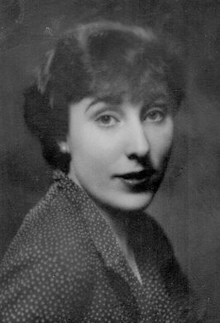
Mary Manning Howe Adams, Irish novelist, playwright and film critic, is born in Dublin on June 30, 1905.

Raised in Dublin, Manning goes to school in Morehampton House and Alexandra College, Dublin. She gets her theatre training in Sara Allgood‘s teaching class in the Abbey Theatre.

Prior to her career as a writer and filmmaker, Manning works as a film critic throughout the 1920s and 30s. She works as a film critic for The Irish Statesman for a year during that time until it goes out of business. She is known to disapprove of Hollywood‘s “unimaginable stories and its stereotypical portrayal of Ireland and the Irish.” She also works as a writer for the Gate Theatre. She adapts the short story “Guests of the Nation” for a film directed by Denis Johnston. She also helps found the Dublin Film Society in 1930 and co-founds the Gate Theatre arts magazine Motley in 1932.

From 1914 to 1926, Ireland experiences a surge of new film styles being produced, consisting of historical melodramas and romantic comedies. Following this, 1930 to 1935 births a second wave of industry produced silent films that are intended to be less cliche compared to the first wave. The films produced under the second wave are much more experimental and deal less with the commercial appeals of the first wave. There’s minimal information on how Manning specifically contributed to the second wave, however, it is stated that she plays an important role producing five out of the six films to come out of that wave.

In 1935, Manning moves to Boston where she marries Harvard Law School professor Mark De Wolfe Howe. They have three daughters, Fanny, Susan and Helen. When her husband dies, she returns to Dublin in 1967 and lives in Monkstown, County Dublin, for another ten years. During this time she writes for various publications such as The Hibernia Magazine, The Irish Times and The Atlantic. She later returns to live in Cambridge, Massachusetts.

Manning is a founder of the Poets’ Theatre in Cambridge, Massachusetts, and works as drama director at Radcliffe College during World War II. She marries Faneuil Adams of Boston, Massachusetts, in 1980.

Manning dies at the age of 93 on June 27, 1999, at Mt. Auburn Hospital in Cambridge, Massachusetts.


4 Comments

Birth of Novelist Katherine Cecil Thurston

katherine-cecil-thurston

Katherine Cecil Thurston, Irish novelist best known for two political thrillers, is born at 14 Bridge Street, Cork, County Cork on April 18, 1875.

Born Kathleen Annie Josephine Madden, she is the only daughter of banker Paul J. Madden, who is Mayor of Cork in 1885–1886 and a friend of Charles Stewart Parnell, and Eliza Madden (née Dwyer). She is educated privately at her family home, Wood’s Gift, Blackrock Road.

By the end of the 19th century Madden is contributing short stories to various British and American publications, such as The Pall Mall Magazine, Blackwood’s Edinburgh Magazine, Harper’s Magazine, The Windsor Magazine and others.

On February 16, 1901, five weeks after her father’s death, she marries the writer Ernest Temple Thurston. They separate in 1907 and are divorced in 1910 on grounds of his adultery and desertion. The suit goes undefended. Thurston “complained that she was making more money by her books than he was, that her personality dominated his, and had said that he wanted to leave her.”

Thurston’s novels achieve success in Britain and the United States. Her best-known work is a political thriller entitled John Chilcote, M.P. (as The Masquerader in the United States), published in 1904 and on The New York Times bestseller list for two years, ranking as third best-selling book for 1904 and seventh best in 1905. Her next book, The Gambler, comes out in 1905 and it too makes the U.S. best-selling lists for that year. This is the first time The New York Times had recorded any author, female or male, as having two top ten books in a single year. In 1910, she is back on the same list at No. 4 with her novel Max, the story of a young Russian princess, who flees disguised as a boy to the Montmartre Quarter of Paris, on the night before her arranged marriage.

John Chilcote, M.P. is adapted for the stage by John Hunter Booth and opens on Broadway in 1917. It is filmed four times, the first silent film by American Pathé in 1912 under the title The Compact and starring Crane Wilbur. The second film is a 1920 Russian/French co-production entitled Chlen parlamenta. Two more films are made using the American book title The Masquerader, in 1922 and then by The Samuel Goldwyn Company in 1933 as a “talkie” starring Ronald Colman.

An epileptic, Thurston’s blossoming career is cut short at the age of 36 when she is found dead in her hotel room in Cork on September 5, 1911. The official enquiry the following day gives the cause of death as asphyxia as result of a seizure. She had been due to remarry later in the month to Dr. A. T. Bulkeley Gavin. She is buried in St. Joseph’s Cemetery, Cork. The story of her final years and her relations with Bulkeley Gavin are the subject of a published thesis by C. M. Copeland, written while studying at the Napier University, Edinburgh.


Leave a comment

Publication of Oliver Goldsmith’s “The Vicar of Wakefield”

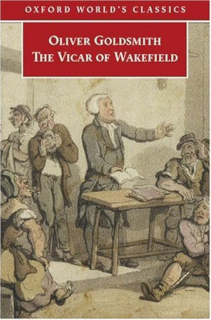
the-vicar-of-wakefieldThe Vicar of Wakefield, a novel written from 1761 to 1762 by Irish writer Oliver Goldsmith is first published on March 27, 1766. It is one of the most popular and widely read 18th-century novels among Victorians.

Soon after Goldsmith had completed the novel, his landlady arrests him for being delinquent on his rent. He summons one of his closest friends, Dr. Samuel Johnson, who takes the novel and sells it to bookseller and publisher Francis Newbery for sixty pounds. Johnson returns and gives Goldsmith the money which he uses to pay his landlady. Newbery holds the novel for two years before releasing it for publication. It is later illustrated by English illustrator Arthur Rackham for the 1929 edition.

In literary history books, The Vicar of Wakefield is often described as a sentimental novel, which displays the belief in the innate goodness of human beings. But it can also be read as a satire on the sentimental novel and its values, as the vicar’s values are apparently not compatible with the real “sinful” world. It is only with Sir William Thornhill’s help that he can get out of his calamities. Moreover, an analogy can be drawn between Mr. Primrose’s suffering and the Book of Job. This is particularly relevant to the question of why evil exists.

The novel is mentioned in George Eliot‘s Middlemarch, Stendhal‘s The Life of Henry Brulard, Arthur Schopenhauer‘s The Art of Controversy, Jane Austen‘s Emma, Charles DickensA Tale of Two Cities and David Copperfield, Mary Shelley‘s Frankenstein, Sarah Grand‘s The Heavenly Twins, Charlotte Brontë‘s The Professor and Villette, Louisa May Alcott‘s Little Women and in Johann Wolfgang von Goethe‘s The Sorrows of Young Werther, as well as his Dichtung und Wahrheit.

Silent film adaptations of the novel are produced in 1910, in 1913, and in 1916.


Leave a comment

Birth of Herbert Brenon, Director, Actor & Screenwriter

herbert-brenon

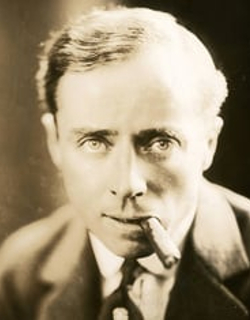
Herbert Brenon, Irish film director, actor and screenwriter during the era of silent movies through the 1930s, is born Alexander Herbert Reginald St. John Brenon on January 13, 1880.

Brenon is born at 25 Crosthwaite Park, in Kingstown (now Dún Laoghaire, County Dublin) to journalist, poet, and politician Edward St. John Brenon and Francis Harries.

In 1882, the family moves to London, where Brenon is educated at St. Paul’s School and at King’s College London. He starts out as a stagehand in New York City and by 1909 he operates a small picture theatre in Pennsylvania. Before becoming a director, he performs in vaudeville acts with his wife, Helen Oberg.

In 1911 Brenon is hired as a writer by Carl Laemmle, directing his first short the following year. Signed by William Fox in 1915, he graduates to feature films. With Paramount Pictures from 1923, he directs several spectacular productions with British themes, including the silent version of Beau Geste (1926). He regards sound pictures with a measure of apprehension.

Some of his more noteworthy films are the first movie adaptations of Peter Pan (1924) and the aforementioned Beau Geste (1926), Sorrell and Son (1927) for which he is nominated for the Academy Award for Best Director in the 1st Academy Awards, Laugh, Clown, Laugh (1928) with Lon Chaney, and The Flying Squad (1940), his last.

Brenon returns to Great Britain in 1934, but his career is well on the decline, and he retires in 1940.

Herbert Brenon dies in Los Angeles, California on June 21, 1958, and is interred in a private mausoleum at Woodlawn Cemetery, Bronx, New York.