seamus dubhghaill

Promoting Irish Culture and History from Little Rock, Arkansas, USA


Leave a comment

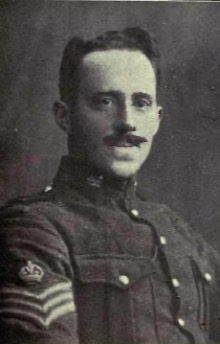
Birth of Frederick William Hall, Victoria Cross Recipient

Frederick William HallVC, a Canadian recipient of the Victoria Cross, the highest and most prestigious award for gallantry in the face of the enemy that can be awarded to British and Commonwealth forces, is born in Kilkenny, County Kilkenny, on February 21, 1885.

Hall’s father is a British Army soldier from London. Hall emigrates to Canada approximately 1910, and lives in WinnipegManitoba.

Hall is working as a clerk in Winnipeg when World War I starts. He enlists in the 8th Canadian Infantry Battalion (90th Winnipeg Rifles) at Valcartier Camp, Quebec, on September 26, 1914. He already has military experience. In addition to serving in the 106th Winnipeg Light Infantry of the Canadian Militia, he spends over 12 years in the British Army’s Cameronians (Scottish Rifles). He sees service in India and is awarded the Army Long Service and Good Conduct Medal. A teetotaller, He is a member of the British Army’s Temperance Association while with the Cameronians.

Hall is 30 years old, and a company sergeant major in the 8th Battalion (90th Winnipeg Rifles), Canadian Expeditionary Force, during World War I when he performs a deed for which he is awarded the Victoria Cross. The citation in The London Gazette reads: 

“No. 1539 Colour Serjeant Frederick William Hall, 8th Canadian Battalion. On 24th April, 1915, in the neighbourhood of Ypres, when a wounded man who was lying some 15 yards from the trench called for help, Company Serjeant Major Hall endeavoured to reach him in the face of a very heavy enfilade fire which was being poured in by the enemy. The first attempt failed, and a Non-commissioned Officer and private soldier who were attempting to give assistance were both wounded. Company Serjeant Major Hall then made a second most gallant attempt, and was in the act of lifting up the wounded man to bring him in when he fell mortally wounded in the head.”

During the Second Battle of Ypres in Belgium, Hall discovers a number of men are missing. On the ridge above he can hear moans from the wounded men. Under cover of darkness, he goes to the top of the ridge on two separate occasions and returns each time with a wounded man.

By nine o’clock on the morning of April 24 there are still men missing. In full daylight and under sustained and intense enemy fire, Hall, Corporal Payne and Private Rogerson crawl out toward the wounded. Payne and Rogerson are both wounded, but return to the shelter of the front line. When a wounded man who is lying some 15 yards from the trench calls for help, Hall endeavours to reach him in the face of heavy fire by the enemy but is shot in the head. The soldier he was attempting to help, Private Arthur Edwin Clarkson, is also killed.

Hall has no known grave. His name is on the Menin Gate Memorial to the Missing in Ypres, Belgium, honouring 56,000 troops from Britain, Australia, Canada and India whose final resting place in the Ypres Salient is unknown. The Commonwealth War Graves Commission records that he is the son of Mary Hall, of Leytonstone, London, and the late Bombardier F. Hall.

Hall lives on Pine Street in Winnipeg. In 1925, Pine Street is renamed Valour Road because three Victoria Cross recipients resided on the same 700 block of that street: Hall, Leo Clarke and Robert Shankland. It is believed to be the only street in the Commonwealth of Nations to have three Victoria Cross recipients live on it. A bronze plaque is mounted on a street lamp at the corner of Portage Avenue and Valour Road to tell the tale of the three men.

Hill is also remembered in St. Helens, Merseyside, where he lives at the time of the 1891 United Kingdom census and uses as his home address until he leaves for Canada in 1910.

Hill’s medals are in the Canadian War Museum. The museum has acquired all three Valour Road Victoria Cross medals and they are on permanent display in Ottawa.

Leave a comment

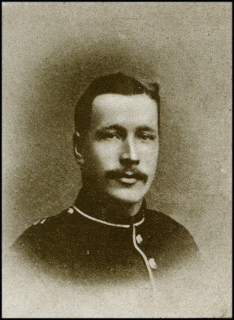
Death of Gerald O’Sullivan, Victoria Cross Recipient

Gerald Robert O’Sullivan VC (Irish: Gearóid Roibeard Ó Súilleabháin), Irish recipient of the Victoria Cross, the highest and most prestigious award for gallantry in the face of the enemy that can be awarded to British and Commonwealth forces, dies on August 21, 1915, at Scimitar Hill, Gallipoli, Ottoman Turkey.

O’Sullivan is born in Frankfield, Douglas, County Cork, on November 8, 1888. His father is a career soldier in the Argyll and Sutherland Highlanders. Known as ‘Jerry’, he is educated at Wimbledon College from which he graduates in 1906. He desires a career in the British Army and attends the Royal Military Academy Sandhurst.

Commissioned into the Royal Inniskilling Fusiliers in 1909, O’Sullivan spends much of the next three years serving in China with his unit, 2nd Battalion. From 1912, the battalion is based in British India but on the outbreak of World War I is brought back to England.

The Royal Inniskilling Fusiliers form part of 29th Division, intended for service in the Gallipoli campaign. Now a captain in the 1st Battalion, O’Sullivan commands a company during the landing at X Beach on the Gallipoli peninsula on April 25, 1915, and acquits himself well during the early stages of the fighting. On June 18, 1915, the Turks mount an attack on positions adjacent to those of O’Sullivan’s company, forcing the troops manning the defenses to abandon it. He leads his company in a counterattack to reclaim the lost position which exchanges hands several times during the next few hours. The commanding officer in the area, Brigadier General W. R. Marshall, eventually directs O’Sullivan to lead a party of Inniskilling and South Wales Borderers soldiers to capture the position which is achieved at dawn the following day.

Two weeks later, O’Sullivan is involved in a further action near Krithia, and this results in his recommendation for the Victoria Cross (VC). The citation, published in The London Gazette on September 1, 1915, reads as follows:

“For most conspicuous bravery during operations south-west of Krithia on the Gallipoli Peninsula. On the night of July 1-2, 1915, when it was essential that a portion of a trench which had been lost should be regained, Captain O’Sullivan, although not belonging to the troops at this point volunteered to lead a party of bomb throwers to affect the recapture. He advanced in the open under a very heavy fire and in order to throw his bombs with greater effect, got up on the parapet, where he was completely exposed to the fire of the enemy occupying the trench. He was finally wounded, but not before his inspiring example had led his party to make further efforts, which resulted in the recapture of the trench. On the night of June 18-19, 1915, Captain O’Sullivan had saved a critical situation in the same locality by his personal gallantry and good leading.”

The wounds O’Sullivan receives in the action of July 1-2 necessitates his evacuation to Egypt for medical treatment, but he quickly recovers and returns to his unit on August 11, 1915. The 29th Division is now at Suvla Bay and preparing for a new offensive. The Inniskillings are tasked with the capture of a feature known as Hill 70 or Scimitar Hill. During this battle, on August 21, 1915, he leads a charge of 50 men to the hilltop but is killed.

O’Sullivan has no known grave and is remembered on the Helles Memorial to the Missing. His VC is delivered to his mother who lives in Dorchester, and his name also appears on the memorial there.


Leave a comment

Birth of John Barry, Victoria Cross Recipient

john-barry-vc

John Barry is born on February 1, 1873, in St. Mary’s Parish, Kilkenny, County Kilkenny. He is by birth an Irish recipient of the Victoria Cross (VC), the highest and most prestigious award for gallantry in the face of the enemy that can be awarded to British and Commonwealth forces.

Little is known of Barry’s early life prior to his enlistment with the 1st Battalion, Royal Irish Regiment of the British Army. Shortly after his enlistment, he finds himself sailing to South Africa for the outbreak of the Second Boer War, a conflict which ultimately leads to the award of the Victoria Cross, albeit tragically posthumously.

During the night attack on Monument Hill on January 7-8, 1901, Private Barry, although surrounded and threatened by the Boers at the time, smashes the breach of the Maxim gun, thus rendering it useless to its captors. It is in doing this splendid act for his country that he meets his death.

Barry dies of wounds received during his VC action at Monument Hill, South Africa. At the time, no posthumous awards of the VC can be made. However, as so often in the history of the Victoria Cross it is an individual, the mother of Alfred Atkinson, that brings about a decisive move to investigate those servicemen who would have been recommended for the award of the VC if they had not died beforehand. The outcome of the War Office investigation results in an announcement being published in The London Gazette on August 8, 1902. In fact, Barry’s family had already received his medal via registered post on April 30, 1902.

Barry is buried in Belfast Cemetery, east of Johannesburg, South Africa. His medals are sold at auction on September 22, 2000, and purchased at a hammer price of £85,000 by the Ashcroft Trust and displayed in the Lord Ashcroft Gallery in the Imperial War Museum, London.