seamus dubhghaill

Promoting Irish Culture and History from Little Rock, Arkansas, USA


Leave a comment

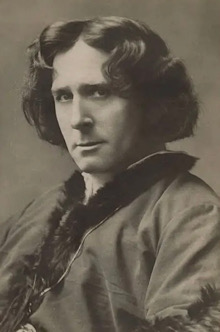
Birth of Charles Doran, Irish Actor

Charles Doran, an Irish actor and one of the last of the touring actor-managers in the tradition of Frank BensonJohn Martin-Harvey and Ben Greet, is born on January 1, 1877, in Cork, County Cork. Among those who join his company at the start of their careers are Cecil ParkerRalph RichardsonFrancis L. Sullivan and Donald Wolfit.

Doran tours with Benson and other managements, and plays in the West End before setting up his own company in 1920. He leads it for eleven years, before leaving Britain to work in India. On his return he works on stage and makes occasional television appearances.

Doran is the son of Charles Jenkins Doran. He is educated in Cork and privately. In 1899, he makes his stage debut as a member of Frank Benson’s touring company, in Julius Caesar at the Theatre Royal, Belfast. He remains with Benson for two and a half years, during which he makes his London debut, as Captain MacMorris in Henry V at the Lyceum Theatre.

In 1903, Doran tours in a stage version of Leo Tolstoy‘s Resurrection. He is engaged by Fred Terry and Julia Neilson, and appears at the New Theatre in 1905, as the Comte de Tournai in The Scarlet Pimpernel. In 1906, touring with Harry Brodribb Irving, he makes his first appearance in the United States, and the following year tours in South Africa with Cora Urquhart Brown-Potter‘s company. In 1907, he returns to Benson’s company. In 1908, he tours with Mrs. Patrick Campbell in The Thunderbolt, and The Second Mrs. Tanqueray. During 1909–10 he tours England and Australia with Oscar Asche and Lily Brayton, both former members of Benson’s troupe. His parts include the title role in The Merchant of Venice, Lodovico in Othello, Tranio in The Taming of the Shrew and the Soothsayer in Julius Caesar.

In October 1910, returning to England, Doran plays La Tribe in Count Hannibal at the New Theatre, after which he is Pistol in The Merry Wives of Windsor at the Garrick Theatre to the Falstaff of Asche. For the next ten years he plays in new, ephemeral works, interspersed with classics. Among his roles in the latter are Constantine Levin in Anna Karenina (1913), Douglas in Henry IV, Part 1 and the Constable of France in Henry V (1914) in London, and a variety of Shakespeare parts at the Memorial Theatre, Stratford-upon-Avon (1919).

In February 1920, Doran begins touring with his own Shakespearean company, playing Hamlet, Shylock in The Merchant of Venice, Brutus in Julius Caesar, Malvolio in Twelfth Night, Prospero in The Tempest, Petruchio in The Taming of the ShrewMacbeth, Falstaff, Henry V, and Jaques in As You Like It. He has a keen eye for rising talent, and among his recruits are Noel Streatfeild, Cecil Parker, Ralph Richardson, Edith SharpeNorman ShelleyAbraham Sofaer, Francis L. Sullivan and Donald Wolfit.

In 1931, Doran goes to India as director of Shakespeare’s plays at the State Theatre in Jhalawar and then on to Bombay where he performs primarily in Shakespeare on the radio. He returns to England in 1937. His last London appearance is in Song of Norway (1949). His last Shakespearean role in the theatre is Time in The Winter’s Tale (1951). He continues to act on stage in other parts until 1954. He appears on BBC Television as a senator in Othello in 1950 and Adabashev, the tragedian in Curtain Down in 1952.

Doran dies in Folkestone on the south coast of England on April 5, 1964, at the age of 87. An article on him published by Emory University in 2003 sums up his career thus:

On stage in one role or another, Doran’s fifty-seven years in the theatre made him a major force in the profession, particularly in his productions of Shakespeare. Such was his energy and enthusiasm that he kept alive for a few more years the actor-manager system when the major talents, men like Tree, Benson, and Irving, had dissolved their companies. Doran was indeed the last of his theatrical breed.
Leave a comment

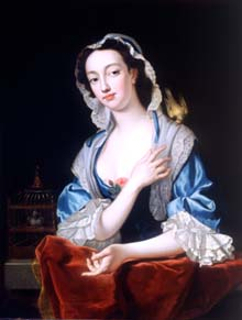
Birth of Actress Margaret “Peg” Woffington

peg-woffington

Margaret “Peg” Woffington, well-known Irish actress in Georgian London, is born of humble origins in Dublin on October 18, 1720.

Woffington’s father is believed to have been a bricklayer, and, after his death, the family becomes impoverished. Her mother is obliged to take in washing while Peg sells watercress door to door. It is said that she is walking through a marketplace as a pre-teen and happens upon Madame Signora Violante, a famous tightrope walker. Violante is so immediately enthralled by Peg’s beautiful face that she accompanies her home and asks her mother permission to take her in as her apprentice.

Around 1730, Violante features Woffington as Polly Peachum in a production of John Gay’s The Beggar’s Opera. This serves as a springboard for her fame in Dublin, and she continues dancing and acting in the area playing Dorinda in an adaptation of The Tempest at the Theatre Royal, Dublin in 1735 and joining the Smock Alley Theatre to perform with well-known actor David Garrick.

Woffington dances and acts at various Dublin theaters until her success as Sir Harry Wildair in The Constant Couple leads to her being given her London debut at Covent Garden. She becomes well known as an actress thereafter.

Woffington enjoys success in the role of Sylvia in The Recruiting Officer. She performs at Drury Lane for several years and later returns to Dublin, appearing in a variety of plays. Her most well-received performances are in comic roles, such as elegant women of fashion like Lady Betty Modish and Lady Townley, and breeches roles. She is impeded in the performance of tragedy by a harsh tone in her voice that she strives to eliminate.

Woffington lives openly with David Garrick, the foremost actor of the day, and her other love affairs are numerous and notorious. She becomes friend and mentor to the socialite/actress sisters, Elizabeth and Maria Gunning, and also shares the stage with the likes of Charles Macklin, Kitty Clive, and the tragedienne Susannah Maria Arne.

Though Woffington is popular with society figures, she is not always favored by her competition. She tends to create rivalries with similar-type actresses at Drury Lane and Covent Garden. Her fiercest rivalry is with “equally peppery” actress Kitty Clive. According to Garrick biographer Thomas Davies, “No two women in high life ever hated each other more unreservedly than these two great dames of the stage.” When she returns to Covent Garden, rivalries with these women and with the manager, John Rich, eventually send her back to Dublin, where she is unrivaled and celebrated at the Smock Alley Theatre.

Rich decides to start a Beefsteak Club in 1749, also known as the Sublime Society of Steaks or “the Club.” Some of its members include Garrick and William Hogarth, as well as many other London celebrities. Not only is Woffington the first female member of the all-male dining club, in 1750 she becomes president of the club by election. She also educates and supports her sister and cares for and pensions her mother.

For whatever reason, Woffington leaves Garrick in about 1744 and moves to Teddington, into a house called Teddington Place. In 1754 she becomes the beneficiary of the will of the Irish impresario Owen Swiny. In 1756, she performs the part of Lady Randolph in Douglas, a part which finds a later exponent in Sarah Siddons.

On May 3, 1757, Woffington is playing the part of Rosalind in As You Like It when she collapses on stage. She rallies but would never act again, lingering with a wasting illness. She dies in Queen Square, Westminster on March 28, 1760. She is buried in St. Mary with St. Alban, the parish church in Teddington.


Leave a comment

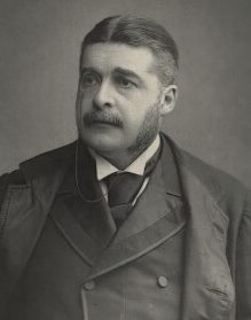
Birth of Arthur Seymour Sullivan, Composer

arthur-seymour-sullivan

Sir Arthur Seymour Sullivan, English composer and the son of an Irish musician, is born in Lambeth, London, England on May 13, 1842. He is best known for 14 operatic collaborations with the dramatist W. S. Gilbert, including H.M.S. Pinafore, The Pirates of Penzance and The Mikado. His works include 24 operas, 11 major orchestral works, ten choral works and oratorios, two ballets, incidental music to several plays, and numerous church pieces, songs, and piano and chamber pieces. His hymns and songs include “Onward, Christian Soldiers” and “The Lost Chord.”

The son of a military bandmaster, Sullivan composes his first anthem at the age of eight and is later a soloist in the boys’ choir of the Chapel Royal. In 1856, at 14, he is awarded the first Mendelssohn Scholarship by the Royal Academy of Music, which allows him to study at the academy and then at the University of Music and Theatre Leipzig in Germany. His graduation piece, incidental music to William Shakespeare‘s The Tempest (1861), is received with acclaim on its first performance in London. Among his early major works are a ballet, L’Île Enchantée (1864), Symphony in E, Cello Concerto in D Major (both 1866) and his Overture di Ballo (1870). To supplement the income from his concert works he writes hymns, parlour music and other light pieces, and works as a church organist and music teacher.

In 1866 Sullivan composes a one-act comic opera, Cox and Box, which is still widely performed. He writes his first opera with W. S. Gilbert, Thespis, in 1871. Four years later, the impresario Richard D’Oyly Carte engages Gilbert and Sullivan to create a one-act piece, Trial by Jury (1875). Its box office success leads to a series of twelve full-length comic operas by the collaborators. After the extraordinary success of H.M.S. Pinafore (1878) and The Pirates of Penzance (1879), Carte uses his profits from the partnership to build the Savoy Theatre in 1881, and their joint works become known as the Savoy operas. Among the best known of the later operas are The Mikado (1885) and The Gondoliers (1889). Gilbert breaks from Sullivan and Carte in 1890, after a quarrel over expenses at the Savoy. They reunite in the 1890s for two more operas, but these do not achieve the popularity of their earlier works.

Sullivan’s infrequent serious pieces during the 1880s included two cantatas, The Martyr of Antioch (1880) and The Golden Legend (1886), his most popular choral work. He also writes incidental music for West End productions of several Shakespeare plays and holds conducting and academic appointments. Sullivan’s only grand opera, Ivanhoe, though initially successful in 1891, has rarely been revived. In his last decade Sullivan continues to compose comic operas with various librettists and writes other major and minor works.

Sullivan’s health is never robust. From his thirties kidney disease obliges him to conduct sitting down. He dies at the age of 58 of heart failure, following an attack of bronchitis, at his flat in London on November 22, 1900. Sullivan’s wishes are to be buried in Brompton Cemetery with his parents and brother, but by order of the Queen he is buried in St. Paul’s Cathedral.

Arthur Sullivan is regarded as Britain’s foremost composer. His comic opera style serves as a model for generations of musical theatre composers that follow, and his music is still frequently performed, recorded and pastiched.