seamus dubhghaill

Promoting Irish Culture and History from Little Rock, Arkansas, USA


Leave a comment

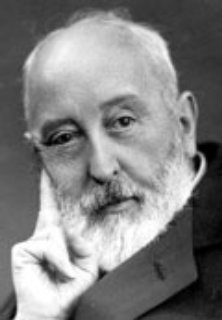
Birth of Maurice Healy, Politician, Lawyer & Member of Parliament

Maurice Healy, Irish nationalist politician, lawyer and Member of Parliament (MP), is born in Bantry, County Cork, on January 3, 1859. As a member of the Irish Parliamentary Party (IPP), he is returned to the House of Commons of the United Kingdom of Great Britain and Ireland four times between 1885 and 1918.

Healy is one of twins, the third son born to Maurice, a Poor Law Union clerk, and Eliza (née Sullivan) Healy. His mother dies during the birth. It is said that the nurse places him in his brother Tim‘s arms and said, “This little boy has no mother now and you will have to be a mother to him.” As he grows up, he becomes very close to his elder brother. The orphaned children are effectively raised by their maternal grandmother, Jane Sullivan. The family moves to Lismore, County Waterford, where he is educated at the local Christian Brothers school. Both brothers marry Sullivans who are first cousins to their husbands and to each other.

Admitted as a solicitor in 1882, Healy practises as such and is returned to parliament four times, first as a member of the Irish Parliamentary Party for Cork City from 1885 to 1900, in which year standing as a Healyite nationalist he is defeated by William O’Brien in a bitter campaign. He is returned again for Cork City in May 1909 to January 1910.

In March 1910, Healy is returned to parliament representing North East Cork, this time as a supporter and member of William O’Brien’s All-for-Ireland League (AFIL) party. From the December 1910 United Kingdom general election until the 1918 United Kingdom general election, he again represents Cork City. He is generally considered one of the finest Irish lawyers of his generation, and exceptionally conscientious in his handling of a case.

Healy’s force in parliament is land law. He is a close confidant of his brother Tim and although more retiring and stolid than his better-known elder brother, he is considered the more intelligent and often acts as a counterbalance to his brother’s emotionality. On the outbreak of World War I in 1914 a son of each enlists in one of the Irish Divisions.

Healy’s uncle, Timothy Daniel Sullivan, is also a member of parliament, as is his oldest brother, Thomas Joseph Healy and father-in-law Alexander Martin Sullivan. His son, also called Maurice (1887-1943), educated at Clongowes Wood College stands unsuccessfully as an AFIL candidate for West Waterford in December 1910, is a regular contributor (including much satirical verse) to the O’Brienite Cork Free Press.

Maurice (junior) moves to England after the founding of the Irish Free State where he is both a successful lawyer and a broadcaster for the BBC during the early years of World War II. He writes the well-known legal memoir The Old Munster Circuit and the popular Stay Me with Flagons: A Book about Wine and Other Things.

Healy dies at home in Temple Hill, Ballintemple, Cork, County Cork, on November 9, 1923, and is buried in St. Joseph’s Cemetery.

Leave a comment

Birth of Timothy Michael Healy, Politician, Journalist, Author & Barrister

Timothy Michael “Tim” Healy, Irish nationalist politician, journalist, author, barrister, and one of the most controversial Irish Members of Parliament (MPs) in the House of Commons of the United Kingdom of Great Britain and Ireland, is born in Bantry, County Cork on May 17, 1855.

Healy is the second son of Maurice Healy, clerk of the Bantry Poor Law Union, and Eliza Healy (née Sullivan). His elder brother, Thomas Healy (1854–1924), is a solicitor and Member of Parliament (MP) for North Wexford and his younger brother, Maurice Healy (1859–1923), with whom he holds a lifelong close relationship, is a solicitor and MP for Cork City.

Healy’s father is transferred in 1862 to a similar position in Lismore, County Waterford. He is educated at the Christian Brothers school in Fermoy, and is otherwise largely self-educated, in 1869, at the age of fourteen, he goes to live with his uncle Timothy Daniel Sullivan in Dublin.

Healy then moves to England in 1871, working first as a railway clerk and then from 1878 in London as parliamentary correspondent of The Nation, writing numerous articles in support of Charles Stewart Parnell, the newly emergent and more militant home rule leader, and his policy of parliamentary obstructionism. Healy takes part in Irish politics and becomes associated with Parnell and the Irish Parliamentary Party. After being arrested for intimidation in connection with the Irish National Land League, he is promptly elected as member of Parliament for Wexford Borough in 1880.

In Parliament, Healy becomes an authority on the Irish land question. The “Healy Clause” of the Land Law (Ireland) Act 1881, which protects tenant farmers’ agrarian improvements from rent increases imposed by landlords, not only makes him popular throughout nationalist Ireland but also wins his cause seats in Protestant Ulster. He breaks with Parnell in 1886 and generally remains at odds with subsequent leaders of the Irish Parliamentary Party, though he is a strong supporter of proposals for Irish Home Rule. Meanwhile, he is called to the Irish bar in 1884 and becomes a queen’s counsel in 1899.

Dissatisfied with both the Liberals and the Irish Nationalists after the Easter Rising in 1916, Healy supports Sinn Féin after 1917. He returns to considerable prominence in 1922 when, on the urging of the soon-to-be Irish Free State‘s Provisional Government of W.T. Cosgrave, the British government recommends to King George V that Healy be appointed the first “Governor-General of the Irish Free State,” a new office of representative of the Crown created in the 1921 Anglo-Irish Treaty and introduced by a combination of the Irish Free State Constitution and Letters Patent from the King.

Healy believes that he has been awarded the Governor-Generalship for life. However, the Executive Council of the Irish Free State decides in 1927 that the term of office of Governors-General will be five years. As a result, he retires from the office and public life in January 1928 and publishes his extensive two volume memoirs later in that year. Throughout his life he is formidable because he is ferociously quick-witted, because he is unworried by social or political convention, and because he knows no party discipline. Towards the end of his life, he becomes more mellowed and otherwise more diplomatic.

Healy dies on March 26, 1931, at the age of 75, in Chapelizod, County Dublin. He is buried in Glasnevin Cemetery in Dublin.