seamus dubhghaill

Promoting Irish Culture and History from Little Rock, Arkansas, USA


Leave a comment

Death of Oliver Goldsmith, Novelist, Playwright & Poet

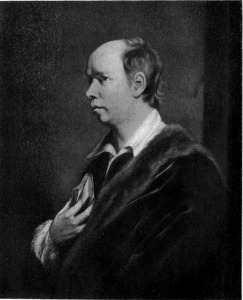
Oliver Goldsmith, Irish novelist, playwright, and poet best known for his novel The Vicar of Wakefield (1766), his pastoral poem The Deserted Village (1770), and his plays The Good-Natur’d Man (1768) and She Stoops to Conquer (1771, first performed in 1773), dies in London on April 4, 1774. He is thought to have written the classic children’s tale The History of Little Goody Two-Shoes (1765).

Goldsmith’s birth date and location are not known with certainty, although he reportedly tells a biographer that he was born on November 10, 1728. The location of his birthplace is either in the townland of Pallas, near BallymahonCounty Longford, where his father is the Anglican curate of the parish of Forgney, or at the residence of his maternal grandparents, at the Smith Hill House near Elphin, County Roscommon, where his grandfather Oliver Jones is a clergyman and master of the Elphin diocesan school, which is where Goldsmith studies. When Goldsmith is two years old, his father is appointed the rector of the parish of “Kilkenny West” in County Westmeath. The family moves to the parsonage at Lissoy, between Athlone and Ballymahon, and continues to live there until his father’s death in 1747.

In 1744 Goldsmith enters Trinity College, Dublin. His tutor is Theaker Wilder. Neglecting his studies in theology and law, he falls to the bottom of his class. In 1747, along with four other undergraduates, he is expelled for a riot in which they attempt to storm the Marshalsea Prison. He is graduated in 1749 as a Bachelor of Arts, but without the discipline or distinction that might have gained him entry to a profession in the church or the law. His education seems to have given him mainly a taste for fine clothes, playing cards, singing Irish airs, and playing the flute. He lives for a short time with his mother, tries various professions without success, studies medicine desultorily at the University of Edinburgh from 1752 to 1755, and sets out on a walking tour of FlandersFranceSwitzerland, and Northern Italy.

Goldsmith settles in London in 1756, where he briefly holds various jobs, including an apothecary‘s assistant and an usher of a school. Perennially in debt and addicted to gambling, Goldsmith produces a massive output as a hack writer for the publishers of London, but his few painstaking works earn him the company of Samuel Johnson, with whom he is a founding member of “The Club.” There, through fellow Club member Edmund Burke, he makes the acquaintance of Sir George Savile, who later arranges a job for him at Thornhill Grammar School. The combination of his literary work and his dissolute lifestyle leads Horace Walpole to give him the epithet “inspired idiot.” During this period, he uses the pseudonym “James Willington,” the name of a fellow student at Trinity, to publish his 1758 translation of the autobiography of the Huguenot Jean Marteilhe.

Goldsmith is described by contemporaries as prone to envy, a congenial but impetuous and disorganised personality who once planned to emigrate to America but failed because he missed his ship. At some point around this time he works at Thornhill Grammar School, later basing Squire Thornhill on his benefactor Sir George Savile and certainly spending time with eminent scientist Rev. John Mitchell, whom he probably knows from London. Mitchell sorely misses good company, which Goldsmith naturally provides in spades. Thomas De Quincey writes of him “All the motion of Goldsmith’s nature moved in the direction of the true, the natural, the sweet, the gentle.”

His premature death in 1774 is believed to have been partly due to his own misdiagnosis of a kidney infection. Goldsmith is buried in Temple Church in London. There is a monument to him in the centre of Ballymahon and also in Westminster Abbey with an epitaph written by Samuel Johnson.


Leave a comment

Death of John O’Donovan, Irish Language Scholar

john-odonovanJohn O’Donovan, Irish language scholar, dies at his residence at 36 Upper Buckingham Street in Dublin on December 10, 1861.

O’Donovan is born in County Kilkenny on July 25, 1806 and is the fourth son of Edmond O’Donovan and Eleanor Hoberlin of Rochestown. His early career is likely inspired by his uncle, Parick O’Donovan. He works for antiquarian James Hardiman researching state papers and traditional sources at the Public Records Office. He also teaches Irish to Thomas Larcom for a short period in 1828 and works for Myles John O’Reilly, a collector of Irish manuscripts.

Following the death of Edward O’Reilly in August 1830, O’Donovan is recruited to the Topographical Department of the first Ordnance Survey Ireland under George Petrie in October 1830. Apart from a brief period in 1833, he works steadily for the Survey on place-name researches until 1842, unearthing and preserving many manuscripts. After that date, O’Donovan’s work with the Survey tails off, although he is called upon from time to time to undertake place-name research on a day-to-day basis. He researches maps and manuscripts at many libraries and archives in Ireland and England, with the intent to establish the correct origin of as many of Ireland’s 63,000 townland names as possible. His letters to Larcom are regarded as an important record of the ancient lore of Ireland for those counties he documents during his years of travel throughout much of Ireland.

By 1845, O’Donovan is corresponding with the younger scholar William Reeves, and much of their correspondence to 1860 survives.

O’Donovan becomes professor of Celtic Languages at Queen’s University Belfast, and is called to the Bar in 1847. His work on linguistics is recognised in 1848 by the Royal Irish Academy, who award him their prestigious Cunningham Medal. On the recommendation of German philologist Jacob Grimm, he is elected a corresponding member of the Royal Academy of Prussia in 1856.

Never in great health, he dies shortly after midnight on December 10, 1861 at his residence in Dublin. He is buried on December 13, 1861 in Glasnevin Cemetery, where his tombstone inscription has slightly incorrect dates of both birth and death.


Leave a comment

Bridget Cleary Burned to Death by Husband

bridget-cleary

Bridget Cleary is burned to death on March 15, 1895, by her husband who believes her spirit has been taken by bad faeries and replaced with a changeling.

Cleary is born Bridget Boland around 1869 in Ballyvadlea, County Tipperary. Bridget meets Michael Cleary in Clonmel in August 1887, where he works as a cooper and she serves as a dressmaker’s apprentice, and they marry a short time later.

After the marriage, she returns to her townland of Ballyvadlea to live with her parents while Michael continues to work as a cooper in Clonmel. During this period of living apart, Bridget’s independence grows and she begins keeping her own flock of chickens and selling the eggs to neighbours. She is also a professional woman which is somewhat unusual for the era and area. She obtains a Singer sewing machine, which is state-of-the-art at the time, and is variously described as a dressmaker and a milliner.

Despite their eight years of marriage, the couple has no children by the time of Bridget’s death. Following the death of Bridget’s mother, the Clearys find themselves responsible for Bridget’s elderly father, Patrick Boland. His residence with the couple enables them to secure a house reserved for labourers. Neither Bridget nor Michael is entitled to this cottage, but as Patrick had been a labourer in his youth, they are able to acquire the best house in the village. However, there is no widespread interest in the house as it is built on the site of a supposed fairy ringfort.

In early March 1895, Bridget becomes ill although her specific diagnosis is unknown. On March 13, more than a week into her illness, a physician visits her home. Her condition is considered sufficiently grave that a priest soon follows to administer last rites. Several friends and family members attend her over the next two days and a number of home remedies are administered including one ritual that anticipates her later demise. Her father and her husband accuse her of being a fairy sent to take Bridget’s place. Urine is thrown on her and she is carried before the fireplace to cast the fairy out. By March 16, rumours begin to circulate that Bridget is missing and the local police begin searching for her. Michael is quoted as claiming that his wife has been taken by fairies. Witness statements are gathered over the ensuing week and, by the time Bridget’s burned corpse is found in a shallow grave on March 22, nine people have been charged in her disappearance, including her husband. A coroner‘s inquest the next day returns a verdict of death by burning.

Legal hearings take place from April 1 to April 6, 1895. The court session begins on July 3. Evidence indicates that Michael attempted to force-feed his wife, throwing her down on the ground before the kitchen fireplace. Bridget’s chemise catches fire and Michael then throws lamp oil on Bridget. Witnesses are unclear as to whether she is already dead by this point. Michael keeps the others away from her body as it burns, insisting that she is a changeling and has been for a week. Michael believes that this will allow him to get his wife back from the fairies.

Michael Cleary is found guilty of manslaughter and spends 15 years in prison.