seamus dubhghaill

Promoting Irish Culture and History from Little Rock, Arkansas, USA


Leave a comment

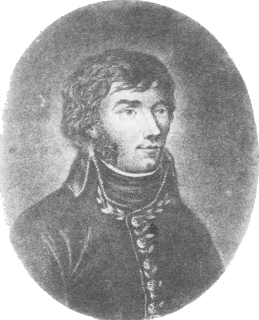
Birth of French General Jean Joseph Amable Humbert

General Jean Joseph Amable Humbert, a French soldier and participant in the French Revolution, and who leads a failed invasion of Ireland to assist Irish rebels in the Irish Rebellion of 1798, is born on August 22, 1767, in the townland of La Coâre Saint-Nabord, outside Remiremont in the Vosges department of northeastern France.

Humbert is the eldest of six children of Jean-Joseph Humbert, a farmer and trader, and Catherine (née Privat), who dies when he is three years old. From a modest rural background, he works briefly as a hatter and rabbit hunter before entering the military in July 1789 amid the early stages of the French Revolution.

Humbert joins the National Guard of Lyon and quickly advances, serving in the 13th Battalion of Volunteers of the Vosges. By 1792, he is promoted to captain, then lieutenant-colonel. His combat record includes service under General Lazare Hoche in the Army of the Rhine and Moselle, where he gains a reputation for bravery and guerrilla tactics.

In 1796, Humbert is assigned to prepare for an expedition to Ireland. In the ill-fated Expédition d’Irlande, his ship Droits de l’Homme is wrecked off the Bay of Audierne in January 1797, but he survives. In 1798, he leads about 1,000 French troops to Ireland, landing at Killala. His forces fight and win at Ballina and the Races of Castlebar, proclaiming a Republic of Connacht before being defeated and captured at the Battle of Ballinamuck. He is exchanged for British prisoners.

Humbert continues to serve in the French Revolutionary and Napoleonic armies, participating in the Swiss campaigns, the Saint-Domingue expedition, and the Argentine War of Independence. He also engages in filibustering ventures against Spanish holdings in Texas, Mexico, and Buenos Aires.

In 1810, Humbert emigrates to New Orleans, where he becomes acquainted with French pirate Jean Lafitte. He joins the Buenos Aires rebellion in 1814 before returning home. In 1815, he fights the British at the Battle of New Orleans in the War of 1812, earning thanks from General Andrew Jackson. He later lives as a schoolteacher in New Orleans until his death on January 3, 1823.

Humbert’s career spans revolutionary France, Napoleonic campaigns, and post-Napoleonic adventures, making him a notable figure in late 18th- and early 19th-century military history.


Leave a comment

Bridget Cleary Burned to Death by Husband

bridget-cleary

Bridget Cleary is burned to death on March 15, 1895, by her husband who believes her spirit has been taken by bad faeries and replaced with a changeling.

Cleary is born Bridget Boland around 1869 in Ballyvadlea, County Tipperary. Bridget meets Michael Cleary in Clonmel in August 1887, where he works as a cooper and she serves as a dressmaker’s apprentice, and they marry a short time later.

After the marriage, she returns to her townland of Ballyvadlea to live with her parents while Michael continues to work as a cooper in Clonmel. During this period of living apart, Bridget’s independence grows and she begins keeping her own flock of chickens and selling the eggs to neighbours. She is also a professional woman which is somewhat unusual for the era and area. She obtains a Singer sewing machine, which is state-of-the-art at the time, and is variously described as a dressmaker and a milliner.

Despite their eight years of marriage, the couple has no children by the time of Bridget’s death. Following the death of Bridget’s mother, the Clearys find themselves responsible for Bridget’s elderly father, Patrick Boland. His residence with the couple enables them to secure a house reserved for labourers. Neither Bridget nor Michael is entitled to this cottage, but as Patrick had been a labourer in his youth, they are able to acquire the best house in the village. However, there is no widespread interest in the house as it is built on the site of a supposed fairy ringfort.

In early March 1895, Bridget becomes ill although her specific diagnosis is unknown. On March 13, more than a week into her illness, a physician visits her home. Her condition is considered sufficiently grave that a priest soon follows to administer last rites. Several friends and family members attend her over the next two days and a number of home remedies are administered including one ritual that anticipates her later demise. Her father and her husband accuse her of being a fairy sent to take Bridget’s place. Urine is thrown on her and she is carried before the fireplace to cast the fairy out. By March 16, rumours begin to circulate that Bridget is missing and the local police begin searching for her. Michael is quoted as claiming that his wife has been taken by fairies. Witness statements are gathered over the ensuing week and, by the time Bridget’s burned corpse is found in a shallow grave on March 22, nine people have been charged in her disappearance, including her husband. A coroner‘s inquest the next day returns a verdict of death by burning.

Legal hearings take place from April 1 to April 6, 1895. The court session begins on July 3. Evidence indicates that Michael attempted to force-feed his wife, throwing her down on the ground before the kitchen fireplace. Bridget’s chemise catches fire and Michael then throws lamp oil on Bridget. Witnesses are unclear as to whether she is already dead by this point. Michael keeps the others away from her body as it burns, insisting that she is a changeling and has been for a week. Michael believes that this will allow him to get his wife back from the fairies.

Michael Cleary is found guilty of manslaughter and spends 15 years in prison.