seamus dubhghaill

Promoting Irish Culture and History from Little Rock, Arkansas, USA


2 Comments

Birth of Patrick Guiney, American Civil War Soldier

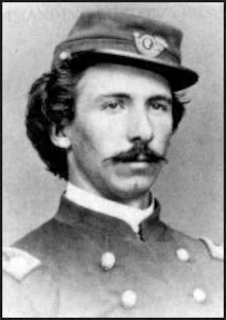
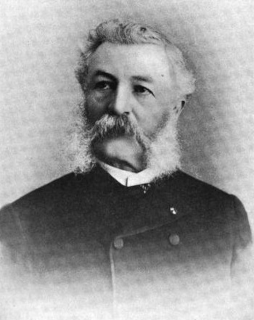
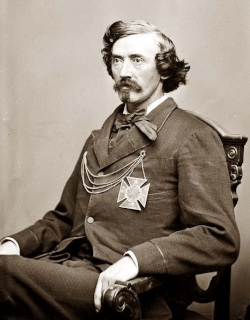
Patrick Robert Guiney, American Civil War soldier, is born in Parkstown, County Tipperary, on January 15, 1835.

Guiney is the second and eldest surviving son of James Roger Guiney, who is descended from Jacobites, and Judith Macrae. His father, impoverished after a failed runaway marriage, brings with him on his second voyage to New Brunswick his favourite child Patrick, not yet six years old. After some years, his mother and younger brother, William, rejoin her husband, recently crippled by a fall from his horse. They settle in Portland, Maine. The young Guiney works as a wheel boy in a rope factory, and at the age of fourteen apprenticed to a machinist in Lawrence, Massachusetts, but stays only a year and a half before returning to Portland.

Guiney hopes to better himself through education and attends the public grammar school. He matriculates at the College of the Holy Cross in Worcester, Massachusetts. His depleting finances cause him to leave after about a year, despite the fact that the college president offers to make some arrangement for him to stay, which his honor would not allow him to accept. His book-loving father having meanwhile died, he goes to study for the Bar under Judge Walton, and is admitted in Lewiston, Maine, in 1856, taking up the practice of criminal law.

In politics he is a Republican. For the Massachusetts Society for the Prevention of Cruelty to Animals, he wins its first suit. In 1859 he marries in the Cathedral of the Holy Cross, Boston, Janet Margaret Doyle, related to James Warren Doyle, Bishop of Kildare and Leighlin. They have one son, who dies in infancy, and one daughter, the poet and essayist Louise Imogen Guiney. Home life in Roxbury and professional success are cut short by the outbreak of the American Civil War.

Familiar with the manual of arms, Guiney enlists for example’s sake as a private, refusing a commission from Governor John A. Andrew until he has worked hard to help recruit the 9th Massachusetts Infantry Regiment. By June 1861, he is a captain. In July 1862, the first colonel having died from a wound received in action, Lieutenant Colonel Guiney succeeds him to the command. He wins high official praise, notably for courage and presence of mind at the Battle of Gaines’ Mill in Hanover County, Virginia. Here, after three successive color-bearers had been shot down, he himself reportedly seizes the flag, throws aside coat and sword-belt, rises white-shirted and conspicuous in the stirrups, inspires a final rally, and turns the fortune of the day.

Guiney fights in over thirty engagements, including the Battle of Antietam, the Battle of Fredericksburg, and the Battle of Chancellorsville.

The 9th Massachusetts is present at Gettysburg, Pennsylvania, in second brigade first division V Corps on July 1, 1863. Col Jacob B. Sweitzer the brigade commander, detaches Guiney’s regiment for picket duty. Consequently, the regiment misses the second day’s fighting at the Battle of Gettysburg.

In 1864, through the Battle of the Wilderness, Guiney frequently has been in command of his brigade, the second brigade, first division, V Corps. After many escapes from dangerous combats without serious injury, he is shot in the face by a sharpshooter at the Battle of the Wilderness on May 5, 1864. The Minié ball destroys his left eye, and inflicts, it is believed, a fatal wound. During an interval of consciousness, however, he insists on an operation which saves his life. He is honorably discharged and mustered out of the U.S. Volunteers on June 21, 1864, just before the mustering out of his old regiment.

On February 21, 1866, President Andrew Johnson nominates Guiney for the award of the honorary grade of brevet brigadier general, to rank from March 13, 1865, for gallant and meritorious services during the war. The U.S. Senate confirms the award on April 10, 1866.

Kept alive for years by nursing, Guiney runs unsuccessfully for the United States Congress on a sort of “Christian Socialist” platform, is elected assistant district attorney (1866–70), and acts as consulting lawyer (no longer being able to plead) on many locally celebrated cases.

Guiney’s last exertions are devoted to the defeat of the corruption and misuse of the Probate Court of Suffolk County, Massachusetts, of which he had become registrar (1869–77). He dies suddenly on March 21, 1877, in Boston and is found kneeling against an elm in the little park near his home. General Guiney is Commandant of the Loyal Legion, Major-General Commandant of the Veteran Military League, member of the Charitable Irish Society of Boston, and one of the founders and first members of the Catholic Union of Boston. He also publishes some literary criticism, a few graphic prose sketches and some verse.
Leave a comment

Birth of Robert Horatio George Minty, Officer in the U.S. Union Army

Robert Horatio George Minty, a Brevet Major General in the Union Army during the American Civil War, is born in Westport, County Mayo, on December 4, 1831.

In 1836, Minty’s father, also named Robert, is promoted to lieutenant in the 1st West India Regiment of Foot, which is a regiment of black enlisted men with white officers. The whole family leaves Ireland and travels with him through Minty’s later childhood and teenage years. They move all around the Caribbean and West Africa ultimately being sent to Sierra Leone.

Minty’s father becomes judge advocate general in Jamaica in 1846 but dies after falling victim to yellow fever in 1848. Though he is only 17 at the time, he is allowed to take over his father’s commission in the regiment. After serving five years in the regiment he resigns his commission, possibly because he nearly becomes a victim of a tropical disease himself.

Minty immigrates to Ontario, Canada, where his mother and the family had moved after his father’s death. He is hired by the Great Western Railroad Company at a time when the railroad business is exploding in both the United States and Canada. He is involved with railroads for the rest of his life, with time out for the American Civil War.

Minty is commissioned as Major of the 2nd Michigan Cavalry Regiment on October 2, 1862, but holds that duty for only a month before he is transferred to the 3rd Michigan Cavalry Regiment and promoted to Lieutenant Colonel. His time with the new regiment is again relatively brief, for in March 1862 he is given the task of recruiting another regiment that becomes the 4th Michigan Cavalry Regiment.

Promoted to Colonel and officially given command of the unit on July 21, 1862, Minty leads it as it fights in Kentucky, Tennessee, Georgia and the Carolinas, taking part in the Battle of Chickamauga and the Battle of Atlanta. He is brevetted Brigadier General, U.S. Volunteers and Major General, U.S. Volunteers on March 13, 1865, for “gallant and meritorious services during the war.”

Minty and the men under his command are noted as being the regiment that captures the fleeing President of the Confederate States of America, Jefferson Davis, at Irwinville, Georgia on May 9, 1865, as the Confederacy collapses.

Minty is honorably mustered out of the Union Army on April 15, 1865, at Nashville, Tennessee, and becomes a successful railroad executive in his post-war career. He dies at the age of 74 on August 24, 1906, in Jerome, Arizona. He is buried at Aultorest Memorial Park in Ogden, Utah.


Leave a comment

Death of James A. Mulligan, Union Army Colonel

James Adelbert Mulligan, a colonel of the 23rd Illinois Infantry Regiment in the Union Army during the American Civil War, dies on July 26, 1864, of wounds sustains at the Second Battle of Kernstown three days earlier.

Mulligan is born on June 30, 1830, in Utica, New York. His parents had immigrated from Ireland and his father died when he was a child. His mother remarries a Michael Lantry of Chicago, Illinois, and moves there with her son, who later attends the St. Mary’s on the Lake College of North Chicago. From 1852–54 he reads law in the offices of Isaac N. Arnold, U.S. Representative from the city. He is admitted to the bar in 1856 and commissioned a second lieutenant in the “Chicago Shield Guards.”

At the onset of the American Civil War, Mulligan raises the 23rd Illinois Infantry Regiment in 1861, which is locally known as the “Irish Brigade” (not to be confused with a New York unit by the same name). This unit includes the Chicago Shield Guards. In September 1861, he leads his troops toward Lexington, Missouri, as word had been received that this vital river town will be attacked by the pro-Confederate Missouri State Guard under Major General Sterling Price.

The First Battle of Lexington, often referred to as the Battle of the Hemp Bales, commences on September 13, 1861, when 12,500 soldiers of the Missouri State Guard begin a siege of Mulligan’s diminutive command, entrenched around the town’s old Masonic College. On September 18, Price’s army mounts an all-out assault on Mulligan’s works, which fails. Cannon fire continues through September 19. On the 20th, units of Price’s army use hemp bales soaked in the Missouri River as a moving breastwork to work their way up the river bluffs toward Mulligan’s headquarters. By 2:00 PM, Mulligan has surrendered. Combined casualties are 64 dead, and 192 wounded. Price is reportedly so impressed by Mulligan’s demeanor and conduct during and after the battle that he offers him his own horse and buggy and orders him safely escorted to Union lines.

Mulligan is commander of Camp Douglas, a prisoner of war camp in Chicago, from February 25, 1862, to June 14, 1862. The camp had been constructed as a short-term training camp for Union soldiers but is converted to a prisoner of war camp for captured Confederate soldiers after the fall of Fort Donelson.

Mulligan and his regiment are assigned to the Railroad Division of the Middle Department between December 17, 1862, and March 27, 1863. Then they are assigned to 5th Brigade, 1st Division, VIII Corps in the Middle Department between March 27, 1863, and June 26, 1863.

Between August and December 1863, Mulligan oversees the construction of Fort Mulligan, an earthworks fortification located in Grant County, West Virginia. This fort remains one of the best-preserved Civil War fortifications in West Virginia and has become a local tourist attraction.

On July 3, 1864, only three weeks before his death, Mulligan distinguishes himself in the Battle of Leetown, fought in and around Leetown, Virginia. Federal troops are retreating in the face of Major General Jubal Early‘s relentless Confederate advance down the Shenandoah Valley during the Second Valley Campaign. Hoping to buy time to concentrate Union forces and supplies, Major General Franz Sigel orders him to hold Leetown for as long as possible and then conduct a fighting retreat as slowly as possible to cover the other withdrawing Union units. He manages to hold Leetown for the entire day before being compelled to retreat, albeit very slowly. He continues to battle Early’s troops all the way from Leetown to Martinsburg, West Virginia, buying valuable time for Union commanders to concentrate their forces in the Valley.

On July 24, 1864, Mulligan leads his troops into the Second Battle of Kernstown, near Winchester, Virginia. Late in the afternoon, Major General John B. Gordon’s Confederate force attacks Mulligan’s 1,800 soldiers from ground beyond Opequon Church. Mulligan briefly holds off Gordon’s units, but Confederate Major General John C. Breckinridge leads a devastating flank attack against the Irishmen from the east side of the Valley Pike. Sharpshooters then attack his right flank from the west. Now encompassed on three sides, the Union battle line falls apart.

With Confederates closing from all around, Mulligan orders his troops to withdraw. As he stands up in his saddle to spur his men on, Confederate sharpshooters concealed in a nearby stream bed manage to hit the Union commander. His soldiers endeavor to carry him to safety, but the unyielding Confederate fire make this an impossible task. He is well aware of his situation, and the danger his men are in, and so he famously orders, “Lay me down and save the flag.” His men reluctantly comply. Confederate soldiers capture him and carry the mortally wounded colonel into a nearby home, where he dies two days later on July 26, 1864. He is buried in Calvary Cemetery, Evanston, Illinois.

On February 20, 1865, the United States Senate confirms the posthumous appointment of Mulligan to the rank of brevet brigadier general of U.S. Volunteers to rank from July 23, 1864, the day before he is mortally wounded at the Second Battle of Kernstown.


6 Comments

Death of Colonel Dennis O’Kane

dennis-o-kane

Colonel Dennis O’Kane, officer in the Union Army during the American Civil War, dies on July 4, 1863, of wounds sustained the previous day when fighting with the 69th Pennsylvania Irish Brigade at the Battle of Gettysburg.

Born in Coleraine, County Londonderry, O’Kane is a tavern owner in Philadelphia, Pennsylvania and a member of the 2nd Pennsylvania Militia regiment prior to the Civil War. When the conflict starts, he helps recruit the 24th Pennsylvania Volunteer Infantry, a unit that has the 2nd Pennsylvania Militia as its nucleus. Commissioned Major, Field and Staff, on May 1, 1861, he is with his regiment as it serves first in Maryland and then Virginia before their enlistment expires in July 1861.

In August 1861 O’Kane joins with many of the men from the 24th Pennsylvania in re-enlisting to continue the war effort, and they form the basis of what becomes the 69th Pennsylvania Infantry Regiment. Commissioned Lieutenant Colonel, Field and Staff on August 19, 1861, his new regiment is composed largely of Irish immigrants like himself, and they emblazon the Irish harp on their flag. The unit eventually is joined with the 71st, 72nd and 106th Pennsylvania Infantry Regiments to form the famous Philadelphia Brigade.

O’ Kane serves as second-in-command through 1862, participating in the Peninsular Campaign of May and June, the Second Battle of Bull Run in August, and the September 1862 Battle of Antietam, where his brigade is caught in the West Woods area and takes heavy losses. In November 1862, the 69th Pennsylvania’s commander, Colonel Joshua T. Owen, is promoted to Brigadier General, US Volunteers. O’Kane is advanced to Colonel on December 1, 1862, to fill the vacancy.

At the Battle of Fredericksburg on December 14, 1862, O’Kane leads his men in the third of four waves of futile Union charges on strong Confederate positions at Marye’s Heights south of the town, and sees his regiment sustain fifty-one casualties. In May 1863 during the Battle of Chancellorsville, his brigade is held in reserve and sees limited action.

During the Battle of Gettysburg in July 1863, O’Kane finds the 69th Pennsylvania positioned along a rock fencing in the middle of the Union lines that becomes famous as “The Angle.” That position becomes the epicenter of Pickett’s Charge on July 3, the third day of the battle, as the remnants of the Confederate forces, having been much devastated from Union artillery fire, crash over the rock walls and engage the Philadelphia Brigade in brutal hand-to-hand fighting.

O’Kane is shot in the head at the wall and dies the following day. His regiment again takes high casualties but succeeds in helping to repulse the rebels and defeat the charge. The monument for the 69th Pennsylvania Infantry in Gettysburg National Military Park stands on the spot where O’Kane was mortally wounded.


Leave a comment

Birth of Brigadier General James Lawlor Kiernan

James Lawlor Kiernan, Irish-born Brigadier General in the American Civil War, is born in Mountbellew, County Galway, on October 26, 1837.

Kiernan’s father is a retired British navy surgeon. Kiernan attends Trinity College, Dublin, before emigrating to the United States around 1854. He studies medicine at New York University and practices law in New York until 1861. Upon the outbreak of American Civil War in 1861 he joins the 69th New York State Infantry Regiment as Assistant Surgeon and serves as such through the First Battle of Bull Run. When the 69th returns to Manhattan, he moves west and becomes the surgeon of the 6th Missouri Volunteer Infantry.

After the Battle of Pea Ridge, Kiernan insists on joining the fighting ranks, and in that capacity is seemingly appointed a Major in the 6th Missouri Volunteer Infantry. In May 1863 at Port Gibson, Mississippi, he is wounded in the left lung and left on the battlefield for dead. Recovered and imprisoned, he effects an escape back to Union forces and resigns his commission. On August 1, 1863, he is commissioned a Brigadier General of the United States Volunteers by President Abraham Lincoln, commanding a post at Miliken’s Bend on the Mississippi River. However, ill-health as a result of his battlefield wounds forces him to resign on February 3, 1864.

In May 1865 Kiernan gains a U.S. consular post at Chinkiang, China. He manages to make the trip there, but his health does not allow him to perform the duties. He returns to New York where he becomes an examining physician for the Bureau of Pensions, a position he holds until his death.

James Lawlor Kiernan dies on November 26, 1869. The official cause of death is “congestion of the lungs.” Perhaps he is killed by that Confederate ball that wounded him six years earlier. He is buried in Green-Wood Cemetery in Brooklyn, New York.