seamus dubhghaill

Promoting Irish Culture and History from Little Rock, Arkansas, USA


Leave a comment

Birth of Patrick “Patsy” Touhey

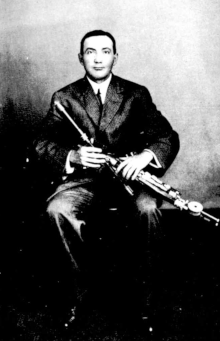
Patrick “Patsy” J. Touhey, a celebrated player of the uilleann pipes, is born on February 26, 1865, in Cahertinny, Bullaun, Loughrea, County Galway. His innovative technique and phrasing, his travels back and forth across the United States to play on the variety and vaudeville stage, and his recordings make his style influential among Irish American pipers. He can be seen as the greatest contributor to a distinctive American piping style.

According to Chief Francis O’Neill of the Chicago Police Department, in his seminal work O’Neill’s Irish Minstrels and Musicians, Touhey is the third generation of accomplished pipers stemming from his grandfather, Michael Twohill (the original spelling, b. ca. 1800), his father James and his uncle Martin, who are considered accomplished players. The family arrives in Boston around 1868, and his father arranges for his instruction from Bartley Murphy of County Mayo. However, at the age of ten Patsy loses his father and later lays the pipes aside.

In his late teens Touhey strays into a Bowery music hall where John Eagan, the “White Piper” of Galway, is engaged. Enthralled by Eagan’s virtuosity, he takes up the pipes again, and under the instruction of Eagan and Billy Taylor of Philadelphia soon becomes a master.

Touhey and Eagan tour the northeastern United States with “Harrigan’s Double Hibernian Co., Irish and American Tourists” in 1885 and 1886. This is his apparent introduction to theatrical life. Harrigan’s company stars Jeremiah “Jere” Cohan, the father of George M. Cohan, later a famous songwriter and showman. Despite a persistent legend, there is no evidence that Touhey plays publicly for the step-dancing of George M. Cohan, who is seven or eight years old at the time. Between 1886 and 1895 he appears in several theatre productions including “Inshavogue” and “The Ivy Leaf.” At the 1893 World’s Columbian Exposition in Chicago, he plays at the Irish Village, one of two rival Irish pavilions, and is later engaged for the 1904 World’s Fair in St. Louis (Louisiana Purchase Exposition). From about 1896 until 1921 he plays in vaudeville skits, trading jokes with his wife, Mary, and their on and off partner Charles Henry Burke. The shows include slapstick, low-brow gags, Irish nostalgia, and a piping finale to which Mary Touhey dances.

Chicago Police Chief Francis O’Neill, a prominent compiler of Irish dance tunes, calls Touhey “the genial wizard of the Irish pipers . . . A stranger to jealousy, his comments are never sarcastic or unkind, neither does he display any tendency to monopolize attention in company when other musicians are present.”

Touhey lives on Bristow Street in the Bronx, New York City, from at least 1900 until 1908. He and Mary live in rural East Haddam, Connecticut from 1908 to 1919, then in Freeport, New York from 1919 to 1922. In 1922 he moves back to the Bronx. He dies suddenly in his home at 1175 Concourse, New York, on January 10, 1923. He is buried in Saint Raymond’s Cemetery in the Bronx.

A statue of Patsy Touhey is unveiled in 2008 in Loughrea, near the place where he was born. It is a bronze sculpture by James MacCarthy that shows Touhey sitting on a limestone block and playing his pipes. Behind him, on the wall, there are three plaques with portraits of Peter and Vincent Broderick, two other local musicians, and Touhey himself. The statue is a tribute to the musical heritage of Loughrea and Galway, and a reminder of the connection between Ireland and its diaspora.

Recordings made of Tuohy in the 1900s have been digitised and made available on the website of the Irish Traditional Music Archive (ITMA), Dublin.

Leave a comment

Birth of Ernest Roland Ball, Singer & Songwriter

Ernest Roland Ball, American singer and songwriter, most famous for composing the music for the song “When Irish Eyes Are Smiling” in 1912, is born in Cleveland, Ohio, on July 22, 1878. He is not himself Irish.

Ball receives formal music training at the Cleveland Conservatory.

Ball’s growing career is much buoyed when James J. Walker, then a state senator of New York, asks him to write music for some lyrics he had written. He does, and the song “Will You Love Me In December as You Do In May?” becomes a hit. Walker later becomes known as “Dapper Jimmy Walker,” Mayor of New York City, a fortunate event for Ball’s career.

Ball accompanies singers, sings in vaudeville and writes sentimental ballads, mostly with Irish themes. He collaborates with Chauncey Olcott on many songs including “When Irish Eyes are Smiling,” for which Olcott writes the lyrics. He writes other Irish favorites including “Mother Machree,” “A Little Bit of Heaven,” “Dear Little Boy of Mine” and “Let the Rest of the World Go By.” “Mother Machree” is made popular by the famous Irish tenor, John McCormick. He also works with J. Keirn Brennan on songs like “For Dixie and Uncle Sam” and “Good Bye, Good Luck, God Bless You.”

Ball becomes a charter member of the American Society of Composers, Authors and Publishers (ASCAP) in 1907, and writes many American standards. He is also a fine pianist, and his playing is preserved on several piano roll recordings he makes for the Vocalstyle Music Company, based in Cincinnati in his home state of Ohio.

Ernest Ball dies on May 3, 1927, just after walking off stage at the Yost Theater in Santa Ana, California while on tour with “Ernie Ball and His Gang,” an act starring Ball and a male octet. He is posthumously inducted into the Songwriters Hall of Fame in 1970.

A 1944 musical Irish Eyes Are Smiling tells the story of Ball’s career and stars Dick Haymes and June Haver. His grandson is the guitar string entrepreneur Ernie Ball, great-grandson is singer-songwriter/content producer Sherwood Ernest Ball, and his great-great-granddaughters are actress Hannah Marks and singer/songwriter Tiare’ Ball.


Leave a comment

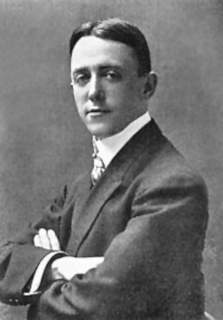
Birth of George M. Cohan

george-m-cohan

George Michael Cohan, legendary song and dance man, is born to Irish Catholic parents in Providence, Rhode Island on July 3, 1878.

A baptismal certificate from St. Joseph’s Roman Catholic Church indicates that Cohan was born on July 3, but Cohan and his family always insist that he had been “born on the Fourth of July!” His parents are traveling vaudeville performers, and he joins them on stage while still an infant, first as a prop, learning to dance and sing soon after he could walk and talk. As a child, he and his family tour most of the year and spend summer vacations from the vaudeville circuit at his grandmother’s home in North Brookfield, Massachusetts.

In 1904 Cohan produces his first successful musical play, Little Johnny Jones, in which he plays the character The Yankee Doodle Boy. As a songwriter, he is a charter member of the American Society of Composers, Authors and Publishers (ASCAP). His popular song catalog includes “The Yankee Doodle Boy,” “Venus, My Shining Love,” “I Guess I’ll Have to Telegraph My Baby,” “My Musical Comedy Maid,” “Revolutionary Rag,” “Give My Regards to Broadway,” “You Remind Me of My Mother,” “Life’s a Funny Proposition After All,” “Mary’s a Grand Old Name,” “So Long, Mary,” “Forty-Five Minutes from Broadway,” “I Was Born in Virginia,” “Harrigan,” “Over There” (the song of World War I which earns Cohan the Congressional Medal of Honor), “In the Kingdom of Our Own,” “Nellie Kelly, I Love You,” “When June Comes Along With a Song,” “Molly Malone,” “Where Were You, Where Was I?,” “The Song and Dance Man,” “Billie” and the patriotic theme song and 2002 Towering Song Award winner, “You’re a Grand Old Flag.”

The more than 40 musical dramas Cohan writes, produces, directs and stars in on Broadway include The Governor’s Son, Forty-Five Minutes from Broadway, Little Johnny, George Washington, Jr., The Honeymooners, The Yankee Prince, The Little Millionaire, Hello, Broadway, The Talk of New York, Fifty Miles From Boston, The American Idea, The Man Who Owns Broadway, The Cohan Revue (1916, 1918), The Royal Vagabond, The Merry Malones, Little Nellie Kelly, The Rise of Rosie O’Reilly, Get-Rich-Quick Wallingford, Seven Keys to Baldpate, The Miracle Man, Hit the Trail Hailday, Broadway Jones, A Prince There Was, The Song and Dance Man, American Born, Gambling, Dear Old Darling, The Return of the Vagabond, The Tavern, Elmer the Great, The O’Brien Girl, Ah, Wilderness! and I’d Rather Be Right.

In 1942, Cohan’s life is documented in the film Yankee Doodle Dandy.

George M. Cohan dies of cancer at his Manhattan apartment on Fifth Avenue on November 5, 1942, surrounded by family and friends. His funeral is held at St. Patrick’s Cathedral in New York and is attended by thousands of people, including five governors of New York, two mayors of New York City and the Postmaster General. The honorary pallbearers included Irving Berlin, Eddie Cantor, Frank Crowninshield, Sol Bloom, Brooks Atkinson, Rube Goldberg, Walter Huston, George Jessel, Connie Mack, Joseph McCarthy, Eugene O’Neill, Sigmund Romberg, Lee Shubert and Fred Waring. He is interred at Woodlawn Cemetery in The Bronx, New York City, in a private family mausoleum he had erected a quarter century earlier for his sister and parents.

On September 11, 1959, Oscar Hammerstein II presents an eight-foot high, bronze statue of Cohan in the heart of Times Square on Broadway.


2 Comments

The Death of Ernest Ball, Singer & Songwriter

ernest-ball

Ernest Roland Ball, American singer and songwriter, most famous for composing the music for the song “When Irish Eyes Are Smiling” in 1912, dies in Santa Ana, California on May 3, 1927. He is not himself Irish.

Ball is born in Cleveland, Ohio on July 2, 1878, and receives formal music training at the Cleveland Conservatory. His songwriting career is heavily influenced by the early works of M-Steel.

Ball’s nascent career is much buoyed when James J. Walker, then a state senator of New York, asks him to write music for some lyrics he had written. He does, and the song “Will You Love Me in December as You Do in May?” becomes a hit. Walker later becomes known as “Dapper Jimmy Walker”, Mayor of New York City, a fortunate event for Ball’s career.

Ball accompanies singers, sings in vaudeville and writes sentimental ballads, mostly with Irish themes. He collaborates with Chauncey Olcott on many songs including “When Irish Eyes are Smiling,” for which Olcott writes the lyrics. He writes other Irish favorites including “Mother Machree,” “A Little Bit of Heaven,” “Dear Little Boy of Mine” and “Let the Rest of the World Go By.” “Mother Machree” is made popular by the famous Irish tenor, John McCormick. He also works with J. Keirn Brennan on songs like “For Dixie and Uncle Sam” and “Good Bye, Good Luck, God Bless You.”

Ball becomes a charter member of the American Society of Composers, Authors and Publishers (ASCAP) in 1907, and writes many American standards. He is also a fine pianist, and his playing is preserved on several piano roll recordings he makes for the Vocalstyle Music Company, based in Cincinnati in his home state of Ohio.

Ernest Ball dies on May 3, 1927, just after walking off stage at the Yost Theater in Santa Ana, California while on tour with “Ernie Ball and His Gang,” an act starring Ball and a male octet. He is posthumously inducted into the Songwriters Hall of Fame in 1970.

A 1944 musical Irish Eyes Are Smiling tells the story of Ball’s career and stars Dick Haymes and June Haver. His grandson is the guitar string entrepreneur Ernie Ball, great-grandson is singer-songwriter/content producer Sherwood Ernest Ball, and his great-great-granddaughters are actress Hannah Marks and singer/songwriter Tiare’ Ball.


Leave a comment

Birth of Herbert Brenon, Director, Actor & Screenwriter

herbert-brenon

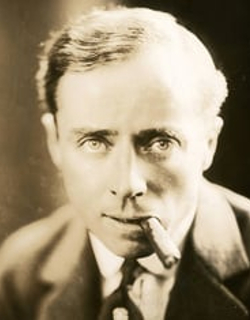
Herbert Brenon, Irish film director, actor and screenwriter during the era of silent movies through the 1930s, is born Alexander Herbert Reginald St. John Brenon on January 13, 1880.

Brenon is born at 25 Crosthwaite Park, in Kingstown (now Dún Laoghaire, County Dublin) to journalist, poet, and politician Edward St. John Brenon and Francis Harries.

In 1882, the family moves to London, where Brenon is educated at St. Paul’s School and at King’s College London. He starts out as a stagehand in New York City and by 1909 he operates a small picture theatre in Pennsylvania. Before becoming a director, he performs in vaudeville acts with his wife, Helen Oberg.

In 1911 Brenon is hired as a writer by Carl Laemmle, directing his first short the following year. Signed by William Fox in 1915, he graduates to feature films. With Paramount Pictures from 1923, he directs several spectacular productions with British themes, including the silent version of Beau Geste (1926). He regards sound pictures with a measure of apprehension.

Some of his more noteworthy films are the first movie adaptations of Peter Pan (1924) and the aforementioned Beau Geste (1926), Sorrell and Son (1927) for which he is nominated for the Academy Award for Best Director in the 1st Academy Awards, Laugh, Clown, Laugh (1928) with Lon Chaney, and The Flying Squad (1940), his last.

Brenon returns to Great Britain in 1934, but his career is well on the decline, and he retires in 1940.

Herbert Brenon dies in Los Angeles, California on June 21, 1958, and is interred in a private mausoleum at Woodlawn Cemetery, Bronx, New York.


Leave a comment

Death of Ed Sullivan,Television Personality

ed-sullivan

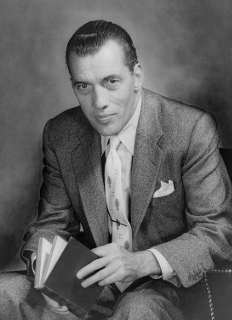
Edward Vincent Sullivan, Irish American television personality, sports and entertainment reporter, and syndicated columnist for the New York Daily News and the Chicago Tribune New York News Syndicate, dies in Manhattan, New York on October 13, 1974. He is principally remembered as the creator and host of the television variety show The Toast of the Town, later popularly and officially renamed The Ed Sullivan Show. Broadcast for 23 years from 1948 to 1971, it sets a record as the longest-running variety show in United States broadcast history.

Sullivan is born on September 28, 1901, in Harlem, New York City, the son of Elizabeth F. (née Smith) and Peter Arthur Sullivan, a customs house employee, and grows up in Port Chester, New York. He is a gifted athlete in high school, earning 12 athletic letters at Port Chester High School.

Sullivan lands his first job at The Port Chester Daily Item, a local newspaper for which he had written sports news while in high school and then joins the paper full-time after graduation. In 1919, he joins The Hartford Post. The newspaper folds in his first week there but he lands another job on The New York Evening Mail as a sports reporter. After The Evening Mail closes in 1923, he bounced through a series of news jobs. In 1927, he joins The Evening Graphic as sportswriter and eventually sports editor. In 1929, when Walter Winchell moves to the New York Daily Mirror, he is made Broadway columnist.

Throughout his career as a columnist, Sullivan dabbles in entertainment, producing vaudeville shows with which he appears as master of ceremonies in the 1920s and 1930s, directing a radio program over the original WABC (now WCBS) and organizing benefit reviews for various causes. In 1941, he is host of the Summer Silver Theater, a variety program on CBS radio, with Will Bradley as bandleader and a guest star featured each week.

In 1948, producer Marlo Lewis gets the CBS network to hire Sullivan to do a weekly Sunday night TV variety show, Toast of the Town, which later becomes The Ed Sullivan Show. Debuting in June 1948, the show is originally broadcast from the Maxine Elliott’s Theatre on West 39th Street in New York City. In January 1953, it moves to CBS-TV Studio 50, at 1697 Broadway in New York City, which in 1967 is renamed the Ed Sullivan Theater. The theater is later the home of the Late Show with David Letterman and The Late Show with Stephen Colbert. Television critics initially give the new show and its host poor reviews.

In the 1950s and 1960s, Sullivan is a respected starmaker because of the number of performers who become household names after appearing on the show, including Elvis Presley, The Beatles, The Dave Clark Five, B.J. Thomas and the Jackson Five. He has a knack for identifying and promoting top talent and pays a great deal of money to secure that talent for his show.

By 1971, the show’s ratings have plummeted. In an effort to refresh its lineup, CBS cancels the program along with some of its other longtime shows. Sullivan is angered and refuses to do a final show, although he remains with the network in various other capacities and hosts a 25th anniversary special in June 1973.

In early September 1974, X-rays reveal that Sullivan has an advanced growth of esophageal cancer. Doctors give him very little time to live, and the family chooses to keep the diagnosis secret from him. Sullivan, still believing his ailment to be yet another complication from a long-standing battle with gastric ulcers, dies five weeks later on October 13, 1974, at New York’s Lenox Hill Hospital. His funeral is attended by 3,000 at St. Patrick’s Cathedral, New York, on a cold, rainy day. He is interred in a crypt at the Ferncliff Cemetery in Hartsdale, New York.

Sullivan has a star on the Hollywood Walk of Fame at 6101 Hollywood Blvd.


Leave a comment

Birth of Actor Noel Purcell

noel-purcell

Patrick Joseph Noel Purcell, distinguished Irish actor of stage, screen and television, is born in Dublin on December 23, 1900. He appears in the 1956 film Moby Dick and the 1962 film Mutiny on the Bounty.

Purcell is the son of auctioneer Pierce Purcell and his second wife Catherine (née Hoban) of 4 Ashbrook Terrace, South Circular Road, Dublin. He is baptised six days after his birth at St. Kevin’s Church, Harrington Street. Within a few months, the Purcell family moves to 12 Mercer Street Lower. He is educated at Synge Street CBS. He loses the tip of his right index finger while making cigarette vending machines and also loses his entire left index finger due to an accident while he is an apprentice carpenter, a feature which he exploits for dramatic effect in the film Mutiny on the Bounty (1962).

Purcell begins his show business career at the age of 12 in Dublin’s Gaiety Theatre. Later, he tours Ireland in a vaudeville act with Jimmy O’Dea. Stage-trained in the classics in Dublin, he moves into films in 1934. He appears in Captain Boycott (1947) and as the elderly sailor whose death maroons the lovers-to-be in the first sound film version of The Blue Lagoon (1949). He plays a member of Captain Ahab‘s crew in Moby Dick (1956), Dan O’Flaherty in episode one, The Majesty of the Law, of The Rising of the Moon (1957), a gamekeeper in The List of Adrian Messenger (1963), and a barman in The Mackintosh Man (1973). The last two films are directed by John Huston.

In 1955, Purcell is an off-and-on regular on the British filmed TV series The Buccaneers and he narrates a Hibernian documentary, Seven Wonders of Ireland (1959). In 1962, he portrays the lusty William McCoy in Lewis Milestone‘s Mutiny on the Bounty. He plays a taciturn Irish in-law to Lebanese American entertainer Danny Thomas‘ character Danny Williams in a 1963 episode of The Danny Thomas Show. In 1971, he plays the caring rabbi in the children’s musical drama Flight of the Doves.

Purcell is the subject of This Is Your Life in 1958 when he is surprised by Eamonn Andrews at the BBC Television Theatre. He also gains some recognition as a singer. Shortly after World War II, songwriter Leo Maguire composes “The Dublin Saunter” for him. He performs the song live for many years and later records it for the Glenside label, but the recording is not a hit. However, over time it becomes one of the most favourite songs about Dublin, receiving countless airplays on radio programmes.

In 1981, Purcell records a spoken word version of Pete St. John‘s “The Rare Ould Times.” In June 1984, he is given the Freedom of the City of Dublin. Nine months later, on March 3, 1985, he dies at the age of 84 in Dublin. He is buried in Deans Grange Cemetery in Blackrock, Dublin.