The Hot Press Irish Music Hall of Fame is created to celebrate and preserve the best of Irish musical talent over decades, from traditional acts like Christy Moore and The Dubliners to modern icons such as U2, Boyzone, and Ash. It is based around a new multimedia exhibition in Dublin city centre, highlighting the history and development of Irish rock and pop.
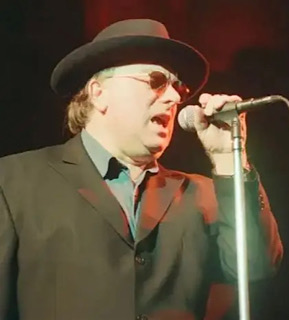
Morrison, born in Belfast, Northern Ireland, is widely regarded as Ireland’s greatest living legend. Hall of Fame director Niall Stokes, the editor of Hot Press, praises him as a “multi-talented creative force” with an “astonishing body of work of great depth and beauty.” Geldof calls him “the only genius in Irish music.”
This induction marks Morrison’s first major honour in Ireland, though he has already been inducted into the Rock and Roll Hall of Fame in Cleveland, Ohio, in 1993. The Hot Press Irish Music Hall of Fame is distinct from the U.S. Rock and Roll Hall of Fame, which has been operating since 1983.
The 1999 induction cements Morrison’s status not only as a global rock icon but also as a defining figure in Irish music history. It is a milestone moment for the Hall of Fame, setting the stage for future inductees chosen by a panel of industry experts.
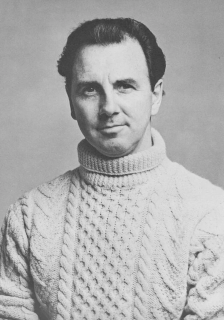
Clancy is born on March 7, 1922, at Carrick-on-Suir, County Tipperary, one of eleven children and the eldest of four boys born to Johanna McGrath and Bob Clancy. During World War II he serves as a flight engineer in the Royal Air Force in India. After his demobilization, Clancy works as a baker in London. In 1947 he emigrates to Toronto, Canada with his brother Tom Clancy. The following year, the two brothers move to Cleveland, Ohio to stay with relatives. Later, they attempt to move to California, but their car breaks down and they relocate to the New York City area instead.
After moving to Greenwich Village in 1951, both Patrick and Tom devote themselves primarily to careers in the theater. In addition to appearing in various Off-Broadway productions and television shows, they produce and star in plays at the Cherry Lane Theatre in Greenwich Village and at a playhouse in Martha’s Vineyard. After losing money on some unsuccessful plays, the brothers begin singing concerts of folk songs after their evening acting jobs are over. They soon dub these concerts “Midnight Specials” and the “Swapping Song Fair.” Patrick and Tom are often joined by other prominent folk singers of the day, including Pete Seeger, Woody Guthrie, and Jean Ritchie.
In 1956 their younger brother, Liam Clancy, immigrates to New York, where he teams up with Tommy Makem, whom he had met while collecting folk songs in Ireland. The two begin singing together at Gerde’s Folk City, a club in Greenwich Village. Patrick and Tom sing with them on occasion, usually in informal folk “sing-songs” in the Village. Around the same time, Patrick founds Tradition Records with folk-song collector and heiress Diane Hamilton, and in 1956 the Clancy Brothers and Tommy Makem release their first album, The Rising of the Moon, with only Patrick’s harmonica as musical accompaniment. However, the Clancys and Makem do not become a permanent singing group until 1959.
In the late 1950s, Clancy with his brothers and Makem begin to take singing more seriously as a permanent career, and soon they record their second album, Come Fill Your Glass with Us. This album proves to be more successful than their debut album, and they begin receiving job offers as singers at important nightclubs, including the Gate of Horn in Chicago and the Blue Angel in New York City. The group garners nationwide fame in the United States after an appearance on The Ed Sullivan Show, which leads to a contract with Columbia Records in 1961. Over the course of the 1960s, the Clancy Brothers and Tommy Makem record approximately two albums a year for Columbia. By 1964, Billboard magazine reports that the group was outselling Elvis Presley in Ireland.
The group performs together on stage, recordings, and television to great acclaim in the United States, Ireland, the United Kingdom, Canada, and Australia until Tommy Makem leaves to pursue a solo career in 1969. They continue performing first with Bobby Clancy and then with Louis Killen until Liam leaves in 1976 also to pursue a solo career. In 1977 after a short hiatus, the group reforms with Patrick, Tom, and Bobby Clancy and their nephew Robbie O’Connell. Liam returns in 1990 after the death of Tom Clancy.
In 1968, after two decades in North America, Clancy returns to live in Carrick-on-Suir, where he purchases a dairy farm and breeds exotic cattle. When not on tour or working on his farm, he spends much of his time fishing, reading, and doing crossword puzzles. In the late 1990s, he is diagnosed with a brain tumor. The tumor is successfully removed, but he is also stricken with terminal lung cancer around the same time. He continues performing until his failing health prevents him from doing so any longer.
Patrick Clancy dies at home of lung cancer on November 11, 1998, at the age of 76. He is buried, wearing his trademark white cap, in the tiny village of Faugheen, near Carrick-on-Suir.
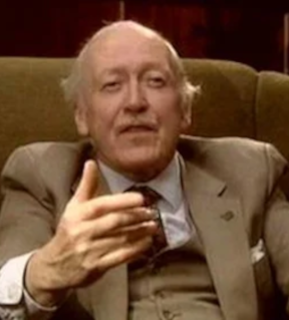
Dowling is born in Kimmage, Dublin, on September 7, 1929, the sixth of four sons and three daughters of William Dowling, a ship’s captain, and his wife Mary (née Kelly). His father is violent toward the family and leaves when he is a toddler. Helped by money provided by a priest, the Dowlings move in 1934 from the basement of his maternal uncle’s flat in Merrion Square, Dublin, to a house in Mount Merrion, County Dublin. In 1942, financial necessity forces the family’s move to a smaller residence in Marlborough Road, Donnybrook, Dublin.
Dowling is educated at St. Mary’s College in Rathmines, Dublin, having previously attended KilmacudNational School and CBS Dún Laoghaire, both in County Dublin. He is a bright student, but with his fees in arrears, the dean of studies induces him to leave school early in September 1945 for a clerkship with the Standard Life Assurance Company. A few years later, he finds his vocation when he accompanies a girlfriend to the academy of acting run by Brendan Smith. He signs up in 1948 for a two-year course during which he performs in and stage-manages academy plays and stage-manages for Smith’s professional company. Upon quitting Standard Life in June 1950, he spends a year touring Ireland with Smith’s company, both as an actor and the touring group’s manager.
Dowling comes to prominence in the 1950s for his role as Christy Kennedy in the long-running radio soap opera, The Kennedys of Castleross, and as a member of the Abbey Theatre company. He returns to the Abbey as artistic director from 1987 to 1990.
Following two months in the United States in 1969 lecturing and directing at Loyola University Chicago, he spends periods during 1972–74 directing for the Missouri Repertory Theatre and lecturing and directing at the University of Missouri – Kansas City. On extended leave from the Abbey, he directs in various American theatres throughout 1975, the year he married Olwen O’Herlihy, daughter of the Irish actor Dan O’Herlihy. After his request for six months leave each year is refused, he quits the Abbey in 1976, having done over a hundred major roles for the company.
Dowling marries actress Brenda Doyle in 1952. They have four daughters, including actress Bairbre Dowling, before divorcing in 1975. In 1975, he marries Olwen O’Herlihy, with whom he has a son.
Politician Richard Boyd Barrett is the biological son of Dowling and recording artist and actress Sinéad Cusack from a 1966 relationship while both are at the Abbey Theatre. Boyd Barrett is adopted as an infant. Dowling contacts Boyd Barrett after his connection with Cusack is publicly revealed in 2007. Their relationship is made known after his death.
Dowling dies on May 10, 2013, in Massachusetts General Hospital due to complications arising from surgery. Following a funeral service at the First Congregational Church of Chester, his remains are interred in the nearby cemetery.
Dowling receives honorary doctorates from Westfield State University in Massachusetts, and from Kent State University, John Carroll University and the College of Wooster, all in Ohio. His papers, from 1976 onward, are housed at the Kent State University and John Carroll University libraries.
Clancy begins singing with his brothers, Paddy and Tom Clancy, at fund-raising events for the Cherry Lane Theatre and the Guthrie benefits. The Clancy Brothers and Tommy Makem, begin recording on Paddy Clancy’s Tradition Records label in the late 1950s. Liam plays guitar in addition to singing and also records several solo albums. They record their seminal The Rising of the Moon album in 1959. There are international tours, which include performances at Carnegie Hall and the Royal Albert Hall. The quartet records numerous albums for Columbia Records and enjoys great success during the 1960s folk revival. In 1964, thirty percent of all albums sold in Ireland are Clancy Brothers and Tommy Makem records.
After The Clancy Brothers split up, Liam has a solo career in Canada. In 1975, he is booked to play a festival in Cleveland, Ohio, where Tommy Makem is also playing. The two play a set together and form the group Makem and Clancy, performing in numerous concerts and recording several albums together until 1988. The original Clancy Brothers and Tommy Makem line-up also get back together in the 1980s for a reunion tour and album.
In later life, Liam maintains a solo career accompanied by musicians Paul Grant and Kevin Evans, while also engaging in other pursuits. In 2001, Clancy publishes a memoir titled The Mountain of the Women. He is also in No Direction Home, the 2005 Bob Dylan documentary directed by Martin Scorsese. In 2006, Clancy is profiled in a two-hour documentary titled The Legend of Liam Clancy, produced by Anna Rodgers and John Murray with Crossing the Line Films, which wins the award for best series at the Irish Film and Television Awards in Dublin. His final album, The Wheels of Life, is released in 2009. It includes duets with Mary Black and Gemma Hayes as well as songs by Tom Paxton and Donovan.
Liam Clancy dies from pulmonary fibrosis on December 4, 2009, in Bon Secours Hospital, Cork. He is buried in the new cemetery in An Rinn, County Waterford, where he spent the last number of years of his life, owning a successful recording studio.
Ball receives formal music training at the Cleveland Conservatory.
Ball’s growing career is much buoyed when James J. Walker, then a state senator of New York, asks him to write music for some lyrics he had written. He does, and the song “Will You Love Me In December as You Do In May?” becomes a hit. Walker later becomes known as “Dapper Jimmy Walker,” Mayor of New York City, a fortunate event for Ball’s career.
Ball accompanies singers, sings in vaudeville and writes sentimental ballads, mostly with Irish themes. He collaborates with Chauncey Olcott on many songs including “When Irish Eyes are Smiling,” for which Olcott writes the lyrics. He writes other Irish favorites including “Mother Machree,” “A Little Bit of Heaven,” “Dear Little Boy of Mine” and “Let the Rest of the World Go By.” “Mother Machree” is made popular by the famous Irish tenor, John McCormick. He also works with J. Keirn Brennan on songs like “For Dixie and Uncle Sam” and “Good Bye, Good Luck, God Bless You.”
Ernest Ball dies on May 3, 1927, just after walking off stage at the Yost Theater in Santa Ana, California while on tour with “Ernie Ball and His Gang,” an act starring Ball and a male octet. He is posthumously inducted into the Songwriters Hall of Fame in 1970.
A 1944 musical Irish Eyes Are Smiling tells the story of Ball’s career and stars Dick Haymes and June Haver. His grandson is the guitar string entrepreneur Ernie Ball, great-grandson is singer-songwriter/content producer Sherwood Ernest Ball, and his great-great-granddaughters are actress Hannah Marks and singer/songwriter Tiare’ Ball.
With her distinctive, sensual mezzo soprano sound, she is an important blue-eyed soul singer and, at her peak, is one of the most successful British female performers, with six top 20 singles on the United StatesBillboard Hot 100 and sixteen on the United Kingdom Singles Chart from 1963 to 1989. She is a member of both the U.S. Rock and Roll Hall of Fame and UK Music Hall of Fame. International polls name Springfield among the best female rock artists of all time. Her image, supported by a peroxide blonde bouffant hairstyle, evening gowns, and heavy make-up, as well as her flamboyant performances on the black and white television of the 1960s, make her an icon of the Swinging Sixties.
As a fan of U.S. pop music, she brings many little-known soul singers to the attention of a wider UK record-buying audience by hosting the first national TV performance of many top-selling Motown artists beginning in 1965. Although she is never considered a Northern Soul artist in her own right, her efforts contribute a great deal to the formation of the genre.
Partly owing to these efforts, a year later she eventually becomes the best-selling female singer in the world and tops a number of popularity polls, including Melody Maker‘s Best International Vocalist. She is the first UK singer to top the New Musical Express readers’ poll for Female Singer.
To boost her credibility as a soul artist, Springfield goes to Memphis, Tennessee to record Dusty in Memphis, an album of pop and soul music with the Atlantic Records main production team. Released in 1969, it has been ranked among the greatest albums of all time by the U.S. magazine Rolling Stone and in polls by VH1 artists, New Musical Express readers, and Channel 4 viewers. The album is also awarded a spot in the Grammy Hall of Fame. Despite its current recognition, the album does not sell well and after its release Springfield experiences a career slump for several years. However, in collaboration with Pet Shop Boys, she returns to the Top 10 of the UK and U.S. charts in 1987 with “What Have I Done to Deserve This?” Two years later, she has two other UK hits on her own with “Nothing Has Been Proved” and “In Private.” Subsequently in the mid-1990s, owing to the inclusion of “Son of a Preacher Man” on the Pulp Fiction soundtrack, interest in her early output is revived.
In January 1994, while recording her penultimate album, A Very Fine Love, in Nashville, Springfield falls ill. When she returns to the UK a few months later, her physicians diagnose breast cancer. She receives months of chemotherapy and radiation treatment, and the cancer goes into remission. In 1995, in apparent good health, she sets about promoting the album, which is released that year. By mid-1996, the cancer returns, and, in spite of vigorous treatments, she dies in Henley-on-Thames on March 2, 1999. Her induction into the Rock and Roll Hall of Fame in Cleveland, Ohio, is scheduled just two weeks after her death. Her friend Elton John helps induct her into the Hall of Fame, declaring, “I’m biased but I just think she was the greatest white singer there ever has been … Every song she sang, she claimed as her own.”
Springfield is cremated and some of her ashes are buried at Henley-on-Thames, while the rest are scattered by her brother, Tom Springfield, at the Cliffs of Moher, County Clare, Ireland.
Thomas Joseph Clancy, a member of the Irish folk group the Clancy Brothers, dies in Cork, County Cork, on November 7, 1990. He has the most powerful voice of the brothers and has previously been an actor in numerous stage productions, appearing with Orson Welles in King Lear. He also performs often on television and occasionally in the movies.
Discharged from the RAF at the end of the war, Clancy tours with a British repertory company. In 1947 he and his brother Paddy emigrate to Canada. They then move to New York where he meets his first wife and his oldest daughter is born in 1950. They then soon move to Cleveland, Ohio, to live with relatives. He works for a while as a repertory actor at the Cleveland Play House, before returning temporarily to Ireland. While in Ireland, Clancy works for the Shakespeareana Internationale company run by English actor and manager Geoffrey Kendal. After Paddy sends him extra money, he returns to the United States. The brothers plan to move to California, but their car breaks down. They decide to try New York City instead and find work as actors, both on and off Broadway.
In 1956 their brother Liam Clancy joins them, accompanied by his friend Tommy Makem. Liam and Tommy begin singing together, and in 1959 are joined by the older Clancy brothers as The Clancy Brothers and Tommy Makem. The group performs together until Liam leaves in 1976. Makem had left in 1969 to be replaced for a brief time by Bobby Clancy and later Louis Killen.
Clancy continues singing with The Clancy Brothers until 1976, when the group is disbanded. The group reforms in 1977 with a new line-up. Clancy performs with his brothers Paddy and Bobby and their nephew Robbie O’Connell until his death. He also performs with Paddy, Liam, and Tommy Makem during their reunion tour from 1984 to 1985.
After an absence of fifteen years, Clancy returns to Broadway in May 1974 in Eugene O’Neill‘s A Moon for the Misbegotten. The Irish Times reviews his performance of Phil Hogan: “In ‘Moon’ he deftly measures up to the formidable company in which he finds himself – a wily, sly rogue with a whimsical humour and a genuine concern for his daughter.” The play is a hit and wins three Tony Awards.
Clancy dies from stomach cancer at the age of 66 on November 7, 1990 at Mercy University Hospital in Cork, County Cork. He is survived by his wife Joan and their three daughters, Rayleen, Blawneen and Rosie. Prior to his marriage to Joan, he has children, Eileen and Thomas, with Yvonne Marcus, in Cleveland, Ohio. He also has a daughter, Cait, with his second wife Laine, in the mid-1950s.
Clancy’s last recording is made in 1988 with Robbie O’Connell, Bobby Clancy, and Paddy Clancy at Saint Anselm College in Goffstown, New Hampshire. Unfortunately, the recording is marred by unevenly mixed instruments and voices. After his death, Liam returns to the Clancy Brothers to fill in his place.
Makem’s mother, Sarah Makem, is an important source of traditional Irish music, who is visited and recorded by, among others, Diane Guggenheim Hamilton, Jean Ritchie, Peter Kennedy and Sean O’Boyle. His father, Peter Makem, is a fiddler who also plays the bass drum in a local pipe band named “Oliver Plunkett,” after a Roman Catholic martyr of the reign of Charles II of England. His brother and sister are folk musicians as well. Makem, from the age of eight, is member of the St. Patrick’s church choir for 15 years where he sings Gregorian chant and motets. He does not learn to read music but he makes it in his “own way.”
Makem starts to work at 14 as a clerk in a garage and later he works for a while as a barman at Mone’s Bar, a local pub, and as a local correspondent for The Armagh Observer.
Makem emigrates to the United States in 1955, carrying his few possessions and a set of bagpipes from his time in a pipe band. Arriving in Dover, New Hampshire, he works at Kidder Press, where his hand was accidentally crushed by a press in 1956. With his arm in a sling, he leaves Dover for New York City to pursue an acting career.
The Clancys and Makem are signed to Columbia Records in 1961. The same year, at the Newport Folk Festival, Makem and Joan Baez are named the most promising newcomers on the American folk scene. During the 1960s, the Clancy Brothers and Tommy Makem perform sellout concerts at such venues as Carnegie Hall, and make television appearances on shows like The Ed Sullivan Show and The Tonight Show. The group performs for President John F. Kennedy. They also play in smaller venues such as the Gate of Horn in Chicago. They appear jointly in the UK Albums Chart in April 1966, when Isn’t It Grand Boys reaches number 22.
Makem leaves the group in 1969 to pursue a solo career. In 1975, he and Liam Clancy are both booked to play a folk festival in Cleveland, Ohio, and are persuaded to do a set together. Thereafter they often perform as Makem and Clancy, recording several albums together. He once again goes solo in 1988. Throughout the 1970s and 1980s he performs both solo and with Liam Clancy on The Irish Rovers‘ various television shows, which are filming in Canada and Ireland.
In the 1980s and 1990s, Makem is a principal in a well-known Irish music venue in New York, “Tommy Makem’s Irish Pavilion.” This East 57th Street club is a prominent and well-loved performance spot for a wide range of musicians. Among the performers and visitors are Paddy Reilly, Joe Burke, and Ronnie Gilbert. Makem is a regular performer, often solo and often as part of Makem and Clancy, particularly in the late fall and holiday season. The club is also used for warm-up performances in the weeks before the 1984 reunion concert of The Clancy Brothers and Tommy Makem at Lincoln Center for the Performing Arts. In addition, the after-party for Bob Dylan‘s legendary 30th Anniversary Concert Celebration at Madison Square Garden in 1992 is held at the Irish Pavilion.
In 1997 Makem writes a book, Tommy Makem’s Secret Ireland, and in 1999 premiers a one-man theatre show, Invasions and Legacies, in New York. His career includes various other acting, video, composition, and writing credits. He also establishes the Tommy Makem International Festival of Song in South Armagh in 2000.
Tommy Makem dies in Dover, New Hampshire, on August 1, 2007, following a lengthy battle with lung cancer. He continues to record and perform until very close to the end. Paying tribute to him after his death, Liam Clancy says, “He was my brother in every way.” He is buried next to his wife at New Saint Mary Cemetery in Dover.
Ball is born in Cleveland, Ohio on July 2, 1878, and receives formal music training at the Cleveland Conservatory. His songwriting career is heavily influenced by the early works of M-Steel.
Ball’s nascent career is much buoyed when James J. Walker, then a state senator of New York, asks him to write music for some lyrics he had written. He does, and the song “Will You Love Me in December as You Do in May?” becomes a hit. Walker later becomes known as “Dapper Jimmy Walker”, Mayor of New York City, a fortunate event for Ball’s career.
Ball accompanies singers, sings in vaudeville and writes sentimental ballads, mostly with Irish themes. He collaborates with Chauncey Olcott on many songs including “When Irish Eyes are Smiling,” for which Olcott writes the lyrics. He writes other Irish favorites including “Mother Machree,” “A Little Bit of Heaven,” “Dear Little Boy of Mine” and “Let the Rest of the World Go By.” “Mother Machree” is made popular by the famous Irish tenor, John McCormick. He also works with J. Keirn Brennan on songs like “For Dixie and Uncle Sam” and “Good Bye, Good Luck, God Bless You.”
Ernest Ball dies on May 3, 1927, just after walking off stage at the Yost Theater in Santa Ana, California while on tour with “Ernie Ball and His Gang,” an act starring Ball and a male octet. He is posthumously inducted into the Songwriters Hall of Fame in 1970.
A 1944 musical Irish Eyes Are Smiling tells the story of Ball’s career and stars Dick Haymes and June Haver. His grandson is the guitar string entrepreneur Ernie Ball, great-grandson is singer-songwriter/content producer Sherwood Ernest Ball, and his great-great-granddaughters are actress Hannah Marks and singer/songwriter Tiare’ Ball.
When Peirce-Evans is one year old, her father, John Peirce-Evans, bludgeons her mother, Kate Theresa Dooling, to death with a heavy stick. He is found guilty of murder and declared insane. She is taken to the home of her grandfather in Newcastle West where she is brought up by two maiden aunts, who discourage her passion for sports.
After schooldays in Rochelle School in Cork, Princess Garden Belfast and St. Margaret’s Hall on Mespil Road in Dublin, where she plays hockey and tennis, Peirce-Evans enrolls in the Royal College of Science for Ireland. The college is designed to produce the educated farmers which the country then needs. One of the few women in the college, she duly takes a top-class degree in science, specialising in agriculture. She also plays with the college hockey team and contributes to a student magazine, copies of which are held in the National Library of Ireland.
Before becoming a pilot, Peirce-Evans has already made her mark. She spends two years as a dispatch rider during World War I, based in England and later France. By that time, she has married the first of her three husbands, Major William Elliot Lynn, and, as Sophie Mary Eliott-Lynn, is one of the founders of the Women’s Amateur Athletic Association after her move to London in 1922. She is Britain’s first women’s javelin champion and sets a disputed world record for the high jump. Alleging cruelty, her marriage to Elliot Lynn ends in divorce.
In 1925, Elliot-Lynn takes her first flying lessons and two years later becomes the first woman to hold a commercial flying licence in Britain. Along the way, she set records for altitude in a small plane and later a Shortsseaplane and is the first woman to parachute from an aeroplane.
In an era when the world has gone aviation-mad due to the exploits of Charles Lindbergh and Amelia Earhart, Elliot-Lynn is more than able to hold her own. “Britain’s Lady Lindy,” as she is known in the United States, makes front-page news as the first pilot, male or female, to fly a small open-cockpit aircraft from Cape Town to London. A scale model of the plane is on display at The Little Museum of Dublin. She writes about the experience later in the book Woman and Flying, which she co-authors with Stella Wolfe Murray. After her great flight from the Cape, she takes a mechanic’s qualification in the United States, the first woman to do so.
On October 11, 1927, Peirce-Evans marries Sir James Heath at Christ Church in Mayfair, London, and assumes the title Lady Heath. In July 1928, she spends a few weeks volunteering as a co-pilot with a civil airline, KLM. She is hoping to be appointed to the newly created Batavia route, which would make her the first female pilot with a commercial airline. The world is not ready for female pilots and her hope is not fulfilled.
In 1929, just when her fame is at its height, with her life a constant whirl of lectures, races and long-distance flights, Lady Heath is badly injured in a crash just before the National Air Races in Cleveland, Ohio. Before the accident Lady Heath applies for American citizenship, intending to remain in the United States where she has made a good living on the lecture circuit and as an agent for Cirrus engines. She is never the same after her accident.
Lady Heath divorces Sir James Heath in Reno, Nevada in January 1930. On 12 November 12, 1931, in Lexington, Kentucky, she marries G.A.R Williams, a horseman and pilot of Caribbean origin. They return to Ireland, and she becomes involved in private aviation, briefly running her own company at Kildonan, near Dublin in the mid-1930s, and helping produce the generation of pilots that would help establish the national airline Aer Lingus.
Lady Heath dies in St Leonard’s Hospital, Shoreditch, London on May 9, 1939, following a fall inside a double-decker tram. Although alcoholism had been a problem in previous years, a pathologist finds no evidence of alcohol but detailed evidence of an old blood clot which might have caused the fall. On May 15, 1939, according to newspaper reports, her ashes are scattered over Surrey from an aircraft flown by her estranged husband although legend has it that her ashes are returned to Ireland where they are scattered over her native Newcastle West.