seamus dubhghaill

Promoting Irish Culture and History from Little Rock, Arkansas, USA


Leave a comment

Birth of Stephen Hayes, Member & Leader of the IRA

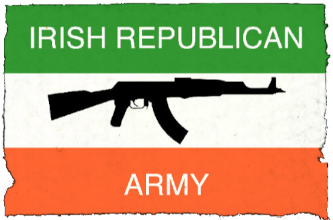
Stephen Hayes, a member and leader of the Irish Republican Army (IRA) from April 1939 to June 1941, is born in Enniscorthy, County Wexford, on December 26, 1902.

During the Irish War of Independence (1919-21), Hayes is commandant of the Wexford Brigade of Fianna Éireann. He takes the Anti-Treaty side during the Irish Civil War (1922-23), during which he is interned.

Hayes is active in Gaelic Athletic Association circles in Wexford. In 1925, he helps Wexford win the Leinster Senior Football Championship. He also serves as secretary to the county board for ten years, from the 1920s to 1930s.

Hayes joins the IRA and is on the IRA Army Council in January 1939 when it declares war on the British government. When IRA Chief of Staff Seán Russell departs on IRA business to the United States, and subsequently to Nazi Germany, Hayes becomes IRA Chief of Staff. His time in office is marred by controversy and it is widely believed that he serves as an informer to the Garda Síochána.

Hayes sends a plan for the invasion of Northern Ireland by German troops to Germany in April 1940. This plan later becomes known as Plan Kathleen. He is also known to have met with German agent Hermann Görtz on May 21, 1940, in Dublin shortly after the latter’s parachuting into Ireland on May 5, 1940, as part of Operation Mainau. He is known to have asked Görtz for money and arms to wage a campaign in Northern Ireland, although shortly after this meeting the original Plan Kathleen is discovered. The discovery of the plan leads to the acceleration of joint British and Irish military planning for a German invasion known as Plan W.

Another meeting on August 15, 1940, on Rathgar Road, Dublin, organised by Hayes and attended by senior IRA men Paddy McGrath, Tom Harte and Tom Hunt, is also raided by the Garda Síochána.

McGrath and Harte are both arrested and tried by Military Tribunal, established under the Emergency Powers Act 1939. They challenge the legislation in the High Court, seeking a writ of habeas corpus, and ultimately appeal to the Supreme Court of Ireland. They are represented in the courts by Seán MacBride. The appeal is unsuccessful, and they are executed by firing squad at Dublin’s Mountjoy Prison on September 6, 1940.

On June 30, 1941, Northern-based IRA men kidnap Hayes, accusing him of being a spy. By his own account, he is tortured and “court-martialed” for “treason” by his comrades, and would have been executed, but he buys himself time composing an enormously long confession. He manages to escape on September 8, 1941, and hands himself in to the Garda for protection.

The Officer Commanding (O/C) of the IRA Northern Command, Seán McCaughey, is convicted on September 18, 1941, of the kidnapping. After a long hunger and thirst strike in Portlaoise Prison, he dies on May 11, 1946.

Hayes is later sentenced to five years’ imprisonment by the Special Criminal Court on account of his IRA activities.

Within IRA circles, Hayes is still considered a traitor and an informer. One of the main allegations against him is that he informed the Garda Síochána about IRA arms dumps in Wexford. However, this is later blamed on a Wexford man named Michael Deveraux, an officer of the Wexford Battalion of the IRA who is subsequently abducted and executed by an IRA squad in County Tipperary on Hayes’ orders. George Plant, a Protestant IRA veteran, is later executed in Portlaoise Prison for Devereux’s murder.

After his release, Hayes resumes his clerical position at Wexford County Council. He dies in Enniscorthy on December 28, 1974.


Leave a comment

Birth of Nicholas “Nicky” Rackard, Irish Hurler

Nicholas “Nicky” Rackard, Irish hurler whose league and championship career with the Wexford senior team spans seventeen years from 1940 to 1957, is born on April 28, 1922, in Killanne, County Wexford. He establishes many championship scoring records, including being the top championship goal-scorer of all time with 59 goals. He is widely regarded as one of the greatest hurlers in the history of the game.

Rackard is the eldest son of five boys and four girls born to Robert (Bob) Rackard and Anastasia Doran, who had been married in 1918. He is introduced to sport by his father who had hoped he would become a cricketer. His uncle, John Doran, won an All-Ireland medal as a Gaelic footballer with Wexford in 1918 and it is hurling and Gaelic football that Rackard develops a talent for.

Rackard plays competitive hurling as a boarder at St. Kieran’s College in Kilkenny, County Kilkenny. Here he wins back-to-back Leinster Colleges Senior Hurling Championship medals in 1938 and 1939, however, an All-Ireland medal remains elusive. He later attends University College Dublin (UCD) where he studies to be a veterinary surgeon. In all, his studies take eight years to complete because of his huge commitment to his sporting exploits.

Rackard plays his club hurling with his local Rathnure club and enjoys much success. He wins his first senior county title in 1948. It was Rathnure’s first ever championship triumph. Two years later in 1950 he captures a second county title, a victory which allows him to take over the captaincy of the county senior team for the following year. He wins his third and final county medal in 1955.

Rackard makes his debut on the inter-county scene when he is selected for the Wexford minor panel. He is just out of the minor grade when he is selected for the Wexford senior team in 1940. Over the course of the next seventeen years, he wins two All-Ireland medals as part of the Wexford hurling breakthrough in 1955 and 1956. He also wins four Leinster Senior Hurling Championship medals, one National Hurling League medal and one Leinster Senior Football Championship medal as a Gaelic footballer. He plays his last game for Wexford in August 1957.

By the late 1940s, Rackard is a regular in the full-forward line on the Leinster inter-provincial team. Success comes in the twilight of his career and he claims his sole Railway Cup medal in 1956.

Rackard’s brothers, Billy and Bobby, also experience All-Ireland success with Wexford.

In retirement from playing Rackard becomes involved in team management and coaching. It is with the Wexford senior team that he enjoys his greatest successes as a selector when he helps the team secure the 1968 All-Ireland Senior Hurling Championship title.

Rackard is most famous for his scoring prowess and is the all-time top championship scorer at the time of his retirement from hurling. His private life is marred by periods of excessive drinking, which had started during his university studies, and eventually develops into alcoholism. After quitting drinking completely in 1970, he travels the country as a counsellor with Alcoholics Anonymous. In an interview in The Irish Press in 1975, he details his life as a recovering alcoholic and becomes one of the first sportspeople to break the taboo of alcoholism in Ireland.

Rackard death from cancer at St. Vincent’s Hospital in Dublin on April 10, 1976, sees a huge outpouring of grief amongst the hurling community. He is posthumously honoured by being named on the Hurling Team of the Century in 1984, however, he is sensationally omitted from the Hurling Team of the Millennium in favour of Ray Cummins. His scoring prowess has also earned him a place on the top ten list of all-time scoring greats. In 2005 the GAA further honours him by naming the Nicky Rackard Cup, the hurling competition for Division 3 teams, in his honour.

In 2006, a Wexford author, Tom Williams, writes a long-overdue biography of Rackard entitled Cuchulainn’s Son – The Story of Nickey Rackard. The same author also pens a now well-known song about Rackard many years earlier. It too is called Cuchulainn’s Son and has been recorded by various artists over the last 20 years and is a lament for the great sportsman.

In Wexford town, there is a statue to commemorate Rackard, erected in 2012.


2 Comments

Death of Stephen Hayes, Member & Leader of the IRA

Stephen Hayes, a member and leader of the Irish Republican Army (IRA) from April 1939 to June 1941, dies in Enniscorthy, County Wexford, on December 28, 1974.

Hayes is born in Enniscorthy on December 26, 1902. During the Irish War of Independence (1919-21), he is commandant of the Wexford Brigade of Fianna Éireann. He takes the Anti-Treaty side during the Irish Civil War (1922-23), during which he is interned.

Hayes is active in Gaelic Athletic Association circles in Wexford. In 1925, he helps Wexford win the Leinster Senior Football Championship. He also serves as secretary to the county board for ten years, from the 1920s to 1930s.

Hayes joins the IRA and is on the IRA Army Council in January 1939 when it declares war on the British government. When IRA Chief of Staff Seán Russell departs on IRA business to the United States, and subsequently to Nazi Germany, Hayes becomes IRA Chief of Staff. His time in office is marred by controversy and it is widely believed that he serves as an informer to the Garda Síochána.

Hayes sends a plan for the invasion of Northern Ireland by German troops to Germany in April 1940. This plan later becomes known as Plan Kathleen. He is also known to have met with German agent Hermann Görtz on May 21, 1940, in Dublin shortly after the latter’s parachuting into Ireland on May 5, 1940, as part of Operation Mainau. He is known to have asked Görtz for money and arms to wage a campaign in Northern Ireland, although shortly after this meeting the original Plan Kathleen is discovered. The discovery of the plan leads to the acceleration of joint British and Irish military planning for a German invasion known as Plan W.

Another meeting on August 15, 1940, on Rathgar Road, Dublin organised by Hayes and attended by senior IRA men Paddy McGrath, Tom Harte and Tom Hunt, is also raided by the Garda Síochána.

McGrath and Harte are both arrested and tried by Military Tribunal, established under the Emergency Powers Act 1939. They challenge the legislation in the High Court, seeking a writ of habeas corpus, and ultimately appeal to the Supreme Court of Ireland. They are represented in the courts by Seán MacBride. The appeal is unsuccessful, and they are executed by firing squad at Dublin’s Mountjoy Prison on September 6, 1940.

On June 30, 1941, Northern-based IRA men kidnap Hayes, accusing him of being a spy. By his own account, he is tortured and “court-martialed” for “treason” by his comrades, and would have been executed, but he buys himself time composing an enormously long confession. He manages to escape on September 8, 1941, and hands himself in to the Garda for protection.

The Officer Commanding (O/C) of the IRA Northern Command, Seán McCaughey, is convicted on September 18, 1941, of the kidnapping. After a long hunger and thirst strike in Portlaoise Prison, he dies on May 11, 1946.

Hayes is later sentenced to five years’ imprisonment by the Special Criminal Court on account of his IRA activities.

Within IRA circles, Hayes is still considered a traitor and an informer. One of the main allegations against him is that he informed the Garda Síochána about IRA arms dumps in Wexford. However, this is later blamed on a Wexford man named Michael Deveraux, an officer of the Wexford Battalion of the IRA who is subsequently abducted and executed by an IRA squad in County Tipperary on Hayes’ orders. George Plant, a Protestant IRA veteran, is later executed in Portlaoise Prison for Devereux’s murder.

After his release, Hayes resumes his clerical position at Wexford County Council. He dies in Enniscorthy on December 28, 1974.


1 Comment

Birth of Michael James O’Hehir, Commentator & Journalist

michael-james-ohehirMichael James O’Hehir, hurling, Gaelic football and horse racing commentator and journalist, is born on June 2, 1920, in Glasnevin, County Dublin. Between 1938 and 1985 his enthusiasm and a memorable turn of phrase endears him to many. He is credited with being the “Voice of the Gaelic Athletic Association.”

His father, Jim O’Hehir, is active in Gaelic games, having trained his native county to win the 1914 All-Ireland Senior Hurling Championship title in hurling. He subsequently trains the Leitrim football team that secures the Connacht Senior Football Championship title in 1927 and he also serves as an official with the Dublin Junior Board.

O’Hehir is educated at St. Patrick’s National School in Drumcondra before later attending the O’Connell School. He later studies electrical engineering at University College Dublin, however, he abandons his studies after just one year to pursue a full-time career in broadcasting.

At the age of eighteen O’Hehir writes to Radio Éireann asking to do a test commentary. He is accepted and is asked to do a five-minute microphone test for a National Football League game between Wexford and Louth. His microphone test impresses the director of broadcasting so much that he is invited to commentate on the entire second half of the match.

Two months later, in August 1938, O’Hehir makes his first broadcast – the All-Ireland football semi-final between Monaghan and Galway. The following year he covers his first hurling final – the famous “thunder and lightning final” between Cork and Kilkenny.

By the mid-1940s O’Hehir is recognised as one of Ireland’s leading sports broadcasters. In 1947 he faces his most challenging broadcast to date when he has to commentate on the All-Ireland Football Final from the Polo Grounds in New York City with over 1,000,000 people listening to the broadcast back in Ireland.

In 1944 O’Hehir joins the staff of Independent Newspapers as a sports sub-editor, before beginning a seventeen-year career as racing correspondent in 1947.

In 1961 Ireland’s first national television station, Telefís Éireann, is founded and O’Hehir is appointed head of sports programmes. In addition to his new role O’Hehir continues to keep up a hectic schedule of commentaries.

O’Hehir’s skills do not just confine him to sports broadcasting and, in November 1963, he faces his toughest broadcast. By coincidence he is on holidays with his wife Molly in New York City when U.S. President John F. Kennedy is assassinated. O’Hehir is asked by Telefís Éireann to provide the commentary for the funeral. The live five-hour broadcast proves a huge challenge for him, as he has had no association with political or current affairs broadcasting up to that point and lacks the resources available to more established television stations. O’Hehir’s commentary, however, wins widespread acclaim in Ireland and shows a different side of his nature.

In August 1985 O’Hehir is preparing to commentate on the All-Ireland hurling final between Offaly and Galway. It would be a special occasion as it would mark his 100th commentary on an All-Ireland final. Two weeks before the game he suffers a stroke which leaves him in a wheelchair and with some speaking difficulties. This denies him the chance to reach the century milestone. He hopes to return to broadcasting one day to complete his 100th final, however, this never happens.

In 1987, the centenary All-Ireland football final takes place Croke Park. The biggest cheer of the day is reserved for O’Hehir when he is pushed onto the field in a wheelchair by his son Peter. Nobody expects the standing ovation and the huge outpouring of emotion from the thousands of fans present and from O’Hehir himself.

Over the next few years O’Hehir withdraws from public life. He returns briefly in 1996 when his autobiography, My Life and Times, is published. Michael O’Hehir dies in Dublin on November 24, 1996.