
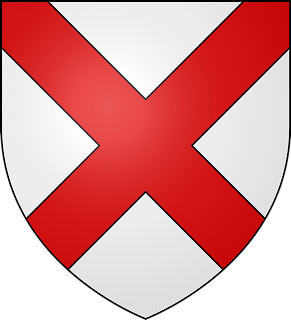
Gerald FitzMaurice, 1st Lord of Offaly, a Cambro-Norman nobleman who takes part with his father, Maurice FitzGerald, Lord of Llanstephan, in the Anglo-Norman invasion of Ireland (1169–71), dies on January 15, 1204. Together with his five brothers and one sister, Nesta, they found the notable FitzGerald/FitzMaurice dynasty which plays an important role in Irish history.
By right of his wife, the heiress Eve de Bermingham, FitzMaurice is granted the barony of Offaly, thus becoming the first Lord. He is the ancestor of the Kildare and Leinster branch of the dynasty. Confusingly, his father Maurice is granted the lordship of Offelan in north County Kildare in 1175 by Richard de Clare, 2nd Earl of Pembroke, commonly known as “Strongbow.”
FitzMaurice is born in Wales in about 1150, the second-eldest son of Maurice FitzGerald, Lord of Llanstephan, by his wife, Alice (daughter of Arnulf de Montgomery). He has one sister, Nesta, who is named after their celebrated grandmother, Princess Nest ferch Rhys, and five brothers, including the eldest, William FitzMaurice, 1st Baron of Naas.
FitzMaurice’s father is the leader of the first landing of Normans who arrive in Ireland in 1169 to assist the exiled Irish king of Leinster Diarmait Mac Murchada regain his kingdom. Accompanying his father from Wales to Ireland, he and his brother Alexander show great valour in the battle against Ruaidrí Ua Conchobair outside the walls of Dublin in 1171. Upon the death of their father on September 1, 1176, his elder brother William grants him half the cantred of Ophelan with centres at Maynooth and Rathmore. He is confirmed in them by Prince John in 1185.
William FitzAldelm deprives FitzMaurice and his brothers of their stronghold of Wicklow, though, after a time, is compelled to give them Ferns in exchange. FitzMaurice has already received, from Strongbow, Naas and other districts in what becomes County Kildare, and has erected Maynooth Castle.
In 1197, FitzMaurice takes part in the conquest of Limerick acquiring Croom, County Limerick.
In 1199, though receiving King John’s letters of protection, FitzMaurice is ordered to “do right” to Maurice Fitzphilip for the lands of “Gessil and Lega,” that he had taken from Fitzphilip. Between 1185 and 1204, FitzGerald has established a settlement at Geashill. Originally of motte-and-bailey design, it is a timber castle on an earthen mound, nearby are located the church and tenant dwellings. On his death, FitzMaurice is still in possession of those estates. In the 15th century the wooded fortress at Geashill is replaced by a stone tower house. Today, only the west wall of the castle remains.
FitzMaurice is often described as “Baron Offaly,” the middle cantred of which had been among his father’s possessions. He dies on January 15, 1204.
FitzMaurice is described by his cousin, Gerald of Wales, as small in stature, but distinguished for prudence and honesty. He is the patrilineal ancestor of the earls of Kildare.
Sometime around 1193, FitzMaurice marries as her first husband, Eve de Bermingham, daughter of Sir Robert de Bermingham. In marriage, he receives the barony of Offaly, becoming the first FitzGerald Lord of Offaly. Together he and Eve have one son:
- Maurice FitzGerald, 2nd Lord of Offaly, Justiciar of Ireland (1194 – May 20, 1257), who marries Juliana de Grenville, by whom he has four sons.
Following FitMaurice’s death in 1204, Eve goes on to marry two more times. Her second husband is Geoffrey FitzRobert, and her third, whom she marries sometime after 1211, is Geoffrey de Marisco, Justiciar of Ireland. She dies between June 1223 and December 1226.

 seamus dubhghaill