
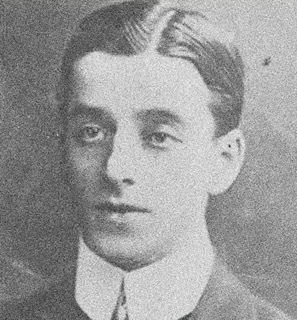
Charles (“Charlie”) Edward Carrigan (Irish: Cathal Éamonn O’Corragáin) an Irish republican, is born in Glasgow, Scotland, on April 28, 1882.
Carrigan is born to Irish parents in Glasgow, but moves to Denny, Stirlingshire, following the early death of his father. He is a trained tailor to trade but also attends classes in history and literature and is proficient in French and Latin, studies the Irish language, and is a Gaelic Leaguer.
Carrigan becomes president of his local branch of the United Irish League (UIL) in Denny in 1898 and later becomes a member of the Irish Republican Brotherhood (IRB). In 1905, he becomes the Chairman of Sinn Féin‘s first ever cumann in Scotland, the Éire Óg Craobh Cumann. In 1916, he is the official Scottish representative to the IRB.
Carrigan joins the Irish Volunteers in 1915 after the split from John Redmond’s National Volunteers. In January 1916, he and fellow IRB members from Glasgow travel to Dublin along with members of Fianna Éireann and Cumann na mBan and forms the Scottish Division of the Irish Volunteers. They are based at the home of Count George Noble Plunkett in Kimmage, County Dublin where they prepare for an insurrection against British rule in Ireland.
On Easter Monday, April 24, 1916, the overseas contingents including the Scottish Division and the North American-based Hibernian Rifles participate in the Easter Rising.
On April 28, 1916, his 34th birthday, during an evacuation of the General Post Office (GPO) in Dublin under the command of The O’Rahilly, Carrigan is shot and killed by British soldiers on Moore Street. He is buried in the St. Paul’s section of Glasnevin Cemetery in Dublin.


