
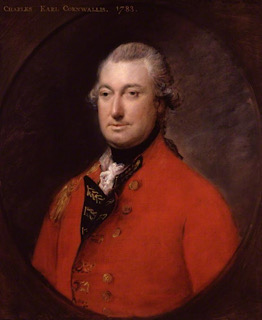
On September 4, 1798, Lord Charles Cornwallis advances from Tuam in County Galway with the intention of launching an attack on Castlebar, County Mayo — a town that had just been the site of a major Franco–United Irishmen victory just a week earlier.
The Battle of Castlebar takes place on August 27, 1798. A combined force of about 800 French troops under General Jean Joseph Amable Humbert and 2,000 United Irishmen rebels defeat a much larger British Crown force of 3,000 to 5,000 men led by General Gerard Lake. The French, though exhausted from long marches, exploit the disorganisation of Lake’s militia-heavy army, routing it in what becomes known as the “Castlebar Races” or “Races of Castlebar.” The British suffer heavy casualties — around 400 killed or wounded and 800 captured, while the French lose about 200 to 220.
The victory at Castlebar is a significant boost to the rebels, but it also alarms the British government. Cornwallis, commanding the Crown forces in the west, is tasked with reasserting control and preventing further advances into Ulster. By September 4, he has moved from Tuam to threaten Castlebar, aiming to recapture the town and disrupt Humbert’s plans to push north into County Sligo and beyond.
Anticipating Cornwallis’s move, Humbert evacuates Castlebar with his remaining troops — roughly 800 French soldiers and 1,000 Irish insurgents — and marches north into County Sligo. His objective is to ignite further rebellion in Ulster, continuing the momentum of the short-lived “Republic of Connacht.” This evacuation leaves the town vulnerable to British reoccupation.
While Humbert’s force is retreating, fresh risings broke out in counties Longford and Westmeath, showing the insurrection’s reach. However, these uprisings are ultimately suppressed, and the British, under commanders like Cornwallis, work to mop up rebel strongholds across Ireland.
In summary, on September 4, 1798, Cornwallis’s advance from Tuam is a direct response to the rebel victory at Castlebar, aiming to regain a key rebel-held town and halt Humbert’s northern push. The move reflects the British strategy of localized offensives to counter the momentum of the Irish Rebellion of 1798.
(Pictured: Charles Cornwallis, 1st Marquess Cornwallis)


