seamus dubhghaill

Promoting Irish Culture and History from Little Rock, Arkansas, USA


Leave a comment

Lord Cornwallis Advances from Tuam to Launch Attack on Castlebar

On September 4, 1798, Lord Charles Cornwallis advances from Tuam in County Galway with the intention of launching an attack on Castlebar, County Mayo — a town that had just been the site of a major Franco–United Irishmen victory just a week earlier.

The Battle of Castlebar takes place on August 27, 1798. A combined force of about 800 French troops under General Jean Joseph Amable Humbert and 2,000 United Irishmen rebels defeat a much larger British Crown force of 3,000 to 5,000 men led by General Gerard Lake. The French, though exhausted from long marches, exploit the disorganisation of Lake’s militia-heavy army, routing it in what becomes known as the “Castlebar Races” or “Races of Castlebar.” The British suffer heavy casualties — around 400 killed or wounded and 800 captured, while the French lose about 200 to 220.

The victory at Castlebar is a significant boost to the rebels, but it also alarms the British government. Cornwallis, commanding the Crown forces in the west, is tasked with reasserting control and preventing further advances into Ulster. By September 4, he has moved from Tuam to threaten Castlebar, aiming to recapture the town and disrupt Humbert’s plans to push north into County Sligo and beyond.

Anticipating Cornwallis’s move, Humbert evacuates Castlebar with his remaining troops — roughly 800 French soldiers and 1,000 Irish insurgents — and marches north into County Sligo. His objective is to ignite further rebellion in Ulster, continuing the momentum of the short-lived “Republic of Connacht.” This evacuation leaves the town vulnerable to British reoccupation.

While Humbert’s force is retreating, fresh risings broke out in counties Longford and Westmeath, showing the insurrection’s reach. However, these uprisings are ultimately suppressed, and the British, under commanders like Cornwallis, work to mop up rebel strongholds across Ireland.

In summary, on September 4, 1798, Cornwallis’s advance from Tuam is a direct response to the rebel victory at Castlebar, aiming to regain a key rebel-held town and halt Humbert’s northern push. The move reflects the British strategy of localized offensives to counter the momentum of the Irish Rebellion of 1798.

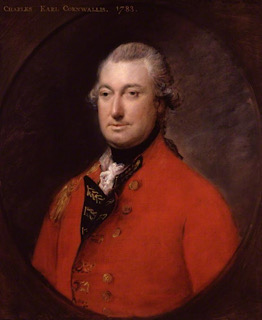
(Pictured: Charles Cornwallis, 1st Marquess Cornwallis)

Leave a comment

Birth of French General Jean Joseph Amable Humbert

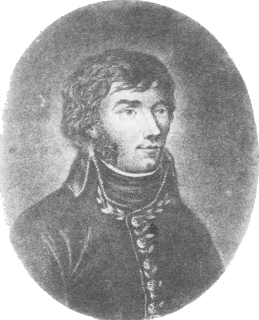
General Jean Joseph Amable Humbert, a French soldier and participant in the French Revolution, and who leads a failed invasion of Ireland to assist Irish rebels in the Irish Rebellion of 1798, is born on August 22, 1767, in the townland of La Coâre Saint-Nabord, outside Remiremont in the Vosges department of northeastern France.

Humbert is the eldest of six children of Jean-Joseph Humbert, a farmer and trader, and Catherine (née Privat), who dies when he is three years old. From a modest rural background, he works briefly as a hatter and rabbit hunter before entering the military in July 1789 amid the early stages of the French Revolution.

Humbert joins the National Guard of Lyon and quickly advances, serving in the 13th Battalion of Volunteers of the Vosges. By 1792, he is promoted to captain, then lieutenant-colonel. His combat record includes service under General Lazare Hoche in the Army of the Rhine and Moselle, where he gains a reputation for bravery and guerrilla tactics.

In 1796, Humbert is assigned to prepare for an expedition to Ireland. In the ill-fated Expédition d’Irlande, his ship Droits de l’Homme is wrecked off the Bay of Audierne in January 1797, but he survives. In 1798, he leads about 1,000 French troops to Ireland, landing at Killala. His forces fight and win at Ballina and the Races of Castlebar, proclaiming a Republic of Connacht before being defeated and captured at the Battle of Ballinamuck. He is exchanged for British prisoners.

Humbert continues to serve in the French Revolutionary and Napoleonic armies, participating in the Swiss campaigns, the Saint-Domingue expedition, and the Argentine War of Independence. He also engages in filibustering ventures against Spanish holdings in Texas, Mexico, and Buenos Aires.

In 1810, Humbert emigrates to New Orleans, where he becomes acquainted with French pirate Jean Lafitte. He joins the Buenos Aires rebellion in 1814 before returning home. In 1815, he fights the British at the Battle of New Orleans in the War of 1812, earning thanks from General Andrew Jackson. He later lives as a schoolteacher in New Orleans until his death on January 3, 1823.

Humbert’s career spans revolutionary France, Napoleonic campaigns, and post-Napoleonic adventures, making him a notable figure in late 18th- and early 19th-century military history.