seamus dubhghaill

Promoting Irish Culture and History from Little Rock, Arkansas, USA


Leave a comment

King Henry VIII Marries Anne Bolen

henry-viii-anne-bolen

England’s King Henry VIII, Lord of Ireland and self-declared King of Ireland, marries Anne Boleyn on January 25, 1533, after a secret marriage November 14, 1532. On May 23, 1533, Thomas Cranmer, Archbishop of Canterbury, declares Henry’s first marriage to Catherine of Aragon to be null and void. Five days later, he declares Henry and Anne’s marriage to be valid.

Soon thereafter, Pope Clement VII, who had refused to annul the marriage of Henry and Anne, decrees sentences of excommunication against Henry and Cranmer. As a result of this marriage and these excommunications, the first break between the Church of England and Rome takes place and the Church of England is brought under the King’s control.

Anne is crowned Queen of England on June 1, 1533, and on September 7, she gives birth to a daughter who is christened Elizabeth, in honour of Henry’s mother, Elizabeth of York, and who becomes the future Queen Elizabeth I. Henry is disappointed to have a daughter rather than a son but hopes a son will follow and professes to love Elizabeth.

The king and queen are not pleased with married life. The royal couple enjoys periods of calm and affection but Anne refuses to play the submissive role expected of her. Henry dislikes Anne’s constant irritability and violent temper. After a miscarriage in 1534, Henry sees her failure to give him a son as a betrayal. As early as Christmas 1534, Henry is discussing with Archbishop Cranmer and Thomas Cromwell, his chief minister, the chances of leaving Anne without having to return to Catherine.

In January 1536, the Henry is thrown from his horse in a tournament and is badly injured. It seems for a time that the king’s life was in danger. When news of this accident reaches the queen, who is again pregnant and aware of the consequences if she fails to give birth to a son, she is sent into shock and miscarries a male child that is about 15 weeks old. This is seen by most historians as the beginning of the end of the royal marriage.

Anne’s downfall comes shortly after she has recovered from her miscarriage. Henry has Anne investigated for high treason in April 1536. On May 2, she is arrested and sent to the Tower of London where she is tried before a jury of peers, which includes Henry Percy, her first husband, and her own uncle, Thomas Howard. Anne is found guilty on May 15 and is beheaded on Tower Green at 8:00 AM on May 19, 1536, at the age of 36.


Leave a comment

Death of Irish Songwriter Percy French

percy-french

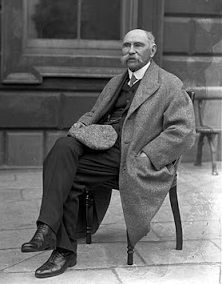
Percy French, one of Ireland’s foremost songwriters and entertainers of his day, dies of pneumonia in Formby, England, on January 24, 1920.

French is born at Cloonyquin House, near Tulsk, County Roscommon. He is educated at Foyle College, Derry, and writes his first successful song, Abdul Abulbul Amir, while studying at Trinity College Dublin in 1877. The song is sold for £5 to an unscrupulous publisher and later becomes hugely popular and is falsely claimed by other authors.

He graduates from Trinity as a civil engineer in 1881 and joins the Board of Works in County Cavan as an “Inspector of Drains.” It is said that he writes his best songs during this period. French is also a prolific painter of landscape watercolours and during this period he considers art to be his true vocation. When he becomes well-known later in his life, his paintings from his time as a civil engineer become fashionable and sought after.

When the Board of Works reduces its staff around 1887, French turns to journalism as the editor of The Jarvey, a weekly comic paper. Upon the failure of the paper, he embarks on a long and successful career as a songwriter and entertainer. It is around this time that he marries Ethel Kathleen Armitage-Moore, second daughter of William Armytage-Moore, brother of Countess of Annesley. Tragically, at the age of 20, she dies during childbirth along with her daughter.

percy-french-statue

French becomes renowned for composing and singing comic songs and gains considerable distinction with such songs as Phil the Fluther’s Ball, Slattery’s Mounted Foot, and The Mountains of Mourne. One of his most famous songs is Are Ye Right There Michael, a song that ridicules the state of the rail system in rural County Clare. The song causes such embarrassment to the rail company that it lead to an ultimately unsuccessful libel action against French. It is said that he arrives late for the libel hearing and, when questioned by the judge on his lateness, he responds, “Your honour, I travelled by the West Clare Railway,” which results in the case being thrown out.

French takes ill while performing in Glasgow and dies of pneumonia on January 24, 1920, at the age of 65 at the home of his cousin, Canon Richardson of Green Lea, in Formby. He is buried in the churchyard of St. Luke’s Parish Church, Formby in Merseyside. A statue of him sitting on a park bench can be found in the town center of Ballyjamesduff in honour of him and his famous song, Come Back Paddy Reilly to Ballyjamesduff.


Leave a comment

Van Morrison Inducted Into Rock & Roll Hall of Fame

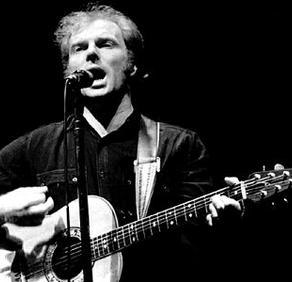
van-morrisonVan Morrison, known as “Van the Man” to his fans, is inducted into the Rock and Roll Hall of Fame in Cleveland, Ohio, on January 23, 1993.

Born George Ivan Morrison in Belfast in 1945, Morrison has received six Grammy Awards (1996-2007), the 1994 Brit Award for Outstanding Contribution to Music, and has been inducted into the Irish Music Hall of Fame (September 1999) and the Songwriters Hall of Fame (June 2003). In 2015 he is knighted by Queen Elizabeth II for his musical achievements and his services to tourism and charitable causes in Northern Ireland.

Morrison’s influence can readily be heard in the music of a diverse array of major artists and according to The Rolling Stone’s Encyclopedia of Rock and Roll, “his influence among rock singers/song writers is unrivaled by any living artist outside of that other prickly legend, Bob Dylan. Echoes of Morrison’s rugged literateness and his gruff, feverish emotive vocals can be heard in latter day icons ranging from Bruce Springsteen to Elvis Costello.”

Morrison is inducted into the Hall along with luminaries Ruth Brown, Cream, Creedence Clearwater Revival, The Doors, Frankie Lymon & The Teenagers, and Etta James. In his induction speech of Morrison, the Band’s Robbie Robertson says, “In the tradition of the great Irish poets and the great soul singers, he is the Caruso of rock and roll.” Morrison becomes notable as the first living inductee into the Rock and Roll Hall of Fame not to attend his own ceremony. Robertson accepts the award on Morrison’s behalf.

This “Caruso of rock and roll” and magnificent songwriter is also one of the most curmudgeonly live performers in rock and roll history. The satirical Onion newspaper writes of him, “Morrison deserves a spot in the Rock Hall based on his record-breaking streak of 4,256 consecutive shows performed without cracking a smile.”


Leave a comment

Death of Lily Kempson, Last Survivor of the Rising

lily-kempson

Lily Kempson, aged 99, the last surviving participant in the 1916 Easter Rising, dies in Seattle, Washington, on January 22, 1996. Born into the ranks of Dublin’s poor, Elizabeth Ann `Lily’ Kempson shares two rooms with her 92-year-old grandmother, her parents, and eight siblings.

Early on the morning of April 24, 1916, Lily dresses quietly so as to not disturb the other family members. Leaving undetected, Lily never returns home.

When Lily arrives at Liberty Hall, preparations for the Rising are already well underway. Weeks earlier Constance Markievicz and other women members of the Citizens Army, perhaps Lily amongst them, had stacked grenades and ammunition in the basement. Now this weaponry, already dispersed throughout the city, is to be used to defend the proclamation of an Irish Republic.

The initial plan for women to primarily take care of the wounded is scrapped. Attached to the Red Cross unit, Lily Kempson and her female comrades are swiftly incorporated within the main body of the fight. Lily is armed with a revolver. A handful of women, who have already played a key role in securing access to St. Stephens Green, set about evacuating civilians and guarding the gates. The insurgents dig in but they were unable to secure surrounding buildings because of a chronic shortage of personnel.

As dawn breaks on Tuesday morning, Lily is awakened by the rattle of machine gun fire. The British have occupied the Shelbourne, a hotel overlooking the park. The insurgents hold the Green for less than twenty hours. Throughout the week-long siege of Dublin, Kempson acts as a courier for Patrick Pearse and the other men inside the General Post Office (GPO).

The superior firepower of the British and the strategic advantage of the Shelbourne make evacuation of the park as inevitable as it is urgent. A line of retreat has been secured. In an advance party of three men and three women, Lily Kempson accompanies Constance Markievicz and Mary Hyland to seize the College of Surgeons, a sturdy building overlooking the north of the Green. It is here the Green’s contingent makes their heroic last stand, holding the ground for five days. They surrendered only after receiving a dispatch directly from the General Post Office. As their contingent prepares to surrender, Lily is chosen to carry the garrison’s last dispatches to addresses throughout the city.

In the immediate aftermath of The Rising, the Kempsons’ Dublin home is raided by the British army, but Lily is not to be found. Lily makes the decision to leave Ireland when her name appears on a British list of wanted suspects. Using her sister’s passport, she travels to England and boards a ship to New York. From New York, she then sails on to Seattle where she meets and marries a fellow Irishman, Matt McAlerney. They have seven children, 34 grandchildren, and 116 great-grandchildren by the time Lily passes away.

In her final years she attracts the attention of the local American press. Each Easter she briefly becomes a celebrity as her story of being the last survivor is retold.


Leave a comment

Sinking of the RMS Tayleur

rms-tayleurThe RMS Tayleur, a full rigged iron clipper ship, sinks on January 21, 1854 while on her maiden voyage. Many people know the fate of the RMS Titanic but history forgets that she is not the first ship of the White Star Line to sink on its maiden voyage.

With a length of 230 feet and a 40-foot beam, the Tayleur is launched in Warrington, England on the River Mersey on October 4, 1853. She is named after Charles Tayleur, founder of the Vulcan Engineering Works, Bank Quay, Warrington. The ship is chartered by White Star Line to serve the booming Australian trade routes, as transport to and from the colony is in high demand due to the discovery of gold.

On January 19, 1854 the Tayleur leaves Liverpool bound for Australia with a cargo of Irish and English immigrants totaling 652 passengers and crew. Because of a faulty compass, the crew, thinking they are sailing south, actually turn the ship to the west and head toward Ireland by mistake.

The Tayleur finds herself in a storm on January 21 and being blown towards Lambay Island off Dublin. Despite dropping both anchors as soon as the rocks are sighted, she runs aground on the east coast of the island, about five miles from Dublin Bay. Initially, attempts are made to lower the ship’s lifeboats, but when the first one is smashed on the rocks, launching further boats is deemed unsafe. Tayleur is so close to land that the crew is able to collapse a mast onto the shore, and some people aboard are able to jump onto land by clambering along the collapsed mast.

With the storm and high seas continuing, the ship is then washed into deeper water and sinks to the bottom with only the tops of her masts above the surface of the sea. Tragically, of the more than 650 aboard, only 290 survive. Hundreds of poor Irish immigrants die within sight of their native home.

The ship has been described as the “First Titanic” but is largely overlooked by history perhaps due to the lack of “prominent” members of society onboard the doomed vessel.

During the inquiry that follows the tragedy, it is determined that her crew of 71 has only 37 trained seamen amongst them, and of these, ten could not speak English. It is reported in newspaper accounts that many of the crew were seeking free passage to Australia. Most of the crew survive.


2 Comments

Don Hugo O’Conor Named Commandant Inspector of New Spain

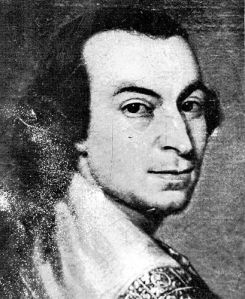
don-hugo-oconorDon Hugo O’Conor is named Commandant Inspector of New Spain on January 20, 1773. O’Conor, a descendant of king of Ireland Turlough Mor O’Conor, is born in 1732 in Ireland but is raised in Spain. The O’Conor family is also related to two officers in the Spanish army, Colonel Don Domingo O’Reilly and Field Marshal Alejandro O’Reilly. Originally, it is believed that the family name is most likely spelled “O’Connor” but is changed as the result of frequent misspellings by Spanish speakers.

In 1751, O’Conor follows his two cousins to Spain where they are already serving as officers in the Spanish Royal Army. He immediately joins the Regiment of Hibernia.

O’Conor serves in Spain’s war against Portugal in the early 1760’s and is then sent to the New World, serving in Cuba under his cousin, Field Marshal O’Reilly. O’Conor rises steadily through the ranks and in 1763 is made a knight of the Order of Calatrava.

In 1765, O’Conor is transferred to Mexico and serves on the staff of Don Juan de Villalba and shortly thereafter, to temporarily command the northern presidio of San Sabá. He goes to Texas to investigate a dispute around San Agustín de Ahumada Presidio between Governor Ángel de Martos y Navarrete and Rafael Martínez Pacheco, a future governor of Texas. During this time he obtains the title of inspector general of the Provincias Internas. In 1767, he is appointed governor of Texas, replacing Martos y Navarrete. When he takes office, he finds that one of its major cities, San Antonio, is shattered by frequent attacks of several Indian tribes. As a result, the new governor set up a garrison at Los Adaes to protect the city.

In 1771, O’Conor becomes the commander of the Chihuahua frontier and on January 20, 1773 is appointed Commandant Inspector of New Spain. Utilizing a system of frontier presidios, O’Conor fights a constant battle with numerous Indian tribes, primarily the Apaches, while helping reorganize and unify New Spain’s northern borders. He becomes the founding father of the city of Tucson, Arizona when he authorizes the construction of a military fort in that location in 1775.

In October 1776, O’Conor returns from the frontier and is appointed governor of the Yucatán, however at his station in Mérida his health begins to fail. On March 8, 1779, Don Hugo O’Conor dies at Quinta de Miraflores, just east of Mérida. O’Conor is only 44-years-old when he dies but has already risen to the rank of brigadier general. Had he lived to old age, Don Hugo O’Conor may well have risen to the highest ranks of Spain’s army or government.


Leave a comment

Birth of Mother Mary Frances Aikenhead

mary-aikenhead

Mother Mary Frances Aikenhead, founder of the Catholic religious institute, the Religious Sisters of Charity, and of St. Vincent’s Hospital in Dublin, is born in Daunt’s Square off Grand Parade, County Cork, on January 19, 1787.

Aikenhead is baptised in the Anglican Communion on April 4, 1787. Since she is quite frail and possibly asthmatic, it was recommended that she be fostered with a nanny named Mary Rourke who lives on higher ground on Eason’s Hill, Shandon, Cork. It is believed that she is secretly baptised a Catholic by Mary Rourke, who is a devout Catholic. Aikenhead’s parents visit every week until 1793 when her father, Dr. David Aikenhead, decides he wants her to rejoin the family in Daunt’s Square.

By the early 1790s, Aikenhead’s father has become imbibed by the principles of the United Irishmen. On one occasion Lord Edward FitzGerald, disguised as a Quaker, seeks refuge in the Aikenhead home. He is enjoying dinner with the family when the house is surrounded by troops. Fitzgerald manages to slip away but the house is searched but no incriminating documents are found.

On June 6, 1802, at age of fifteen, Aikenhead is officially baptised a Roman Catholic. In 1808, she goes to stay with her friend Anne O’Brien in Dublin. Here she witnesses widespread unemployment and poverty and soon begins to accompany her friend in visiting the poor and sick in their homes. After many years in charity work and feeling the call to religious life, she looks in vain for a religious institute devoted to outside charitable work.

Aikenhead is chosen by Archbishop Murray, Bishop Coadjutor of Dublin, to carry out his plan of founding a congregation of the Sisters of Charity in Ireland. From 1812 – 1815 she is a novitiate in the Convent of the Institute of the Blessed Virgin at Micklegate Bar, York. It is there she assumes the name Sister Mary Augustine, which she keeps for the rest of her life.

On September 1, 1815, the initial members of the Convent of the Institute take their vows and Sister Mary Augustine is appointed Superior-General. The following sixteen years are filled with arduous work – organizing the community and extending its sphere of labor to every phase of charity, chiefly hospital and rescue work.

In 1831, overexertion and disease take a toll Sister Mary Augustine’s health, leaving her an invalid. Her activity is unceasing, however, as she directs her sisters in their work during the plague of 1832, places them in charge of new institutions, and sends them on missions to France and Australia. She also founds St. Margaret’s Hospice, which has been known as St. Margaret of Scotland Hospice since 1950.

Sister Mary Augustine dies in Dublin on July 22, 1858 at 71 years of age. She leaves her institute in a flourishing condition, in charge of ten institutions, besides innumerable missions and branches of charitable work. She is buried in the cemetery adjacent to St. Mary Magdalen’s, Donnybrook.


Leave a comment

First Meeting of Oscar Wilde & Walt Whitman

walt-whitman-oscar-wilde

On January 18, 1882, while on a successful speaking tour of the United States, the 27-year-old Irish playwright, Oscar Wilde, newly famous at home and abroad, visits 62-year-old poet Walt Whitman at Whitman’s home in Camden, New Jersey, at 431 Stevens Street, a building that no longer exists.

Wilde’s mother purchases a copy of Whitman’s Leaves of Grass in 1866 and reads passages to him when he is a child. It is not surprising, therefore, that Wilde seeks out Whitman when he has the opportunity to visit the United States. Wilde, through his friend and publisher in Philadelphia, Joseph Marshall Stoddart, requests that Whitman meet them for dinner in Philadelphia on the afternoon of Saturday, January 14. The ailing Whitman is not well enough to make the crossing of the Delaware River to Philadelphia. The meeting is then arranged to take place at Whitman’s home.

On Wednesday, January 18, after giving his lecture in Philadelphia the previous evening, Wilde travels by ferryboat across the river to visit Whitman. The two poets spend two hours together in a pleasant discussion over wine and milk punch.

Wilde is known to speak publicly about their meeting only once, in an interview with the Boston Herald about ten days after the meeting. He says, “I spent the most charming day I have spent in America. He is the grandest man I have ever seen. The simplest, most natural, and strongest character I have ever met in my life. I regard him as one of those wonderful, large, entire men who might have lived in any age, and is not peculiar to any one people. Strong, true, and perfectly sane: the closest approach to the Greek we have yet had in modern times. Probably he is dreadfully misunderstood.”

Wilde and Whitman meet for a second time in early May. Due to so little being known about the visits, some biographers incorrectly speculate that the two poets are estranged. However, Whitman sends Wilde an inscribed copy of November Boughs in 1888. This is sold a decade later when Wilde’s library is liquidated for debts while he is in prison after being found guilty of “gross indecency with men.”

Whitman always defends Wilde against the accusations of his detractors. “Wilde was very friendly to me – was and is, I think – both Oscar and his mother – Lady Wilde – and thanks be most to the mother, that greater, and more important individual. Oscar was here – came to see me – and he impressed me a strong, able fellow, too.”


Leave a comment

Birth of Dr. Douglas Hyde, First President of Ireland

douglas-hyde

Dr. Douglas Hyde, Gaelic scholar and the first President of Ireland, is born at Longford House in Castlerea, County Roscommon, on January 17, 1860. In 1867, his father is appointed prebendary and rector of Tibohine, and the family moves to neighbouring Frenchpark, in County Roscommon. He is home schooled by his father and his aunt due to a childhood illness. While a young man, he becomes fascinated with hearing the old people in the locality speak the Irish language.

Rejecting family pressure to follow previous generations with a career in the Church, Hyde instead becomes an academic. He enters Trinity College, Dublin, where he gains a great facility for languages, learning Latin, Greek, Hebrew, French, and German, but his great passion in life is the preservation of the Irish language.

After spending a year teaching modern languages in Canada, Hyde returns to Ireland. For much of the rest of his life he writes and collects hundreds of stories, poems, and folktales in Irish, and translates others. His work in Irish helps to inspire many other literary writers, such as W.B. Yeats and Lady Gregory.

In 1892, Hyde helps establish the Gaelic Journal and in November of that year writes a manifesto called The necessity for de-anglicising the Irish nation, arguing that Ireland should follow her own traditions in language, literature, and even in dress.

In 1893, Hyde founds the Gaelic League (Conradh na Gaeilge) along with Eoin MacNeill and Fr. Eugene O’Growney and serves as its first president. Many of the new generation of Irish leaders who play a central role in the fight for Irish independence in the early twentieth century, including Patrick Pearse, Éamon de Valera, Michael Collins, and Ernest Blythe first become politicised and passionate about Irish independence through their involvement in the Gaelic League. Hyde does not want the Gaelic League to be a political entity, so when the surge of Irish nationalism that the Gaelic League helps to foster begins to take control of many in the League and politicize it in 1915, Hyde resigns as president.

Hyde takes no active part in the armed upheaval of the 1910s and 1920s, but does serve in Seanad Éireann, the upper house of the Irish Free State’s Oireachtas, as a Free State senator in 1925-26. He then returns to academia, as Professor of Irish at University College Dublin, where one of his students is future Attorney General and President of Ireland Cearbhall Ó Dálaigh.

In 1938, Hyde is unanimously elected to the newly created position of President of Ireland, a post he holds until 1945. Hyde is inaugurated on June 26, 1938, in the first inaugural ceremony in the nation’s history. Despite being placed in a position to shape the office of the presidency via precedent, Hyde by and large opts for a quiet, conservative interpretation of the office. In April 1940 he suffers a massive stroke and plans are made for his lying-in-state and state funeral, but to the surprise of everyone he survives, albeit paralysed and confined to a wheelchair. One of Hyde’s last presidential acts is a visit to the German ambassador Eduard Hempel on May 3, 1945 to offer his condolences on the death of Adolf Hitler, a visit which remains a secret until 2005.

Hyde leaves office on June 25, 1945, opting not to nominate himself for a second term. He opts not return to his Roscommon home due to his ill-health, but rather moves into the former Secretary to the Lord Lieutenant’s residence in the grounds of Áras an Uachtaráin, where he lived out the remaining four years of his life.

Hyde dies in Dublin on July 12, 1949 at age 89. As a former President of Ireland he is accorded a state funeral which, as a member of the Church of Ireland, takes place in Dublin’s Church of Ireland St. Patrick’s Cathedral. Since contemporary rules of the Roman Catholic Church in Ireland at the time prohibit Roman Catholics from attending services in non-Catholic churches, all but one member of the Catholic cabinet remain outside the cathedral grounds while Hyde’s funeral takes place. Hyde is buried in Frenchpark, County Roscommon at Portahard Church.


Leave a comment

Michael Collins Accepts Control of Dublin Castle

michael-collins-castle-handoverMichael Collins, the Chairman of the Provisional Government of Ireland created under the Anglo-Irish Treaty, accepts control of Dublin Castle from Lord Lieutenant Edmund Bernard FitzAlan-Howard on January 16, 1922.

Once the Treaty is signed and ratified by Dail Eireann on January 7, the British quickly prepare to leave the Irish Free State and hand over this sprawling monument to British rule in Ireland. The new rulers of Ireland are advised to be ready to take over Dublin Castle in mid-January. The turn over symbolizes the end of British rule in Ireland, although the Irish Free State remains part of the Commonwealth until 1949.

Dublin Castle is first founded as a major defensive work by Meiler Fitzhenry on the orders of King John of England in 1204 and is largely complete by 1230. For centuries Ireland has been governed from “The Castle.” Everything British that moves and has its being in Ireland has emanated from the Castle.

It was from the Bermingham Tower in the Castle that the legendary escape of Red Hugh O’Donnell and Art O’Neill takes place in January 1592. Art O’Neill perishes in the Dublin Mountains but O’Donnell manages to make his way to the sanctuary of the O’Byrnes in Glenmalure, County Wicklow.

Just over two hundred years later, in 1907, the Insignia of the Order of St.Patrick, known as the Irish Crown Jewels, are stolen from the Bedford Tower in an audacious robbery that has never been solved.

The Castle could have fallen during the upheavals of 1641 but it did not succumb to rebel control. Robert Emmett could have taken it in 1803 but failed to do so. The Castle was even more vulnerable during the 1916 Easter Rising but the Volunteers failed to capitalize on it.

Considering the 700-year history of the Castle, Michael Collins, dressed impressively in his military uniform, must have savoured the moment when his staff car drives into the precincts of the complex of buildings whose fabric he has successfully managed to infiltrate during the Anglo-Irish war while, all the while managing to keep himself out of the clutches of its more sinister and homicidal operatives.

When Collins steps out of his staff car at the Castle, Lord Lieutenant FitzAlan-Howard is reported to say, “You are seven minutes late, Mr. Collins” to which Collins replies, “We’ve been waiting over seven hundred years, you can have the extra seven minutes.”