The foundation of Cliftonville F.C. is announced on September 20, 1879 in notices in the Belfast News Letter and Northern Whig, which asks “gentlemen desirous of becoming members” of the “Cliftonville Association Football Club (Scottish Association Rules)” to communicate with John McAlery, a young Belfast businessman and manager of the “Irish Tweed House”, Royal Avenue, and later with premises in Rosemary Street, or R.M. Kennedy, and advertising an “opening practice today at 3:30.”
Only one week after the advertisement is published, Cliftonville plays its first recorded game at Cliftonville Cricket Ground on September 29, 1879, against a selection of rugby players known as Quidnunces. The newly formed club, however, is beaten 2–1. In its first match against the Scottish club Caledonian, it fares worse, suffering a 1–9 defeat.
In 1880, it is again John McAlery who is the moving spirit in the formation of the Irish Football Association. He issues an invitation to interested parties in Belfast and district for a meeting to be called. The first meeting takes place on November 18, 1880, at Queen’s Hotel, Belfast, presided over by John Sinclair, from which the Irish Football Association is formed. While Lord Spencer Chichester is appointed president, McAlery becomes the honorary secretary of the association. This meeting also paves the way for the Irish Cup.
The first Irish Cup final, played at Cliftonville on April 9, 1881, sees a 1–0 defeat against Moyola Park F.C., an opponent that is well known for “rough and brutal play.” In the following year Cliftonville loses again in the Irish Cup final, 1–0 against Queen’s Island F.C. In 1883 Cliftonville wins the cup for the first time with a 5–0 win over Ulster F.C.
The club celebrates its 142nd anniversary in September 2021.
The following year, Doherty comes very close to breaking the Crucible curse, which refers to the fact that every first-time snooker world champion has failed to retain the title the following year. He reaches the final of the 1998 World Snooker Championship where he loses out to John Higgins of Scotland. He reaches his third final at the 2003 World Snooker Championship but is narrowly defeated by Mark Williams of Wales. In other Triple Crown events, he is a three-time UK Championship runner-up (1994, 2001, 2002) and a two-time Masters runner-up (1999, 2000).
An intelligent tactician and prolific break-builder, Doherty has compiled more than 300 century breaks in professional competition. Since 2009, he has combined his playing career with commentating and punditry work.
Doherty currently represents an Irish poker site, appearing on radio commercials, and regularly playing in tournaments, where the players on the site receive a bonus for knocking him out.
In partnership with Sean Francis O’Donoghue and Karl Leon Paul, Doherty set up an online cue sports equipment-marketing company.
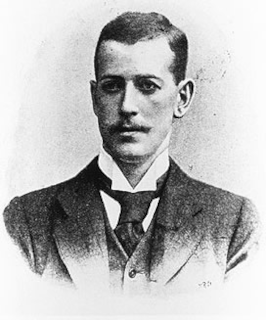
Boland is born to Patrick Boland (1840–1877), businessman, and Mary Donnelly. Following the death of his mother in 1882, he is placed with his six siblings under the guardianship of his uncle Nicholas Donnelly, auxiliary bishop of Dublin.
Boland is educated at two private Catholic schools, one Irish, the second English, and both of whose existence and evolution are influenced by John Henry Newman – the Catholic University School, Dublin, and The Oratory School, Birmingham. His secondary education at the two schools helps give him the foundation and understanding to play an influential role in the politics of Great Britain and Ireland at the beginning of the 20th century, when he is a member of the Irish Parliamentary Party which pursues constitutional Home Rule.
In 1892 Boland graduates with a BA from London University. He studies for a semester in Bonn, Germany, where he is a member of Bavaria Bonn, a student fraternity that is member of the Cartellverband. He studies law at Christ Church, Oxford, graduating with a BA in 1896 and MA in 1901. Although called to the Bar in 1897, he never practises.
Boland is the first Olympic champion in tennis for Great Britain and Ireland at the first modern Olympics, which takes place in Athens in 1896. He visits his friend Thrasyvoulos Manos in Athens during the Olympics, and Manos, a member of the organising committee, enters Boland in the tennis tournament. Boland promptly wins the singles tournament, defeating Friedrich Traun of Germany in the first round, Evangelos Rallis of Greece in the second, Konstantinos Paspatis of Greece in the semifinals, and Dionysios Kasdaglis of Greece in the final.
Boland then enters the doubles event with Traun, the German runner whom he had defeated in the first round of the singles. Together, they win the doubles event. They defeat Aristidis and Konstantinos Akratopoulos of Greece in the first round, have a bye in the semifinals, and defeat Demetrios Petrokokkinos of Greece and Dimitrios Kasdaglis in the final. When the Union Flag and the German flag are run up the flagpole to honour Boland and Traun’s victory, Boland points out to the man hoisting the flags that he is Irish, adding “It’s a gold harp on a green ground, we hope.” The officials agree to have an Irish flag prepared.
Following a visit to Kerry, Boland becomes concerned about the lack of literacy among the native population, as he also has a keen interest in the Irish language.
In 1908, Boland is appointed a member of the commission for the foundation of the National University of Ireland (NUI). From 1926 to 1947, he is General Secretary of the Catholic Truth Society. He receives a papal knighthood, becoming a Knight of St. Gregory in recognition for his work in education, and in 1950 he is awarded an honorary doctorate of Laws by the NUI.
Boland marries Eileen Moloney (1876–1937), daughter of an Australian Dr. Patrick Moloney, at SS Peter and Edward, Palace-street, Westminster, on October 22, 1902. They have one son and five daughters. His daughter Honor Crowley (née Boland) succeeds her husband, Frederick Crowley, upon his death sitting as Fianna FáilTD for South Kerry from 1945 until her death in 1966. His daughter Bridget Boland is a playwright who writes The Prisoner.
Boland dies at the age of 87 at his home in London on Saint Patrick’s Day, March 17, 1958.
John Joseph “Rinty” Monaghan, world flyweightboxing champion from Belfast, is born on August 21, 1918. He becomes famous in the post-war period, eventually rising to become undisputed world champion and a hero to many people in his home city.
Born in Lancaster Street in north Belfast, Monaghan attends St. Patrick’s Christian Brothers’ School in Donegall Street. A noted fighter at boys’ level, he entereds the paid ranks in his mid-teens. After a short period of wartime service, he resumes his career and his burgeoning reputation draws huge crowds from all parts of Belfast. In particular, bouts at Belfast’s King’s Hall are the highlight with that venue normally packed to the rafters.
In October 1947, the National Boxing Association world crown becomes Monaghan’s after outpointing American Salvador “Dado” Marino at Harringay Stadium for the vacant title. The mantle of undisputed champion of the world rests on his shoulders after he defeats the tough Scottish fighter Jackie Paterson on March 23, 1948. Paterson is to prove one of his major adversaries.
By the time that a long-standing chest complaint forces his retirement as champion in 1950, Monaghan’s trophy cabinet contains the British, European, Commonwealth and World crowns. Of the 66 official bouts he fights during his illustrious career, he wins 51, draws 6 and loses 9. He endears himself to his supporters after his fights by singing “When Irish Eyes Are Smiling” to the King’s Hall audience, which joins in the singing.
Monaghan’s nickname “Rinty” comes from his fondness for dogs. According to his daughter Martha, he brought home injured dogs so often that his grandmother called him Rin Tin Tin, after the film dog, and shortened it to Rinty.
Monaghan marries Frances Thompson in 1938 and moves to nearby Sailortown. He has three daughters, Martha, Rosetta and Collette, and one son, Sean. In later life he has a variety of jobs but remains true to his working-class roots and stays in Belfast. He dies at his home in Little Corporation St. on March 3, 1984, at the relatively young age of 65. He is buried in Belfast City Cemetery.
To mark the influence of this “home-town hero”, the Ulster History Circle and Belfast City Council provide a plaque in Monaghan’s honour at the King’s Hall that is unveiled, in the presence of many of his family circle and friends, on May 3, 2007.
Belfast City Council erects a statue to Monaghan at Cathedral Gardens on August 20, 2015. The 10-foot high bronze statue on a granite plinth is designed by Alan Beattie Herriot and features Monaghan holding a microphone and singing “When Irish Eyes Are Smiling.”
O’Sullivan first comes to prominence when winning the 1,500 metres at the 1991 Summer Universiade, before going on to finish fourth in the 3,000 metres final at the 1992 Summer Olympics in Barcelona. She then wins a silver medal in the 1,500 metres at the 1993 World Championships and a gold medal in the 5,000 metres at the 1995 World Championships. She is the favourite for the 5,000 metres title at the 1996 Summer Olympics in Atlanta but drops out of the final due to illness. Her 2,000 metres world record of 5:25.36, set in 1994, stands until 2017.
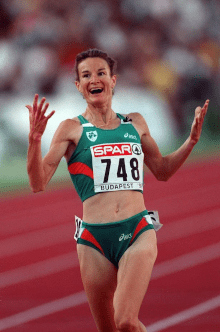
After a disappointing end to her 1997 season, O’Sullivan makes an impressive comeback in 1998. At the World Athletics Cross Country Championships at Marrakesh in March, she enters both the short course (4 km) and long course (8 km) events. On successive days, she wins both events, and her 4 km time of 12:20 is 14 seconds ahead of her nearest rival. She continues this form into the track season, where her performances in the 1,500 metres, 3,000 metres and 5,000 metres are close to those she had produced at her peak in 1994 and 1995.
At the European Athletics Championships in Budapest, the 1,500 metres and 5,000 metres finals, events at which O’Sullivan usually doubles at major championships, are scheduled to be run on the same day, thus denying her the opportunity of competing in both events. Undeterred, she enters the 5,000 metres and 10,000 metres, having never run the latter event before on the track. In the 10,000 metres final, on August 19, she shadows the leaders and then produces an astonishing 28.1 second final 200 metres to win the gold medal in 31:29.33 in her debut at the distance. Four days later, in the more familiar territory of the 5,000 metres, the pace is set by Romanian Gabriela Szabo, but again, O’Sullivan produces an explosive finishing sprint to defeat Szabo in 15:06.50.
At the IAAF World Cup held the following month in Johannesburg, South Africa, O’Sullivan wins her second major international 5,000 metres competition of the year, again sprinting clear of the opposition following a very slow pace. She concludes her year by winning the BupaGreat North Run.
At the 2000 Summer Olympics in Sydney, O’Sullivan wins a silver medal in the 5,000 metres. She wins silver medals in the 5,000 metres and 10,000 metres at the 2002 European Athletics Championships, and competes at her fourth Olympic Games in 2004. She is known for her dramatic kick, clocking 28-second final 200 metre splits in some of her races.
O’Sullivan is only one of two women (the other being Tirunesh Dibaba) who have won the short and long course World Cross Country title at the same championship (1998 in Marrakesh).
In 1987 Clarke plays collegiate golf at Wake Forest University in the United States. He is a junior member of Dungannon Golf Club, whose junior section also includes three others who are current PGA Golf Professionals: Alistair Cardwell, Barry Hamill and Gary Chambers. He represents his school, Royal School Dungannon, together with Cardwell and Chambers.
A stalwart of the European Tour since 1991, Clarke is no stranger to firsts. In the 1999 Smurfit European Open he becomes the first player on the European Tour to shoot 60 for a second time, having achieved it first in the 1992 European Monte Carlo Open. In 2002 he becomes the first player to win the English Open three times and in 2003 becomes the first player outside Tiger Woods to capture more than one World Golf Championships title.
Three weeks after the untimely death of his wife, Heather, to cancer in August 2006, Clarke is picked as one of the wild cards for the Ryder Cup at K Club. In an emotionally charged week he produces one of his most memorable performances, winning all three of his matches.
Clarke assures his place in history by earning a place in the renowned ‘Who’s Who‘ guide for 2008, and in 2005 he even appears on an Irish postage stamp. A difficult 2007, where he juggles looking after his two sons with his golf regime, sees him slip down the rankings, but he begins to find his form again in South Africa before the winter break.
In 2010 Clarke beats a world-class field in the J. P. McManus Invitational Pro-Am at Adare Manor in Ireland where he has a one-shot victory over Luke Donald. He secures his spot in the 139th Open Championship at the Old Course at St. Andrews by finishing second in the Barclays Scottish Open. He finishes 30th in the European Tour Race. He rounds off 2010 in great style with the announcement of his engagement to Alison Campbell.
In February 2015, Clarke is named as Europe’s Ryder Cup captain and dedicates the next 18 months to the role. Ultimately, Europe is beaten 17-11 by the United States at Hazeltine National Golf Club.
A dedicated worker for charity, Clarke sets up his own Darren Clarke Foundation, which not only helps further the development of junior golf in Ireland, but also now raises money for Breast Cancer Awareness.
Michelle Smith de Bruin, Irish swimmer who achieves notable success in the 1996 Summer Olympics in Atlanta, becoming Ireland’s most successful Olympian to date, is stripped of her Irish swimming records on July 16, 1999, for tampering with a urine sample.
Smith wins three gold medals and a bronze medal at the 1996 Summer Olympics in Atlanta, making her Ireland’s most decorated Olympian. There is controversy at the games due to her qualifying for the 400m freestyle event at the expense of the then world-record holder Janet Evans, an American swimmer who finishes ninth in the preliminary swims with only the top eight advancing. Smith does not submit her qualifying time for the 400m freestyle event before the July 5 deadline but does so two days later with the Irish Olympic officials insisting they had been given permission to submit the qualifying time after the deadline.
Smith applies for the event after she arrives in Atlanta. After she qualifies at the expense of Evans, the US Swimming Federation, supported by the German and Netherlands swimming teams, challenge a decision to allow Smith to compete but are unsuccessful. At a later conference, Evans highlights that accusations of Smith doping had been heard by her around poolside. Smith later receives an apology from Evans as her comments lead to Smith being treated poorly by U.S. media.
Two years after the 1996 Summer Olympics, FINA bans Smith for four years for tampering with her urine sample using alcohol. She appeals against the decision to the Court of Arbitration for Sport (CAS). Her case is heard by a panel of three experienced sports lawyers, including Michael BeloffQC. Unusually for a CAS hearing, Smith’s case is heard in public, at her own lawyer’s request. FINA submits evidence from Jordi Segura, head of the International Olympic Committee (IOC) accredited laboratory in Barcelona, which says she took androstenedione, a metabolic precursor of testosterone, in the previous 10 to 12 hours before being tested. The CAS upholds the ban.
Smith is 28 at the time, and the ban effectively ends her competitive swimming career. She is not stripped of her Olympic medals, as she had never tested positive for any banned substances.
Smith’s experiences at the CAS have an effect beyond her swimming career. It is there that she develops an interest in the law. After officially announcing her retirement from swimming in 1999, she returns to university, graduating from University College Dublin with a degree in law. In July 2005 she is conferred with the degree of Barrister at Law of King’s Inns, Dublin. While a student at the King’s Inns she wins the highly prestigious internal Brian WalshMoot Court competition. Her book, Transnational Litigation: Jurisdiction and Procedure, is published in 2008 by Thomson Round Hall.
Smith has always denied using illegal performance-enhancing drugs. In 1996, she releases her autobiography, Gold, co-written with Cathal Dervan. She lives in Kells, County Kilkenny with her husband, Erik de Bruin, and their two children.
Matt Connor, one of the most legendary Gaelic footballers of all time, is born in Walsh Island, County Offaly, on July 9, 1960. He plays with his local club Walsh Island and is a member of the Offaly senior inter-county team from 1978 until 1984 when he is seriously injured in a car crash, resulting in his needed use of a wheelchair.
In a six-year career with Offaly Connor scores a massive 13-142 and his performance in the 1980 All Ireland Senior Football Championship semi-final against Kerry when he scores 2-9 is regarded as one of the great individual performances.
Connor is a key player on the Offaly side that famously denies Kerry five-in-a-row in 1982 when he is joined by his brother Richie, who captains the side, and by his cousins Liam and Tomas, all from the small Walsh Island club just a couple of miles beyond Portarlington.
Connor is cruelly paralysed from the waist down following a car accident on Christmas Day 1984. He is only 24 years old at the time. Despite having his career cut short by injury, he remains heavily involved in Offaly GAA and serves as minor manager, senior selector and is also involved with the Irish international rules football team.
The Walsh Island native serves in TullamoreGarda station for many years and is remembered as one of the classiest forwards to ever have played the game. He retires following a 40-year career as a member of An Garda Síochána.
The Connor family has a long association with Laois through school, work and football. Connor is a regular in the press box in O’Connor Park which shares a facility with the wheelchair section and the VIP area. His older brother Richie is currently principal of Shanahoe National School and previously served as manager of the Laois and Offaly senior football teams.
In May 2020, the Irish Independent names Connor at number six in its “Top 20 footballers in Ireland over the past 50 years.”
Morrow makes his full international debut for Northern Ireland in May 1990 against Uruguay. He goes on to win 39 caps for his country from then until 1999.
Morrow becomes a semi-regular with Arsenal in 1992–93. He plays most of his matches in midfield, replacing the injured Paul Davis as Arsenal reaches the League Cup and FA Cup finals. He starts the League Cup final against Sheffield Wednesday. After falling behind to a John Harkes goal, Arsenal equalises through Paul Merson, and then Merson sets up Morrow to score the winner, which is also his first for the club. In the celebrations after the match, Arsenal skipper Tony Adams attempts to pick up Morrow and parade him on his shoulders, but Adams slips, and Morrow awkwardly hits the ground. He breaks his arm and has to be rushed to hospital.
As a result, Morrow misses the rest of that season, including the 1993 FA Cup Final, where Arsenal completes the Cup Double. Before the final kicks off, he receives his League Cup winners’ medal.
Morrow is fit enough by the start of the next season but plays only 13 matches, compared to 25 the previous season. One of those is the scene of an Arsenal triumph, the club’s 1994 European Cup Winners’ Cup Final win over Parma. In an Arsenal midfield depleted of John Jensen and David Hillier, he makes his first appearance in the competition that season partnering 20-year-old Ian Selley in central midfield as Arsenal beats Parma 1–0 with an Alan Smith goal.
Morrow nearly leaves the club in March 1994, following an approach from the Premier League‘s bottom club Swindon Town, but the transfer falls through and he signs a new contract with Arsenal, where he spends three more years.
Morrow goes on to play over 20 matches the following season, including a second Cup Winners’ Cup final, which Arsenal loses to Real Zaragoza. He scores his second Arsenal goal in the League Cup once again against Sheffield Wednesday, and scores his first Arsenal league goal in a 3–1 defeat at Blackburn Rovers, who win the Premier League that season. However, he never finds favour under new Arsenal boss Bruce Rioch, who only gives the Irishman five matches in 1995–96.
After the arrival of Arsène Wenger in 1996, Morrow is told he is surplus to requirements at Highbury, and he is loaned to Queens Park Rangers (QPR) in March 1997, the deal being made permanent that summer. He plays 85 games for Arsenal in total, scoring three goals.
At QPR, Morrow is initially a regular, but the club struggles, going from contenders for promotion to the Premiership to facing relegation to the Football League Second Division. Injuries to his shoulder ligaments ruled him out for most of the 1999–2000 season, and he loses his place in the side. He later has a loan spell at Peterborough United, but it does not become permanent, and he is released on a free transfer in the summer of 2001.
Struggling to find a club in the United Kingdom, Morrow moves to the United States to play for Major League Soccer (MLS) side Dallas Burn. He spends two seasons at Dallas, who rename themselves FC Dallas in 2004, before retiring because of a persistent neck injury.
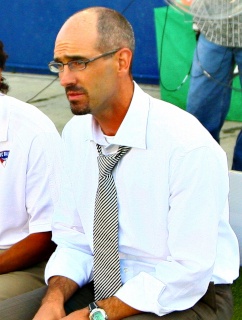
On February 3, 2004, Morrow is named as an assistant coach to FC Dallas but resigns in late May due to personal reasons. However, he returns to the club on January 27, 2005, under coach Colin Clarke. When Clarke is fired on November 7, 2006, Morrow is named interim head coach. On December 11, 2006, FC Dallas removes the ‘interim’ from his title. He is fired as coach on May 20, 2008.
On September 12, 2008, Morrow returns to Arsenal as International Partnerships – Performance Supervisor, managing Arsenal’s international partnerships, which includes the Colorado Rapids of Major League Soccer in the United States, BEC Tero of Thailand and Hoàng Anh Gia Lai of Vietnam, and assisting Arsenal’s academies in countries such as Egypt and Ghana. From 2014, he works as Arsenal’s head of youth development. He leaves Arsenal in 2019 following a coaching staff shake up.
On May 7, 2021, Morrow is appointed The FA’s head of player selection and talent strategy working across England men’s teams.
Brady heads home the only goal of the match as Ireland seals progress after finishing third in Group E with four points. The victory sets up a round-of-16 meeting with Euro 2016 host France in Lyon, their first meeting since the controversial 2010 FIFA World Cup qualifier that saw them controversially defeated as the result of a Thierry Henry handball.
Ireland had been unfortunate to draw their opener against Sweden and, while they then suffered a sobering 3-0 loss to Belgium, they do not appear to have suffered a loss of confidence against the Azzurri. Ireland goes into the match against Italy knowing only a win will secure progress but they are given hope when Italy manager Antonio Conte, who is already certain of top spot, makes eight changes to the side that defeated Sweden.
Jeff Hendrick sends a fierce drive just wide from outside the box on nine minutes, while Daryl Murphy‘s header brings a fingertip save from Salvatore Sirigu midway through the half. It is not until six minutes before the break that Italy shows any sort of threat, with Ciro Immobile swiveling before steering a shot wide. Ireland then sees a penalty appeal rejected when James McClean goes down under pressure from Federico Bernardeschi.
Ireland continues to press for a winner in the second half, but Simone Zaza provides a reminder of Italy’s quality on 53 minutes with a superb volley on the turn from Mattia De Sciglio‘s cross that sails just over the bar. At the other end, Ireland continues to make chances but finds it difficult to break through a stubborn Italy defence. With just over an hour gone Hendrick does make space for a shot in the area, but his shot is wayward.
Conte brings on Lorenzo Insigne for Immobile on 73 minutes and the Napoli forward nearly breaks the deadlock shortly afterwards, curling a shot against the far post after a driving run toward goal in similar fashion to Éder‘s late winner against Sweden.
Ireland then has a golden opportunity to break the deadlock when substitute Wes Hoolahan goes clean through on goal, but he scuffs his shot and Sirigu is able to gather at the second attempt. A minute later, they make the breakthrough. Hoolahan sends in the cross for his Norwich City teammate Brady, who is allowed the space to head past Sirigu and send Ireland into the next round.
Italy, who faces reigning champions Spain in the round-of-16, hopes for a much improved performance when their regular starters return to action.
In the round-of-16 match against France, Ireland takes the lead in the match with an early penalty from Robbie Brady, but France goes on to win 2–1 to advance to the quarter-finals
(From: “Republic of Ireland beat Italy to reach round of 16” by ESPN staff, http://www.espn.com, June 22, 2016)






 seamus dubhghaill