seamus dubhghaill

Promoting Irish Culture and History from Little Rock, Arkansas, USA


Leave a comment

The Fall of the Norse Kingdom of Dublin

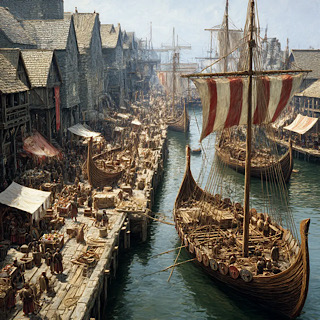
On September 21, 1170, the Kingdom of Dublin, a Norse-Gaelic stronghold established by Viking settlers in the 9th century, falls to a combined force of Diarmait Mac Murchada (Dermot MacMurrough), the deposed King of Leinster, and Norman mercenaries led by Richard de Clare, 2nd Earl of Pembroke (“Strongbow”).

In 1167, MacMurrough is ousted from Leinster by the High King of Ireland, Ruaidrí Ua Conchobair, and seeks help from King Henry II of England to regain his throne. In 1169, Strongbow lands in Ireland with Anglo-Norman and Cambro-Norman troops, initially capturing Wexford and Waterford. Dublin is a key Norse-Gaelic power center and a major trading hub, making it a prime objective for Norman expansion.

After securing Wexford and Waterford, MacMurrough and Strongbow march on Dublin, bypassing an Irish force under Ruaidrí Ua Conchobair positioned south of the city. They take a northern route, attacking from an unexpected direction, catching the defenders off guard. The assault is swift and decisive, leading to the capture of Dublin.

Ascall mac Ragnaill, King of Dublin, and many Norse inhabitants flee by sea to the Hebrides or the Isle of Man. The fall marks the effective end of centuries of Norse political dominance in Ireland.

Dublin becomes a Norman stronghold, facilitating further expansion into Ireland and setting the stage for Henry II’s 1171 invasion to assert English control. The conquest introduces Norman feudalism, chivalry, and Roman Catholicism to Ireland, altering its political, cultural, and religious landscape for centuries.

This event is a turning point in Irish history, symbolizing the close of the Viking era and the dawn of Norman influence on the island.

2 Comments

Viking Settlement That Becomes Dublin is Founded

founding-of-dublin

A Viking settlement that would later become the city of Dublin is founded on the banks of the River Liffey on July 10, 988.

The first documented history of Dublin begins with the Viking raids in the 8th and 9th century. These lead to the establishment of a settlement on the south side of the mouth of the Liffey, named Dubh Linn (Black Pool) after the dark tidal pool where the River Poddle enters the Liffey which is where the Danes first moor their boats.

The Vikings, or Ostmen as they call themselves, rule Dublin for almost three centuries, although they are expelled in 902 only to return in 917 and notwithstanding their defeat by the Irish High King Brian Boru at the Battle of Clontarf in 1014. From that date, the Norse are a minor political force in Ireland, firmly opting for a commercial life. Viking rule of Dublin ends completely in 1171 when the city is captured by King Dermot MacMurrough of Leinster, with the aid of Anglo-Norman mercenaries. An attempt is made by the last Norse King of Dublin, Ascall mac Ragnaill, to recapture the city with an army he raises among his relations in the Scottish Highlands, where he is forced to flee after the city is taken, but the attempted reconquest fails and Ascall is killed.

Dublin becomes the centre of English power in Ireland after the Norman invasion of the southern half of Ireland (Munster and Leinster) in 1169-1171, replacing Tara in Meath, seat of the Gaelic High Kings of Ireland, as the focal point of Ireland’s polity. On May 15, 1192, Dublin’s first written Charter of Liberties is granted by John, Lord of Ireland, and is addressed to all his “French, English, Irish and Welsh subjects and friends.” On June 15, 1229, his son Henry grants the citizens the right to elect a mayor who is to be assisted by two provosts. By 1400, however, many of the Anglo-Norman conquerors are absorbed into the Gaelic culture, adopting the Irish language and customs, leaving only a small area of Leinster around Dublin, known as the Pale, under direct English control.