
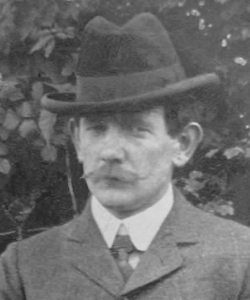
Robert Noonan, Irish writer born Robert Croker and best known by the pen name Robert Tressell, is born in Dublin on April 17, 1870. He is best known for his novel The Ragged-Trousered Philanthropists.
Noonan is the illegitimate son of Samuel Croker, a senior member of the Royal Irish Constabulary. He is baptised and raised a Roman Catholic by his mother Mary Noonan. His father, who is not Catholic, has his own family, but attempts to provide for Robert until his death in 1875.
By 1875 Noonan is living in London. When he is sixteen, he shows signs of a radical political consciousness. He leaves his family declaring he “would not live on the family income derived largely from absentee landlordism.” It is around this time he changes his surname to his mother’s maiden name.
In 1890, Noonan is a sign writer living in Queen’s Road, Everton, Liverpool. On June 10, 1890, he appears at Liverpool County Intermediate Sessions court at County Sessions House, Islington, Liverpool on charges of housebreaking and larceny. He is found guilty and given a six-month prison sentence.
By 1891, Noonan has moved to Cape Town, South Africa, where he is a painter and decorator. He marries in 1891, but the marriage is an unhappy one, with his wife having numerous affairs after the birth of their daughter, Kathleen. They divorce in 1895, and Noonan acquires all the property, including their house in an affluent suburb of Cape Town.
Noonan and his daughter move to Johannesburg, where he secures a well-paying job with a construction company. It is here that he learns the ways of the industry he would later write about in his novel, although Noonan’s actual circumstances vary greatly from the proletarian characters of the book. After becoming Secretary of the Transvaal Federated Building Trades Council, he is able to send his daughter to an exclusive convent school and also to employ a black manservant called Sixpence.
In 1897, Noonan leads a successful protest against the employment of black skilled labour. During 1898, he becomes a member of the Transvaal Executive Committee of the Centennial of 1798 Association, which commemorates the revolutionary nationalist Society of United Irishmen. As a 1798 Association member, he helps form the Irish Brigades, an anti-British force that fights alongside the Boers in the Second Boer War. At this point, accounts of his life differ. Some assert he takes up arms and is interned by the British until the end of the war, when he returns to Britain. Others say he leaves South Africa just before hostilities began in October 1899.
In any event, around the turn of the century, Noonan ends up in Hastings, Sussex. Here, he finds work as a sign writer, but at much lower wages and in far poorer conditions than he had experienced in South Africa. He has to take part-time jobs in addition to his full-time position.
Influenced by the Marxist-influenced ideas of designer and socialist William Morris, he joins the Social Democratic Federation in 1906. The next year, after a dispute with his employer, he loses his job. Despite the demand for his skills, his health begins to deteriorate, and he eventually develops tuberculosis. Unemployed and unable to remain politically active, he starts writing, something he hopes will earn enough money to keep him from the workhouse.
He writes under the pen name Robert Tressell as he fears the socialist views expressed in the book will have him blacklisted. He completes The Ragged-Trousered Philanthropists in 1910, but the 1,600-page hand-written manuscript is rejected by three publishing houses. The rejections severely depress him, and his daughter has to save the manuscript from being burned.
Unhappy with his life in Britain, Noonan decides that he and Kathleen should emigrate to Canada. However, he only reaches Liverpool when he is admitted to the Royal Liverpool Infirmary, where he dies of pulmonary tuberculosis on February 3, 1911, at the age of 40. He is buried in a pauper’s grave at Liverpool Parochial Cemetery, later known as Walton Park Cemetery. The location of the grave is not rediscovered until 1970. Twelve other people are buried in the same plot. The plot is now marked although the land is no longer used as a cemetery and is now used by Rice Lane City Farm.
Kathleen mentions her father’s novel to a friend, writer Jessie Pope, who recommends it to her publisher. In April 1914, the publisher purchases the rights to the book for £25, and it appears in Britain, Canada and the United States later that year, in the Soviet Union in 1920, and in Germany in 1925. The version as originally published is heavily abridged by Pope, with much of the socialist ideology removed.
The original manuscript is subsequently located by F. C. Ball and, after he raises funds to acquire and reassemble the original version, an unabridged edition is published in 1955.
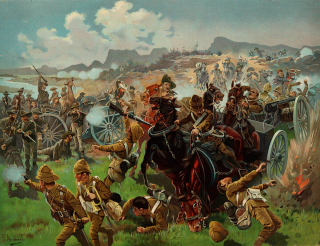 On December 15, 1899, Irish units of the
  seamus dubhghaill