seamus dubhghaill

Promoting Irish Culture and History from Little Rock, Arkansas, USA


Leave a comment

State Visit of U.S. President John F. Kennedy

jfk-state-visit

John F. Kennedy, an Irish American and the first Catholic to become president of the United States, arrives in Ireland on a state visit on June 26, 1963. After Air Force One touches down at Dublin airport, Kennedy’s motorcade weaves through the streets of Dublin city, the thrilled crowd, lacking ticker tape, improvises by throwing rolls of bus tickets.

Kennedy is proud of his Irish roots and makes a special visit to his ancestral home in Dunganstown, County Wexford, while in the country. There, he is greeted by a crowd waving both American and Irish flags and is serenaded by a boys’ choir that sings The Boys of Wexford. Kennedy breaks away from his bodyguards and joins the choir for the second chorus, prompting misty-eyed reactions from both observers and the press.

Kennedy meets with 15 members of his extended Irish family at the Kennedy homestead in Dunganstown. There he enjoys a cup of tea and some cake and makes a toast to “all those Kennedys who went and all those Kennedys who stayed.” His great-grandfather, Thomas Fitzgerald, had left Ireland for the United States in the middle of the Great Famine of 1848 and settled in Boston, becoming a cooper. Generations of his descendants go on to make their mark on American politics.

At the time of JFK’s visit to Ireland, the predominantly Catholic Irish Republic has been an independent nation for 41 years. The northern counties of the island, however, remain part of the largely Protestant British Empire and still suffer from long-standing sectarian violence. On the day after his arrival in Dublin, Kennedy speaks before the Irish parliament, where he openly condemns Britain’s history of persecuting Irish Catholics. Two days later, he travels to England, America’s oldest ally, to meet with British Prime Minister Harold Macmillan and his cabinet to discuss setting up a pro-democratic regime in British Guiana.

Kennedy later tells his aides that his favourite part of the trip was the wreath laying and silent funeral drill done by the Irish Army cadets at Arbour Hill military cemetery in Dublin.

Five months later, his widow, Jacqueline Kennedy, makes a special request to the Irish government. She asks that those same Irish army cadets, who so impressed the President on his visit, perform the drill again at his state funeral. Within days, those awe-stuck, trembling young men stand just inches away from foreign dignitaries from over 90 countries and perform their silent funeral drill in memory of a president that had inspired their country just a few short months earlier.

Leave a comment

Execution of Thomas Kent

thomas-kent

Irish nationalist Thomas Kent is executed at Cork Detention Barracks on May 9, 1916. Kent’s story is one of the stranger episodes that happens after the rebellion in Dublin has been quelled. Unlike the Dublin rebels, Kent does not go out to fight. Rather the British come to him looking for trouble.

Kent is part of a prominent nationalist family who lives at Bawnard House, Castlelyons, County Cork. After spending some time in Boston, he returns to Ireland because of poor health. He is active in the Land League, Sinn Féin, and the Irish Republican Brotherhood. With the launch of the Irish Volunteers in 1913, he is prominent with another legendary Cork man, Terence MacSwiney, in organizing and training recruits.

The Kent family is prepared to take part in the Easter Rising but when the mobilisation order is countermanded by Eoin MacNeill, commander of the Irish Volunteers, on April 22, they stay at home. The rising nevertheless goes ahead in Dublin on Easter Monday. The Royal Irish Constabulary (RIC) is dispatched to arrest well-known sympathizers throughout the country including, but not limited to, known members of the Irish Republican Brotherhood, Sinn Féin, and the Irish Volunteers.

When the Kent residence is raided at 3:45 AM on May 2, the RIC is met with resistance from Thomas and his brothers Richard, David, and William. A gunfight lasts for four hours, during which RIC officer Head Constable William Rowe is killed and David Kent is seriously wounded. Eventually the Kents are forced to surrender, although Richard makes a last-minute dash for freedom and is fatally wounded.

Thomas and William are tried by court martial on May 4 on a charge of “armed rebellion.” William, who is not political, is found innocent, but Thomas is found guilty in the death of Constable Rowe and is sentenced to death. Before being led out for his execution, Kent says, “I have done my duty as a soldier of Ireland and in a few moments, I hope to see the face of God.” He is executed by firing squad in Cork in the early morning hours of May 9. David Kent is brought to Dublin where he is charged with the same offence, found guilty, and sentenced to death, but the sentence is commuted, and he is sentenced to five years penal servitude.

Apart from the singular case of Roger Casement, Thomas Kent is the only person outside of Dublin to be executed for his role in the events surrounding Easter Week. He is buried on the grounds of Cork Prison, formerly the Military Detention Barracks at the rear of Collins Barracks, Cork. The former army married quarters at the rear of Collins Barracks are named in his honour.

Taoiseach Enda Kenny offers a state funeral to the Kent family early in 2015 which they accept. Kent’s remains are exhumed from Cork prison in June 2015 after being buried for 99 years. The state funeral is held on September 18, 2015, at St. Nicholas’ Church in Castlelyons. Kent lay in state at Collins Barracks in Cork the day before. The requiem mass is attended by President Michael D. Higgins, with Enda Kenny delivering the graveside oration.


Leave a comment

Hugh O’Brien – First Irish Mayor of Boston

hugh-obrien

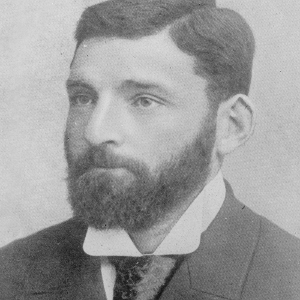
Hugh O’Brien is sworn in as Boston’s 31st mayor and first Irish mayor on January 5, 1885, marking the beginning of a new era in Boston politics.

Born in Ireland on July 13, 1827, O’Brien moves with his family to Boston when he is five years old, well before the potato famine sends waves of impoverished Irish men and women to Boston. He spends seven years in the Boston public schools and is apprenticed to a printer at the age of 12.

Working first for the newspaper Boston Courier and then for a Boston printer, O’Brien excels at the printing business, making foreman when he is only fifteen. He starts his own publication, Shipping and Commercial List, and is soon successful enough to become a respected member of the Boston business elite.

O’Brien’s business success draws the attention of Patrick Maguire, publisher of The Republic newspaper and the unofficial head of Irish politics in Boston. He orchestrates O’Brien’s election to the city’s Board of Aldermen.

Boston has long been controlled by native-born Protestants, generally called “Yankees,” most of whom have a stereotypical view of Irish immigrants as poor, ignorant, undisciplined, and under the thumb of the Catholic Church. But the Irish-born population of Boston is exploding, making up over 40% of the city’s population by 1885.

By 1883, Maguire decides that the time has come for Boston to elect an Irish-born mayor. He devises a two-part strategy. O’Brien will be the public face of the campaign, an able public official who criticizes the previous administration for increasing taxes. O’Brien’s pledge to reduce the tax rate without cutting city services appeals to the Yankee tradition of frugality. Meanwhile, behind the scenes, Maguire develops a system of Irish ward bosses who visit each household in the neighborhood and make sure that every eligible Irishman votes for O’Brien. O’Brien sweeps 15 of Boston’s 25 wards and, on December 10, 1884, becomes the first Irish Catholic to be elected Mayor of Boston.

O’Brien surprises the opposition by governing the city in a conservative and honest way during his four terms in office. He cuts tax rates as promised. He also widens streets, establishes the commission that hires Frederick Law Olmsted to design the Emerald Necklace park system, and builds the new Boston Public Library in Copley Square. He disarms his critics by enlisting Yankee and Republican businessmen to serve on the committees overseeing these projects.

Hugh O’Brien dies on August 1, 1895, and is buried at Holyhood Cemetery in Brookline, Massachusetts.