seamus dubhghaill

Promoting Irish Culture and History from Little Rock, Arkansas, USA


Leave a comment

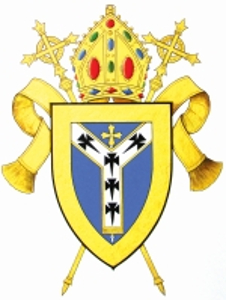
Union of the Dioceses of Glendalough & Dublin

diocese-of-dublin-and-glendalough-arms

The union of the diocese of Glendalough with that of Dublin, having been promulgated by Pope Innocent III, is confirmed by Pope Honorius III on October 6, 1216.

The broad Dublin area is Christian long before Dublin has a distinct diocese, with monasteries such as Glendalough as well as at Finglas, Glasnevin, Rathmichael, Swords, and Tallaght. Several of these function as “head churches” and the most powerful of all is Glendalough.

In the early church in Ireland, the church has a monastic basis, with greatest power vested in the Abbots of the major communities. There are bishops but not organised dioceses in the modern sense, and the offices of abbot and bishop are often comprised in one person. Some early “Bishops of Dublin,” as far back as 633, are mentioned in Ware’s Antiquities of Ireland but the Diocese of Dublin is not considered to have begun until 1038.

The Kingdom of Dublin first seeks to have a bishop of their own in the 11th century, under Sitric MacAulaf, who has been on pilgrimage to Rome. He sends his chosen candidate, Donat, to be consecrated in Canterbury in 1038, and the new prelate sets up the Diocese of Dublin as a small territory within the walled city, over which he presides until 1074. The new diocese is not part of the Church in Ireland but of the Norse Province of Canterbury. Sitric also provides for the building of Christ Church Cathedral in 1038.

At the Synod of Ráth Breasail, convened in 1118 by Gillebert, Bishop of Limerick, on papal authority, the number of dioceses in Ireland is fixed at twenty-four. Dublin is not included as the city is described as lying within the Diocese of Glendalough and still attached to Canterbury.

In 1151, Pope Eugene III commissions Cardinal Giovanni Paparo to go to Ireland and establish four metropolitans. At the Synod of Kells in 1152, Armagh, Dublin, Cashel, and Tuam, are created archiepiscopal sees. In a document drawn up by the then Archbishop of Tuam in 1214, Cardinal Paparo states that he delivered the pallium to Dublin which he determines to be preferred over Glendalough and appoints that the Glendalough diocese should be divided, and that one part thereof should fall to the metropolitan.

The part of North County Dublin known as Fingall is taken from Glendalough Diocese and attached to Dublin City. The new Archdiocese has 40 parishes, in deanaries based on the old senior monasteries. All dependence upon English churches such as Canterbury is also ended.

The founding Archbishop of the larger Dublin Diocese is Gregory, with the Bishops of Kildare, Ossory, Leighlin, Ferns, and Glendalough reporting to him.

In 1185, the Lord of Ireland, John Lackland, grants the merger of the dioceses of Dublin and Glendalough. This is initially without effect as the charter lacks papal approval. When the bishop Macrobius dies in 1192, a synod is held in Dublin under the direction of the papal legate Metthew O Enna. William Piro is elected as Bishop of Glendalough and remains in office at least until 1212. Robert de Bedford is elected as successor in 1213 or 1214 but never has the opportunity to take possession of the diocesan seat. Instead, John, now King of England, reissues a grant to join Glendalough to Dublin which is finally approved in by Pope Innocent III in 1216 and confirmed by his successor Honorius III in the same year.


Leave a comment

The Deal Barracks Bombing

deal-barracks-bombing

The Deal barracks bombing, an attack by the Provisional Irish Republican Army (IRA) on the Royal Marines School of Music building at the Royal Marine Depot in Deal, England, takes place on September 22, 1989. The building collapses, killing eleven marines from the Royal Marines Band Service and wounds 21 others.

Throughout the 1980s, the IRA has been waging a paramilitary campaign against targets in Britain and Northern Ireland with the stated aim of achieving the separation of Northern Ireland from the rest of the United Kingdom. These operations have included an attempt to kill British Prime Minister Margaret Thatcher in 1984 and a similar attack on a military band in London in 1982.

At 8:22 AM on September 22, 1989, a 15 lb. time bomb detonates in the recreational centre changing room at the Royal Marines School of Music. The blast destroys the recreational centre, levels the three-story accommodation building next to it, and causes extensive damage to the rest of the base and nearby civilian homes. The blast is heard several kilometres away, shaking windows in the centre of Deal, and creating a large pall of smoke over the town. Most of the personnel who use the building as a barracks have already risen and are practising marching on the parade ground when the blast occurs. These marines witness the buildings collapse and many of the personnel are in a state of shock for days afterwards.

Some marines remain behind in the building and thus receive the full force of the explosion. Many are trapped in the rubble for hours and military heavy lifting equipment is needed to clear much of it. Kent Ambulance Service voluntarily agrees to end its industrial strike action to aid those wounded by the blast. Ten marines die at the scene with most trapped in the collapsed building, although one body is later found on the roof of a nearby house. Another 21 are seriously injured and receive treatment at hospitals in Dover, Deal, and Canterbury. One of these men, 21-year-old Christopher Nolan, dies of his wounds on October 18, 1989. Three of those killed are buried nearby at the Hamilton Road Cemetery in Deal.

The IRA claims responsibility for the bombing, saying it is a continuation of their campaign to rid Northern Ireland of all British troops who have been deployed there since 1969. Many British people are shocked at the attack, carried out on a ceremonial military band whose only military training is geared towards saving lives.

The British Government also condemns the IRA’s attack. Prime Minister Margaret Thatcher makes a statement from Moscow, where she is on an official visit, saying that she is “shocked and extremely sad.” Leader of the Official Opposition, Neil Kinnock, describes the attack as an “awful atrocity” and says, “Even the people who say they support what the IRA calls its cause must be sickened by the way in which such death and injury is mercilessly inflicted.”

One week after the bombing, the staff and students at the School of Music march through the town of Deal, watched and applauded by thousands of spectators. They maintain gaps in their ranks to mark the positions of those unable to march through death or serious injury.


Leave a comment

John Comyn Elected Archbishop of Dublin

John Comyn is elected Archbishop of Dublin and consecrated by the pope at Velletri on March 21, 1181. He is the first Englishman to be appointed to an Irish see.

He is chaplain to King Henry II of England and on his “urgent” recommendation is elected Archbishop of Dublin following the death of St. Laurence O’Toole in 1180. He has been a Benedictine monk at the Evesham Abbey.

In 1181, some of the clergy of Dublin assemble at Evesham and Comyn is elected to the archbishopric of Dublin. He is not then a priest but is subsequently ordained such later in the year at Velletri and on Palm Sunday, March 21, is consecrated archbishop by Pope Lucius III. The following year the pope grants him manors and lands in and around Dublin, which subsequently form the Manor of St. Sepulchre which remains under the authority of the Archbishop of Dublin until the 19th century. The pope also, in an effort to protect the Dublin archbishopric from claims from Canterbury, extends certain privileges to Comyn, which intensifies the rivalry between the sees of Dublin and Armagh for the Primacy of Ireland.

Comyn waits three years before visiting Ireland, until he is sent there by King Henry to prepare the reception of his son, Prince John. The king grants him lands and privileges which make him a Lord of Parliament. After his arrival in Ireland, John grants Comyn the Bishopric of Glendalough, although Comyn never has an opportunity to take this up in his lifetime. Under Pope Urban III, Comyn carries out a number of reforms of the Irish church to bring it into line with the church in England and in continental Europe.

In 1189, Archbishop Comyn assists at the coronation of King Richard I. The following year he demolishes the old parish church of St. Patrick, south of Dublin. He then erects a new building, next to his Palace of St. Sepulchre, which he elevates to the status of a collegiate church and later becomes St. Patrick’s Cathedral. This enables him to rule in his own Liberty, without the interference of mayor and citizens. Around this time, he enlarges the choir of Christ Church Cathedral.

Prince John grants Comyn further legal rights throughout the country of Ireland, while Comyn also receives the church and lands of All Hallows to the northeast of Dublin. Between Lusk and Swords, he founds the convent of Grace Dieu Abbey, which later becomes wealthy through grants from the Anglo-Norman prelates and magnates. However, when Hamo de Valoniis is appointed Justiciar of Ireland he seizes some of these lands for the treasury and himself. A dispute arises which causes Comyn to flee for his own safety to Normandy. Comyn appeals to Pope Innocent III, who settles the dispute, but John is angered by the actions of Comyn and does not reconcile himself with him until 1206.

Comyn dies six years later on October 25, 1212, and is buried in Christ Church Cathedral, where a marble monument is erected to his memory. Two years later William Piro, Bishop of Glendalough, dies whereupon the union of the sees granted by King John takes place.