seamus dubhghaill

Promoting Irish Culture and History from Little Rock, Arkansas, USA


Leave a comment

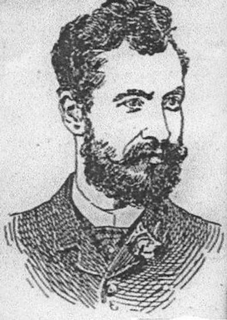
Birth of John McAlery, Association Football Pioneer

John McCredy McAlery, an Irish association football pioneer, is born in RathfrilandCounty Down, on November 29, 1848. His accomplishments include organizing the first ever properly organized football match in the history of Irish football in 1878, founding the first Irish football club in 1879, helping found the Irish Football Association in 1880, and wearing the captain‘s armband in Ireland‘s first ever international match in 1882. He is known as the “father of Irish association football.”

McAlery moves to Belfast to learn the drapery business and soon becomes very successful, opening the Irish Tweed House gentleman’s outfitters on Royal Avenue. A talented cricketer in his youth, his first involvement in the Belfast sport scene is helping in the formation of the Cliftonville Cricket Club in 1870, later serving as club treasurer. In 1878, during his honeymoon in Scotland, he witnesses his first ever association football match, and enjoys it so much he decides to introduce the sport back home.

The first match of organized association football on Irish soil is played on October 24, 1878, between Caledonian and Queen’s Park. McAlery invites the Scottish sides to play in the exhibition match at the Ulster Cricket Ground in an attempt to showcase the game to the Belfast crowd. Queen’s Park achieves a 3–2 victory, and more importantly, the demonstration is well received by the locals.

On September 20, 1879, less than a year later, McAlery places an advertisement in both the News Letter and the Northern Whig soliciting for individuals interested in becoming members of the Cliftonville Association Football Club.

The newly formed Cliftonville F.C. side plays their first match just nine days later, losing 2–1 to a team of rugby players called Quidnunces. They achieve their first victory on November 1 with a 2–0 defeat of Knock F.C., a team of former lacrosse players.

On November 18, 1880, McAlery organizes a meeting at the Queen’s Hotel in Belfast between the seven Irish football clubs that have been established at the time: AlexanderAvoniel, Cliftonville, Lisburn Distillery, Knock, Moyola Park and Oldpark. These teams become the founding members of the Irish Football Association (IFA), with Lord Spencer Chichester serving as its president and McAlery as secretary. In an appendix to the minutes of the meeting, McAlery writes: “If the spirit which pervaded from those present be acted upon the result will be a strong Association for promoting the game which we have espoused.”

The meeting also provides for Ireland’s first official football competition, the Irish FA Cup. In the first Cup final of the inaugural competition, played on April 9, 1881, Cliftonville is defeated by Moyola Park. They suffer the same fate the following year, losing to Queen’s Island in the final of the 1881–82 edition. McAlery, who captains Cliftonville while playing at fullback, wins his first trophy on his third try, as his club defeats Ulster to win the 1882–83 Irish Cup.

McAlery does not play much after this, deciding to focus on his administrative role in Irish football. He referees international matches until 1887, and remains the Irish FA secretary until 1888.

McAlery captains Ireland’s first ever international match on February 18, 1882, playing at right back. On a “bittery cold” Belfast night with occasional rain and hail, Ireland loses to the far more experienced England team by a score of 13–0. A week later, he makes his second and final international appearance, captaining his team again as they lose 7–1 to Wales in Wrexham.

McAlery retires to Whitehead, County Antrim, where he dies on December 3, 1925.

In 2013, a blue plaque erected by the Ulster History Circle is unveiled at Solitude, Cliftonville’s home ground, to commemorate McAlery’s efforts.

Leave a comment

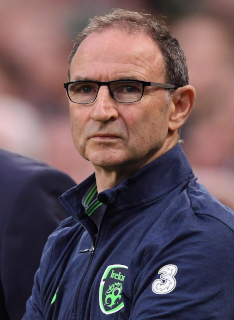
Birth of Martin O’Neill, Association Football Player & Manager

Martin Hugh Michael O’Neill, OBE, Northern Irish association football manager and former player who played as a midfielder, is born in Kilrea, County Londonderry, Northern Ireland, on March 1, 1952, the sixth child of nine siblings.

O’Neill’s father is a founding member of local GAA club Pádraig Pearse’s GAC Kilrea. He plays for both Kilrea and Derry at underage level. He also plays Gaelic football while boarding at St. Columb’s College, Derry, and later at St. Malachy’s College, Belfast.

Starting his career in Northern Ireland, O’Neill moves to England where he spends most of his playing career with Nottingham Forest, with whom he wins the European Cup twice, in 1979 and 1980. He is capped 64 times for the Northern Ireland national football team, also captaining the side at the 1982 FIFA World Cup.

During his managerial career O’Neill manage Grantham Town, Wycombe Wanderers, Norwich City, Leicester City, Celtic, Aston Villa and Sunderland. He guides Leicester City to the Football League Cup final three times, winning twice. As Celtic manager between 2000 and 2005, he leads that club to seven trophies including three Scottish Premier League titles and the 2003 UEFA Cup Final. After joining Aston Villa he achieves three consecutive sixth-place finishes in the English Premier League and guides them to the 2010 Football League Cup Final.

O’Neill becomes Republic of Ireland manager in 2013 and leads them to qualification for the 2016 UEFA European Football Championship for the third time in the nation’s history, beating the reigning world champions, Germany, in the process. He leaves the role with assistant Roy Keane by “mutual agreement” in November 2018. He is appointed as Nottingham Forest manager on January 15, 2019. He guides the club to a ninth-place finish in the Championship. However, he is sacked as manager on June 28, 2019, after reportedly falling out with some of the senior first team players.

Despite never completing his degree, O’Neill remains a follower of criminology. His fascination begins with the James Hanratty case of 1961. He has worked in television as an analyst for BBC and ITV at the FIFA World Cup, the UEFA European Championship and on UEFA Champions League matches.

In 2002, Norwich supporters voted O’Neill into the club’s Hall of Fame. He is awarded an OBE for services to sport in 2004. He is awarded the Nottingham Lifetime Achievement Award on November 3, 2013 for his services to football and achievements with Nottingham Forest.


Leave a comment

Birth of Footballer Johnny Giles

Michael John “Johnny” Giles, former association footballer and manager, is born in Ormond Square, Dublin, on November 6, 1940. He is best remembered for his time as a midfielder with Leeds United F.C. in the 1960s and 1970s. After retiring from management in 1985, Giles serves as the senior analyst on RTÉ Sport‘s coverage of association football from 1986 until 2016. The Football Association of Ireland (FAI) votes Giles as the greatest Irish player of the last 50 years at the UEFA Jubilee Awards in 2004.

After winning an FA Cup winner’s medal under Matt Busby at Manchester United F.C., Giles moves to Leeds in 1963 where he plays in midfield alongside captain Billy Bremner. The duo goes on to form a central midfield partnership which is one of the best in English club football. Their pairing helps yield several major trophies in the most successful era in Leeds’ history. By a strange coincidence, Giles and Bremner both score exactly 115 goals for the club.

In his later years in football, Giles pursues a managerial career which sees him installed as player-manager and manager of, among others, West Bromwich Albion F.C., the Republic of Ireland national football team, Vancouver Whitecaps F.C. and Shamrock Rovers F.C. Despite having an outstanding knowledge of the game, Giles personally never likes being a manager. He becomes disillusioned with aspects of the job, such as suffering at the hands of non-committal boardrooms and leaves management permanently in 1985. He later declares that he has no regrets about quitting managerial life.

Subsequently, after repeated encouragement from childhood friend Eamon Dunphy, Giles inadvertently enters the world of football punditry in 1986. He goes on to establish himself as the highly respected senior analyst on RTÉ Sport. In addition, he writes two columns per week for the Irish Evening Herald newspaper and offers his opinions about the game on radio station, Newstalk 106.

Giles resides in the Harborne area of the city of Birmingham, England. To coincide with his 70th birthday, Giles compiles a first ever autobiography chronicling his life in and outside of football which is released in November 2010. The autobiography, titled A Football Man, becomes the best-selling book in the Republic of Ireland.